Disciple Simon Peter: Facts, Roles, and Significance in the Bible
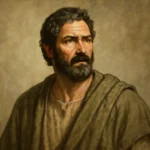
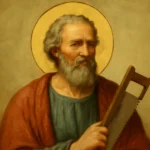
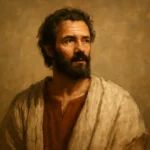
Simon Peter is one of the most prominent figures in the New Testament. Across the Gospels and the Acts of the Apostles, he appears as a fisherman turned preacher, a sometimes impulsive but deeply faithful leader, and a bridge between the earliest Christian community and the wider Gentile world. In this article we will explore the multiple facets of this enduring figure—his birth and background, his various names and identifications, the key moments in his ministry, and the theological and historical significance of his life for readers today.
Who Was Simon Peter?
Simon Peter is also known by several other names that reflect different cultural and spiritual layers of his identity. In Aramaic, Jesus gave him the name Cephas, which translates to rock. In Greek, the same name is rendered as Petros, from which we derive the word “Peter.” The combination often reads as “Simon Peter, the Rock” in Christian tradition, highlighting his role in the early church. Throughout the Bible, this trio of designations—Simon, Peter, and Cephas—is used to refer to the same individual, emphasizing both his human, fallible dimensions and his pivotal contributions to the spread of the Christian movement.
Occupation and family background anchor his life in a familiar first-century Galilean setting. He was a fisherman by trade, part of a family business with his brother Andrew, who is often mentioned alongside him in the Gospels. The reference to his father’s name, often given as Jonah or John in various texts, places him within a working-class milieu that Jesus chose to transform. The New Testament also alludes to the possibility that Peter had a wife, since Jesus heals his mother-in-law in Luke 4:38, a hint that Peter’s family life intersected with his ministry. This mix of ordinary origin and extraordinary calling helps explain why his leadership felt both authentic and contested within the infant church.
Two aspects stand out in the portrayal of Simon Peter across the scriptural record: his boldness and his humility. He is quick to speak, quick to act, and quick to repent when he misunderstands or fails. This combination makes him a compelling, complex model for readers who encounter the Bible’s portraits of leadership, courage, and growth under pressure.
Peter the Apostle: Roles in the Gospels
Call, vocation, and early ministry
Call by Jesus: Peter and his brother Andrew are casting nets when Jesus approaches and calls them to follow him, promising they will become “fishers of men.” This invitation marks a decisive turn from a routine life to a chosen mission.
Immediate allegiance: He leaves behind not only his nets but also the security of his former livelihood to accompany Jesus on a path that would reveal the Father’s plan in a new way.
First public courage: In several episodes, Peter speaks on behalf of the Twelve, expressing faith and questions alike; he often acts as a representative voice for the disciples in moments of decision or ambiguity.
One of the earliest dramatic demonstrations of Peter’s character occurs when he and his fellow disciples are overwhelmed by the vastness of the sea during a night of fishing, and Jesus calls them to a «miraculous catch»—an event that reorients their mission and underscores Jesus’ authority over nature. In this moment, the fisherman’s vocation is transformed into a divine commission, and the door is opened for Peter to be a witness to Jesus’ identity as the Messiah.
Confession of Christ: In the Gospels, Peter makes a defining confession that Jesus is the Christ, the Son of the living God. This moment is often celebrated as a high point of faith and a turning point in the disciples’ understanding of Jesus’ mission.
Denial and repentance: Yet Peter’s journey includes a contrasting episode—the threefold denial of Jesus during the Passion narrative. This human weakness does not erase his devotion; rather, it becomes a context for profound restoration.
Recommissioning by the risen Lord: After the Resurrection, Jesus forgives and commissions Peter anew, directing him to care for the believers and to “feed my sheep.” This reinstatement demonstrates a pathway from failure to renewed leadership and service.
These episodes illuminate a central theme in the Peter narrative: growth through failure. The apostle’s capacity to learn, confess, and ultimately lead reflects a model of Christian discipleship where growth occurs within relationship with Jesus, rather than through perfect performance alone.
Peter in the Book of Acts: Leadership in the Early Church
Prominent role at Pentecost and in Jerusalem
Pentecost sermon: Peter stands among the early followers when the Holy Spirit is poured out, and his preaching on that day results in the conversion and baptism of many. This event marks a turning point in the church’s mission—from a Jewish sect to a mission to the world.
Authority in the Jerusalem church: Peter emerges as a key leader in the apostolic community, guiding decisions, addressing concerns, and interpreting how the gospel should be applied in a growing and diverse community.
Two compelling moments showcase Peter’s practical leadership in Acts. First, his healing ministry and preaching alongside John at the temple gate demonstrate the power of the new movement and its claim about Jesus’ identity. Second, his leadership extends to discussion and resolution when questions of circumcision and the inclusion of Gentiles arise in the early church. Peter’s stance—emphasizing faith in Christ over adherence to ceremonial regulations—helps frame the Christian message as inclusive rather than narrowly Jewish in its reach.
Vision, Gentile mission, and the unfolding mission to the nations
Vision of unclean foods and Gentiles: In a defining vision, Peter learns that the gospel is not limited to Jewish boundaries. This revelation prompts him to associate with Gentiles, which many theologians regard as a foundational step toward a universal church.
Peter and Cornelius: In Acts 10, Peter preaches to Cornelius and his household, heralding the acceptance of Gentiles into the church without the requirement of circumcision. This episode is celebrated as a watershed moment in the Bible for the inclusion of non-Jews in the faith journey sparked by Jesus’ resurrection.
These episodes cement Peter’s role as a bridging figure—between the old covenant framework and the new covenant reality inaugurated by Christ. The apostle’s willingness to engage with the Spirit’s leading in this way reflects a dynamic leadership style characterized by humility, discernment, and obedience to God’s unfolding plan.
The Epistles of Peter: Letters with a Pastoral Voice
1 Peter: Hope in the midst of suffering
Thematic emphasis: The first letter attributed to the apostle Peter speaks to audiences facing persecution and social pressure. It emphasizes holiness, steadfastness, and living as a compelling witness in a difficult environment.
Pastoral tone: The letter is practical, offering guidance on conduct, suffering, and hope anchored in the example of Christ’s own submission and sacrificial love.
In 1 Peter, the apostle frames Christian life as a pilgrimage—one that maintains identity and integrity in the face of hostility while trusting in God’s ultimate vindication. The language invites readers to borrow courage from Peter’s own journey: a fisherman’s realism tempered by a conviction of divine purpose.
2 Peter: Warnings, growth, and the call to truth
Instructional priorities: The second letter attributed to Peter emphasizes the dangers of false teaching and the importance of growing in grace and knowledge of the Lord Jesus Christ.
Ethical exhortation: This epistle invites readers to pursue holiness and to hold fast to reliable, apostolic witness—an appeal rooted in the authority Peter attributes to the eyewitness experience of the risen Christ.
Scholars often highlight 2 Peter as a text that encourages discernment and resilience in communities beginning to encounter challenges from external pressures and internal distortions. The author invites believers to be vigilant about what they hear and to cling to the truth handed down by the earliest witnesses, including Peter himself.
Theological Significance and Debates: What Peter Means for Believers
Primacy, authority, and the question of succession
Petrine primacy: The Gospel narratives and the Acts portray Peter as a leading figure among the Twelve. Different Christian traditions interpret this leadership in varied ways. Some emphasize a line of succession that culminates in the office of the pope in the Roman Catholic framework; others view Peter’s leadership as authoritative for the early church but realized in a more decentralized way among bishops and elders in different communities.
Scriptural foundations: Core texts associated with Peter—the confession of Christ as the Messiah, the “rock” statement, the commissioning to feed Christ’s flock, and the decisive actions at Pentecost and in the Gentile mission—are central to debates about how leadership should be understood in the church’s life.
These discussions reflect a broader question about how leadership functions in Christian communities: is leadership primarily narrative and functional (as in the early church’s communal discernment), or is it institutional with a defined line of succession? Readers encounter these questions through Peter’s life: a compelling example of how a single life can shape the trajectory of belief, practice, and identity across generations.
Peter’s role in Christology and ecclesiology
Christology: Peter’s confession is often cited as a hinge moment in the Gospels—asserting Jesus’ identity as the Messiah and the Son of God. This confession remains central to Christian faith and is frequently treated as a guardrail for understanding who Jesus is within the broader scriptural witness.
Ecclesiology: The language about “the keys of the kingdom” (Matthew 16:19) has been interpreted in multiple ways. Some traditions link this to a unique pastoral authority granted to Peter, while others see it as symbolic of the church’s authority to proclaim and apply the gospel in keeping with the Spirit’s guidance.
In both Christology and ecclesiology, the figure of Peter the Apostle demonstrates how a single apostle’s encounter with Jesus can generate a durable framework for faith communities—one that invites ongoing interpretation, critique, and spiritual formation.
Ancient Christian writers and later traditions offer a portrait of Peter’s martyrdom that has shaped devotional and liturgical life in many churches. The most widespread tradition holds that he died in Rome during the persecution of Christians under Emperor Nero, crucified in Rome. Some legends claim he requested to be crucified upside down because he felt unworthy to die in the same manner as Jesus. While these details are not described in the canonical New Testament, they are part of the broader patristic and apostolic tradition that venerates Peter as a witness to Christ unto death.
Beyond death, Peter’s legacy endures in the lasting imprint he left on Christian practice and memory. The name Peter became associated with leadership of the church, the leadership of the apostles, and the call to shepherd the flock of Christ. Christian art, liturgy, and hagiography frequently invoke Peter as a pattern of courageous faith, steadfastness under hardship, and a repentant, teachable spirit.
Peter’s Significance for Today: Practical and Spiritual Takeaways
Lessons on leadership: Peter’s life shows that leadership in faith communities is not about flawless perfection but about faithful perseverance, humility, and a willingness to listen to the Spirit’s prompting even when it leads beyond comfortable boundaries.
Model of repentance: The arc from denial to restoration offers a potent reminder that spiritual growth includes realistic self-assessment, repentance, and restoration within a community of faith.
Role in mission: Peter’s life highlights the early church’s move from a primarily Jewish footprint to a universal mission. This transition invites Christians to consider how their own communities welcome and integrate people from diverse backgrounds while preserving core apostolic teaching.
Elevation of grace and faith: The confession that Jesus is the Messiah and the subsequent trust in God’s plan emphasize a faith anchored not in human power but in divine grace and the transformation that grace brings to daily life.
Common Misconceptions About Peter
Peter as the first pope: Some traditions teach that Peter’s leadership establishes a papal line of succession. In the New Testament itself, while Peter is a prominent leader among the apostles, there is no explicit laying of a formal papal office in the early church. The later development of a formal papacy draws on later ecclesial structures and historical interpretation rather than a single scriptural assertion.
Peter’s perfection: It is a common misconception to view Peter as a flawless model. In reality, Peter’s life contains bold faith and dramatic missteps, and his ongoing growth is a central theme that resonates with readers who wrestle with doubt and vocation.
Peter’s role in every doctrinal decision: While Peter contributes to crucial early decisions, the early church’s decisions emerge from a broader apostolic council and communal discernment. This helps readers appreciate the collaborative nature of church leadership in the New Testament era.
Conclusion
In sum, Disciple Simon Peter embodies a distinctive blend of accessibility and significance. From his humble beginnings as a Galilean fisherman to his central role in the founding narrative of the church, this figure demonstrates how God can work through imperfect vessels to accomplish extraordinary purposes. Through the Gospels, the Acts, and the Petrine letters, Peter the Apostle emerges as a figure of courage, repentance, and hope, guiding believers toward a deeper understanding of who Jesus is and what it means to live as faithful followers in a challenging world. Whether readers approach Peter as Simon, Peter, or Cephas, the throughline remains clear: a life touched by Christ can become a beacon for countless others, inviting all to participate in God’s ongoing work of renewal and mission.






Leave a Reply