Badger skins are valued mainly for their distinctive hair structure: coarse guard hairs provide strength and shape, while the softer underfur adds warmth and insulation. Their commercial history includes shaving brushes, paintbrushes, trim, hats, gloves, rugs, and other leather or fur goods.
What badger skins are and why their hair is useful
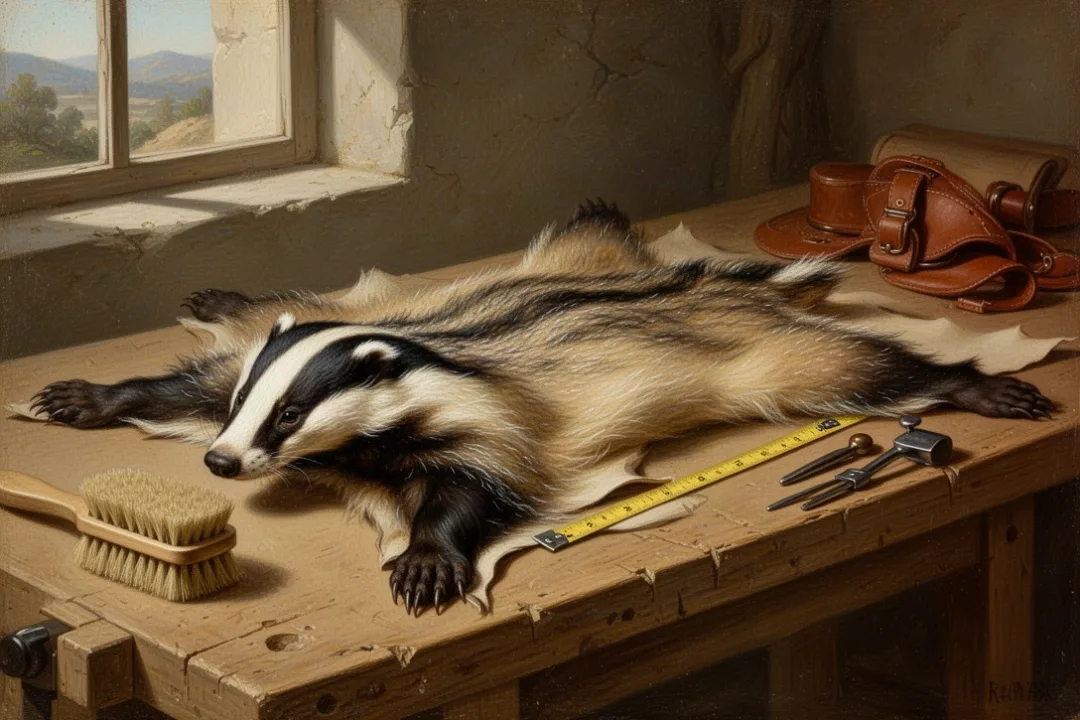
A badger skin is the preserved hide of a badger, usually sold as a raw pelt, a tanned skin, or a finished fur piece. The skin includes the leather hide and the hair attached to it. Its appearance and performance depend on the species, the animal’s age, the season when it was taken, and how the pelt was cleaned and tanned.
Badger fur usually has a noticeable mixture of long guard hair and shorter, softer underfur. The guard hair can resist wear and hold a defined shape, while the underfur creates density and softness. This combination made badger hair especially useful for brushes, where the fibers need to absorb and release water while remaining flexible.
Color varies by species and individual animal. North American badgers often show pale gray, buff, brown, and black markings, including a dark facial pattern. European badgers tend to have a different body shape and a more recognizable striped face. A skin’s color should not be treated as proof of species, however, because lighting, tanning, dyeing, age, and trimming can alter its appearance.
The leather side also matters. A well-preserved hide should be flexible rather than brittle, with an even surface and no strong chemical or musty odor. Fur that looks attractive from the hair side can still have damaged leather underneath, so buyers and makers inspect both sides before purchasing.
Key distinction: “Badger skin” may mean a complete pelt, a tanned hide with hair, a fur strip, or hair removed from the skin for brush making. Ask which form is being sold before comparing prices or uses.
Common uses for badger skins and badger hair
The best-known use of badger hair is in shaving brushes. The fibers can hold water and shaving soap, then distribute lather across the face. Brush makers have traditionally described different grades according to the part of the animal from which the hair was taken, the softness of the tips, and the density of the finished knot.
Commercial labels such as “pure,” “best,” “super,” or “silvertip” are not universal technical standards. One company’s grade may not match another company’s grade. Hair length, bleaching, dyeing, trimming, knot construction, and manufacturing quality can all affect how a brush feels and performs.
Badger hair has also been used in artist’s brushes, makeup tools, dusting brushes, and specialty finishing brushes. Its usefulness depends on the required balance of softness, spring, water retention, and resistance to repeated handling. Some brushes use badger hair alone, while others blend it with hair from different animals or with synthetic fibers.
Whole or partial skins have appeared in clothing and accessories, particularly as trim, lining, collars, cuffs, hats, gloves, and small decorative pieces. The fur’s thickness can provide warmth, but the size and shape of a badger pelt limit how it can be used. Several skins may be joined to create a larger panel, and seams may be visible on the leather side.
Other traditional uses include rugs, wall hangings, fly-tying materials, taxidermy projects, and craft items. These markets are smaller and may be subject to specific rules. A skin intended for a brush is not automatically suitable for a garment: the hair may have been cut, stripped, sorted, or chemically treated during processing.
Brushes: shaving, painting, dusting, and other specialty tools.
Fur goods: trim, hats, collars, gloves, and decorative panels.
Leather crafts: small projects where the hide is more important than the fur.
Collections and display: naturally marked pelts, study specimens, or historical reproductions.
Modern buyers should also consider whether the same result can be achieved with a synthetic material. High-quality synthetic brush fibers can be designed for water retention, softness, and spring. Faux fur can provide a similar visual effect for many costumes and decorative projects without using animal-derived material.
How badger skins are graded, tanned, and prepared
Processing begins soon after the animal is harvested. The pelt must be cooled and handled carefully to reduce bacterial damage, hair slip, and deterioration. Flesh, fat, and connective tissue are removed from the inner surface in a process called fleshing. The hide may then be salted, dried, frozen, or treated through another approved preservation method before tanning.
Tanning converts the perishable hide into a more stable material. Depending on the tannery and intended use, the pelt may undergo soaking, cleaning, liming or another hair-preserving treatment, tanning, oiling, drying, stretching, and finishing. The exact sequence differs, and a pelt prepared for a fur garment may receive different treatment from one prepared for leather craft.
Good preparation usually produces a hide that is supple, evenly dried, and securely attached to the hair. The fur should feel clean and relatively consistent, with no large bare patches caused by shedding or poor handling. Small natural scars, healed wounds, color variation, and uneven hair length can occur because the material comes from an animal rather than a uniform manufactured sheet.
Buyers should separate natural variation from processing defects. A few differences in color or density are normal. Excessive hair loss when the pelt is gently handled, a greasy surface, deep cracks, exposed tissue, insect damage, or a sharp chemical smell suggests storage or tanning problems.
How to inspect a pelt before buying
Check the species description. Confirm whether the seller identifies the pelt as American badger, European badger, or another animal sold under a similar trade name.
Examine both sides. Look at the hair for bald patches and the leather for cracks, tears, stiff areas, mold, or heavy staining.
Test flexibility carefully. A tanned hide should bend without producing a dry, cracking sound. Do not fold an old or brittle pelt sharply.
Look for hair slip. A few loose hairs may be normal, but tufts coming out with light handling indicate a serious problem.
Ask how it was preserved. Tanning method, age, storage conditions, and whether the skin was dyed or chemically treated affect its durability.
Request legal and origin information. A responsible seller should be able to explain where the pelt came from and what documentation applies.
Terms such as “cased,” “flat,” “tanned,” or “dressed” can describe different stages of preparation. A cased skin may have been opened in a tube-like form, while a flat skin has been opened and stretched more broadly. “Dressed” often indicates a finished fur pelt, but terminology varies among sellers, so photographs and measurements are useful.
Legal and ethical issues when buying badger skins
Rules for possessing, selling, importing, exporting, trapping, and transporting badger skins vary by species, location, and transaction. A pelt legally sold in one state or country may require permits or be restricted elsewhere. The rules may apply not only to the finished skin but also to raw hides, hair, mounted specimens, and items made from them.
Before purchasing, identify the animal and check the regulations where the skin originates, where it will be shipped, and where you will use or resell it. Border shipments can involve wildlife declarations, import permits, veterinary or sanitation requirements, and restrictions on untreated biological material. Do not assume that a seller’s online listing proves that an international shipment is legal.
In the United States, wildlife regulation can involve federal authorities, state wildlife agencies, tribal authorities, and local rules. State requirements may differ widely, particularly for trapping seasons, possession records, sale of furs, and movement across state lines. For an imported pelt, additional federal requirements may apply depending on the species and country of origin.
Ethical sourcing means more than asking whether a skin is legal. A responsible supply chain should provide clear species identification, lawful origin, and honest condition grading. If the seller cannot say where the pelt came from, how it was preserved, or whether it is captive-bred, wild-harvested, reclaimed, or vintage, treat the item cautiously.
Important warning: Do not buy an unverified pelt simply because it is inexpensive. Missing origin details can create legal problems, and untreated or poorly preserved animal material may carry pests, contamination, or serious storage damage.
Animal welfare is another consideration. Trapping and hunting practices differ in their methods and oversight, and the conditions cannot always be determined from the finished pelt. Some buyers choose only reclaimed vintage material, certified or traceable products, or non-animal alternatives. Others decide that they do not want animal-derived materials at all.
“Vintage” does not automatically mean legal to resell or ship. Older goods may still contain protected species, and the age of an item can be difficult to establish. If a pelt has been inherited, found in an old collection, or removed from a garment, keep any available receipts, estate records, labels, or prior documentation.
How to store, clean, and maintain badger skins
Badger skins last longest when kept cool, dry, clean, and protected from insects. Avoid attics, garages, sheds, damp basements, and areas exposed to direct sunlight. Heat and humidity can dry out leather, encourage mold, and create conditions that attract clothes moths, carpet beetles, and other pests.
Store a finished pelt loosely rather than compressing it under heavy objects. Use a breathable cover, such as clean cotton or another suitable fabric, rather than airtight plastic for long-term storage. Keep it away from strong fragrances, solvents, smoke, oily materials, and freshly treated wood that may transfer odors or chemicals.
For a loose pelt, gentle surface cleaning may be possible with a soft brush or careful shaking outdoors, provided the material is sound. Do not saturate the hide, soak it in household cleaner, or put it in a washing machine. Water can cause shrinkage, stiffness, dye bleeding, or damage to the tanning structure.
Professional fur or leather cleaners are the safest choice for valuable, old, fragile, or heavily soiled skins. Tell the cleaner that the item is badger and disclose any stains, odors, repairs, dyes, or previous treatments. A cleaner who handles ordinary fabrics may not have the equipment or experience required for fur-bearing pelts.
If the skin becomes wet, remove surface moisture by blotting with a clean towel and let it dry naturally in a cool, ventilated place. Keep it away from radiators, hair dryers, fireplaces, and direct sunlight. Do not force a wet pelt into shape, because stretching or brushing while the leather is swollen can cause permanent damage.
Inspect stored skins periodically without disturbing them unnecessarily. Look for small holes, powdery residue, webbing, shed hair, unusual odor, or insect casings. If you suspect an infestation, isolate the item from other textiles and consult a conservator, fur specialist, or pest-control professional familiar with museum and animal materials.
Use a breathable storage cover and avoid sealed plastic for long-term storage.
Keep the pelt away from moisture, heat, sunlight, smoke, and household chemicals.
Handle it with clean, dry hands so oils do not transfer to the hair or leather.
Do not cut, dye, glue, or wash an old pelt until its condition has been assessed.
Have valuable or fragile pieces cleaned and repaired by a qualified specialist.
Alternatives to badger skins for brushes and crafts
Synthetic fibers are the most practical alternative for many shaving brushes and paintbrushes. Their texture can be engineered to provide soft tips, backbone, spring, and water retention, and they offer consistent sizing without requiring an animal pelt. They are also easier to source when you need a repeatable material for production.
Other natural fibers may suit specific craft purposes. Plant fibers, wool, horsehair, and other animal hairs have different properties and are not direct substitutes in every application. The right choice depends on whether you need softness against skin, stiffness for scrubbing, flexibility for painting, or a particular visual effect.
Faux fur can replace badger fur in many decorative and costume uses. When selecting it, compare the pile length, density, backing flexibility, color variation, and resistance to shedding. A printed fabric may reproduce the general markings, while a high-pile faux fur can provide a more convincing texture without using a real pelt.
Reclaimed material can reduce demand for newly sourced skins, but it still needs careful evaluation. A secondhand brush or old garment may contain damaged fibers, degraded backing, or unknown treatments. Reuse is not automatically risk-free, especially when the material is dusty, moldy, or stored with pests.
For a project that only needs the look of a badger pelt, photograph-based printing, woven textiles, felt, and synthetic pile fabrics can provide safer and more predictable options. For a brush, choose according to performance rather than a prestige label: a well-made synthetic brush may be more comfortable, durable, and consistent than a poorly made natural-hair product.
The most suitable choice balances function, legality, durability, animal-welfare preferences, and maintenance. If you buy a genuine badger skin, choose a seller who can identify the species, document lawful origin, describe the tanning process, and answer questions about storage and care.
Frequently asked questions
Are badger skins legal to buy in the United States?
Legality depends on the species, state, source, and type of transaction. Rules may govern harvest, possession, sale, transport, and import separately. Before buying, check the wildlife regulations in the relevant state and ask the seller for species and origin documentation. International purchases may also require federal permits or declarations.
How can I tell whether a badger pelt is in good condition?
Inspect the hair and leather sides in strong, indirect light. The hair should not release large tufts with gentle handling, and the leather should bend without cracking. Avoid pelts with mold, insect damage, strong chemical odor, greasy patches, extensive bare areas, or severe stiffness unless a specialist has assessed them.
Can I wash a badger skin at home?
Do not machine-wash or soak it. Water and household detergents can shrink the hide, loosen the hair, or damage the tanning. For light surface dust, use gentle brushing if the pelt is sound. Valuable, old, wet, or stained skins should go to a cleaner or conservator experienced with fur and leather.
Are synthetic shaving brushes as effective as badger-hair brushes?
Many synthetic brushes perform very well and can offer consistent softness, spring, and lather retention. Performance depends on fiber design, knot density, and construction rather than the material label alone. Synthetic brushes are also easier to source without animal-derived materials and generally require less concern about legal origin or hair shedding.











Leave a Reply