Old Bibles for Sale: Rare Vintage Editions & Collectibles
For book lovers, historians, and collectors, the world of old Bibles for sale represents a unique intersection of faith, culture, and the evolution of printing. Whether you are seeking an antique Bible to complete a shelf, a vintage Bible for display, or a rare Bible edition with a storied provenance, understanding what makes these volumes special is essential. This guide offers a comprehensive look at how to recognize rarity, assess condition, navigate the market, and care for these cherished works.
What makes an old Bible valuable
The value of old Bibles depends on a blend of historical significance, physical condition, and provenance. Collectors weigh several factors, including the edition’s printing history, the binding, page quality, and whether the text is complete. In many cases, a Bible’s age alone is not the sole determinant of value; instead, it is the confluence of rarity, desirability, and scholarly interest.
Below are the core elements often considered by dealers and connoisseurs when evaluating rare Bible editions for sale.
Edition rarity and the number of surviving copies.
Printing history, including the transition from manuscript Bibles to early printed forms.
Physical condition, including the state of the paper, ink, margins, and binding.
Provenance—documented ownership, library marks, and historical context.
Completeness of the text, including apocrypha, maps, tables, and marginalia.
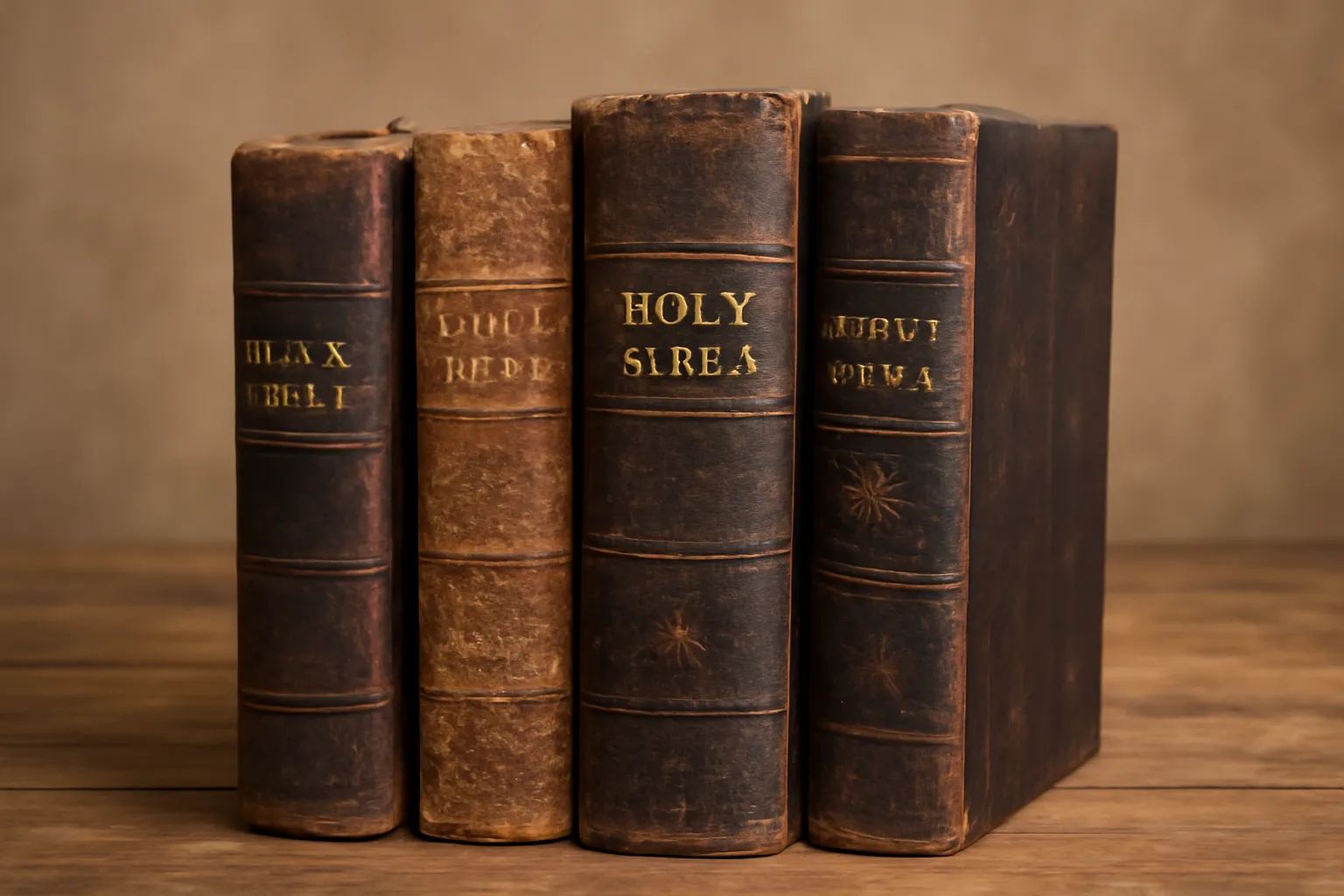
Binding quality, such as leather, vellum, boards, clasps, and tooling.
Illustrations and illuminations, including woodcuts, copperplate engravings, or rubrication.
Typography and block printing techniques, which reveal the era of production.
Categories of old Bibles for sale: what you might find
Early printed Bibles
The term incipient printed Bibles often refers to the earliest post-manuscript editions that appeared after movable type became practical. Iconic examples include stenciled or early Gutenberg-era works, incunabula, and the transition from hand-copied manuscripts to printed editions. These early printed Bibles tend to be scarce, and their value is typically driven by historical significance and rare typography.
Medieval Bibles and illuminated manuscript traditions
Medieval Bibles cover a broad range of handwritten volumes created before the printing press reshaped book production. While truly illuminated Bibles—pictorial, gold-leafed, and richly decorated—are often better categorized as manuscripts, some later medieval Bible manuscripts were rebound or re-edited in ways that affect their market value. In any case, these historic Bibles offer exceptional artistry and palaeographic interest.
Renaissance and Baroque editions
The Renaissance and Baroque periods brought standardized printings, more durable bindings, and a wave of vernacular Bibles alongside Latin editions. Edges of possibility expanded during this time, and collectors often seek rare editions featuring color plates, marginal notes, or distinctive typography that reflects the aesthetic of the era.
18th- and 19th-century Bibles
The 1700s and 1800s introduced mass-produced Bible editions in growing print cultures across Europe and North America. Although not always as scarce as earlier works, antique Bibles for sale from these centuries can be highly desirable for their binding craftsmanship, textual variants, and accessibility to modern readers who want to study the evolution of the Bible’s presentation.
Some rare Bible editions are prized specifically for particular features—for example, bilingual texts, concordances, marginal glosses from notable scholars, or limited-number printings with exclusive bindings and casework. These special editions frequently attract collectors who seek a narrative element or a tangible link to a historical moment.
Key materials and bookmaking terms you’ll encounter
When assessing old Bibles for sale, you’ll notice a vocabulary that reflects ancient and traditional bookmaking practices. Understanding some of these terms helps you gauge authenticity and condition.
Vellum and parchment bindings: durable animal-skin skins used for covers and sometimes pages.
Blind tooling and gold tooling: decorative impressions on leather covers created with heated tools.
Rubrication: red lettering or headings used to emphasize important sections.
Imprimatur and colophon: statements about editorial authority and publication details.
Cold press vs. typesetting methods: how the page was produced and laid out.
Ink corrosion: a common issue in older works where iron gall ink can damage paper over time.
Illumination and miniature illustrations: decorative artwork that adds historical and aesthetic value.
Colophons: statements that identify printer, place, and date—crucial for dating a volume.
Margins and flyleaves: the edges of pages and the often important blank pages that can bear ownership marks.
Provenance, rarity, and market value
The provenance of an old Bible can significantly influence its price and desirability. A documented history—from a notable library, a historic home, or a notable collector—adds a narrative that many buyers value as highly as the text itself.
Provenance documentation, including previous ownership, sales receipts, and library stamps.
Rarity measured by the number of surviving copies and editions.
Condition of binding, paper, and text; minor flaws may be acceptable, depending on rarity.
Completeness of the pages and whether any sections, maps, or plates are missing.
Edition quality (e.g., typography, paper stock, and ornamentation) that reflects the period’s craftsmanship.
Scholarly interest—editions that have been cited in reference works or used by theologians often hold additional appeal.
Market values for old Bibles for sale span a wide range. A well-indexed, fully intact, well-bound early edition with solid provenance could command several thousand dollars or more, while more common 19th-century Bibles in good condition may be accessible to new collectors at lower price points. Even within a single category, the presence of illuminations, rare bindings, or a historically significant colophon can push price upward.
How to evaluate authenticity and avoid fakes
The market for old Bibles for sale can include fakes or misrepresented items. A careful approach helps protect your investment and ensures you acquire a volume that truly matches its described attributes.
Learn the basics: study the typical features of the edition you seek, including expected bindings, paper texture, and font.
Check the colophon and printer’s imprint for date and place; compare with reference catalogs.
Inspect bindings: signs of modern repair or non-original materials can affect value and integrity.
Examine paper and ink: acid damage, foxing, and ink corrosion can indicate age and condition.
Request provenance: any documented history adds credibility; ask for receipts, library catalogs, or auction records.
Compare prices: cross-check with reputable catalogs and recent auction results for similar items.
Seek professional authentication when in doubt, especially for very rare or high-value volumes.
Reputable dealers often provide detailed descriptions, condition reports, and high-resolution images. Be wary of too-good-to-be-true prices, missing bibliographic details, or sellers who cannot verify the item’s origin and edition.
Care, handling, and preservation of antique Bibles
Proper handling and storage can preserve historic Bibles for generations. Whether you own a vintage Bible or a rare Bible edition, careful maintenance is essential.
Wear gloves when handling to protect against oils and acids on skin.
Avoid direct sunlight and keep volumes in a climate-controlled environment to minimize fading and paper degradation.
Support the spine with book cradles or archival supports to prevent breaking or warping.
Store upright or flat with proper padding and with enough space to prevent rubbing or crowding.
Use acid-free materials for storage, including boxes, interleaving papers, and protective wrappers.
Regular checkups: inspect for signs of mold, insects, or ink bleed, and consult a conservator if issues arise.
If you are a new collector, consider starting with early-20th-century rebinds or more common antique Bibles to understand handling and conservation practices before acquiring more fragile items.
Where to buy: reputable sources for old Bibles for sale
The market for old Bibles for sale includes auctions, rare-book dealers, libraries’ surplus sales, and specialized online marketplaces. Each channel has its own advantages and risk profile.
Reputable rare-book dealers with documented histories and return policies.
Auctions (live and online) that specialize in rare books and manuscripts; they provide provenance and lot history.
Library surplus sales and institutional repositories, which may offer previously cataloged items with strong provenance.
Specialized online marketplaces that curate antique and historical Bibles with detailed descriptions.
Bibliographic catalogs and reference works that help you verify edition information before purchase.
When shopping, request high-resolution images of the cover, spine, title page, colophon, and any marginalia. If possible, obtain a condition report from the seller or an independent appraiser. A careful buyer will also ask for a complete inventory of the volume’s pages and any missing plates to understand the full scope of condition issues.
Practical buying tips for enthusiasts and first-time collectors
Define your goals: are you collecting for aesthetics, scholarship, or investment? This helps narrow the field to family Bibles, biblical apparatus, or liturgical editions.
Set a budget and distinguish between a target price and a ceiling to avoid overextending on a single volume.
Assess display needs: some old Bibles are visually striking on shelves or in vitrines, while others are more suitable for careful study.
Consider digital access—many rare Bibles are complemented by digitized editions or facsimiles that allow study without handling the original.
Look for bundles or paired items, such as a Bible with a related concordance, biblical commentary, or a historical pamphlet series.
Ask about restoration history: informed restoration can preserve value, while indiscriminate repairs may reduce it.
A thoughtful approach to purchasing old Bibles for sale will yield a collection that is both meaningful and enduring. By balancing historical value, material quality, and provenance, you can build a compelling archive that educates and inspires.
All old Bibles are fragile: While many are delicate, proper handling and storage can stabilize even highly aged volumes for display and study.
Older equals more valuable: Age is a factor, but rarity, edition significance, and condition often matter more in determining price.
Any signed or marked Bible is authentic: Ownership marks can enrich provenance but should be verified against credible records.
All illuminated Bibles are manuscripts: While illuminated texts are often manuscripts, many later editions also feature decorative elements.
Examples of notable types you might encounter
If you are exploring old Bibles for sale with an eye toward notable examples, here are some archetypes that frequently appear in collections and catalogs.
Gutenberg-era Bibles: Often cited as among the first major printed books with movable type; these are exceedingly rare and highly coveted.
King James Version (KJV) early editions: 17th- to 19th-century printings in English that reflect evolving language and typography.
Latin Vulgate Bibles: Scholarly editions with historical significance in church history and biblical scholarship.
Greek New Testament editions with Latin or vernacular glosses, used by scholars in the early modern period.
Commemorative or limited-edition Bibles: Printed to mark a specific event or patronage, often featuring distinctive bindings.
Frequently asked questions
What is the best way to start collecting old Bibles for sale?
Begin with reputable dealers, set a clear budget, and study reference catalogs. Start with volumes that have strong provenance and solid condition.
How can I tell if a Bible is complete?
Check the title and imprint pages for the edition, verify the presence of tables, maps, concordances, and any internal plates, and compare against bibliographic records.
Are there ethical concerns with acquiring antique Bibles?
Yes. Ensure items were obtained legally, respect cultural and religious sensibilities, and prefer sellers who provide transparent provenance and immigration or export documentation if applicable.
How should I insure an old Bible in a collection?
Work with a qualified appraiser or insurer to obtain a valuation, then secure coverage that accounts for replacement cost, restoration needs, and environmental risks.
What is the difference between an antique Bible and a rare Bible edition?
An antique Bible is defined primarily by age, while a rare Bible edition is defined by scarcity, edition characteristics, and historical interest that elevate its market value.
Conclusion: appreciating old Bibles for sale as cultural artifacts
The market for old Bibles for sale is not merely about monetary value—it is about stewardship of cultural and religious heritage. A well-chosen rare Bible edition can serve as a bridge to study, theology, and art, connecting readers with centuries of faith, scholarship, and craftsmanship. Whether you are drawn to the austere beauty of a vellum binding, the intricate illuminations of a medieval manuscript, or the crisp clarity of a Renaissance print, there is a path through the market that respects both history and readability.
If you are considering an acquisition, take your time to study the field, consult with experts, and examine the provenance and condition of any candidate. With thoughtful care, a piece of biblical history can become a meaningful part of a living library—an old Bible that continues to inspire learning, reflection, and preservation for future generations.
For readers seeking further guidance, keep exploring catalogs from reputable dealers, library sales, and scholarly journals. The world of antique Bibles and historic Bibles is broad, nuanced, and deeply rewarding for those who approach it with curiosity and respect.

 Por Laura Jara