Bible and Holy Spirit: Understanding Their Roles in Christian Faith
Bible and Holy Spirit: Understanding Their Roles in Christian Faith
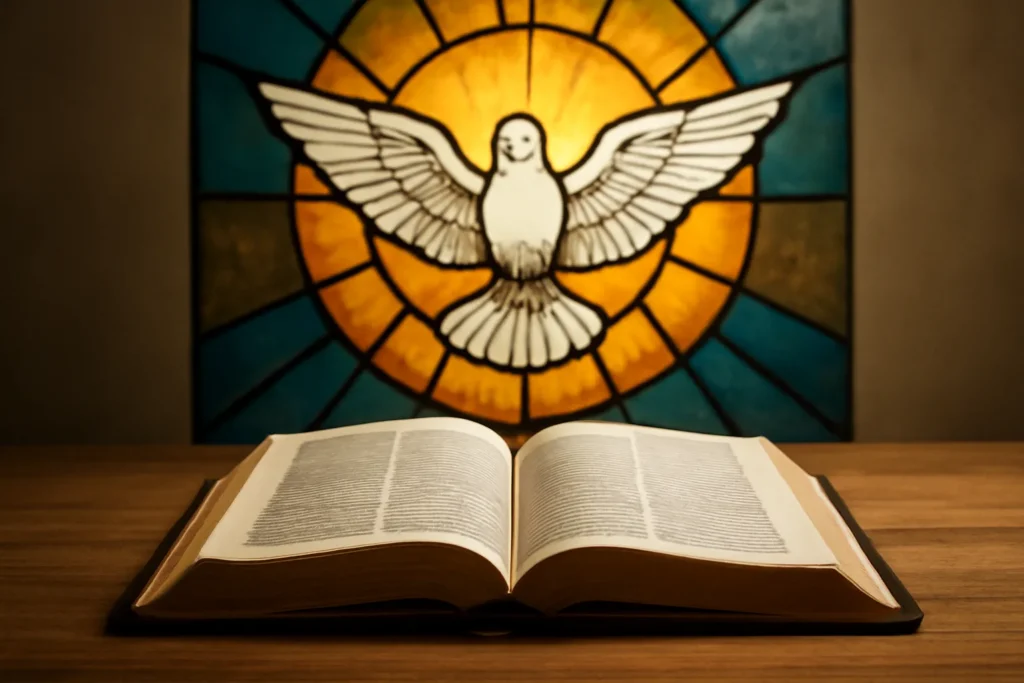
The relationship between the Bible and the Holy Spirit lies at the heart of Christian faith and practice. Across denominations and traditions, believers seek to understand how sacred writings come alive in the life of the church and in the heart of individual readers. This article offers an in-depth exploration of Scripture and the Spirit, their distinct roles, how they work together, and what this means for daily discipleship, teaching, and worship. It is designed to be informative for newcomers and helpful for seasoned readers who want a clearer map of how these two sources of divine revelation intersect in Christian belief.
When Christians speak of the Bible, they refer to a collection of sacred writings that has been gathered over centuries as the authoritative revelation of God. While popular usage often equates the Bible with a single book, the canonical Bible is best understood as a library of books written in different historical contexts, languages, and literary genres. The central claim behind the Scriptures is not merely that they contain good moral teachings, but that they are the inspired Word of God given to humanity for faith, life, and mission.
Key features of Sacred Scripture include:
Inspiration—the belief that God was at work through human authors to convey divine truth. This does not erase human personality or historical circumstance; rather, it affirms that God used human voices to deliver authentic revelation.
Authority—for many Christians, the Bible is the standard by which beliefs, teachings, and practices are measured. It guides doctrines, ethics, worship, and community life.
Canon—the recognized collection of writings considered authoritative for faith and practice. Different Christian traditions differ in their lists of books, especially in relation to the Old Testament/Apocrypha, but most trace a shared core that centers on the life and message of Jesus Christ.
Historicity—the biblical books come from specific times and places, and are often embedded in historical narratives, prophecies, poems, letters, and wisdom literature. Reading Scripture involves understanding these genres and the historical contexts in which they arose.
Scholars and faith communities emphasize that the Bible should be read in humility and with careful interpretation. The text can be understood differently depending on the reader’s tradition, linguistic study, and spiritual formation. Yet most Christians agree that the Bible testifies to the person and work of God, especially as revealed in Jesus Christ. The Bible, in all its parts, points toward God’s redemptive work in the world and invites readers into a response of faith, repentance, and love.
What is the Holy Spirit?
The Holy Spirit, also described as the Spirit of God, is the third person of the Trinity in mainstream Christian theology. The Spirit is not a mere force or an impersonal power; the Spirit is a personal, divine presence who interacts with creation, sanctifies believers, and empowers the church for mission. Different biblical images illuminate the Spirit’s work, including wind, breath, fire, and a counselor, advocate, and guide. The Spirit's activity is pervasive: in creation, in the life of Christ, and in the ongoing life of God’s people.
Conviction and conversion—the Spirit works to reveal human need, awaken faith, and draw people into a relationship with God.
Regeneration and transformation—the Spirit empowers new life within believers, enabling growth in holiness and conformity to Christ.
Sanctification—the Spirit helps believers to become increasingly like Jesus, bearing fruit such as love, joy, peace, and gentleness.
Gifting and empowerment for ministry—the Spirit distributes spiritual gifts to equip the church for service, proclamation, mercy, and leadership.
Guidance and discernment—the Spirit directs the people of God in decision-making, moral choices, and understanding of Scripture.
Communion and unity—the Spirit fosters fellowship within the body of Christ and cultivates unity among diverse communities of faith.
Presence—the Spirit’s indwelling presence makes God near to believers, offering comfort, strength, and encouragement in everyday life.
Throughout Christian history, the language about the Holy Spirit has varied in emphasis. Some traditions highlight the Spirit’s experiential gifts, such as prophetic utterances or miraculous signs; others emphasize personal transformation and ethical living as primary evidence of Spirit-work. Regardless of emphasis, most Christian streams affirm that the Spirit’s work is essential for reading, understanding, and applying Scripture within the life of the church and in the world.
How the Bible and the Spirit Interact
Many Christian thinkers describe a dynamic partnership between the Bible and the Spirit. The relationship is sometimes described in terms of revelation and illumination: God reveals truth through Scripture, and the Spirit helps readers perceive and apply that truth. This interaction can be understood in several interconnected ways:
Revelation through the Word—God’s planned communication comes to humanity primarily through the canonical writings. The Bible presents the narrative of salvation, the life of Jesus, and the call to faithful living.
Inspiration through the Spirit—the process by which human authors carried along by the Spirit produced writings that accurately express divine intention, while reflecting their own contexts and abilities.
Illumination by the Spirit—readers rely on the Spirit to interpret, understand, and apply what is read. Illumination helps readers see meanings that are beyond mere human analysis, highlighting spiritual significance and practical implication.
Guidance for discernment—the Spirit assists the church in discerning truth from error, guiding exegesis, doctrine, and ethical decision-making within community life.
In practice, readers approach the Scriptures with prayer and ask the Spirit for insight, humility, and a faithful response. This posture guards against a purely mechanical approach to the text and invites a living encounter with God through Scripture. The Spirit’s work is not opposed to reason or scholarship; rather, it presupposes thoughtful study, historical awareness, and responsible interpretation aimed at flourishing in God’s design.
Inspiration and Illumination
Two terms often used in discussions of Bible and Spirit are inspiration and illumination. Though related, they describe distinct moments in the interpretive process:
Inspiration refers to the divine influence that guided the human authors in producing the biblical texts. It secures the integrity of theological content while allowing stylistic diversity and historical setting to be preserved.
Illumination refers to the Spirit’s work with readers today. It enables comprehension, discernment, and application, helping readers connect ancient texts to contemporary life and moral choices.
Understanding both concepts helps Christians avoid two errors: treating the Bible as a purely human book with no divine shaping, and treating Scripture as an infallible, unchanging textbook that requires no ongoing interpretation or discernment. The healthy approach recognizes the Bible as a divinely inspired library that the Spirit continually helps the church interpret and apply across generations.
Historical and Theological Perspectives
Christian perspectives on the Bible and the Holy Spirit have developed over two millennia. This history includes debates about canonicity, inspiration, authority, and the functioning of spiritual gifts. While traditions differ in emphasis, several core themes are widely acknowledged across most Christian communities:
Canon and transmission—The process by which certain writings were recognized as authoritative continues to shape how communities read Scripture. The formation of the canon involved questions about apostolic witness, consistency with the faith once delivered, and widespread usage in worship.
Inspiration and authority—Most traditions affirm that the Word of God is authoritative for faith and practice because it is ultimately God’s message conveyed through human authors and guided by the Spirit.
Pneumatology—The study of the Spirit’s person and work, including how the Spirit relates to the Church, to Scripture, and to individual believers. Pneumatology has varied in emphasis—some streams emphasize spiritual gifts and experiential encounters, while others stress ethical transformation and guidance in daily life.
Ecclesial life and discernment—Within communities of faith, the Spirit’s guidance is often sought through prayer, liturgy, preaching, and shared discernment. This communal dimension is considered essential; interpretation is not merely an individual task but a corporate one as the church reads and applies Scripture together.
Historically, some traditions have emphasized inerrancy or infallibility of the Bible in matters of faith and practice, while others highlight inspiration and human responsibility to interpret faithfully. In contemporary discussions, many theologians propose a balanced view: Scripture is authoritative and trustworthy in guiding faith, but readers are called to interpret responsibly in light of the Spirit’s guidance, with attention to literary genres, historical context, and the broader witness of Scripture itself.
While this article is not a verse-by-verse Bible study, it is helpful to consider foundational passages that illuminate how Christians understand the relationship between the Bible and the Holy Spirit. Some central ideas include:
Scripture as breathed by God—Scripture is described as being breathed out by God, indicating divine sponsorship of the text and its ultimate authority for faith and practice.
Prophetic and apostolic witness—The Bible bears testimony to the life, death, and resurrection of Jesus and to the early church’s proclamation, which is regarded as trustworthy because it aligns with the Spirit’s leading.
Spirit-guided understanding—Readers are invited to rely on the Spirit for illumination, which means applying biblical truths in ways that honor God and serve neighbor.
Unity of Scripture and Spirit—Rather than viewing Scripture alone or Spirit alone, Christian tradition often speaks of a needed harmony where the Spirit works through the Word to form the church and guide life.
Some representative themes that appear across major Christian teachers and confessions include the following:
Jesus as the center of revelation—The Bible converges on the person and work of Christ, and the Spirit’s primary work often points believers toward Jesus and His mission.
Mission and proclamation—The Spirit empowers the church to bear witness to the gospel and to live out its implications in justice, mercy, and love.
Personal transformation—The Spirit works within individuals to produce fruits of the Spirit, shaping character and impulse toward God’s purposes.
Ethical living—Biblical instruction is not merely information but call to faithful living that honors God and serves others.
Practical Implications for Faith and Life
Understanding the synergy between the Bible and the Holy Spirit has practical consequences for how Christians read, study, worship, and live. Here are several practical implications to consider:
Prayerful reading—Approach the Scriptures with prayer, inviting the Spirit to illuminate truth, convict hearts, and encourage obedience. Prayer is not a mere preface; it is part of the reading process itself.
Community-based interpretation—Engage Scripture within a community of faith. Different perspectives can illuminate aspects of a passage that one person alone might miss, and the Spirit often works through communal discernment.
Holistic interpretation—Consider the literary genre, historical context, audience, and目的 of each biblical book. This helps avoid misinterpretation and fosters a faithful application to contemporary life.
Discernment of gifts and calling—Be attentive to spiritual gifts and callings, recognizing that the Spirit equips every believer for particular forms of service and witness within the body of Christ and the world.
Ethical formation—Let Scripture shape moral reasoning and behavioral choices, being open to correction by the Spirit when life diverges from the gospel’s call to love God and neighbor.
Worship and devotion—In worship, the Spirit fosters a posture of adoration, humility, and thanksgiving, aligning personal devotion with the witness of Scripture and the church’s tradition.
For anyone pursuing spiritual growth, a practical approach could include a rhythm of reading, reflection, prayer, and conversation with others, always held together by a trust in the Spirit to lead toward truth and a deeper love for God and neighbor.
Questions People Commonly Ask
Readers often have questions about how to navigate the relationship between the Bible and the Holy Spirit in daily life. Here are concise answers to some common queries, presented in a way that preserves the nuance of traditional Christian teaching while remaining accessible:
How do I know I’m interpreting Scripture correctly? Seek alignment with the core gospel, test ideas against the broader witness of Scripture, consult trustworthy teachers and resources, and pray for the Spirit’s illumination and discernment in community with others.
Can the Spirit contradict Scripture? Most orthodox Christian teaching holds that the Spirit does not contradict the Bible. If a perceived experience or prompting seems to diverge from Scripture, it warrants careful scrutiny, accountability, and re-examination of one’s understanding.
What about spiritual gifts? The Spirit distributes gifts for the common good. Practices regarding discernment, testing, and governance help ensure that gifts are used to build up the church and serve justice and mercy in the world.
Is personal experience with the Spirit enough, or is Scripture essential? The best approach honors both: personal experience that is tested by the Word and interpreted within the church, and Scripture that reveals the Spirit’s character and mission in Jesus.
Ultimately, the Christian life is shaped by the integrated work of the Bible and the Holy Spirit. The Scriptures provide a reliable, divinely oriented account of God’s redemptive plan, while the Spirit fosters faith, guides ethical living, and empowers the church for mission. Far from being a static, antiquated book, the Bible remains a living document through which God speaks to individuals and communities today, as the Spirit works to illuminate meaning, convict conscience, and generate obedience to Christ.
In practice, Christians believe that reading the Sacred Writings without the Spirit’s guidance can lead to cultural accommodation or legalism, whereas relying only on experiential signs without anchoring interpretation in Scripture risks subjectivism. The healthiest approach seeks a sustained dialogue between the two: a reverent, prayerful engagement with Scripture that is opened by the Spirit, so that God’s truth shapes thinking, worship, and everyday ethics. When readers engage in this partnership—through study, prayer, worship, and service—the Bible and the Holy Spirit work together to form a life that honors God, loves neighbor, and participates in God’s ongoing work of restoration in the world.
Whether you are a long-time student of theology or someone exploring the Christian faith for the first time, the synergy of the Bible and the Holy Spirit offers a framework for understanding who God is, what God has done in Jesus, and how God intends to live in and through human beings. It is an invitation to encounter the divine in a way that is both intellectually serious and deeply transformational—a call to read with integrity, pray with honesty, and live with compassionate courage in every sphere of life.








Leave a Reply