Manna — Biblical Meaning and Significance in Scripture
Manna — Biblical Meaning and Significance in Scripture
Bible Dictionary · elementos
Manna — Biblical Meaning and Significance in Scripture
elementos Manna
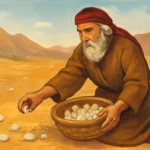
Manna is the miraculous food provided by God to the Israelites during their 40-year journey in the wilderness, as described in the Book of Exodus. It appeared each morning like flaky bread on the ground, offering sustenance for the people. Manna served as a divine sign of God's provision and faithfulness. It also prefigures spiritual nourishment provided through Jesus Christ in the New Testament.
The Hebrew word for manna is 'man,' which means 'what is it?' or 'what is this?' It was first used when the Israelites questioned what the food was that appeared on the ground (Exodus 16:15). The term reflects their initial bewilderment and the mysterious nature of God's provision. Over time, 'manna' has come to symbolize divine sustenance and God's miraculous care for His people.
Key Bible Verses
Exodus 16:15
The Israelites asked what this bread from heaven was, and God explained it was His daily provision for them.
This verse is key as it introduces manna and underscores God's direct provision for His people's needs.
Deuteronomy 8:3
Moses reminds the Israelites that God humbled them by allowing them to hunger and then feeding them with manna to teach dependence on Him.
It highlights the spiritual lesson of trusting God for daily provision and reliance on His care.
John 6:31-35
Jesus references manna as a type of spiritual nourishment, declaring Himself the true bread from heaven for eternal life.
This passage reveals the deeper spiritual significance of manna pointing to Christ as the ultimate source of life.
Theological Significance
Manna holds profound theological significance as a symbol of God's providence and faithfulness in Scripture. In the Old Testament, it prefigures God's provision through Jesus Christ, who is described as the bread of life in the New Testament. The manna represents God's grace sustaining His people physically and spiritually. It underscores the theme of dependence on divine provision rather than human effort. The concept of manna connects to the overarching narrative of salvation, emphasizing God's ongoing care and the promise of eternal sustenance through Christ.
Across Christian Traditions
Catholic traditions see manna as a miraculous sign of God's providence, with some Church teachings emphasizing its prefiguration of the Eucharist. Protestant perspectives often interpret manna as a symbol of God's daily provision and trustworthiness, focusing on God's grace. Orthodox Christianity venerates manna as a divine gift that foreshadows Christ, emphasizing its significance in liturgy and iconography. Evangelicals tend to view manna primarily as a biblical symbol of God's provision, reinforcing reliance on God's daily grace and the spiritual nourishment found in Christ.
Application in Christian Life
Christians can apply the concept of manna by trusting in God's daily provision for their needs and avoiding reliance on material wealth. It encourages daily prayer and dependence on God, recognizing Him as the true source of sustenance. Manna also reminds believers to seek spiritual nourishment through Scripture and prayer, much like how the Israelites depended daily on God's gift. Practically, this might mean trusting God during times of financial or emotional hardship, trusting that He will provide what is necessary each day.
The word 'manna' appears only a few times in the Bible but has inspired numerous artistic and cultural representations, symbolizing divine sustenance. Historically, some researchers suggest that manna might have been a natural excretion of insects or a resin, but the biblical account emphasizes its divine origin. This mysterious food continues to inspire theological reflection on God's care for His people.
Frequently Asked Questions
What does manna symbolize in the Bible?
Manna symbolizes God's provision, faithfulness, and the sustenance He offers both physically and spiritually, pointing to Christ as the true bread of life (John 6:35).
Is manna only a historical event or does it have spiritual meaning?
While it is a historical event, manna also has deep spiritual significance as a symbol of God's ongoing provision and His promise of eternal life through Jesus.
How is manna related to the Eucharist?
Manna is seen as a prefiguration of the Eucharist, representing God's spiritual nourishment, with Jesus referring to Himself as the true bread from heaven in the New Testament (John 6:51).