Revelation 2:17: The hidden manna and white stone explained
Revelation 2:17: The hidden manna and white stone explained
Have you ever wondered what Jesus means by the hidden manna, the white stone, and the “new name” in Revelation 2:17? The verse uses symbols rather than explaining everything directly, but its central message is clear: Christ sees faithful believers, sustains them spiritually, welcomes them personally, and promises a relationship known fully between the giver and the receiver.
Revelation 2:17 is addressed to the church in Pergamum, a congregation living under pressure to compromise its loyalty to Jesus. The promise is given to the person who “overcomes,” meaning the believer who remains faithful rather than surrendering to idolatry, immoral teaching, or fear. Each image adds another dimension to that promise.
Revelation 2:17 belongs to the message Jesus sends to the seven churches in Revelation 2–3. Before the promise appears, Jesus identifies himself as the one who has the sharp two-edged sword. That image points to his authority to judge, expose false teaching, and defend what is true.
Pergamum is portrayed as a place where Satan’s influence is especially evident. The church has remained attached to Jesus even when one of its members, Antipas, was killed for his faith. Yet the congregation also tolerates teachings associated with Balaam and the Nicolaitans, which encourage compromise with pagan worship and sexual immorality.
Revelation 2:17 therefore contains both a warning and a promise. Jesus calls the church to repent, but he also assures faithful believers that their true nourishment, identity, and acceptance come from him rather than from the surrounding culture.
Central idea: Revelation 2:17 is not mainly a puzzle about objects. It is a promise that Jesus gives hidden spiritual nourishment and personal belonging to those who remain faithful to him.
How the three promises in Revelation 2:17 fit together
The verse presents three connected gifts: hidden manna, a white stone, and a new name written on that stone. Christians have proposed several explanations for each image, and no single interpretation is accepted by every reader. The safest approach is to begin with what the symbols communicate together.
Hidden manna points to nourishment and provision from God.
The white stone suggests acceptance, acquittal, honor, or entrance into a privileged relationship.
The new name points to personal identity and belonging known fully to Christ and the believer.
These promises answer pressures faced by the church in Pergamum. Believers who refused pagan feasts could lose social connection and economic opportunities. Those who rejected public religious loyalty could appear disloyal or strange to their neighbors. Jesus promises that what they give up for him will not be their final loss.
What the hidden manna means in Revelation 2:17
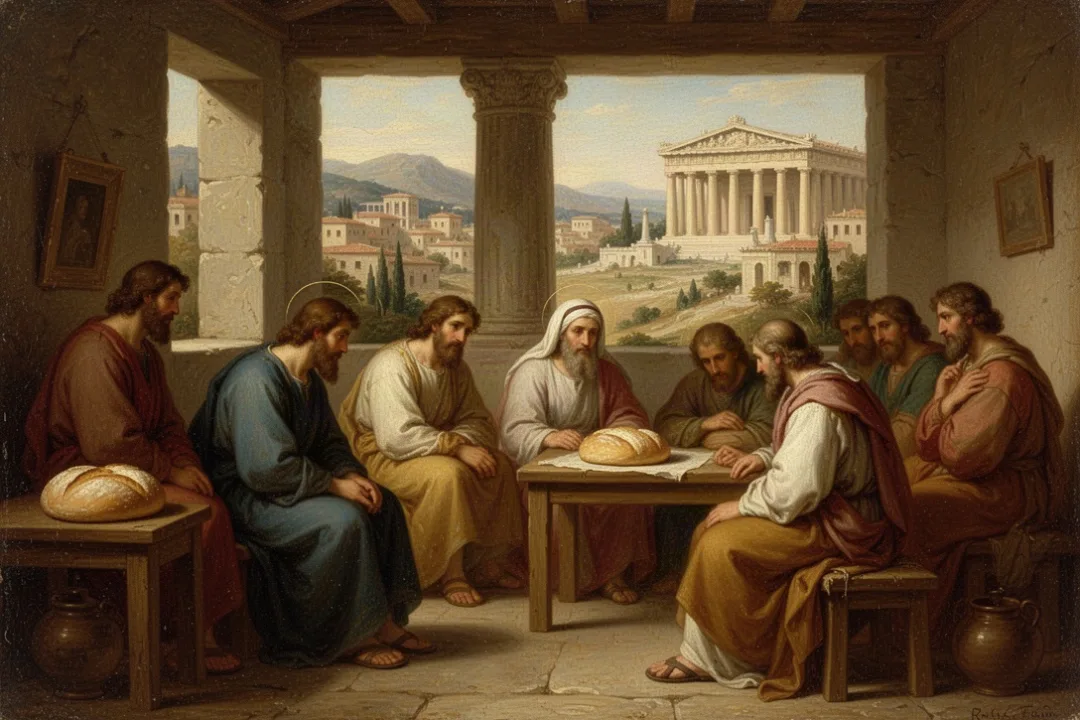
Manna recalls the food God provided for Israel during its wilderness journey. According to Exodus, the Israelites depended on God for daily sustenance after leaving Egypt. The manna showed that the nation’s survival did not ultimately depend on the land, its military strength, or human supply chains.
By calling it “hidden manna,” Revelation 2:17 emphasizes that the provision comes from God’s unseen realm. It is not ordinary food that can be purchased, displayed, or distributed by a political or religious institution. It represents a gift accessible through Christ, even when the world cannot recognize its value.
The image may also connect with the manna preserved in a sacred container. Hebrews 9 refers to manna kept with other items associated with Israel’s worship, while Exodus 16 describes God’s instruction to preserve a portion as a reminder of his provision. Revelation does not spell out that connection, but the biblical background makes the symbol especially meaningful.
Why manna matters to believers under pressure
The church in Pergamum lived among competing religious practices. Pagan meals could carry religious meaning, and participation might be treated as ordinary social behavior even when it involved devotion to false gods. Refusing those practices could leave Christians feeling excluded.
Jesus responds with a better meal: food from God, not participation in idolatrous worship. The hidden manna says that believers do not need to accept spiritual compromise in order to be fed, included, or secure.
The promise is spiritual rather than a guarantee of constant material comfort. Faithful Christians can still experience hunger, poverty, illness, or persecution. Revelation 2:17 assures them that Christ himself is their lasting source of life and that God’s provision is more real than the temporary benefits offered by compromise.
This meaning fits Jesus’ teaching in John 6, where he presents himself as the bread of life. Revelation 2:17 does not repeat that teaching word for word, but both passages direct attention away from temporary satisfaction and toward life received from Christ.
What the white stone may represent
The white stone is the most debated image in the verse. In the ancient world, small stones could be used in several settings, including legal decisions, voting, admission, identification, or tokens of recognition. Because the same kind of object might serve different purposes, readers should be cautious about treating one proposed background as certain.
Several interpretations are especially common:
A sign of acquittal: In some legal contexts, a light-colored stone has been associated with a favorable verdict, while a dark stone represented condemnation. On this reading, Jesus promises acceptance rather than judgment.
A token of admission: A stone might function as a kind of pass or invitation. This interpretation presents the believer as welcomed into God’s presence and community.
A symbol of honor: The stone may represent public approval or a reward granted by a judge or ruler. Jesus gives his faithful people an honor that outweighs the world’s verdict.
A personal identification token: The stone may signify belonging to Christ in a personal, distinctive way, especially because it carries a name known only to the recipient.
These possibilities overlap. A white stone bearing a new name can communicate that the believer is accepted, recognized, and welcomed. The verse does not require you to choose only one of these ideas if the broader meaning remains anchored in Christ’s promise.
Interpretive caution: The Bible does not provide enough information to identify the white stone with certainty as one specific ancient object. Its meaning should be drawn from the verse’s surrounding themes of faithfulness, reward, belonging, and personal recognition.
Why the stone is white
White is a significant symbolic color throughout Revelation. It is associated with purity, victory, glory, and belonging to God’s redeemed people. White clothing appears in the promises to other churches, and white imagery surrounds heavenly worship and the triumph of Christ.
In Revelation 2:17, the color likely strengthens the idea that the recipient has been cleansed and approved. The believer does not receive a stone marked by disgrace or exclusion. The white stone reflects the gracious standing Christ gives to those who remain loyal to him.
That promise does not mean faithful Christians never sin or need repentance. The preceding message to Pergamum includes a call to turn away from wrong teaching and conduct. The whiteness of the stone points to Christ’s gracious acceptance, not to human perfection achieved without mercy.
What the new name means
The final image is a new name written on the stone. Names in Scripture often communicate identity, calling, relationship, or destiny. A changed name can mark a new stage in a person’s relationship with God, as seen in biblical accounts involving Abram, Jacob, and Simon, although Revelation 2:17 does not explain the new name by referring directly to any one of those stories.
The promise suggests that Christ gives the faithful believer an identity deeper than the labels imposed by society. In Pergamum, Christians could be called foolish, disloyal, dangerous, or socially disruptive because they refused pagan practices. Jesus promises a name that comes from him instead.
Why only the recipient knows the name
The verse says that no one knows the new name except the one who receives it. This does not necessarily mean the believer becomes secretive or isolated. Rather, it highlights the personal nature of the relationship between Christ and the believer.
Some aspects of faith are shared publicly: Christians belong to the church, confess Jesus, and live under his teaching. Other aspects are intimate and cannot be fully explained to outsiders. The new name represents a personal knowledge and acceptance that no opponent, crowd, or social authority can take away.
The wording may also indicate that the name is not merely a new label visible to everyone. It is a gift whose full meaning is known by the giver and receiver. Christ knows the believer completely, and he gives a new identity grounded in that knowledge.
Who is the person who overcomes?
Revelation repeatedly uses the phrase “the one who overcomes” in its messages to the churches. In this setting, overcoming does not mean gaining political control, becoming wealthy, or avoiding every hardship. It means remaining faithful to Jesus when pressure encourages compromise.
The church in Pergamum already has an example of this endurance in Antipas, whom Jesus calls his faithful witness. At the same time, the church has tolerated beliefs and behaviors that undermine loyalty to God. The promise in verse 17 is directed to those who respond faithfully rather than simply assuming that belonging to a congregation is enough.
Overcoming can include several forms of faithfulness:
Rejecting worship practices that contradict devotion to God.
Refusing teachings that excuse sexual immorality or idolatry.
Remaining loyal to Jesus when that loyalty costs social approval.
Repenting when you have compromised rather than defending the compromise.
Continuing in faithful obedience even when the reward is not immediately visible.
The emphasis is not on earning salvation through heroic performance. Revelation presents victory as something believers share through their relationship with the victorious Christ. Faithfulness matters because it reveals where a person’s allegiance rests, while the promised reward remains an expression of Christ’s grace.
How Revelation 2:17 connects with the rest of Revelation
The symbols in Revelation 2:17 become clearer when read alongside other promises in the book. The later promise of a new name appears in Revelation 3:12, where Jesus speaks of God’s name, the name of the new Jerusalem, and his own new name being written on the faithful believer. That passage reinforces the themes of belonging and permanent citizenship.
Revelation 19:12 describes Christ with a name known only to himself. The wording is not identical to Revelation 2:17, but both passages show that names can express a depth of identity or knowledge beyond public observation.
Revelation 21–22 develops the hope of God dwelling with his people. The final chapters describe a restored creation, the presence of God and the Lamb, and servants bearing God’s name. These later scenes support the idea that the white stone and new name anticipate a permanent relationship with God.
The hidden manna also fits the Bible’s larger pattern of God providing life in places where human resources fail. Israel received manna in the wilderness, Jesus identifies himself as the bread of life, and Revelation promises divine nourishment to those who refuse spiritual compromise.
What Revelation 2:17 does not mean
Because the verse uses vivid symbols, it is easy to make claims that go beyond what the text says. A careful reading avoids several common misunderstandings.
It does not promise secret information for curiosity’s sake. The hidden aspect of the manna points to divine provision, not a code that unlocks hidden predictions.
It does not say believers receive a magical object. The stone is part of apocalyptic symbolism and communicates acceptance, identity, and reward.
It does not teach that Christians earn God’s love by never failing. The promise appears within a call to repentance and depends on Christ’s grace.
It does not guarantee an easy life. The church receives this promise in a setting marked by pressure, false teaching, and persecution.
It does not mean every believer must discover a secret personal word. The new name represents Christ’s personal knowledge and gift, not a method for finding a private prophecy.
These boundaries protect the verse from becoming either vague encouragement or speculative symbolism. Its message is strong enough without adding details Scripture does not provide.
How to apply Revelation 2:17 to daily faith
The verse speaks to ordinary decisions as much as to dramatic persecution. Modern believers may not face the same religious environment as Pergamum, but pressure to compromise can still arise through work, relationships, entertainment, politics, social expectations, or financial interests.
Start by asking what kind of “food” you are accepting. Are you depending on approval, status, pleasure, or success to make you feel secure? Those things may have a legitimate place, but they cannot sustain the soul. The hidden manna directs you back to Christ as your deepest source of life.
Then consider which voices define your identity. Public opinion can change quickly, and people may reduce you to your failures, affiliations, background, or usefulness. The new name reminds you that your most lasting identity is received from Christ rather than negotiated with every audience.
Finally, examine areas where loyalty has become divided. Pergamum’s problem was not that its members had never shown courage. They had endured suffering, yet they tolerated teaching that made compromise seem acceptable. Faithfulness includes both standing firm under pressure and correcting beliefs or practices that draw you away from Jesus.
A practical way to reflect on the verse
Identify the pressure. Name the situation in which you feel pushed to compromise your convictions.
Separate need from temptation. Ask whether the compromise promises approval, security, pleasure, money, or belonging.
Return to Christ’s provision. Pray for the spiritual nourishment and courage represented by the hidden manna.
Receive your identity from Jesus. Do not let the surrounding culture give the final verdict about your worth.
Choose a faithful action. This may involve repentance, an honest conversation, a boundary, or quiet perseverance.
Stay connected to wise believers. Personal faith is intimate, but Christian endurance is strengthened within a faithful community.
This practice keeps the verse from becoming merely an interesting symbol. The promise becomes a source of discernment when you must decide whether temporary acceptance is worth spiritual compromise.
How different Christian traditions read the passage
Christian interpreters generally agree that Revelation 2:17 promises a reward from Christ to faithful believers, but they may explain the details differently. Some emphasize the white stone as a sign of acquittal before God. Others stress entrance into a heavenly banquet or the privilege of belonging to Christ.
Some readers connect the hidden manna with the Eucharist or Communion because both involve nourishment associated with Christ. Others understand the manna more broadly as eternal life and spiritual sustenance. The text clearly supports divine provision, while more specific sacramental conclusions depend on a reader’s wider theological tradition.
Interpretations of the new name also vary. It may represent a transformed character, a unique calling, a private relationship with Christ, or full participation in the life of the coming kingdom. These ideas need not be mutually exclusive. The common thread is that Christ gives an identity and belonging that cannot be defined by hostile surroundings.
When studying the verse, compare interpretations by asking whether they respect the immediate context, the symbolism of Revelation, and the Bible’s wider teaching. Strong interpretations explain the promise without claiming certainty where the text leaves room for mystery.
Why Revelation 2:17 still speaks to the church
Revelation 2:17 addresses a recurring tension in Christian life: the desire to belong while remaining faithful. A church can show courage in one area and still tolerate compromise in another. It can resist open persecution yet quietly absorb values that conflict with its worship.
Jesus does not overlook either reality. He commends perseverance, confronts error, calls for repentance, and gives a promise. That combination shows that correction is not the opposite of love. Christ warns the church because he intends to preserve its relationship with him.
The hidden manna says that obedience will not leave faithful believers spiritually abandoned. The white stone says that Christ’s verdict is more important than the world’s approval. The new name says that he knows his people personally and gives them an identity that reaches beyond present circumstances.
For a reader facing pressure today, Revelation 2:17 offers a steady question: Whose approval, provision, and definition of your life will you trust? The verse directs the answer toward Jesus, whose gifts are hidden from the world for now but secure in the presence of God.
Frequently asked questions
What is the hidden manna in Revelation 2:17?
The hidden manna symbolizes spiritual nourishment and life provided by God through Christ. It recalls the manna God gave Israel in the wilderness and contrasts with food connected to pagan worship in Pergamum. The image does not necessarily describe literal food; it promises that faithful believers receive sustenance that the surrounding world cannot provide or fully understand.
What does the white stone mean in Revelation 2:17?
The white stone may symbolize acceptance, acquittal, honor, admission, or personal belonging. Ancient stones could be used in several settings, so the exact background is uncertain. Its white color and the name written on it together suggest that Christ gives the faithful believer a favorable standing and a personal token of relationship with him.
What is the new name in Revelation 2:17?
Scripture does not reveal the specific name. The new name represents a personal identity and relationship given by Christ to the believer who overcomes. Since only the recipient knows it, the image emphasizes intimate recognition rather than public status. It may also point to transformed identity and belonging in God’s future kingdom.
Who is the one who overcomes in Revelation 2:17?
The one who overcomes is the believer who remains loyal to Jesus despite pressure, false teaching, suffering, or temptation to compromise. Overcoming does not mean living without weakness or hardship. In the message to Pergamum, it especially involves rejecting idolatrous practices and teachings while continuing to trust Christ and respond to his call to repent.









Leave a Reply