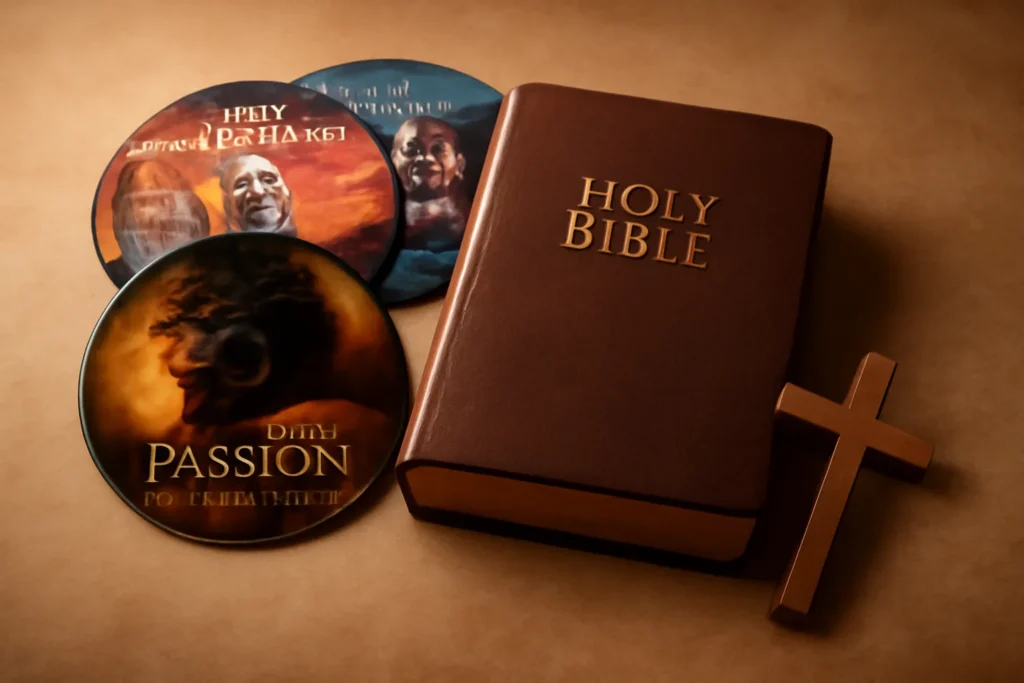
Bible Movies Collection: Top Christian Films and Classics
A well-rounded bible movies collection serves as both a window into
sacred stories and a mirror for how cinema interprets faith, history, and
culture. Whether you are a lifelong student of biblical cinema, a pastor-curator
assembling media for a church library, a teacher seeking classroom-friendly
media, or simply a movie lover interested in the spiritual dimension of film, this
guide offers a thoughtful, widely varied overview of biblical cinema:
from era-defining epics and animated retellings to contemporary faith dramas and
documentary-style explorations. In the following sections, you’ll encounter a
curated spectrum of titles—each chosen for its artistic craft, fidelity to source
material, and potential to spark discussion or illumination within a group setting.
The scope of a bible movie collection is larger than one single genre.
It spans grand operatic epics, intimate character studies, family-friendly
animations, and sober documentary inquiries. In this article we’ll refer to bible movie collections as an evolving catalog: a living
anthology of “biblical cinema” that can be explored by era, by tone (epic,
drama, documentary, animation), or by the specific biblical narrative (exodus,
gospels, psalms, and more). To help with navigation, you’ll see variations of the phrase
bible movies collection sprinkled throughout the text, so the
concept remains semantically rich for readers who search with different terms.
What defines a Bible movie?
Before we dive into lists, it’s helpful to establish a working definition. A bible movie is any film—feature-length or limited-series—that centers
on narratives derived from the Bible or scriptures shared within Christian, Jewish, or
broadly biblical traditions. These films can be retellings of canonical stories (for
example, Moses and the Exodus, the life of Jesus, or the apostles), or they can be
dramatizations that explore moral, theological, or historical themes drawn from
biblical sources. Some entries in this catalog are overtly religious in intent; others
braid spiritual inquiry with cinematic spectacle, historical recreation, or moral
inquiry.
In many cases, a single film is a gateway to broader questions about faith, culture,
and art. A biblical epic may showcase spectacular production design and
a sweeping score, inviting contemplation of its era and the audience it sought to
reach. A smaller-scale drama, meanwhile, may offer a pointed meditation on personal
conversion, faith under pressure, or the social dimensions of a biblical narrative.
The breadth of this collection reflects that diversity: adventure and
awe alongside quiet exploration and educational storytelling.
Categories in this collection: a roadmap for your Bible movie journey
Classic epics and mid-20th-century milestones
The mid-century period produced several enduring biblical epics whose production values,
music, and visual invention left a lasting imprint on the language of cinema. These films
combine historical scope with mythic storytelling, and they often introduced generations
to biblical narratives through widescreen spectacles, memorable performances, and iconic
scenes.
The Ten Commandments (1956) — A towering Cecil B. DeMille achievement that remains
a blueprint for large-scale religious cinema. The film dramatizes the life of Moses, the
parting of the Red Sea, and the giving of the Laws. Its lush production design,
grand set pieces, and enduring lines make it a touchstone for the genre.
Ben-Hur (1959) — A sweeping historical epic rooted in biblical-era context,
exploring faith, forgiveness, and redemption against the backdrop of ancient Rome. The
famous chariot race remains one of cinema’s most cited action sequences.
King of Kings (1961) — A retelling of Jesus’s life framed as a sweeping
historical epic, notable for its production scale and a classic, authoritative tone.
The Greatest Story Ever Told (1965) — An ambitious ensemble drama that
stitches together the life of Jesus with a broad, cinematic sweep, inviting broad
audiences into the Gospel narrative through grand tableaux and sweeping cinematography.
The Gospel According to St. Matthew (1964) — Pier Paolo Pasolini’s austere,
artful retelling of the life of Jesus, renowned for its neorealist textures and insistence
on human detail over spectacle.
These canonical titles may feel different in mood and approach, but they share a common
thread: a desire to translate sacred texts into a language the cinema can read in
a single sitting, often with a reverence for the source material that invites ongoing
reflection.
Animated and family-friendly retellings
For families and younger viewers, animated features and kid-friendly adaptations offer
an accessible entry into biblical narratives while preserving core themes such as faith,
courage, and mercy. Animation sometimes allows for expressive creativity in depicting
miracles, wilderness journeys, and the wonder of sacred stories without compromising
the moral center of the tale.
The Prince of Egypt (1998) — A landmark animated musical from DreamWorks
that presents the life of Moses with a powerful score, lush visuals, and a humanizing
portrayal of the character’s doubts and faith. Its appeal spans generations and
remains a popular choice for schools and families.
Joseph: King of Dreams (2000) — A direct-to-video animated feature that
revisits the biblical narrative of Joseph, dreams, and resilience with accessible storytelling
and memorable songs.
The Nativity Story (2006) — While live-action, this film is crafted
with an intimate, family-focused lens that helps younger audiences connect with the
Christmas story in a grounded manner.
In addition to these, other animated or family-friendly entries appear in broader
compilations or streaming catalogs, often used in church groups or home viewing
environments where accessible language and clear moral messaging are valued.
Modern dramas and faith-centered contemporary cinema
The turn of the 21st century brought a wave of modern biblical dramas that sought
to connect ancient stories with current questions about faith, doubt, history, and
humanity. These films tend to emphasize character-driven arcs and moral stakes, often
interweaving psychological realism with high production quality.
The Passion of the Christ (2004) — A provocative, medically intense
portrayal of the final hours of Jesus, directed by Mel Gibson. Its visceral approach
sparked broad discussion about violence, sacrifice, and theology, while influencing
subsequent religious cinema in its bold directness.
Son of God (2014) — A more streamlined adaptation drawn from The Bible
miniseries, offering a compact retelling of Jesus’s life suitable for broader audiences.
Exodus: Gods and Kings (2014) — Ridley Scott’s visual spectacle on
Moses’s leadership, the plagues, and the deliverance of the Israelites, notable for its
ambitious production design and reinterpretation of familiar moments.
Risen (2016) — A fresh point of view from the Roman perspective that follows
a soldier investigating the disappearance of Jesus after the crucifixion, blending mystery
with gospel themes.
Paul, Apostle of Christ (2018) — A biographical drama focusing on Paul’s
mission and writings in the later years of the early church, often used in group studies
for its emphasis on faith under pressure and mission work.
Mary Magdalene (2018) — A character-led retelling that foregrounds
Mary’s perspective within the Gospel narrative, inviting reflection on women’s roles in
biblical history and the early Christian movement.
The Nativity Story (2006) — While placed here again for emphasis on
its modern production values, its focus on humility, hope, and the meaning of Christmas
makes it a staple in many contemporary home libraries and church budgets.
Documentaries, miniseries, and educational explorations
For viewers who prefer a documentary tone or a pedagogical approach, the Bible has inspired
several high-quality miniseries and documentary-style projects. These works often blend
scholarly inquiry with accessible storytelling, providing context, archaeology, and
textual analysis alongside narrative arcs.
The Bible (2013) — A television miniseries produced by Roma Downey and Mark Burnett
that dramatizes key biblical events across both Old and New Testaments, featuring
contemporary production values and broad audience appeal. It’s often used in classroom
or community settings to introduce the biblical narrative in a coherent arc.
Patterns of Evidence: Exodus (2014) — A documentary-style inquiry into the
historicity and archaeological questions surrounding the Exodus narrative, inviting viewers
to compare biblical text with historical and archaeological evidence.
In the Beginning (1966) — A John Huston-directed exploration of Genesis,
presenting a cinematic meditation on creation, fall, and human vocation through a dramatic lens.
These entries demonstrate that a Bible-themed collection isn’t limited to traditional
storytelling. It can also function as a curated learning resource, blending faith
formation with historical inquiry and critical discussion. When used in church education,
a miniseries or documentary-style film can anchor a study with visually compelling
material and accessible entry points for conversation.
How to build your own Bible movie collection
Whether you’re starting from scratch or expanding an existing archive, assembling a
thoughtful bible movies collection involves criteria beyond simple
preference. The goal is to balance artistic quality, spiritual resonance, historical
breadth, and accessibility. Here are practical steps to consider as you curate your
library.
Define your scope — Decide whether your collection emphasizes
canonical stories (Exodus, Jesus’s life, Acts), thematic arcs (faith and doubt, martyrdom,
redemption), or a mix of epics, dramas, animations, and documentaries. A clear scope
helps with consistency and makes your library more usable for teaching or discussion.
Assess formats and availability — Consider the formats you’ll support
(DVD/Blu-ray, 4K, streaming, digital rentals/purchases). Some classic titles remain
best experienced on Blu-ray for their image quality, while modern productions live
primarily on streaming platforms or digital rental services. Build a catalog that
acknowledges both physical and digital access.
Curate by era and tone — Organize the collection into sections such as
"Classic Epics," "Animated & Family-Friendly," "Modern Dramas," and "Documentaries." A
well-structured layout makes it easier for viewers to select titles based on occasion and mood.
Annotate with context — For each film, include a short note about
its background, production values, themes, and potential discussion questions. This adds
value for study groups, classrooms, or church libraries.
Consider accessibility and inclusivity — Provide guidance on rating
suitability, language complexity, cultural context, and content advisories. A thoughtful
catalog helps diverse audiences engage with the material responsibly.
Plan viewing sessions — Pair films with discussion prompts, study guides,
or supplementary readings. A “movie night” that includes context and reflection often
deepens engagement and helps audiences connect the narrative to contemporary life.
Regularly refresh the collection — Add new titles and revisit older favorites
as streaming catalogs change. A dynamic collection keeps interest alive and allows for
ongoing dialogue about evolving cinematic portrayals of biblical themes.
Top picks for a balanced Bible movies collection
The following list offers a practical cross-section of titles that many libraries, churches,
and families find valuable. The entries are grouped by type to illustrate the breadth of the bible movie collection and the variety of storytelling approaches.
The Ten Commandments (1956) — A landmark epic with monumental scope, ideal for
study of film craft and mythic storytelling in cinema history.
Ben-Hur (1959) — A towering example of the mid-century biblical epic, with a
lasting legacy in action and spiritual narrative.
King of Kings (1961) — A traditional retelling of Jesus’s life, noted for its
historical textures and grand scale.
The Greatest Story Ever Told (1965) — An expansive, ensemble-driven
meditation on the Gospel narrative.
The Gospel According to St. Matthew (1964) — Pasolini’s stark, humanizing
approach to the life of Jesus that emphasizes realism and ethical reflection.
The Prince of Egypt (1998) — A musical, family-friendly reimagining of Moses’s
journey that blends emotional storytelling with robust visual design.
Joseph: King of Dreams (2000) — A companion animated feature that explores
faith, resilience, and providence through Joseph’s arc.
The Nativity Story (2006) — A grounded portrayal of Mary, Joseph, and the birth
of Jesus that appeals to modern family viewing while honoring sacred themes.
The Passion of the Christ (2004) — A polarizing, intensely crafted portrayal of
Jesus’s crucifixion that sparked widespread discussion about sacrifice, faith, and the visual
grammar of suffering.
Son of God (2014) — A more compact retelling designed for broad accessibility
and cross-cultural reach, highlighting Jesus’s ministry through a contemporary lens.
Exodus: Gods and Kings (2014) — A visually ambitious Moses story with sweeping
tableaux and modern special effects, useful for those who enjoy spectacle alongside
scriptural drama.
Risen (2016) — A detective-noir approach to the Easter story from a Roman officer’s
perspective, offering a fresh narrative angle on a familiar tale.
Paul, Apostle of Christ (2018) — A strong character study of Paul’s later years and his
missionary work, framed to highlight themes of faith, perseverance, and ministry.
Mary Magdalene (2018) — A human-centered portrait of Mary in early Christian history
that invites reconsideration of familiar biblical figures through a female lens.
The Bible (2013) — A modern miniseries blending dramatized biblical events with
large-scale production, suitable for group viewing and discussion.
Streaming, libraries, and responsible viewing
In today’s media environment, access to bible movie collections often
involves a mix of streaming platforms, digital purchases, and physical media. For a
church library or school, a careful approach to licensing, age-appropriateness, and
study aids is essential. If you curate a personal collection, you might prioritize
titles that align with your denomination, your group’s interests, or your teaching
themes—while keeping a few universally acclaimed works that have stood the test of
time for broad audiences.
A thriving collection isn’t only about accumulating titles; it’s about enabling
meaningful experiences. After viewing, consider offering guided discussion, sermon
prompts, or youth-group activities that connect cinematic depictions with scriptural
passages. For example, after watching a film about Moses, you might explore the biblical
text of Exodus alongside questions about leadership, obedience, and divine call. After
watching a gospel-era story, you could compare the portrayal with the actual gospel
accounts in the New Testament, encouraging viewers to notice differences in tone,
emphasis, and narrative focus.
Closing thoughts: why a Bible film collection matters
A well-crafted bible movies collection does more than entertain. It
offers a cultural archive of how communities across time have understood sacred
stories, moral dilemmas, and the human encounter with the divine. Cinema—at its best—
can illuminate ancient narratives with contemporary emotion, making timeless themes
accessible to new generations. Whether you seek a grand cinematic epic, a thoughtful
documentary, or an animated retelling that’s appropriate for families, the catalog
discussed above demonstrates how biblical cinema continues to evolve
while remaining deeply connected to its roots.










Leave a Reply