Case for Faith Movie: An In-Depth Review, Themes, and Verdict
Case for Faith Movie: An In-Depth Review, Themes, and Verdict
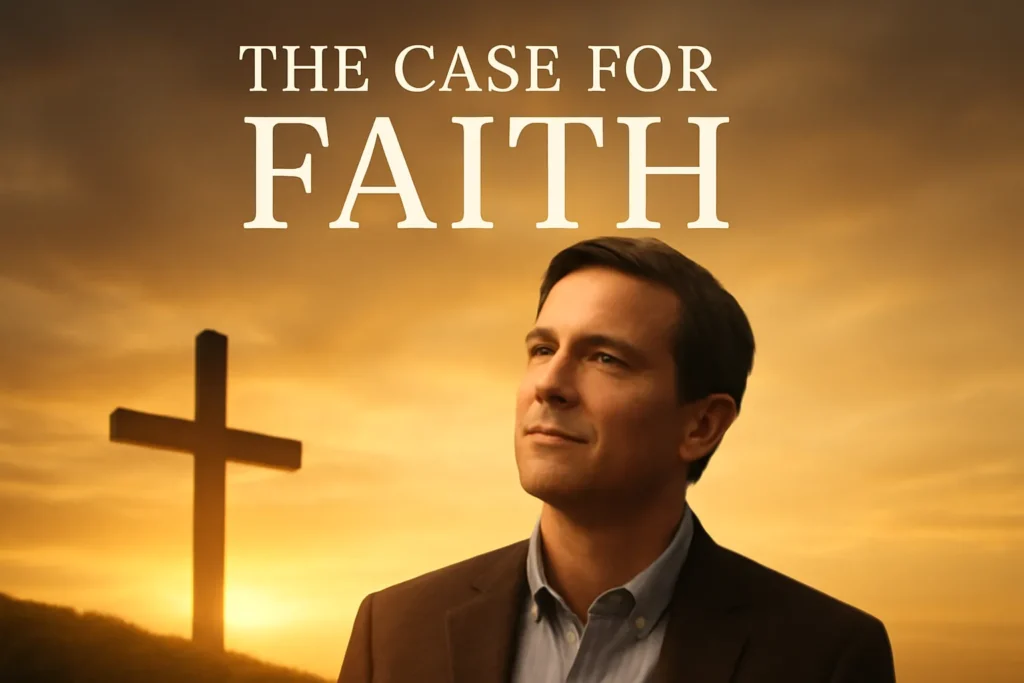
The Case for Faith Movie—also seen as the case for faith film by some viewers—presents a cinematic exploration of enduring questions about belief, doubt, and the role of reason in religious life. This article offers an in-depth review of the movie, delving into its narrative structure, thematic content, production choices, and the broader impact it seeks to have on audiences across faiths and skeptics alike. Whether you encountered the work under the title Case for Faith Movie, the Case for Faith film, or simply as a documentary on faith and apologetics, the following analysis aims to carve out a clear landscape of what the film attempts to accomplish and how successfully it achieves those aims.
The Case for Faith Movie is often framed as a cinematic companion to the broader conversation initiated by apologetics and interfaith dialogue. It tends to position itself as a bridge between two impulses that drive many viewers: the hunger for evidence and the longing for meaning. In varied releases and marketing materials, the film is described in ways that highlight its strategic stance: it does not insist on certainty, but it does insist on plausible, coherent arguments presented in accessible language. Viewers should expect a combination of debate-style segments, interview-style conversations, and guided reflections on personal experience.
Narrative and Structure: How the Case for Faith Movie Builds Its Argument
Format and Approach
At its core, the Case for Faith Movie adopts a dialogic approach to discussing faith. Rather than presenting a single point of view, it often juxtaposes perspectives from theologians, philosophers, scientists, and laypeople. This plurality is designed to echo the book’s intent (in many audiences’ awareness) to examine faith from multiple angles:
Academic perspectives that emphasize historical evidence, textual integrity, and philosophical reasoning.
Personal testimonies that foreground lived experience, moral formation, and the sense of wonder that accompanies belief.
Critical perspectives that challenge assumptions and invite viewers to scrutinize arguments with nuance.
Cultural analysis that situates faith within broader social and historical contexts.
As a result, the movie frequently oscillates between explanation and engagement, moving from abstract claims to concrete examples. This structure mirrors an ongoing conversation rather than a lecture, which can be especially appealing to viewers who prefer a feel of intellectual honesty over certainty or polemics.
Key Segments and Pacing
While the exact sequence can vary across releases, several common segments tend to recur in the film’s pacing:
Opening framing that establishes the questions at stake (e.g., the existence of God, the credibility of religious claims).
Historical and philosophical context that reviews major arguments for and against faith from different eras.
Dialogue-driven interviews with scholars and practitioners who present divergent interpretations.
Case studies or narrative vignettes illustrating how belief operates in real life.
Conclusion segments that invite ongoing reflection rather than closure.
Themes Explored in the Case for Faith Movie
Several intertwined themes emerge as central threads in the film. The following sections highlight core ideas and the ways the movie approaches them.
Doubt and belief: The film treats doubt not as a failure of faith but as a catalyst for deeper understanding, urging viewers to distinguish between epistemic doubt and existential despair.
Reason and revelation: A recurring question is how to balance empirical evidence with transcendent experience, and whether they are mutually exclusive or mutually informative.
Evidence and interpretation: The movie emphasizes that evidence often requires interpretation, and that two people may view the same data through different lenses.
Historicity and tradition: Historical claims about religious events or figures are examined with attention to sources, preservation, and scholarly debate.
Practical faith: The film frequently returns to how beliefs translate into action—ethics, care for others, and community life.
Other salient themes include the role of moral imagination in religious life, the significance of hope as a motive force for belief, and the ways in which faith communities interpret suffering and meaning in a complex world. The film’s handling of these themes tends to blend philosophical inquiry with accessible storytelling, aiming to reach both seasoned readers of apologetics and casual viewers seeking substantive conversation.
Character and Voice: Thematic Resonance
In a film that relies heavily on interviews and testimonials, the way voices are curated matters. Watchful viewers notice how some speakers foreground crisp logical reasoning, while others foreground personal transformation. The tone of voice often signals how the movie intends you to weigh a claim: as a rigorous, testable hypothesis or as a meaningful personal narrative that invites empathy and reflection. This dynamic can be instructive for audiences learning to navigate similar conversations in real life.
Philosophical and Theological Underpinnings
Beyond the surface-level debate, the Case for Faith Movie engages with a constellation of philosophical and theological ideas. The following subsections summarize the film’s engagement with those ideas and how they shape the overall argument.
Apologetics and Counterarguments
Apologetics—the practice of defending a position through reasoned arguments—plays a prominent role in the film. The movie tends to present a spectrum of apologetic approaches, ranging from classical arguments for theism to contemporary evidential and moral arguments. In doing so, it also presents counterarguments in a measured way, inviting the viewer to evaluate the strength of each claim. Key features include:
Cosmological considerations about why anything exists at all and why a reasoned universe might be intelligible to human minds.
Fine-tuning discussions that explore whether the physical constants of the universe point toward design or naturalistic explanations.
Moral arguments that inquire whether objective moral values require a grounding in a transcendent source.
Historical case studies that examine the reliability of religious texts, the plausibility of miracles, and the growth of religious communities.
Crucially, the film does not present these arguments as dogmatic proofs. Instead, it often frames them as probative—reasoned attempts to weigh plausible explanations under uncertainty. This approach is aligned with a broader trend in contemporary apologetics that seeks to be intellectually credible without sacrificing accessibility.
Truth, Faith, and Privilege
The movie sometimes raises questions about the epistemic status of faith itself. Some sections treat faith as a constructiveCredo—an existential commitment that is not reducible to empirical data alone. Others question whether faith should be kept apart from reason or whether it should actively engage with reason as a partner in the pursuit of truth. This tension is a deliberate design choice intended to stimulate thoughtful dialogue rather than resolve it quickly.
Visuals, Production Quality, and Performances
In a documentary-leaning project, the quality of visuals, sound design, and the execution of performances significantly influence the audience’s reception. The Case for Faith Movie generally emphasizes clarity and professionalism in its presentation, with an emphasis on accessible explanations and respectful dialogue.
Casting and Voices
The film’s strength often lies in the diversity of voices it features. Expect a mix of:
Scholars and theologians who articulate complex ideas with precision.
Clergy and lay leaders who speak from pastoral and community perspectives.
Scientists and philosophers who bring analytic rigor to questions about origin, meaning, and knowledge.
Everyday individuals whose personal narratives illustrate faith in practice.
The balance among these voices can influence how persuasive the film feels to different audiences. When the film integrates humor and empathy, it often becomes more approachable for viewers who might otherwise resist doctrinal or polemical tones.
Cinematography, Editing, and Musical Score
From a visual standpoint, the Case for Faith Movie often uses a clean, unobtrusive aesthetic that supports dialogue and explanation. Key considerations include:
Framing that emphasizes face-to-face interaction during interviews, reinforcing the conversational nature of the film.
Editing pace that segments arguments into digestible shards while maintaining a coherent through-line.
Music and sound design that underscore moments of reflection without overpowering spoken content.
While some viewers may desire more cinematic experimentation, the production choices tend to favor clarity, which is particularly important for a film that aims to educate and provoke thoughtful discussion.
Reception and Impact: How Audiences and Critics Respond
Understanding the reception of the Case for Faith Movie requires looking at both critical responses and audience reactions. The film’s impact often hinges on its ability to engage respectfully with opposing viewpoints while remaining faithful to its central questions about faith and reason.
Critical Reception
Intellectual engagement: Critics who value rigorous discussion often praise the film for presenting a range of perspectives without resorting to dogma.
Balance and fairness: Some reviewers commend the film for allowing dissenting voices to exist within the dialog, which can foster a more constructive conversation.
Limitations and critiques: Others argue that the film may still lean toward a particular apologetic leaning or that selective editing could shape viewers’ impressions of competing arguments.
Audience Reception
Faith communities typically find value in a resource that articulates questions they encounter in daily life and church settings.
Audiences exploring doubts often appreciate the respectful tone and the invitation to think more deeply about where beliefs come from.
Critical viewers may seek more exhaustive treatment of difficult counterarguments, supplementing the film with additional sources.
Controversies and Debates
Like many works in the realm of faith and reason, the Case for Faith Movie has sparked debates about issues such as:
Editorial choices that may emphasize certain lines of argument over others.
Representativeness of the voices included and whether the film captures the full spectrum of theological and philosophical positions.
Impact on readers and viewers who might interpret the film as a definitive stance rather than an invitation to ongoing inquiry.
Overall, the film tends to be well-received by those who value thoughtful dialogue and careful presentation, while it invites ongoing critical engagement from skeptics and scholars alike.
The Case for Faith Movie in a Wider Context
Placed within the larger ecosystem of faith-based media and secular critique, the Case for Faith Movie sits among a family of works that seek to reconcile belief with inquiry. It shares ground with other documentary and narrative efforts that explore:
Historical apologetics about religious claims and their place in modern society.
Philosophical investigations into epistemology, metaphysics, and ethics as they relate to faith.
Personal narrative films that illustrate faith’s impact on identity, purpose, and community life.
In this broader landscape, the Case for Faith Movie contributes a particular blend: a respectful, dialogical, and accessible treatment designed to equip viewers to think more clearly about why they believe what they believe, and how to articulate those beliefs to others. The film’s approach can be especially meaningful for students, clergy, teachers, and ordinary believers who want a resource that models serious conversation without surrendering warmth and empathy.
Case Variants and Semantic Breadth: Why Variations Matter
As you may have noticed, I have referred to the film in several variations: Case for Faith Movie, case for faith movie, CASE FOR FAITH MOVIE, Case for Faith film, and more. This lexical diversity serves a practical purpose in online discourse:
It broadens searchability for readers who encounter the work under different labels.
It reflects how audiences, marketers, and critics organically refer to the same work.
It underscores the film’s role as a cultural artifact that operates at the intersection of faith, inquiry, and media.
In formal references, stick to the chosen title consistently. In casual or transitional contexts, using variations can improve accessibility and SEO while preserving the article’s coherence. The important thing is that readers recognize the same film behind all the different phrasings.
Verdict and Recommendations: Who Should Watch the Case for Faith Movie?
The verdict on the Case for Faith Movie is nuanced. It is not an exhaustive treatise that settles every philosophical dispute; rather, it is a thoughtful introduction to the perennial questions that animate religious belief and skeptical inquiry alike. Depending on your goals and background, the film may feel more or less impactful. Here is a practical summary of recommendations.
Verdict Summary
Strengths:
Clear presentation of multiple viewpoints.
Accessible entry point for readers new to apologetics.
Respectful tone that invites dialogue rather than confrontation.
Solid integration of personal narratives with intellectual discussions.
Limitations:
Possible perception of bias depending on editing choices.
May require supplementary materials for a deeper critical treatment of counterarguments.
Some audiences may crave more rigorous or exhaustive engagement with certain topics.
Overall impression: A valuable resource for understanding key questions at the intersection of faith and reason, suitable for study groups, classrooms, church study sessions, and individual reflection.
Students and educators seeking a balanced introduction to faith-and-reason debates.
Believers looking to articulate their beliefs more clearly and listen to counterarguments with an open mind.
Skeptics curious about the internal logic of religious claims and about how believers defend those claims in public life.
Pastors, teachers, and community leaders who want a conversation starter for faith discussions.
Practical Takeaways: How to Engage with the Case for Faith Movie Actively
To maximize your experience with this film, consider the following practical strategies. They help transform passive viewing into active learning and productive dialogue.
Take notes on questions that arise as you watch. Keep a running list of topics you want to explore further, such as the nature of evidence or the relationship between miracle claims and historical reliability.
Compare viewpoints presented in the film with other sources you know. Seek out additional readings, lectures, or debates that challenge or reinforce the arguments you encounter.
Discuss with others after viewing. A structured dialogue with friends, classmates, or a study group can illuminate blind spots and deepen understanding.
Reflect on personal experience—how does the film’s discussion resonate with your own journey of faith, doubt, or intellectual curiosity?
Identify practical implications for daily life, ethics, and community involvement that arise from the belief-system(s) examined in the film.
Frequently Asked Questions
What is the primary goal of the Case for Faith Movie?
The film aims to explore enduring questions about faith, reason, and evidence through a dialogic format that respects multiple viewpoints and invites ongoing inquiry.
Does the film advocate a single religious tradition?
Not primarily. It typically presents a spectrum of perspectives and focuses on the broader questions surrounding belief rather than endorsing a single religious framework.
Is the Case for Faith Movie suitable for teaching?
Yes. It can function well in classrooms, study groups, or church programs as a catalyst for critical thinking, respectful dialogue, and ethical reflection.
How should skeptics approach the film?
Skeptics may approach it as a source of thoughtful perspectives rather than a definitive proof. The film can serve as a springboard for examining assumptions and testing arguments against broader literature.
Where can I watch the Case for Faith Movie?
Availability varies by region and release window. Check streaming platforms, educational licenses, or library screenings. Some regions may offer on-demand access or DVD releases.
Final Thoughts: The Case for Faith Movie as a Conversation Starter
In the final analysis, the Case for Faith Movie stands as a carefully crafted invitation to conversation rather than a conclusive manifesto. Its strength lies in treating belief as a serious matter that deserves careful reasoning and respectful dialogue, even when participants disagree. For viewers who prioritize intellectual honesty, humane dialogue, and a willingness to examine evidence from multiple angles, the film offers a compelling pathway into the complex terrain where faith and reason intersect.
As the film itself often suggests, the journey toward understanding faith is less about forcing a verdict and more about developing the habit of thoughtful engagement. If you go into the movie with curiosity, a readiness to listen, and a clear set of questions you want to explore, you are more likely to extract value, refine your own beliefs, and participate more constructively in conversations about faith in everyday life.








Leave a Reply