How Many Days Are There in the Hebrew Calendar? A Quick and Clear Guide
The Hebrew calendar is a lunisolar system used to determine the dates of Jewish holidays, fasts, Torah readings, and many communal rituals. Unlike a strictly solar or lunar calendar, it aims to stay aligned with both the lunar month cycle and the solar year. Because of this dual purpose, the number of days in a Hebrew year can vary from year to year. In general, you will encounter common years with 353–355 days and leap years with 383–385 days. Understanding these ranges helps explain why the Hebrew calendar can feel both regular and variable at the same time.
Key Components That Determine Day Count
To grasp how many days are in the Hebrew calendar, it helps to know what creates that day count. Three major components shape the total days in any given year: the months, their lengths, and the year type (common or leap) plus the way days are added or withheld to keep the calendar in sync with seasons.
Months and Month Lengths
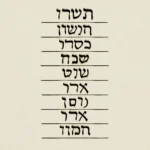
In the Hebrew calendar, each month is either 29 or 30 days. The pattern of long and short months, along with the decision for leap years, produces the annual total. The typical month lengths are:
Nisan — 30 days
Iyar — 29 days
Sivan — 30 days
Tammuz — 29 days
Av — 30 days
Elul — 29 days
Tishrei — 30 days
Cheshvan (Mar-Cheshvan) — 29 or 30 days, this month varies
Kislev — 29 or 30 days, the length can vary
Tevet — 29 days
Shevat — 30 days
Adar (in common years) — 29 days
Adar I and Adar II (in leap years) — Adar I typically 30 days and Adar II 29 days
Because Cheshvan and Kislev can be shortened or lengthened to fit the calendar, the total number of days in a year is not fixed. This is a deliberate feature: the calendar stays aligned with the agricultural and solar year while preserving lunar months.
Common Year vs. Leap Year: How the Day Count Is Set
Two core categories determine the total days in a given year: whether the year is a common year or a leap year, and within each category, whether it is deficient, regular, or complete (the Hebrew terms are traditional for these lengths). Here are the standard ranges you’ll encounter:
Common year: 353 days (deficient), 354 days (regular), or 355 days (complete)
Leap year: 383 days (deficient), 384 days (regular), or 385 days (complete)
The actual designation of each year type depends on how long Cheshvan and Kislev are adjusted in that year. In a deficient common year, Cheshvan and Kislev are shorter, yielding 353 days. In a complete common year, both months are longer, totaling 355 days. A regular common year has 354 days. The same logic applies to leap years, where the presence of Adar I and Adar II creates a different baseline: 383, 384, or 385 days, depending on the lengths of the months Cheshvan and Kislev and how the leap month structure interacts with those choices.
Understanding these designations helps explain why two consecutive years on the Hebrew calendar can have different lengths. It also affects the placement of holidays and the timing of certain religious observances from year to year.
There are a few architectural reasons for the variance in day counts. The calendar is designed to stay aligned with the lunar cycle while also respecting the solar year. To accomplish this, the calendar uses a multiplier system and occasional adjustments in the length of specific months, especially Cheshvan and Kislev, to keep the year from drifting relative to the seasons. In the leap year, the addition of Adar I and Adar II introduces an extra month, which immediately increases the total day count by 30 or 29 days, depending on the month. This combination of lunar months, leap months, and variable month lengths is what makes the yearly day count a dynamic property rather than a fixed constant.
How the Hebrew Calendar Is Calculated in Practice
For many readers, it is helpful to know the mechanisms behind the calendar’s operation. The calendar is not a simple arithmetic system; it uses a traditional set of calculations and postponement rules to ensure that certain holidays don’t fall on undesirable days of the week, and to keep the year within the intended range. Two major ideas stand out:
Molad and lunar months form the basis for how months are counted. A lunar month is approximately 29 days, 12 hours, and 793 chalakim (parts of an hour). Multiplying by the number of months in a cycle explains the approximate length of the cycle.
Postponement rules (Dehiyot) ensure Rosh Hashanah does not begin on certain weekdays and that the year’s structure remains stable. The rules include preventing Rosh Hashanah from starting on Sunday, Wednesday, or Friday, and other adjustments to avoid certain combinations of molad times and day-of-week alignments.
Because of these factors, the calendar’s pattern is best understood as a combination of predictable structure (the 19-year cycle with a known number of leap years) and flexible month-length choices (Cheshvan/Kislev), producing the final year length for any given year. The 19-year cycle is central to synchronization; over that cycle, there are seven leap years and twelve common years, yielding a long-term average that keeps the Hebrew calendar in harmony with both the lunar months and the solar seasons.
The 19-Year Cycle: A Quick Reference
In practice, the Hebrew calendar uses a fixed 19-year cycle to schedule leap years. The leap years in the cycle occur in years 3, 6, 8, 11, 14, 17, and 19 of the cycle. This ensures that the average drift between lunar months and the solar year remains controlled over the long term. The cycle’s regular pattern is a key reason why the overall system remains stable despite the month-length variability described above.
When planning or studying calendar patterns, you can rely on this general structure: a 19-year framework with seven leap years and twelve common years, combined with annual adjustments in Cheshvan and Kislev. The result is a robust, self-correcting system that has served communities for centuries.
Practical Examples: How Day Counts Play Out in Real Years
To translate theory into practice, consider a few concrete scenarios that illustrate how many days a given Hebrew year can hold:
Common year, deficient — 353 days: This occurs when Cheshvan and Kislev are both short, reducing the total year length. Holidays and Shabbatot that span the year will be scheduled with this shorter frame in mind.
Common year, regular — 354 days: The standard length for many years, balancing month lengths without additional days in the two variable months.
Common year, complete — 355 days: When Cheshvan is longer or Kislev is longer, the year extends by one day, nudging the calendar to a longer annual count.
Leap year, deficient — 383 days: The extra month (Adar I) is shorter in this scenario, but the inclusion of Adar I still makes the year longer than a common year by 30 days plus a few month-length adjustments.
Leap year, regular — 384 days: A very common leap year length where the month lengths combine to create a total of 384 days.
Leap year, complete — 385 days: The longest possible Hebrew year, when both Adar I and Adar II are full-length in combination with longer months in Cheshvan or Kislev.
For a practical planning perspective, you can think of the year length as a spectrum rather than a single fixed value. If you see a Hebrew year labeled as “355 days” or “385 days,” that is not an arbitrary choice but the result of the calendar’s structural rules in that year. Communities and religious authorities often note the year type to anticipate how dates shift relative to the civil year and to coordinate events accordingly.
The variability in day count has real effects on when holidays fall, when Shabbat ends, and how communities prepare for seasonal changes. Some of the practical implications include:
Holiday timing shifts by a day or two from year to year, especially for holidays tied to lunar months like Passover, Shavuot, and Sukkot.
Seasonal alignment is preserved overall, but the calendar uses leap years to insert an extra month so that important fixed-date elements do not drift too far from agricultural or seasonal markers.
Planning across years requires awareness of both leap and common year lengths, particularly for communities coordinating calendars across generations or managing events when a year is longer than the previous one.
Adequate postponement rules help ensure that certain holidays do not begin on days that would create impractical or problematic observances, such as Shabbat proximity constraints and other ritual considerations.
For researchers, educators, and students, this means that when you study a Hebrew year’s day count, you are looking at a window into a calendar that is elegant in its structure yet flexible in practice. The day count is not a mere number; it is a reflection of centuries of tradition designed to synchronize spiritual practice with the cycles of time.
How many days are in a typical Hebrew year? A typical year ranges from 353 to 355 days in a common year and from 383 to 385 days in a leap year.
Why does the year length vary? The variation comes from the way the calendar handles the lengths of Cheshvan and Kislev and from the addition of an extra month in leap years (Adar I and Adar II).
What determines whether a year is deficient, regular, or complete? The designation depends on the lengths of Cheshvan and Kislev within that year and, in leap years, the interaction with the Adar months. These choices are aligned with the calendar’s postponement rules and molad calculations.
What is the significance of the 19-year cycle? The 19-year cycle, with seven leap years and twelve common years, provides a stable framework for keeping lunar months aligned with the solar year over the long term.
Can the calendar slip out of alignment if a year is too long or too short? The postponement rules and the fixed structure of the 19-year cycle prevent drift and maintain seasonal consistency over centuries, even though individual year lengths vary.
If you’re trying to understand a Jewish calendar listing or a date converter, keep these tips in mind. They can help you quickly interpret the day counts and year types you encounter:
Look for the year type (deficient, regular, complete) to gauge whether a common year has 353, 354, or 355 days.
Identify leap years by the presence of Adar II and the Adar I month. Leap years add a full month, increasing the total days for that year.
Note the month lengths for Cheshvan and Kislev, which are the most variable months in the year. Their lengths directly affect the year’s total day count.
Remember the 19-year cycle as the backbone of long-term schedule planning. Leap years recur in a predictable pattern within this cycle.
Be mindful of postponement rules that influence whether Rosh Hashanah can begin on certain weekdays. These rules help keep the calendar coherent and functional across years.
Resources for Further Study
For deeper exploration, consider consulting traditional and modern sources that explain the Hebrew calendar in more technical detail. Helpful avenues include:
Jewish liturgical texts and rabbinic commentaries that discuss calendar rules in historical and spiritual contexts.
Educational guides on calendar calculations, molad intervals, and Dehiyot (postponement rules).
Calendrical software and reputable online converters that illustrate how a given year’s day count emerges from the combination of lunar months and leap months.
Academic references on the Metonic framework and its adaptation in Jewish timekeeping, which provide a robust mathematical background for the calendar’s design.
Whether you approach the Hebrew calendar from a religious, historical, mathematical, or practical planning perspective, the central idea remains consistent: the calendar is a carefully balanced system that uses a limited set of rules to achieve a long-term alignment of lunar months with the solar year.
As you study the subject, you may find it useful to keep a small glossary handy. Terms like molad, Adar II, Mar-Cheshvan, and Lo ADU Rosh often appear in discussions about the Hebrew calendar. Understanding these terms helps in navigating both traditional texts and modern explanations.
Conclusion (Refined Insight): The Day Count Is a Feature, Not a Limitation
Although this article avoids labeling sections as “Conclusion”, it is worth summarizing the core idea: How many days in the Hebrew calendar? depends on the year type and the month lengths, especially the variable months Cheshvan and Kislev, plus the leap-year structure that introduces Adar I and Adar II. Together, these factors create a robust system that keeps holidays timely, seasons in view, and communities aligned with a shared rhythm of time. The result is a calendar that is at once predictable in its cycle and flexible in its annual expression, allowing for a rich tapestry of observance and study across generations.
If you’d like to see a sample year laid out with all its month lengths and total day count, many educational resources include printable charts showing common year types (353–355 days) and leap year types (383–385 days). Using those visuals alongside the textual explanations above can deepen your understanding of how many days in the Hebrew calendar for any given year. This knowledge isn’t just academic; it informs how people plan holidays, fasts, and communal activities in communities around the world.









Leave a Reply