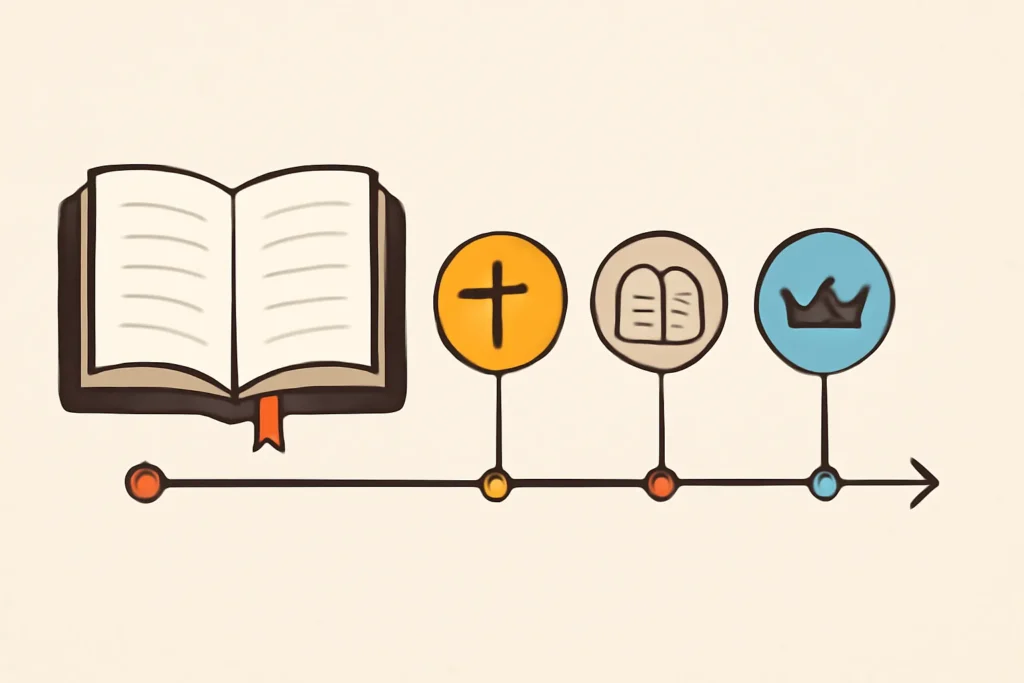
The book commonly titled Revelation is a rich and symbolic work that many readers view as a timeline of prophetic events. It blends visionary imagery with apocalyptic language to convey spiritual truths about good and evil, judgment and hope, and the ultimate restoration of all things. In this article, we explore a structured approach to the bible revelation timeline, outlining the major phases, the key events within each phase, and the diverse interpretations that faithful readers bring to these texts. Our aim is not to presuppose a single reading but to illuminate the major lines of thought, offering readers a clear map of what scholars and theologians often discuss under the umbrella of the Revelation timeline.
For many, the work’s power lies not only in its dramatic scenes but in the way its imagery and symbols invite ongoing reflection. Whether you encounter these chapters as a future-focused forecast, as a historical panorama happening across time, or as a symbolic drama teaching enduring spiritual truths, the Revelation timeline provides a framework for understanding the book’s overarching purpose: to reveal Christ’s supremacy, the vindication of the righteous, and the triumph of God’s eternal plan.
The Major Phases in the Revelation Timeline
The Opening Vision and the Letters to the Seven Churches (Revelation 1–3)
This initial section sets the scene for the entire book. The author presents a vision of Christ among lampstands, with specific messages to seven congregations in Asia Minor. Each letter addresses a particular spiritual condition—faithfulness, compromise, perseverance, and repentance—and thus introduces the reader to the moral and ecclesial themes that recur throughout the sequence. In the broader timeline, these chapters establish a pattern: prophecy engages real communities with real choices, and history is foregrounded by divine commentary on present circumstances.
The Seven Seals (Revelation 6–8:1)
The opening of the scroll and the ensuing seals present a staged drama that moves from conquest and catastrophe to cosmic disruption. The sequence emphasizes the seriousness of human and cosmic rebellion and the need for divine oversight. Each seal introduces a distinctive reality that shapes the rest of the narrative. The broad arc is, in effect, a periodization of trial and revelation that culminates in the ascent toward greater judgments and warnings.
Seal 1 — the rider on the white horse, often read as conquest or false peace.
Seal 2 — the red horse, symbolizing war and upheaval.
Seal 3 — the black horse, commonly interpreted as famine or scarcity.
Seal 4 — the pale horse, associated with death and Hades, reflecting mortality in the wake of violence and famine.
Seal 5 — the souls of martyrs under the altar, who cry out for justice and vindication.
Seal 6 — cosmic signs that usher in a sense of judgment and awe, leading to a pause before the seventh seal.
Seal 7 — a silence in heaven, followed by the revealing of the seven trumpets.
The trumpet visions amplify the judgments introduced by the seals, moving from localized woes to more expansive and symbolic disturbances. The narratival arc here often emphasizes how divine mercy interacts with human stubbornness and how the heralds call for repentance even as impending judgments unfold. In many readings, the trumpets act as a bridge between the hidden purpose behind the seals and the more explicit confrontation with ultimate powers in the final chapters.
Trumpet 1 — hail and fire mixed with blood, affecting land and vegetation.
Trumpet 2 — a great mountain burning with fire, affecting sea life and ecosystems.
Trumpet 3 — a great star falling from heaven, poisoning streams and springs.
Trumpet 5 and Trumpet 6 — intensified spiritual warfare and demonic forces released upon the earth, underscoring the warfare between divine sovereignty and rebellious powers.
Trumpet 7 — the domain of heavenly proclamations expands as God’s plan moves toward completion, culminating in further judgments and the unfolding of the next phase.
The Seven Bowls (Revelation 15–16)
The bowls, or bowls of wrath, present a concentrated set of judgments poured out on the earth. They are often read as the intensification of the trumpet judgments, moving toward an eschatological climactic confrontation. The material in these chapters emphasizes the righteousness of God’s judgments while also underscoring the call to repentance. For many readers, the bowls crystallize the tension between divine holiness and human stubbornness into a decisive moment in the Revelation timeline.
Bowl 1 — painful sores afflicting those who bear the mark of the Beast.
Bowl 2 — the sea turns to blood, killing sea life and affecting commerce.
Bowl 3 — rivers and springs become blood, signaling a moral and cosmic disruption.
Bowl 4 — the sun scorches people with intense heat.
Bowl 5 — darkness and pain envelop the kingdom of the beast.
Bowl 6 — the river Euphrates dries up to prepare the way for kings of the East, inviting a climactic confrontation.
Bowl 7 — a loud voice proclaims that “it is done,” accompanied by dramatic cosmic signs and the emergence of the New Covenant frame that follows in the narrative.
The Beast, Babylon, and the Final Conflict (Revelation 12–19)
In this portion of the timeline, the cosmic dragon—the Dragon (often identified with Satan)—is seen contending with the people of God as the beast rises from the sea and the false prophet performs miracles to consolidate rebellion. The fall of Babylon the Great and the defeat of the Beast mark the turning point toward the climactic battle and the ultimate vindication of the righteous. This phase functions in many readings as the fulcrum of the eschatological drama: a public contest between the powers of darkness and the power of God through Christ.
The Dragon (Satan) wages war against God’s people, attempting to thwart the fulfilled promises of God.
The Beast rises from the sea, wielding political and military power in opposition to the Lamb.
The False Prophet mirrors deceptive miracles to promote allegiance to the Beast and its mark.
The Mark of the Beast serves as a symbolic sign of allegiance and survival within the mortal economy of the end times, contrasting with those who bear the seal of God.
The Fall of Babylon represents the collapse of a corrupt system of power that blasphemes God and exploits the vulnerable.
The Battle of Armageddon (the field of conflict) culminates in divine intervention, where Christ’s ultimate victory is celebrated and the Beast is defeated.
The Millennium, the Final Judgment, and the New Creation (Revelation 20–21)
The later chapters present a debated but influential portion of the Revelation timeline. The Millennium refers to a period of reigning with Christ, with varying interpretations about its nature and duration. The dream of a final judgment follows, after which the new heaven and new earth emerge as the climactic hope of the biblical story. In this part of the timeline, readers encounter ultimate justice, the complete removal of sin, and the transformation of creation into a realm free from death, tears, and pain.
The Millennium — a debated interval in which Christ reigns with the saints; various interpretive frameworks place it in different ways on the timeline.
The Great White Throne Judgment — the decisive judgment of all people, leading to the separation of the righteous from the wicked.
The New Heaven and New Earth — the renewal of creation; God dwells with humanity; pain and death are abolished; and the eternal state unfolds.
The New Jerusalem — the holy city as the symbolic center of worship, presence, and restored relationship with God.
Interpreting the Revelation Timeline: Four Main Approaches
Preterist perspective
In the preterist view, most or all of the prophecies in Revelation are understood as having been fulfilled in the first centuries of the Christian era. The narrative is read as a revelation about persecution, deliverance, and the triumph of faith under ancient imperial power. Proponents emphasize the historical letters to the churches, the political and religious conflicts of the first century, and the symbolic language as rooted in the events of that era. Under this lens, the timeline serves as a lens for understanding how early believers experienced God’s sovereignty in the midst of persecution and how prophecy offered hope for endurance.
The futurist interpretation commonly treats most of Revelation as referring to events that will occur in the future, especially in the period preceding Christ’s return. The major segments—the Seals, Trumpets, and Bowls—are often seen as sequential judgments that culminate in a climactic eschaton. Proponents argue that this framework provides a coherent and watchful lens for understanding current world affairs in light of biblical prophecy, while also preserving the central promise of Christ’s eventual, triumphant return and the establishment of God’s eternal kingdom. This reading emphasizes discernment, readiness, and bold witness in the present age.
Historicist perspective
The historicist approach views Revelation as a sweeping narrative that unfolds across church history. Key events are mapped onto successive historical eras—from the early church through the Reformation and beyond—until the return of Christ. Advocates of this view see the timeline as a continuous chain of fulfillments across ages, with symbols representing long-running trends (for example, empires, religious movements, or political shifts). This interpretation often highlights the continuity of God’s redemptive work through time and encourages readers to recognize their place within a larger divine drama.
Idealist (Symbolic) perspective
The idealist or symbolic reading treats Revelation as a timeless allegory about the spiritual conflict between good and evil, sin and righteousness, rather than a fixed forecast of concrete events. In this view, the timeline is less about specific dates or eras and more about enduring theological themes: God’s sovereignty, the persistence of faith, the call to repentance, and the ultimate victory of Christ. The symbols are read as universal truths applicable across all eras, inviting believers to live with wisdom, courage, and hope in every generation.
Which interpretation helps you read the Revelation timeline today?
Many readers find value in a blended approach, recognizing that Revelation uses symbolic language to speak to particular historical circumstances while also pointing beyond that moment to universal spiritual truths and future hope. The important thing is not merely choosing a single label but cultivating a habit of study that tests interpretations against the text, the larger biblical narrative, and the lived experience of faith communities. When engaging with the timeline of Revelation, readers often benefit from asking questions such as: Which themes recur across chapters? How do the symbols illuminate moral and spiritual decisions in daily life? In what sense can the prophetic language spur ethical action and hopeful perseverance today?
Revelation uses a highly symbolic vocabulary. Understanding a few central terms can illuminate how the timeline unfolds and what it is intended to teach. The following list highlights recurring images and their possible roles within the broader narrative.
The Beast — a figure wielding political power in opposition to God, often interpreted as a symbol of oppressive systems or regimes across time (according to various interpretive frameworks).
The Dragon — the cosmic adversary (Satan) who seeks to thwart God’s purposes and persecute the faithful.
The Lamb — Christ, the central figure whose sacrificial love and victorious authority undergird the entire timeline.
The Mark of the Beast — a sign of allegiance that distinguishes those who align with earthly power from those who follow the Lamb.
The 144,000 — a symbolic representation of faithful witnesses set apart for a mission within the narrative.
Babylon the Great — a symbol of political and economic systems that oppose God’s purposes and exploit the vulnerable.
The New Jerusalem and The New Heaven and New Earth — the culmination of the divine plan, representing restored order, intimate communion with God, and the permanent dwelling of the righteous.
Cross-Biblical Connections and Thematic Trends
Scholars and readers often notice how the Revelation timeline echoes and dialogues with other biblical books. The following cross-references illustrate how themes, figures, and motifs recur across the biblical witness, reinforcing a cohesive theological narrative rather than isolated prophecies.
Daniel’s visions mirror Revelation in the use of beasts, horns, and kingdoms, inviting readers to interpret prophecy through the lens of ancient empires and divine sovereignty.
Ezekiel’s apocalyptic imagery resonates with Revelation in its symbolic language of judgment, restoration, and the presence of God in the midst of a broken world.
The Gospels’ portrayal of Jesus as the Messiah and King provides the essential hermeneutical key to reading Revelation, especially in how the Lamb triumphs and the Church bears witness in a hostile world.
The broader biblical arc—from creation, through fall, redemption, and new creation—frames the Revelation timeline as a climactic fulfillment of God’s redemptive purposes rather than a mere sequence of sensational events.
Practical Takeaways for Faithful Reading
Beyond speculative timelines, what can readers gain from engaging with the Revelation narrative? The following reflections offer practical guidance for study, worship, and discipleship as one encounters the Revelation timeline.
Hope in the face of difficulty — Revelation centers on the ultimate triumph of God, encouraging believers to persevere with trust that justice and mercy prevail.
Faithfulness under pressure — the letters to the seven churches emphasize staying faithful, discerning truth, and practicing love in difficult environments.
Worship and reverence — the visions call readers to a posture of worship, recognizing God’s holiness, authority, and redemptive plan.
Ethical living in light of judgment — knowing that the divine timeline will culminate in a final reckoning motivates ethical decisions, compassion for the vulnerable, and pursuit of justice.
Hopeful wisdom — apocalyptic imagery is not only about predicting events but about shaping character: wisdom, courage, and hope rooted in Christ’s victory.
Because the Revelation narrative uses specialized language, the following glossary provides quick references to essential terms frequently encountered in discussions of the Revelation timeline.
Beast — a figure of political power opposed to God; interpreted variously across the ranges of futurist, historicist, preterist, and idealist readings.
Dragon — the symbolic personification of Satan’s rebellion against God.
Babylon — a symbolic city or system of oppression that promulgates blasphemy and exploitation.
Armageddon — a climactic battlefield or decisive confrontation in which divine justice is executed.
Millennium — a debated period of reign with Christ, interpreted differently by each major approach to Revelation.
New Heaven and New Earth — the final renewal of creation, where God dwells among humanity in a restored cosmos.
New Jerusalem — the holy city as a symbol of God’s intimate presence with his people in the renewed creation.
Seal / Trumpet / Bowl — successive sets of judgments that shape the prophetic drama and its timeline.
White Throne — the final judgment scene that determines the eternal destiny of every person.
Lamb — Christ as the sacrificial and victorious figure at the heart of the narrative.
Putting It All Together: A Cohesive View of the Revelation Timeline
While readers will encounter a spectrum of viewpoints on the precise sequence and meaning of the events in Revelation, several core ideas tend to hold across most interpretations. First, the book’s central aim is to reveal Christ’s ultimate sovereignty over all powers and histories, a point underscored by the repeated refrain that God sits on the throne and the Lamb is worthy of praise. Second, the timeline moves from crisis toward consummation: a series of intensifying judgments leads to a decisive victory by God, followed by the creation of a new order where suffering is ended. Third, readers are invited to participate in fidelity, mercy, worship, and mission in the present age, adopting a posture of hopeful anticipation rather than fear.
For those who want to engage with the Revelation timeline in a structured manner, a practical approach is to study in layers: first the immediate context (the letters to the churches), then the symbolic sequence (seals, trumpets, bowls), followed by the cosmic drama (beast, dragon, Babylon), and finally the climactic chapters (Millennium, Final Judgment, New Creation). By keeping these layers in view, readers can appreciate both the dramatic cadence of Revelation and its enduring theological significance.
Further Resources for Readers
To deepen your understanding of the bible revelation timeline, consider engaging with a mix of scholarly and devotional resources that reflect the diversity of interpretive traditions. Commentaries, study Bibles, and reputable journal articles can help illuminate the historical context, linguistic nuances, and theological themes. Sermons and small-group guides often offer accessible pathways for applying the revelations’ messages to contemporary life. As you explore, remember to remain respectful of differing views within the broader Christian tradition and to test interpretations against the text, the church’s confession, and the Spirit’s guidance.





Leave a Reply