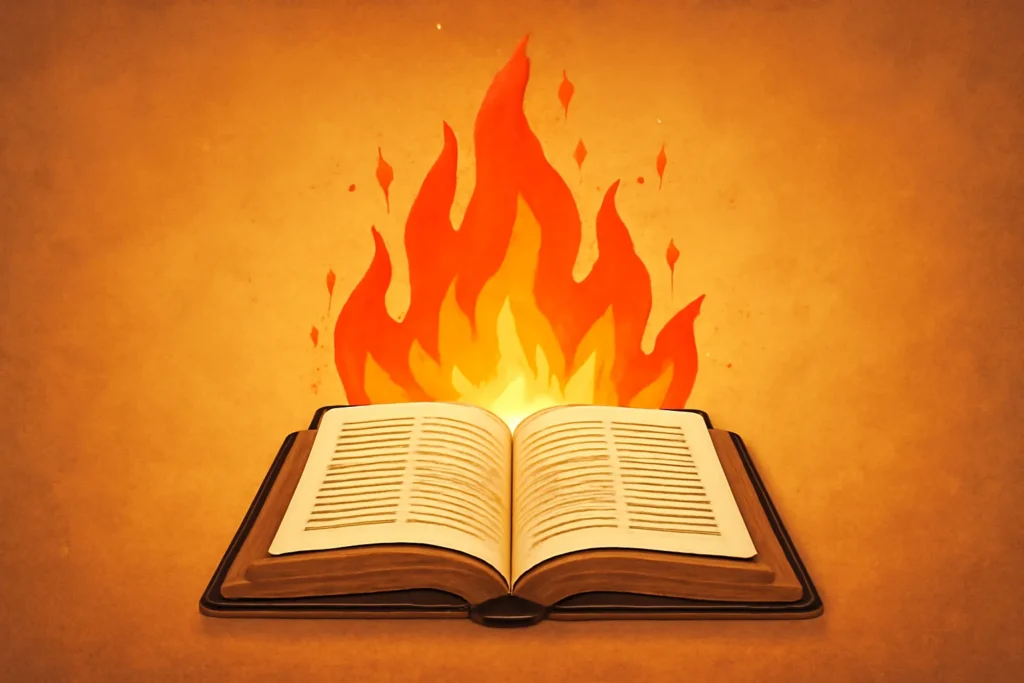
Introduction: Fire as a Woven Thread Through Scripture
Across the Old Testament and New Testament, fire functions as a powerful symbol with multiple, sometimes competing,
yet interlocking meanings. Fire can reveal the presence of God, refine and purify, judge, empower, and warn. It can be a comforting sign of divine
nearness or a stark reminder of accountability. In a broad sense, fire in Scripture points readers toward divine action—God drawing near,
God testing hearts, and God transforming lives. This article gathers and analyzes biblical fire imagery from a range of passages to map the
key passages, themes, and meanings you can apply to personal study, preaching, or teaching.
Key Passages About Fire
The following passages illustrate how fire appears in different literary contexts—narrative, poetry, prophecy, and epistolary writing. Each item
offers a compact takeaway and a reference for deeper study.
Exodus 3:2 — The burning bush where the angel of the LORD appears to Moses marks God’s calling and presence.
The fire itself is not consumed, signaling that God’s presence can dwell in the ordinary and yet reveal a transcendent reality.
Exodus 19:18 — Mount Sinai is described as being wrapped in smoke and fire as God descends on the
mountain; the scene communicates both awe and holiness.
Leviticus 9:24 — At the consecration of offerings, fire from the LORD consumes the burnt offerings, signaling
divine acceptance and the establishment of proper worship.
Leviticus 6:13 — The fire on the altar must be kept burning; it shall not go out. This emphasizes continuity of worship and fidelity.
1 Kings 18:38 — Elijah’s demonstration at Mount Carmel shows God’s fire consuming the sacrifice, the wood, the stones, and the dust.
The episode contrasts deceptive, humanly manufactured religion with genuine divine power.
2 Chronicles 7:1–3 — Fire from heaven consumes the offerings, and the people respond with reverence; this is a dramatic theatre of
God’s presence and acceptance.
Psalm 18:8 — A poetic portrait: smoke out of His nostrils, fire out of His mouth—images of victory, judgment, and
power that belong to the divine king.
Psalm 97:3 — A fire goes before the LORD, and flames surround Him, signaling divine glory and righteous authority.
Isaiah 6:6–7 — A live coal touches Isaiah’s lips, cleansing and commissioning him for prophetic service; the fire here
prepares and purifies a prophet for mission.
Daniel 7:9 — A vision of the Ancient of Days with flames and fiery judgment; the imagery communicates eternal sovereignty and judgment.
Acts 2:3 — The Holy Spirit is depicted as tongues of fire resting on each person, inaugurating the church’s mission
with a divinely empowered witness.
Luke 3:16 — John the Baptist speaks of one who will come “with the Holy Spirit and fire,” signaling purification and power
for ministry.
Matthew 3:11 and Luke 12:49 — Jesus declares that He has come to bring fire on the earth, a fire that will
reform, refine, and, where resisted, consume.
Hebrews 12:29 — God is described as a consuming fire, an image that deepens the sense of reverence, purity, and justice.
James 3:5–6 — The tongue is a fire, a “world of evil” that can set a great forest ablaze; a warning about the power and
danger of speech, and a call to harness it toward blessing.
Matthew 13:40–42 and Matthew 13:50 — Parables and judgments about the furnace of fire where there will be weeping and gnashing of teeth, illustrating eternal separation from God for the unrepentant.
Mark 9:43–48 — A stark reminder that where the fire is not quenched, the judgment is permanent—an image of
ongoing punishment for those who refuse the grace offered in Christ.
1 Peter 1:7 — Fire testing reveals the genuineness of faith, more precious than gold, though refined by trial.
Revelation 1:14 and Revelation 20:10, 14–15 — The imagery of fire recurs as both
divine glory and the lake of fire, the place of final judgment for the devil, the beast, and the wicked.
Revelation 8:5 — A censer filled with fire from the altar is hurled to the earth, producing thunder, lightning, and earthquakes,
signaling dramatic divine action in judgment and redemption.
Romans 12:11 and 2 Timothy 1:6 — While not explicit about fire, these verses speak to being fervent in spirit,
often described with fiery zeal for ministry and mission.
Psalm 42:2 and Psalm 63:1 — Expressions of longing for God that feel like a burning thirst, capturing the intimate
hunger of the soul for divine presence.
Thematic Lenses: What Fire Teaches About God, People, and Covenant
Fire in Scripture is not a single thing with a single meaning. Instead, it functions as a versatile metaphor that
illuminates several core realities of the biblical story. The following themes show how the many images of fire contribute to a robust
and cohesive theology of God and his people.
Presence — Fire signals God’s nearness in distinctive, unmistakable ways (Exodus 3; Exodus 19).
Holiness — The brightness and heat of fire convey moral and spiritual purity; approaching that holiness calls for reverence and reform (Leviticus 9; Hebrews 12).
Power — Fire before the LORD and coming from heaven testify to divine sovereign power revealed in history and experience (Psalm 97; 1 Kings 18).
Fire as Refining and Purifying Power
Refinement — The image of a refiner’s fire describes God’s work to remove impurities from faith and life (Malachi 3:2–3).
Purification — Fire acts like a cleansing agent, purifying the worshiper and the community that seeks God (Isaiah 6; 1 Peter 1:7).
Visibility of Genuine Faith — Trials and testing reveal the true nature of faith, much as fire reveals the true metal (1 Peter 1:7).
Judgment — Fire functions as a decisive instrument in God’s righteous judgment against sin (Matthew 13:40–42; Mark 9:43–48).
Accountability — The fire imagery creates a sense of accountability for choices, especially in regard to rejection of grace (Hebrews 12; Revelation 20).
Warning and Hope — Fire warns of danger while also inviting repentance; the final judgment is described with terrifying clarity and ultimate hope for those in Christ (Revelation 20–21).
Fire as Empowerment and Mission
Empowerment — The coming of the Holy Spirit as “tongues of fire” equips believers for bold witness and service (Acts 2).
Mission — Jesus’ statement about bringing fire on the earth points to a transformative mission that divides, purifies, and renews (Luke 12:49).
Fire as a Dynamic Tension: Danger and Comfort
Danger — Fire can be destructive when mishandled or when one resists divine truth, serving as a sobering reminder of consequences (James 3:5–6; Matthew 13:50).
Comfort — Yet fire also signifies God’s protective presence and sustaining grace in perilous circumstances (Psalm 18; Psalm 97).
Interpreting Fire Across Genres and Books
To study fire in Scripture responsibly, readers should appreciate literary context, covenantal framework, and historical setting. The imagery shifts
across genres—from narrative tests and miraculous signs to prophetic visions and apocalyptic portrayals—yet the underlying patterns remain intelligible when read
in light of the whole biblical story.
Historical-narrative contexts show how fire marks moments of divine intervention, legitimizing leadership, or affirming sacrifice (Exodus, 1 Kings, 2 Chronicles).
Psalms and wisdom literature use fire imagery to express longing, awe, and the dangerous power of speech (Psalm 18, James 3:5–6).
Prophetic and apocalyptic traditions deploy fire to denote purification, judgment, and cosmic drama (Malachi, Isaiah, Daniel, Revelation).
New Testament fulfillment links fire to the sending of the Spirit, Christ’s mission, and the ultimate judgment and glory in the age to come (Acts, Luke, Hebrews, Revelation).
Practical Guides for Studying Bible Fire Imagery
Approaching fire imagery with a structured plan helps readers extract theological meaning without losing the texture of the text. Here are practical steps you can apply in personal devotion, sermon preparation, or classroom teaching.
Identify the fire’s source — Is the fire described as coming from God, from heaven, or as a symbol of human activity? Source narrows interpretation.
Ask about the fire’s effect — Does the fire consume, purify, warn, or empower? Paying attention to verbs helps distinguish themes.
Note the audience — Who is addressed? Israel, the church, or an individual? Audience shapes the pastoral or doctrinal aim.
Context, context, context — Read surrounding verses to see whether the fire signals zeal, judgment, presence, or sanctification.
Cross-reference carefully — Compare parallel descriptions (e.g., fire imagery in Malachi vs. Hebrews; Old Testament fire vs. New Testament fulfillments).
Apply with sensitivity — Translate the imagery into contemporary life, such as pursuing holy living, relying on the Spirit, or warning against complacency.
Applications: How Fire Imagery Affects Belief and Practice
Understanding fire in Scripture informs moral formation, worship practices, and spiritual disciplines. Several practical applications emerge from the themes discussed above.
Worship and Sacrifice — Recognize that true worship invites God’s presence and requires integrity; sacrifice without fire is empty, and fire without worship is dangerous (Leviticus 9; Hebrews 12).
Purification of the Heart — When life feels burning or refining, it can be an invitation to trust God’s refining work, not lose heart (Malachi 3:2–3; 1 Peter 1:7).
Empowerment for Service — The Spirit’s fiery baptism empowers witness, service, and mission (Acts 2; Luke 3:16).
Warning and Hope — Fire imagery both warns against denying truth and offers hope through repentance and grace (Matthew 13:40–42; Revelation 20).
Careful Speech — The tongue’s fiery potential calls for discipline in communication and the pursuit of blessing rather than harm (James 3:5–6).
Conversations with the Text: Theological Reflections on Fire
Engaging fire imagery invites several theological reflections that can shape preaching, catechesis, and personal faith. Here are some core conversations to consider.
Divine Presence and Immanence — When God appears as fire, the relationship is intimate yet demanding; God’s nearness carries responsibility, humility, and courage.
Judgment with Mercy — Fire signals both righteous judgment and the possibility of grace through repentance and faith in Christ.
Transformation over Time — Refinement is a long arc; believers should anticipate a gradual sanctifying process rather than quick shortcuts.
Hope amid Trials — Fire can be a refining trial that deepens trust and dependence on God’s faithfulness.
Final Realities — Apocalyptic fire points toward ultimate destiny: the new creation where God’s glory dwells with his people and sorrow passes away.
Frequently Highlighted Passages for Personal Studies
For quick reference during personal study or devotional planning, the following highlights are particularly fruitful for reflection and memorization. Each entry labels the core idea and offers a concise takeaway.
Presence and Holiness — Exodus 3:2; Exodus 19:18; Hebrews 12:29
Purification and Refinement — Malachi 3:2–3; Isaiah 6:6–7; 1 Peter 1:7
Power for Mission — Acts 2:3; Luke 3:16
Judgment and Accountability — Matthew 13:40–42; Mark 9:43–48; Revelation 20:10
Wisdom in Speech — James 3:5–6
Cosmic and Eternal Dimensions — Daniel 7:9; Revelation 1:14; Revelation 20:10
Conclusion: Embracing the Richness of Fire Imagery
The scriptural use of fire is not a single, simple symbol but a multi-faceted language that speaks of God’s presence,
his purifying love, judgment, and the empowering work of the Holy Spirit. From the dramatic scenes of Old Testament
revelation to the intimate, mission-focused chapters of the New Testament, fire remains a faithful pedagogical tool: it wakes, tests, clarifies, and
awakens desire for God. When we approach fire imagery with patient study and pastoral discernment, we can grow in reverence for God’s holiness, confidence
in his grace, and courage to live as witnesses of his transformative power.







Leave a Reply