Introduction: Bible Slaves, Slavery, and the Ethics of Interpretation
The history of slavery in the Bible spans multiple centuries and cultures, from ancient Near Eastern settings to the early Christian communities of the Mediterranean world. This article surveys the topic under the broad heading of “Bible Slaves: History, Context, and Biblical Interpretations.” It aims to explain how slavery is portrayed in biblical texts, how the social and legal frameworks treated those in bondage, and how readers across history have interpreted these passages in ways that reflect their own contexts and values. By using terms like servants, bondservants, and slaves, the Bible itself distinguishes between different kinds of servitude and varying degrees of social status. The goal is to present a careful, nuanced account that honors the historical reality while engaging with modern ethical concerns.
Historical Background: Slavery in the Ancient World
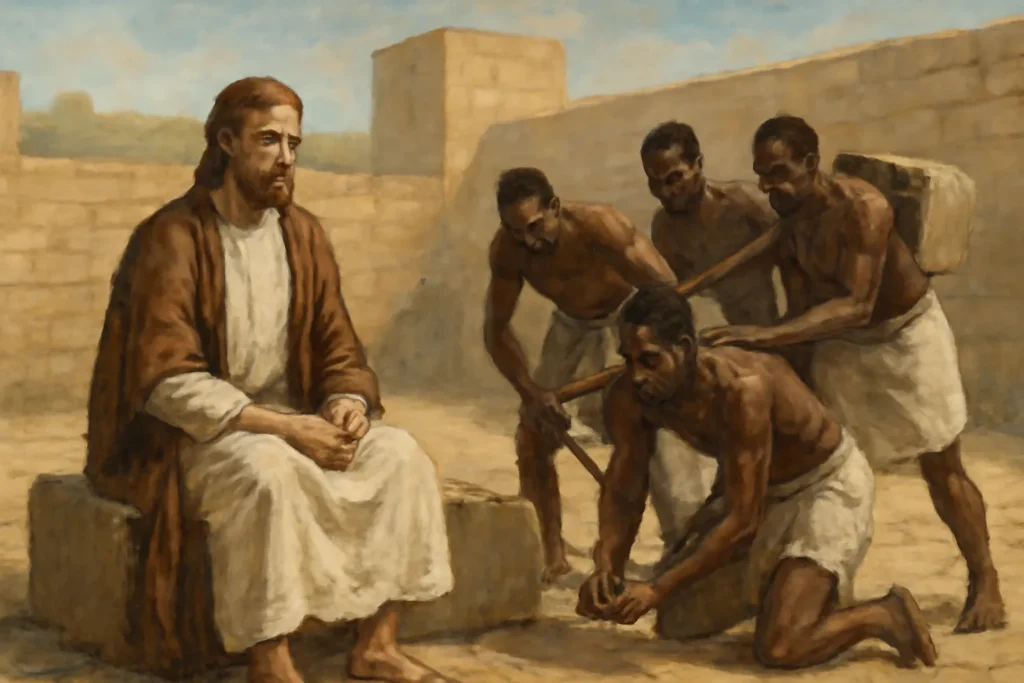
Slavery was a widespread institution in the ancient world, long before the biblical texts were written, and it continued in many forms well after. In the ancient Near East and the Greco-Roman world, people could become slaves through war capture, debt, or sale by family necessity. The Bible emerges from this milieu and often speaks to people living within these social orders rather than prescribing a universal mode of human relations. Understanding the historical backdrop helps readers discern which passages regulate, which condemn, and which presume a social reality in which bondage existed.
Key observations about the historical setting include:
Ownership and status: Slaves could be members of households, workers tied to a master, or debt servants bound by agreement. The line between "servant" and "slave" is not always sharp in biblical Hebrew and Greek terms, but the social role often had legal definitions and protections.
Variation by culture: The status and treatment of enslaved people varied from one community to another. Some laws imposed humane protections, while others permitted harsher conditions depending on the time and place.
Economic and political factors: Slavery intersected with wealth, landholding, and kinship networks. Debts, military conquest, and labor needs could shape who became enslaved and for how long.
Ethical reflexivity: The biblical authors frequently show awareness of vulnerability, dislocation, and the potential for abuse within slavery, which invites readers to weigh the moral complexity of these texts rather than treating them as straightforward endorsements.
Key Terms and Language: What the Texts Actually Say
The Bible uses several overlapping terms for people who are in bondage or in service. In Hebrew, the words ebed and avad are often rendered in English as servant or slave; in the New Testament Greek, the terms doulos and oiketês convey similar ideas with nuances about formal bond and household service. The range of meanings matters for interpretation, because some passages emphasize formal status before God, while others stress moral duties toward human beings made in God’s image.
Ebed (Hebrew): often translated as servant or slave, depending on context; emphasizes service within a household or a community obligation.
Avad (Hebrew): a root tied to work, labor, or serving; used in various ways, sometimes for hired labor and sometimes for bonded service.
Doulos (Greek): slave or bondservant; a formal title in early Christian writings indicating subjection and loyalty to a master, whether earthly or divine.
Oiketês (Greek): usually translated as household slave or domestic servant; used in discussions of household arrangements and social hierarchy.
The translators’ choices—servant versus slave, bondservant versus bondman—give readers very different impressions of the same passages. Readers are encouraged to weigh the language and the surrounding legal or narrative context to understand what the text is actually permitting, regulating, or prohibiting in a given situation.
Old Testament Context: Slavery Among the Israelites
In the Hebrew Bible, or Old Testament, the institution of slavery exists alongside a framework of religious, moral, and social laws that apply to the people of Israel. This framework includes distinctions between Hebrew slaves (often treated differently in law) and foreign slaves (brought in from outside Israel). The text also emphasizes freedom practices such as the Jubilee year and mandatory manumission after a defined period within certain categories.
Six years of service, then liberty: Exodus 21:2-6 specifies that a Hebrew slave serves for six years and goes free in the seventh year. If the slave chooses to stay with the master, a ritual act of binding can affirm lifelong servitude within that household, highlighting consent and stability rather than purely coercive oppression.
Year of Jubilee (Leviticus 25): Every fifty years, land returns to original family lines, and enslaved Israelites are released. The Jubilee represents a communal reset aimed at preventing perpetual poverty and preserving kinship ties and economic balance within Israel.
Foreign slaves and immigration: The laws often distinguish between Israelites’ own kin who might be freed and foreigners who could remain as long-term property. The regulation varied; in some cases, non-Israelite slaves could be inherited as property across generations, which raises important questions for modern readers about justice, dignity, and historical context.
Protection and humane treatment: Several passages emphasize protections—no one may be extorted or harmed cruelly, and procedures exist for the release or fair handling of enslaved persons. The text also presents scenarios where the vulnerable—such as female slaves or those harmed by a master—require scrutiny and redress within the legal system.
Hagar and Sarah’s slave history: In Genesis, the story of Sarah’s slave Hagar includes the dynamic of power, pregnancy, and divine promises. While not a legal code, these narratives illuminate how enslaved persons could be entwined in the family’s fate and divine plan, offering material for later reflection on social power and divine attention to the vulnerable.
It is important to note that while the Old Testament contains regulations about slavery, it also places constraints aimed at mitigating abuse and encouraging release. The texts often reflect a world where bondage existed and developed a framework intended to protect, regulate, and eventually, in some cases, liberate or restore the status of the enslaved as part of a broader moral economy. Readers today debate the extent to which these laws were centers of reform, compromises that restricted cruelty, or steps along a longer historical path toward more expansive notions of justice.
New Testament Context: Slavery in Early Christian Communities
The New Testament era features a shift in social vision as Christianity spread through the Roman world. While the apostolic letters address slaves and masters within existing social structures, they also lay groundwork for a more radical understanding of human equality before God—an ethical horizon that many later Christian thinkers would more fully articulate.
Doulos in Christian writings: The Greek term doulos appears frequently in Paul's letters and other early Christian texts, denoting a servant or slave in a way that emphasizes allegiance to a master. Yet the context often reframes the relationship around loyalty to Christ as the primary master, which has significant interpretive implications.
Onesimus and Philemon: The short letter to Philemon centers on Onesimus, a slave who had run away and encountered Paul. Paul urges Philemon to receive Onesimus not merely as a slave but “as a beloved brother” (Philemon 16). This appeal is widely discussed as an argument for recognizing fundamental kinship and equality within the Christian community, even as social norms continued to permit a slave-master relationship outside the assembly.
Household codes: Passages in Ephesians 6:5-9 and Colossians 3:22-4:1 instruct slaves to obey their earthly masters and masters to treat slaves justly and fairly. The emphasis is on ethical conduct within a social order rather than a call to immediate abolition, though these instructions have been used by later readers to argue that humane treatment and fair labor practices are essential Christian virtues.
Tailoring interpretations: The NT does not decree abolition in a universal sense, and in some case readings, certain passages assume the social reality of slavery. However, many theologians read these texts in light of the overarching Christian themes of love, justice, mercy, and the equality of all people before God, encouraging transformations of social norms over time.
In addition to these core texts, the Bible contains a range of passages that overlook or critique slavery in broader terms, such as exhortations to love one’s neighbor, care for the vulnerable, and insistence that true freedom comes from God. The early Christian movement also engaged with questions of freedom, emancipation, and social hospitality as it grew within diverse households and urban networks.
Interpretations Across History: From Justification to Liberation
Readers across centuries have interpreted biblical passages about slaves in ways shaped by their own social, political, and ethical contexts. Two broad currents have repeatedly appeared in debates about the Bible and slavery:
Historical-legal readings: These readings emphasize the actual legal frameworks found in the text, noting distinctions between different classes of enslaved people (Hebrew vs. foreign), and highlighting manumission, Jubilee, and humane protections as evidence of a moral economy that stops short of outright abolition but attempts to curb cruelty.
Abolitionist and emancipation readings: These readings argue that the central Christian message—dignity of every person made in God’s image, loving neighbor as oneself, and freedom from oppression—ultimately requires challenging and overturning slavery as an institution. Advocates in various eras have invoked biblical themes of liberty, justice, and universal worth to argue for abolition and civil rights.
Critical and contextual readings: More recently, scholars encourage considering genre (law codes, narrative, prophecy, epistles), historical context (economic systems, family structures, warfare), and translation choices. The aim is to understand what the text would have meant to its original audience and how those meanings can be applied with discernment today, without imposing modern norms anachronistically.
Important questions to explore in interpretive practice include:
What is the text’s historical audience, and what social order does it assume or regulate?
Are there explicit prohibitions or protections for enslaved people that indicate moral concern beyond mere regulation?
How do New Testament passages on slaves and masters harmonize with broader biblical ethics about love, human dignity, and justice?
How have different communities historically used these texts to defend or oppose slavery, and what can modern readers learn from those debates?
Ethical Reflections and Modern Lessons
Reading biblical material about slavery today requires careful ethical discernment. While ancient texts contain references to bondage that reflect their era, contemporary readers are called to affirm universal human dignity, oppose every form of exploitation, and pursue social arrangements that uphold justice and freedom for all people. The Bible’s own trajectory—from the complexities of legal regulation toward an emphasis on mercy, equality, and the transformation of hearts—offers a compelling framework for addressing modern abuses, including human trafficking, forced labor, and unjust social hierarchies.
Dignity and kinship: Across biblical narratives and letters, the assertion that every person bears the image of God invites readers to treat others with respect and to resist systems that degrade human beings.
Transformation from within: The biblical emphasis on inner conversion, repentance, and love underlines the possibility of changing social orders not only by laws but by the reshaping of motives, relationships, and care for the vulnerable.
Historical responsibility: Studying how past societies used scripture to justify or challenge slavery helps modern readers recognize the power of interpretation and the ethical responsibilities of religious communities to learn from history and act justly today.
Some theological approaches highlight the difference between abiding moral principles (such as justice, compassion, and honor of every person) and the specific practices of ancient households. In this view, scripture serves as a teacher that reveals God’s will over time, culminating in a fuller realization of freedom and dignity through faith, community, and public ethics.
Conclusion: Reading the Bible’s Slavery Texts with Care
The topic of bible slaves, including servants, bondservants, and slaves, invites careful historical, linguistic, and theological consideration. The ancient world’s practice of bondage was complex and varied, and biblical texts both regulated and, in some contexts, allowed for manumission, protection, and humane treatment. In the New Testament, the presence of slave-and-master relationships coexists with calls to love and to treat others with justice and mercy, and with examples such as Onesimus and Philemon that have been read as seeds for a more expansive social ethic. Across centuries, readers have used these passages to justify oppressive systems or to advocate for liberty, equality, and human rights, depending on how they interpret language, context, and overarching biblical themes.
Today, the most constructive approach to the topic combines historical awareness with ethical focus: recognize the texts’ historical settings, acknowledge where they fall short of modern standards of human rights, and draw on the Bible’s overarching calls to love, justice, and dignity as a guide to moral action in the present. By holding together historical context, textual meaning, and ethical application, readers can engage with the Bible’s difficult passages in a way that honors both the integrity of the ancient world and the dignity of every person today.










Leave a Reply