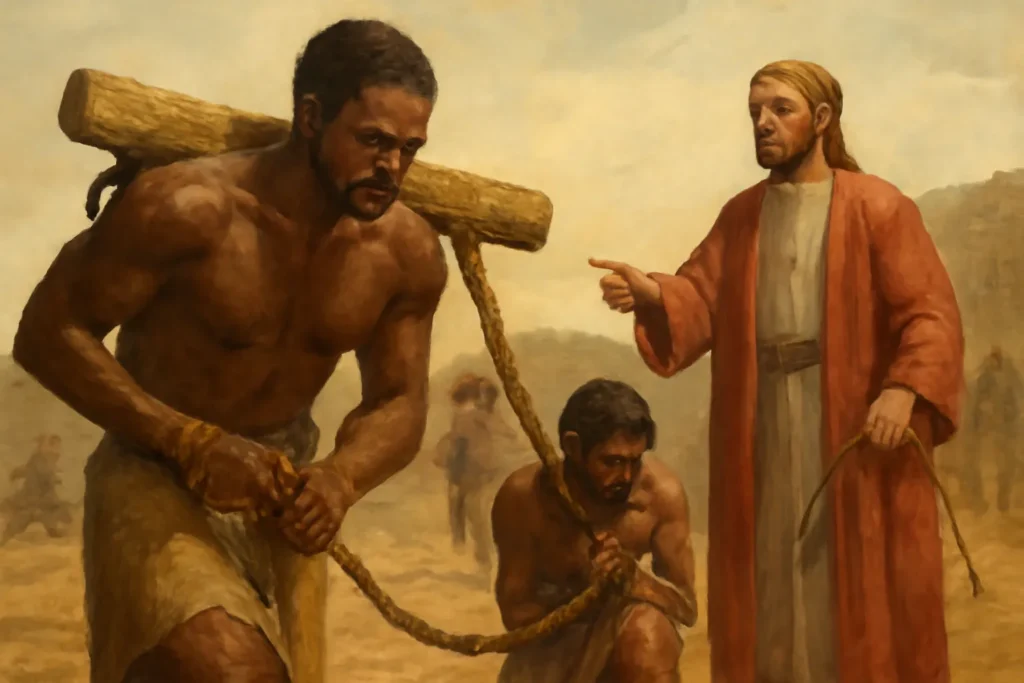
The topic often called biblical slavery sits at the intersection of ancient law codes, religious ideals, and shifting moral intuitions. To understand what the Bible says about slavery in the Hebrew Bible (often rendered as eved ivri or “Hebrew servant”) and in the New Testament, it helps to situate it in the broader ancient Near Eastern world where slavery was a widespread social and economic institution. In many societies of antiquity, slavery arose from war captives, debt, famine, or servitude tied to temple or royal households. It was not a single uniform system but a spectrum of practices that varied by region, era, and status of the enslaved person (war captive, debt slave, household servant, or temple servant). The biblical writers did not operate in a vacuum; their laws and narratives emerged in conversation with neighboring cultures, pastoral communities, and religious horizons that shaped ideas about ownership, obligation, and justice.
Economic and social function: Slavery could relieve debt or unemployment, enable household economies, and maintain labor systems necessary for agrarian life and urban projects.
Categories of bondage: The biblical text often distinguishes between different forms of servitude, including debt servitude, bond-servanthood within a kin group, and foreign servitude tied to land and market exchanges.
Regulation versus endorsement: Biblical authors seldom present slavery as an ideal; instead, they emphasize limits, protections, and periodic release or restoration, especially for the vulnerable.
One of the central interpretive tensions is whether the biblical material merely regulates a preexisting institution or encodes it as a divine or ethical norm. Many scholars argue that the biblical law code is best understood as a set of dueling impulses: an attempt to prevent brutal abuses in a world where slavery was ubiquitous, while also preserving a social order in which dependence and labor relations were codified. This tension is especially evident when comparing passages that appear to restrain harsh practices with passages that permit or regulate slavery in ways that modern readers rightly find troubling.
Historical and linguistic distinctions
In the Hebrew Bible, the terms translated as “slave” or “servant” cover a range of roles. A few important distinctions often get blurred in English translations:
Eved ivri (the Hebrew servant) typically refers to a person who sells themselves into servitude to pay off a debt or to enter into a household economy; after a prescribed period—often six years—the person could be released in the seventh year, unless they chose to remain in a bonded relationship with their master.
Bondservant or servant in many passages signals a more temporary and contractual relationship, sometimes different in tone and obligation from a slave for life.
Foreign or non-Israelite slaves (often from nations around you) could be owned for generations, depending on the law of the land, with different rules applying to their treatment and possibilities for purchase, inheritance, or release.
In the New Testament, the vocabulary shifts toward terms like slave and bondservant in a Greco-Roman context where slavery was also a widespread institution. The ethical and theological landscape expands to include principles such as liberty, equality in Christ, and mutual respect within household codes, which later theologians and reformers examined in light of modern human rights concerns. While some earlier interpreters used certain biblical passages to justify entrenched social hierarchies, others highlighted universal principles of dignity, justice, and neighbor-love that challenged or reinterpreted the practice of bondage.
Key Passages
The Bible contains a constellation of passages about slavery in the biblical world. They range from specific legal provisions about how to treat a Hebrew servant to broader ethical exhortations about equality and justice. Distinguishing Old Testament regulations from New Testament exhortations helps illuminate how readers have understood these texts across history.
Old Testament regulations on servitude and freedom
Several passages shape the historical practice and the moral debates surrounding biblical slavery in the Hebrew Bible:
Exodus 21:2-6 describes the treatment of a Hebrew servant, who serves six years and goes out in the seventh. If the servant chooses to remain with the master for life, an ear is pierced with an awl, signifying lifelong bondservanthood. This passage combines a structured release with a voluntary extension of servitude under certain conditions, illustrating complexity within a framework that sought to temper coercive bondage with some protections for individuals and families.
Exodus 21:7-11 addresses the transfer or sale of a young woman as a servant, setting rules about dowries, marriage expectations, and the rights and duties of her husband and master. This material is often cited in discussions of gendered dimensions of biblical servitude and how families navigated social vulnerability within the law.
Leviticus 25:39-46 allows Israelites to acquire slaves from the nations around them and to own them as property, albeit within a framework of fair treatment, debt and land concerns, and the possibility of eventual release. This text is frequently discussed in conversations about the contrast between humane treatment and the ownership of people as property.
Leviticus 25:10 and the following verses articulate the Year of Jubilee, a dramatic social reset at every fiftieth year in which lands return to their ancestral families and Israelite slaves are released. The Jubilee vision emphasizes restoration, redistribution, and a communal memory of liberation that challenges perpetual cycles of bondage.
Deuteronomy 15:12-15 instructs the release of a Hebrew servant after seven years and grounds the act of release in gratitude for God’s provision, urging the master to remember their own years of servitude in Egypt. This passage ties to ritual memory and social ethics.
Deuteronomy 23:15-16 commands not to return an escaped servant to the master, allowing the runaway to reside among the Israelites and not be delivered back if it would oppress the person further. This text is often discussed in debates about humanizing runaway workers and the limits of servitude in practice.
These passages illustrate a persistent tension within biblical law: a framework that acknowledges and regulates a familiar social order while also embedding principles intended to protect the vulnerable, provide opportunities for release, and remind communities of their own history of liberation.
New Testament references and developments
The New Testament shifts the focus to a Greco-Roman environment where slavery existed as a pervasive social institution. Several passages address how Christians should relate to masters and servants, while others emphasize the radical equality of all people in Christ. Key themes include obedience, ethical conduct, and transformative relationships within households and churches.
Philemon 1:16 is often central in discussions of voluntary emancipation. Paul’s letter to Philemon discusses Onesimus, a runaway slave, and urges Philemon to welcome him not merely as a slave but as a beloved brother in Christ. This passage is widely cited in discussions about early Christian attitudes toward slavery and potential avenues for emancipation or reinterpretation of social hierarchy.
Colossians 3:22-25 and Ephesians 6:5-9 instruct bondservants to obey their earthly masters “in everything,” with the caveat that they should serve as unto the Lord and that masters should treat their servants with fairness. The dual emphasis on obedience and righteous conduct has generated substantial scholarly debate about how Christians should live within oppressive social systems without endorsing them.
1 Timothy 6:1-2 and Titus 2:9-10 outline household codes in which slaves should regard their masters as worthy of all honor, and masters are urged to treat enslaved people justly and with respect. These passages have been read in various ways—from reinforcing existing hierarchies to encouraging humane treatment and restraint within the framework of a restless social order.
1 Peter 2:18-20 exhorts servants to endure mistreatment with patience, appealing to Christ’s own example, while also engaging with the larger Christian ethic of enduring suffering righteously rather than retaliating.
Galatians 3:28 articulates a decisive theological claim: There is neither bond nor free in Christ, highlighting a universal equality grounded in faith rather than social category. This text has been especially influential for abolitionist and later civil rights movements, even as scholars recognize that social structures persisted beyond spiritual egalitarian claims.
Luke 4:18 connects Jesus’ mission with liberation, proclaiming good news to the poor and freedom to the captives. While not a legal code about slavery, this passage has shaped ethical interpretations about the biblical liberty as a broader social horizon beyond the letter of law.
Taken together, these New Testament passages contribute to a complex picture: a community negotiating living within an entrenched social system while simultaneously expanding a transformative vision of what it means to be human and to participate in God’s justice. Readers have drawn from these texts both continuity with existing social orders and, in different moments and contexts, a push toward emancipation, equality, and dignity for all persons.
Interpretations
Across the centuries, interpreters of biblical slavery have produced a spectrum of readings. Some have used the text to defend existing social hierarchies, while others have argued that the Bible ultimately points toward universal principles of justice, freedom, and human dignity. The diversity of interpretation reflects the historical, cultural, and theological commitments of readers, as well as ongoing debates about how to translate ancient material to modern ethical horizons.
In the Enlightenment and modern era, many scholars and reformers reinterpret the biblical material through a lens of human rights, equality before God, and the inherent dignity of every person. These readings often foreground:
Galatians 3:28 as a radical equalizer, challenging hierarchical social structures even when legal codes permit them.
The Philemon text as a potential seed for emancipation or redefinition of social relations—arguments about Onesimus being “no longer as a servant but as a beloved brother” have been used to argue for more humane and respectful relationships that approach abolitionist ideals.
Recognition that old covenant laws were specific to a historical culture and did not create a universal blueprint for all societies, leaving room for ethical evolution and reinterpretation in light of later biblical testimonies and moral reflection.
A critique of ethnic or gendered oppression embedded in certain passages, with contemporary readers seeking to emphasize justice, mercy, and the protection of the vulnerable as central biblical motifs.
Other interpreters have approached biblical texts about servitude as regulative norms for their own historical moments, rather than universal endorsements. In these readings, contemporary questions about slavery require:
A careful distinction between legal regulation of a widespread system and the moral endorsement of that system by the divine author in ancient times.
An emphasis on contextual hermeneutics—that is, interpreting the biblical instructions within their ancient Near Eastern setting, including economic necessity, cultural norms, and the sovereignty of God over history.
A recognition that the biblical text contains ethical constraints that prevented more brutal practices, and that the trajectory of biblical revelation, especially in the New Testament, points toward a broader ethic of love, mutual respect, and justice.
Liberation theology and social justice perspectives
In Latin American and global theological contexts, liberation theology and related movements read biblical texts through a lens of liberation from oppression. These interpretations highlight:
God’s solidarity with the oppressed and the biblical call to justice for the vulnerable, which can include critique of exploitative social structures.
An understanding that biblical justice is not merely personal piety but a call to structural change, including reforms in economic, social, and legal systems that reduce coercive bondage and promote equality.
Attention to the living conditions of enslaved or formerly enslaved communities across history, and how scriptural principles have inspired people to advocate for freedom, dignity, and human rights.
Feminist biblical criticism and minority-majority scholarship examine how gender, race, and power intersect with the language of servitude in Scripture. They often emphasize:
Attention to women’s experience within household codes (for example, passages about enslaved or bound women and marriage practices) and how those texts have been mobilized or contested in different eras.
Critical examination of ownership narratives and how the Bible negotiates autonomy, consent, and family dynamics in patriarchal contexts.
Inclusive readings that reaffirm the Bible’s overarching commitments to dignity, justice, and liberation for all people, regardless of social category.
Historical-critical and contextual approaches
Scholars using historical-critical methods emphasize the importance of:
Distinguishing ancient law codes from New Testament ethics and from later Christian ethical development.
Examining translation choices and how terms like “slave,” “servant,” and “bondservant” can mask nuanced differences in social roles.
Exploring how later communities reinterpreted or transformed these texts as they confronted new social realities, including the abolition movements of the 18th and 19th centuries and modern civil rights struggles.
Conclusion
In sum, biblical slavery—encompassing Old Testament servitude, New Testament housing codes, and the broader cultural ecology of the ancient world—presents a complex portrait. It is a terrain where regulation and compassion, obligation and dignity, coexist in tension. The historical context reveals a society for whom slavery was a routine facet of life, while the text’s ethical trajectories reveal attempts to curb abuses, to set limits, and, over time, to broaden the moral imagination toward greater freedom and equality. Different readers across eras have highlighted different strands: some have cited passages that seem to endorse bondage, others have pointed to those that advocate release, universal kinship in Christ, and a hopeful horizon of liberation for the vulnerable. Reading these passages together—both in their ancient setting and in the light of modern ethical commitments—encourages a nuanced understanding of how sacred texts can speak to justice across centuries, while also acknowledging the harm that can arise when texts are used selectively to justify oppression. The conversation continues today as scholars, religious communities, and lay readers wrestle with how to honor historical context, respect human dignity, and pursue a more just world grounded in the ideals of compassion, mercy, and freedom for all people.











Leave a Reply