Bible Translation Spectrum: Literal to Paraphrase Versions
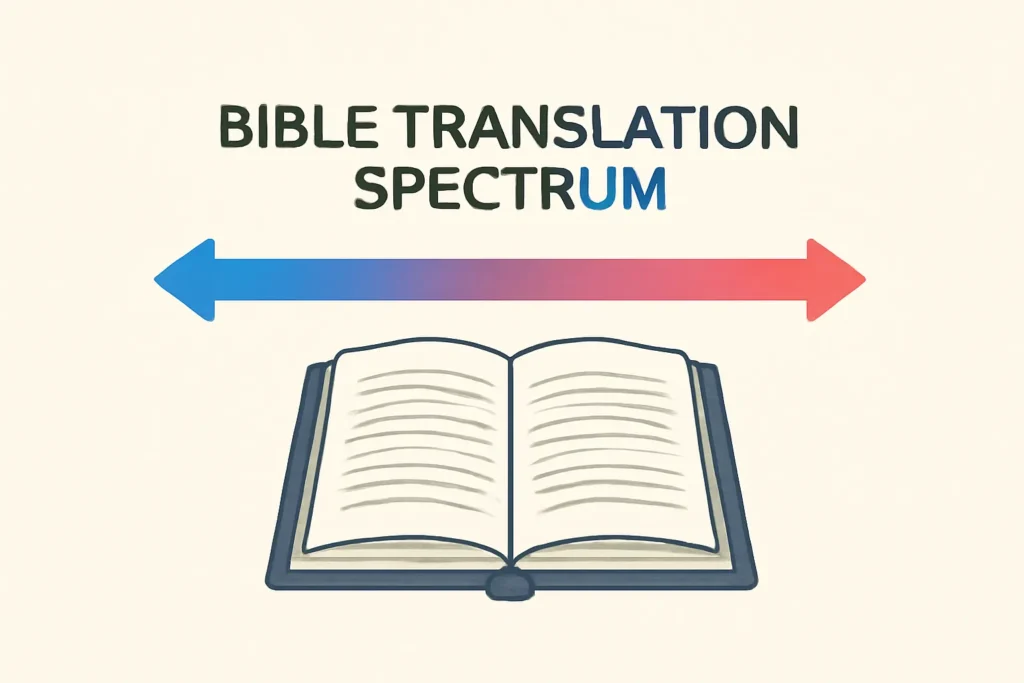
When readers approach the Bible in a new language or in a different translation, they often encounter more than a single “version.” What looks like a simple text is actually the product of a careful set of choices about language, culture, history, and audience. The idea of a translation spectrum helps explain why Bible translations vary in tone, structure, and clarity. This spectrum ranges from literal word-for-word renderings that strive to mirror the wording of the original languages to paraphrase paraphrasings that rephrase the meaning in contemporary idioms and syntax. Between these extremes lie translations that balance fidelity to form with accessibility to modern readers. In this article, we will explore the scope of Bible translation across the spectrum, the philosophies behind different translations, and practical guidance for readers choosing a version for study, devotion, or teaching.
What is meant by a translation spectrum?
The Bible translation spectrum is not a single measure but a continuum that captures how translators treat three core elements: words, grammar, and meaning. On one end sits the literal or word-for-word approach, which aims to preserve the original wording and syntactic structures as much as possible. On the opposite end sits the paraphrase approach, which emphasizes meaning and readability over exact phrasing, often rewording sentences, adding clarifying phrases, or reordering ideas to fit contemporary speech. Between these poles are a family of strategies that scholars and translators use to honor both the ancient texts and modern readers.
Word-for-word translations attempt to reproduce linguistic form as closely as possible to the source language, including idioms, order, and morphology where feasible.
Formal equivalence emphasizes linguistic fidelity and grammatical structure, sometimes at the expense of smooth English syntax.
Functional equivalence (also called dynamic equivalence) prioritizes conveying the sense and function of the original text in natural, idiomatic English.
Paraphrase aims to render the text in contemporary language, often expanding or reinterpreting sentences to illuminate meaning for today’s readers.
The ends of the spectrum: literal versus paraphrase
Literal, word-for-word translations
At the literal end of the spectrum, translators focus on preserving the exact words and, to the extent possible, the grammatical structure found in the Hebrew, Aramaic, and Greek manuscripts. This approach can be valuable for serious study, textual comparison, and understanding original vocabulary. It often yields a text with unusual cadences or terms that require readers to consult glossaries or study notes. Classic examples of this end of the spectrum include a number of bible translation families of the formal equivalence school.
Paraphrase and reader-friendly paraphrase versions
On the paraphrase end, translators prioritize readability and clear comprehension over exact wording. Paraphrase translations rephrase idioms, insert explanatory phrases, and restructure sentences to mirror natural English speech. They can be especially helpful for casual reading, outreach, or for readers new to the biblical languages. Paraphrase versions create a bridge between ancient meaning and modern understanding, but they are less suitable for line-by-line textual analysis.
Where most readers land in between
Most translation spectra placements fall in between these two extremes. A variety of balanced translations seek to honor original meaning while maintaining readability. Readers who want to study the text closely often consult more than one translation, using a side-by-side or parallel Bible to compare how different translators handled particular verses.
How translators navigate the spectrum: principles and methods
Translators operate under a set of guiding principles that help them decide how to render a difficult phrase, a culturally loaded idiom, or a syntactically complex sentence. The key debates revolve around faithfulness to the syntax of the source language, clarity in the target language, and Theological sensitivity to preserve accurate doctrine and nuance.
Textual basis and manuscript decisions: Before translation begins, scholars determine which underlying Hebrew, Aramaic, and Greek texts to use. This choice can influence how literally or freely a verse is rendered.
Linguistic priorities: Translators decide whether to prioritize grammar (keeping biblical syntax) or semantics (religious and cultural meaning) for the receptor language.
Audience and purpose: A translation intended for public worship or devotional reading may differ from a translation designed for scholarly exegesis.
Formal equivalence versus dynamic equivalence
The most common framework for understanding the spectrum is the distinction between formal equivalence (a more literal approach) and dynamic equivalence (a more functional, thought-for-thought approach). Proponents of formal equivalence stress that readers should see the original sentence structure and vocabulary; proponents of dynamic equivalence stress that readers should grasp the intended meaning even if that requires rephrasing. In practice, many translations are hybrids, applying semantic translation strategies to difficult phrases while attempting to maintain a coherent English style.
Beyond the philosophy of translation, readers should consider the level of readability and the availability of scholarly notes. Some translations pair the main text with extensive commentary, lexicons, and maps, providing a robust study Bible experience. Others prioritize a clean text that can be used in liturgical settings or daily devotion. The style choices—such as pronoun usage, verb tense, or the treatment of proper names—also shape how a translation feels to a modern reader.
Major families of Bible translations
Across the bible translation spectrum, publishers group translations into families that share a common translation philosophy. While individual editions can vary, understanding these families helps readers anticipate a translation’s approach before turning a page.
Formal equivalence family (word-for-word)
Translations in this family aim to reproduce the syntax and vocabulary of the source texts as closely as possible, often preserving archaic or formal English. They are frequently favored by students of the Bible, scholars, and translators who want to perform their own exegesis with minimal intermediary interpretation.
KJV (King James Version) — A towering historical translation known for its majestic, poetic language; often used in liturgy and classical study.
NASB (New American Standard Bible) — Noted for its literal fidelity and precise word choices; widely used in academic and devotional contexts that require close textual alignment.
ESV (English Standard Version) — A contemporary formal-equivalence Bible that seeks to balance accuracy with readable English; popular among many churches and scholars.
RSV (Revised Standard Version) — An earlier modern update that influenced later formal-equivalence translations and remains a staple in some academies.
NRSV (New Revised Standard Version) — A widely used scholarly edition that emphasizes inclusive language and careful textual scholarship.
Functional equivalence family (dynamic equivalence)
This branch emphasizes meaning over exact wording, translating phrases into natural, contemporary English while trying to maintain the original sense. These translations are often praised for their readability in public worship, personal reflection, and outreach.
NIV (New International Version) — A balanced, readable English rendering that aims for accessibility without sacrificing essential accuracy.
CSB (Christian Standard Bible) — A modern, highly readable translation built on careful text-critical work and a commitment to clarity.
NLT (New Living Translation) — Focused on natural, idiomatic English; excellent for devotional reading and new readers.
Holman CSB — A revision that emphasizes readability while retaining fidelity to the source texts.
TNIV (Today’s New International Version) — A modern revision of the NIV intended to reflect contemporary usage and language while preserving meaning.
Paraphrase family (thought-for-thought in extended form)
Translations in the paraphrase camp are designed to convey ideas in everyday language, often taking poetic or literary freedoms to help readers grasp the overall message. They are particularly helpful for new readers, outreach contexts, and casual reading where the goal is a clear sense of narrative and doctrine rather than precise wording.
The Message — A large-scale paraphrase that aims to capture the tone and contemporary feel of the original, sometimes reimagining phrases for modern readers.
GNB (Good News Bible / Today’s English Version) — Aimed at straightforward, accessible English for broad audiences; often used for youth and outreach materials.
The Living Bible — A paraphrase that reads like a narrative and is frequently used for devotional reading and family study.
Hybrid and balanced translations
Some editions intentionally blend strategies to provide both readability and fidelity. These paraphrase-inclusive translations might render certain sections in modern syntax while preserving key technical terms with brief glosses. Hybrid approaches are common in study Bibles and popular “read and reflect” editions.
Choosing the right translation for you
The best Bible translation for any reader depends on goals, background, and context. Here are practical considerations and common use cases to help you decide which voice to trust for study, worship, or personal growth.
Study and exegesis
If your goal is careful study, word-for-word and formal equivalence translations provide the closest access to the original wording. You may wish to compare multiple translations, consult critical notes, and use lexicons to parse difficult phrases. Bilingual or parallel editions can be especially helpful for cross-checking wording across languages.
Devotional reading and spiritual formation
For daily devotion, a readable dynamic equivalence or paraphrase translation can be more engaging and emotionally resonant. These versions often offer a sense of narrative flow that makes spiritual reflection more natural and less encumbered by archaic syntax.
Teaching, preaching, and public worship
In corporate settings, many congregations adopt translations that balance clarity with fidelity. A middle-ground translation—one that avoids heavy archaisms while maintaining a solid connection to the original text—can be a practical choice. Some pastors also use multiple translations in sermon preparation to illustrate how different translators handle tricky passages.
Youth and new readers
For younger audiences or readers new to Scripture, paraphrase or readable dynamic translations can reduce initial barriers, offering an approachable doorway into biblical themes and characters. Over time, readers can graduate to more literal translations as their vocabulary and doctrinal understanding mature.
The importance of cross-checking
No single translation perfectly captures every nuance. Practical readers benefit from using parallel Bibles, online comparison tools, and scholarly commentaries to triangulate meaning. When a verse seems to present a theological or textual puzzle, consulting multiple translations often clarifies the range of valid interpretations.
Textual bases and translation history: a quick overview
The differences you see across translations stem in part from the textual base—the actual manuscripts translators rely on—and in part from the translator’s philosophy. An awareness of these foundations helps readers understand why translations vary.
Source languages: Hebrew and Aramaic for the Old Testament; Greek for the New Testament. Some translators consult early versions such as the Septuagint (Greek Old Testament) or the Latin Vulgate to cross-check wording and phrasing.
Textual families: There are different critical editions of the Hebrew Bible and Greek New Testament that reflect decades of manuscript study and scholarly debate.
Historical context: The social and linguistic context of the English-speaking audience influences modern translations. Earlier translations reflected the English of their day, while newer translations aim for natural modern speech.
Historical highlights in translation
The history of Bible translation includes significant milestones. The KJV of 1611 became a standard for centuries, shaping English-speaking Christianity and literary culture. In the 20th and 21st centuries, newer translations emerged to address manuscript discoveries, linguistic changes, and inclusive language considerations. Each generation of translators has grappled with a tension: to remain faithful to the ancient text while making it accessible to contemporary readers.
Practical tips for readers navigating the spectrum
Whether you are a student of the Bible, a pastor, or a curious reader, here are actionable strategies to work with the bible translation spectrum effectively.
Use more than one translation when studying a difficult passage. A side-by-side comparison can reveal how different translators approach syntax, vocabulary, and nuance.
Consult study aids: interlinear charts, lexical glossaries, and concordances help you see where literal translations diverge from dynamic equivalents and how idioms are rendered.
Check the original language notes in study Bibles or scholarly editions. These notes illuminate decisions about tense, aspect, and semantic ranges that a translator must choose among.
Match translation to purpose: for personal devotion, a readable dynamic or paraphrase version might be best; for grammar or exegesis, a formal equivalence edition can be more helpful.
Be mindful of paraphrase limits: paraphrase translations can illuminate meaning, but they may also introduce interpretation that reflects the translator’s worldview or doctrinal emphasis.
A practical reading plan
If you want to explore the spectrum in a structured way, try this plan:
Start with a readable dynamic-equivalence translation for daily reading.
Cross-check with a formal-equivalence edition for passages that seem ambiguous.
Use a paraphrase version to review the overall sense or to engage in group discussion.
Reference a study Bible or commentary to ground your understanding in historical context and linguistic nuance.
Conclusion: embracing the spectrum for deeper engagement
The bible translation spectrum is not a ladder with a single rung waiting at the top but a map of linguistic and interpretive choices that shape how readers encounter Scripture. From the literal, word-for-word renderings that echo ancient syntax to the paraphrase versions that speak in today’s idiom, each translation family offers distinct advantages for different goals. By understanding the spectrum—its formal equivalence and dynamic equivalence poles, as well as the hybrid strategies in between—readers can select tools that best support study, worship, and personal growth. In practice, engaging with multiple translations and consulting scholarly resources fosters a richer, more nuanced appreciation of the biblical text and its enduring message for communities across cultures and eras.
Whether you are just beginning to explore the Bible or you are sharpening your exegetical skills, recognizing the translation spectrum helps you read with discernment, clarity, and an openness to the diverse voices that have carried the biblical narrative across time. By approaching translations with intention—knowing when to read for precision and when to read for meaning—you can experience the Bible as a living document that invites reflection, debate, and discovery.










Leave a Reply