Bible Translation Word for Word: A Guide to Literal Bible Translation
Bible Translation Word for Word: A Guide to Literal Bible Translation
Understanding how the Bible is translated requires more than simply choosing a version and reading. For many readers, a central question is: what does it mean to translate word for word? This article explores literal Bible translation as a distinct approach, often called formal equivalence, and contrasts it with other methods. It offers guidance for readers, students, pastors, and translators who want to grasp the aims, strengths, and limitations of verbatim translation in the biblical tradition. Throughout, you will see variations of the phrase treated to reflect the range of language used in discussions about this topic, including word-for-word rendering, literal rendering, and literalistic translation.
What is a word-for-word translation, and why does it matter?
At its core, a word-for-word translation seeks to render as closely as possible the lexical items (the words themselves) and the grammatical structures of the source language into the target language. In biblical contexts, the primary source languages are Hebrew (for most of the Old Testament) and Greek (for the New Testament), with some Aramaic portions. A literal translation aims to preserve word order, tense, voice, case, and other grammatical features wherever feasible—subject to the natural syntax of the target language. An idealized, pure verbatim rendering would feed readers directly from the source text with minimal interpretive adding.
However, no translation exists in a vacuum. Every choice—how to handle idioms, how to translate proper names, how to render rhetorical devices—affects readability, comprehension, and theological nuance. Therefore, a word-for-word approach is best understood as one pole on a spectrum of translation philosophy. The opposite pole is often described as dynamic equivalence or functional translation, where the goal is to convey the sense in the receptor language even if that requires rephrasing or replacing idioms with more natural equivalents in the target language.
The history of literal Bible translation
The tradition of literal translation has deep roots in biblical scholarship. Early English versions, including the King James Version (KJV), were often esteemed for their attempt to adhere closely to the wording of the Masoretic Text for the Old Testament and the Textus Receptus for the New Testament. Throughout the 20th century, translators increasingly weighed fidelity to form against readability, which gave rise to several widely used editions that explicitly emphasize formal equivalence.
The emergence of formal-equivalence translations in the early to mid-20th century, aiming to preserve syntax and word order where possible.
Advances in textual criticism and the discovery of earlier manuscripts, which refined the source base for literal renderings.
The rise of modern literal translations that publish extensive notes about textual variants and translator decisions, helping readers understand where a word-for-word rendering ends and interpretation begins.
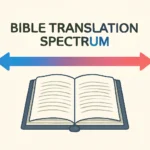
Formal equivalence vs dynamic equivalence: a spectrum
Translators often describe their approach as existing on a spectrum between formal equivalence and dynamic equivalence.
Formal equivalence (word-for-word, literal rendering): prioritize a close tie to the words and grammar of the source language. Benefits include transparency of the original text’s wording and a framework for textual study; drawbacks can include stiffness, awkward idioms, and potential obscurity in natural-sounding English (or other target languages).
Dynamic equivalence (functional equivalence, meaning-based rendering): prioritize readability and the transmission of concepts and impact. Benefits include smooth narration and accessibility; drawbacks can include drift from the original wording or ambiguity about the exact wording of the source texts.
Optimal equivalence (an attempt to balance form and meaning): seek to preserve both the wording and the sense, adjusting the degree of literalness based on context, genre, and audience.
Examples of translations that lean toward formal equivalence include certain editions of the NASB (New American Standard Bible) and ESV (English Standard Version). Examples of translations that emphasize dynamic equivalence include the NIV (New International Version) and the NIRV (New International Readers Version). Many modern translations sit in between, offering notes and alternatives to help readers navigate the word-for-word and thought-for-thought choices that were made.
The challenges of a word-for-word approach
Translating word-for-word presents multiple technical and interpretive challenges.
Hebrew and Greek linguistic differences
Hebrew is often described as a root-based language, where a small set of consonantal roots combines with patterns to generate related words. Greek, especially Koine Greek of the New Testament, has a highly inflected verbal and nominal system with nuances that can be difficult to capture in English word order. A strictly literal rendering may run into problems such as:
Rarely does Hebrew or Greek mirror English word order; forcing a literal order can create sentences that feel artificial or hard to parse.
Words in the source language may have broad semantic ranges; a lexeme may carry shades of meaning that are only partially recoverable in another language.
Verbs carry aspect and mood that can be difficult to reproduce exactly in English tenses and voices.
Idioms, figurative language, and cultural distance
The Bible is rich with idioms, metaphors, and cultural references that are rooted in ancient Near Eastern and Greco-Roman contexts. A strictly literal rendering can render these expressions opaque to modern readers. For example, Judean agricultural imagery or ceremonial terms may be faithful to the source text but require explanatory notes to convey the intended meaning. In such cases, translators often:
Provide footnotes or endnotes explaining the cultural context.
Offer alternative renderings in brackets or as a separate line in the translation.
Use glosses—brief explanatory phrases attached to the term.
The grammar and syntax hurdle
English grammar can differ substantially from the original languages. A word-for-word translation may preserve the original syntactic patterns but clash with natural English sentence structure. For instance, Hebrew often places the verb before the subject, or repeats a word for emphasis. To a modern reader, this can be jarring if left unreconciled. A translator must decide whether to:
Conform to English syntax while preserving the sense, even if that means a small degree of departure from the original order.
Retain a more literal order and then rely on translation notes to guide interpretation.
Break a sentence into smaller English phrases to aid comprehension while carefully marking where the language diverges from the English norm.
Popular literal translations and their ethos
Several well-known translations advocate for a word-for-word or formally oriented approach. Each edition reflects a particular philosophy about where to draw the line between literal rendering and readability.
Notable examples
NASB (New American Standard Bible): widely regarded as one of the most literal modern translations, with careful attention to Greek and Hebrew grammar and vocabulary.
ESV (English Standard Version): emphasizes formal equivalence while striving for literary clarity and doctrinal precision.
KJV (King James Version): a classic example of a formal approach as originally produced in Early Modern English; its phrasing remains influential in modern Bible study.
RSV (Revised Standard Version) and subsequent updates: aimed to preserve the traditional cadence while incorporating modern scholarship.
HCSB (Holman Christian Standard Bible) and its successors: attempt to balance literal rendering with accessibility to contemporary readers.
Readers should note that the very term literal translation can be nuanced. Some editions advertise strict formal equivalence in most places, but still employ interpretive decisions for ambiguous phrases or cultural expressions. A critical reader will often consult footnotes or appendices to understand what was added, omitted, or adjusted in the translation process.
How translators work: steps in a word-for-word project
Translating a biblical text with a word-for-word mindset involves several disciplined steps across linguistic, textual, and theological domains. Here is a typical workflow that undergirds literal renderings:
Textual base selection: Decide which manuscript family to use as the base text (e.g., Masoretic Text for Hebrew, Nestle-Aland/UBS text for Greek). This is fundamental because the chosen base can influence word choices and clause structure.
Lexical analysis: Compile a lexicon that captures the most common meanings of each word in the source language, including polysemy and context-sensitive senses.
Syntactic mapping: Attempt to render the source syntax into the target language while preserving as much structural correspondence as possible, noting where English would require reorderings or clarifications.
idiom and metaphor handling: Identify idioms, metaphors, or culturally bound phrases and decide whether to translate literally, replace with a natural equivalent, or add a clarifying note.
Text-critical notes: Record variants found in textual manuscripts and explain how they might affect translation decisions.
Quality control and peer review: Engage other scholars and linguistic experts to review renderings, ensuring consistency in vocabulary, grammar, and theological nuance.
Textual base and source manuscripts
The fidelity of a word-for-word rendering is heavily influenced by the underlying source texts. Because the biblical texts have a long manuscript history, translators must choose among variants, often presenting them in notes. The discipline of textual criticism seeks to determine the most likely original wording, and this determination directly impacts the accuracy of a verbatim translation.
Notes, footnotes, and the reader’s guide
One common feature of literal translations is the inclusion of footnotes and cross-references that explain differences among textual traditions or indicate where a word-for-word rendering might not capture the full sense of the original. Readers new to grammatical nuance will benefit from these resources, which help bridge the gap between source-language grammar and target-language comprehension.
Reading strategies for a word-for-word Bible
Approaching a word-for-word translation with intention can maximize understanding and minimize misinterpretation. Consider these practical strategies:
Read with a glossary or lexicon at hand to interpret key terms that often carry multiple meanings.
Use the footnotes to gauge where the translation might reflect a deliberate choice rather than a direct rendering.
Compare passages across translations to see how different teams solve the same linguistic challenge.
Pay attention to grammar cues and how English syntax is used to convey the same idea as the source language.
Consider the genre of the passage (narrative, poetry, prophetical, epistolary) since different genres present distinct translation challenges.
Critics and defenders of literal Bible translation
Debates about word-for-word translation are long-running and multi-faceted. Supporters argue that literal rendering preserves the texture of the original text, enabling careful scholarly study, textual criticism, and doctrinal precision. Critics, meanwhile, contend that excessive literalness can obscure meaning, hinder readability, and misrepresent idiomatic expressions. They advocate for more readable or dynamic approaches that aim to convey the intended message to contemporary audiences even if some literal nuance is softened.
In practice, many scholars and readers adopt a pragmatic stance: use a literal translation as a close vantage point for textual study, complemented by other translations or scholarly resources that illuminate idioms, cultural background, and theological nuance. This multiplies the interpretive options available to a reader and helps guard against overconfidence in any single rendering.
Practical guidance for readers and students
For learners and practitioners, the question of how to engage with a word-for-word translation can be guided by a few practical considerations:
Identify your goals: Are you studying wording, textual variants, or the theological sense? Your goal will steer your choice of translation and approach to interpretation.
Know the strengths: A formal-equivalence edition can be invaluable for word studies, cross-referencing, and historical linguistics.
Be aware of limits: Recognize where a literal rendering might obscure nuance or context, especially with idioms or parallelism in poetry.
Use complementary resources: For deeper understanding, consult grammars, lexicons, commentaries, and original-language studies in addition to the Bible text itself.
Check multiple translations: Cross-comparison is a powerful tool for discerning how different translators grapple with the same verse.
Glossary of core terms
Understanding the discourse around literal translation involves a few key terms that recur in scholarly and lay discussions. Here is a concise glossary:
Word-for-word translation or verbatim translation: an approach that prioritizes rendering each word and its direct grammatical function from the source language into the target language.
Formal equivalence: a translation philosophy that strives to preserve form, syntax, and vocabulary as closely as possible to the original text.
Dynamic equivalence or functional translation: a translation philosophy that prioritizes meaning, readability, and natural expression in the target language, sometimes at the expense of exact word-for-word correspondence.
Lexicon: a dictionary of words and their meanings as used in a particular language; in translation studies, it often includes senses, nuances, and collocations critical for accurate rendering.
Textual criticism: the scholarly discipline that studies manuscript evidence to determine the most likely original text, which informs translation choices.
Gloss/footnote: an explanatory note accompanying a translation that clarifies meaning, origin, or textual variation.
Concluding reflections: the place of word-for-word translation today
In a world with diverse readers, a strong case can be made for a holistic approach to Bible translation that respects the original languages while acknowledging modern readers’ needs. Word-for-word translation remains a foundational tool for serious textual study, linguistic analysis, and scholarly debate. It provides a dependable footprint of how the text might be understood in its own terms, enabling readers to examine how translators wrestled with vocabulary, grammar, and cultural distance.
Yet language is living, and meaning is often layered. Therefore, the best practice in today’s biblical study often involves using multiple resources in tandem: a solid formal-equivalence edition for close reading, a dynamic-equivalence edition for accessible comprehension, and scholarly commentaries and dictionaries that illuminate historical contexts and idiomatic usage. By embracing a spectrum of translations and accompanying notes, readers can cultivate a nuanced, well-informed engagement with the biblical text.
Final cautions and cautions for aspiring translators
For those who aspire to tackle literal Bible translation as a craft or vocation, here are a few cautions and best-practice recommendations:
Maintain humility about the limits of language: even the most careful literal rendering may not capture every shade of the source text’s meaning.
Document your methodology: disclose the rationale for choosing particular target-language renderings, especially when choosing between competing equivalents.
Respect genre and audience: a single translation philosophy may not suit all biblical genres; consider tailoring the approach to narrative, poetry, or prophecy as appropriate.
Engage with the original languages: ongoing study of Hebrew and Greek can deepen your appreciation for the challenges of literal rendering and improve accuracy.
Embrace collaboration: translation is often a communal, scholarly effort that benefits from diverse linguistic and theological perspectives.
In sum, Bible translation word for word—whether described as verbatim translation, formal equivalence, or literal rendering—is a disciplined mode of engagement with sacred texts. It invites readers to look closely at the words themselves, while also recognizing the necessity of notes, context, and cross-cultural understanding to interpret those words responsibly. By approaching literal translation with care and curiosity, readers can better appreciate the texture of biblical language and enrich their study of Scripture.
Whether you are a student, a teacher, or a curious reader, the landscape of word-for-word translation offers tools that, when used thoughtfully, can illuminate the original meaning of biblical passages and support a robust, nuanced faith tradition.









Leave a Reply