Bible Version Chart: A Comprehensive Guide to Bible Translations and Comparisons
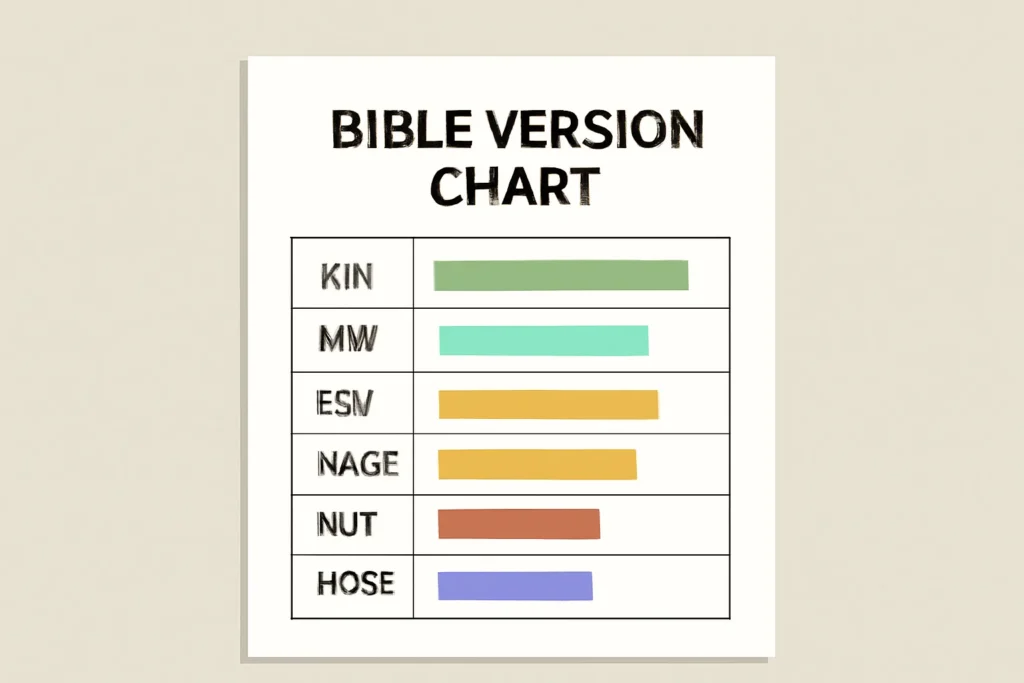
In the study of scripture, a Bible version chart serves as a practical map for understanding how different translations render the original languages. This article offers a detailed exploration of bible translation charts, including how they are constructed, what to look for when comparing versions, and how to select the best translation for various purposes. You will encounter variations of the term bible version chart—sometimes called a translation comparison chart, a version comparison chart, or a translation grid—all aiming to help readers see the strengths, weaknesses, and intended uses of different Bible translations.
What a Bible Version Chart Is and Why It Matters
A Bible version chart is a structured resource that aligns multiple translations side by side or in a way that makes their differences easy to spot. While a traditional table can be useful, a well-designed chart can also be presented as a guide with descriptive notes, bullet lists, and cross-references. The core idea behind any version chart is to provide a concise way to compare:
translation philosophy (word-for-word vs thought-for-thought vs paraphrase)
original language bases (Hebrew, Aramaic, Greek, and the manuscripts used)
readability and targets (scholarship, devotional reading, or public worship)
historical context (theological emphasis, gender-inclusive language, or cultural sensitivity)
When readers use a bible translation chart, they gain a clearer sense of which version to reach for depending on the task—whether it is rigorous study, devotional reading, sermon preparation, or cross-language comparison. This article uses the idea of a chart to organize information about major translations, with practical notes on how to interpret differences you see in any given chapter or verse.
Translation Philosophies: The Framework of a Version Comparison
Translations tend to cluster along a spectrum of translation philosophies. Understanding these categories helps you read any bible version chart more accurately.
Formal Equivalence (Word-for-Word)
Versions described as formal equivalence aim to reproduce the wording and sentence structure of the original languages as closely as possible, while still being readable in the target language. They are often preferred for in-depth study and precise cross-referencing. Typical examples include:
NASB (New American Standard Bible) and NASB 2020 revision
ESV (English Standard Version)
KJV (King James Version)
NKJV (New King James Version)
RSV (Revised Standard Version) and NRSV (New Revised Standard Version)
In many charts, you will see these labeled as word-for-word translations or formal equivalence translations. They tend to retain more literal renderings of nouns, verbs, and idioms, which can require careful reading but offers a solid basis for textual analysis.
Dynamic Equivalence (Thought-for-Thought)
Translations in this category prioritize conveying the meaning and readability in contemporary English. They aim to preserve the sense of the original text while improving natural flow in the target language. This approach is often chosen for:
NIV (New International Version), especially in its modern updates
NLT (New Living Translation)
CEB (Common English Bible)
Paraphrase
Paraphrase translations prioritize readability and contemporary language, sometimes at the expense of a close adherence to the exact words of the original languages. They are often best used for introductory reading, outreach, or getting the gist of a passage quickly.
MSG (The Message)
TLB (The Living Bible)
In a chart, paraphrase items are marked as highly dynamic or highly interpretive, and readers are advised to consult more literal translations for precise study.
Commonly Referenced Translations and Their Identities
Below is a concise overview of some widely used Bible translations, organized by broad categories of translation philosophy and by common usage. This section is designed to help you understand where each translation tends to fit in a bible version chart.
Formal Equivalence Leaders
KJV (1611; classic language; foundational text for English-speaking readers)
NKJV (updates archaic language while preserving the original phrasing and cadence)
NASB (highly regarded for precision in scholarly study; NASB 1995 and NASB 2020 editions)
RSV/NRSV (historially significant; NRSV updates inclusive language for academic and liturgical use)
Dynamic Equivalence and Readable Translations
NIV (widely used in churches; balanced between accuracy and readability)
NLT (clear, natural English; strong devotional and youth outreach appeal)
CEB (clear, modern English with inclusive language considerations)
Paraphrase and Broad Readability
MSG (The Message; contemporary idiom and expressive paraphrase)
TLB (The Living Bible; paraphrase aimed at ease of understanding)
Catholic and Multilingual Perspectives
Douay-Rheims (classic Catholic English translation from the Latin Vulgate)
NABRE (New American Bible Revised Edition; used in many Catholic contexts)
Reina-Valera (spanish Bible; classic for Spanish-speaking readers, with modern revisions)
Core Elements of a Translation Chart: What to Look For
When assembling or interpreting a bible version chart, certain elements help you compare translations effectively. Here are the core components you will typically encounter or want to include:
Abbreviation and Full Name of the translation
Publication Date and Major Edition (e.g., 1984 NIV, 2011 NIV)
A well-constructed bible translation chart often includes sample verse renderings to illustrate how a given passage appears in each translation. If a chart is designed for teaching, you might also see:
Key verse highlights (verses that demonstrate reading differences)
Cross-references (where a verse is echoed in other books or translations)
Textual notes (variant readings and manuscript evidence)
Using a Bible Version Chart for Study and Teaching
A practical bible version chart is not merely a list of translations; it is a tool for critical thinking and informed reading. Here are strategies to use such a chart effectively:
Match the purpose to the translation: choose a formal-equivalence version for close study of the original language and a dynamic-equivalence version for daily reading.
Cross-check key passages across several translations to discern how meaning shifts with language choices.
Pay attention to textual notes that accompany certain verses, especially when there are known manuscript variants.
Consider gender language and ecumenical considerations in the chart’s notes if you are teaching in a diverse audience.
Use parallel reading by placing two or three translations side by side in a study session to highlight differences and common ground.
How to Build a Personal Bible Version Chart
Creating your own version chart can be a rewarding exercise that clarifies your reading plan and study goals. Here is a simple approach you can adapt:
List translations you regularly encounter or want to explore (for example: KJV, ESV, NIV, NASB, NRSV, NLT, CSB, MSG).
Record essential attributes next to each entry: translation philosophy, primary manuscript base, target audience, notable features.
Add a short sample verse to illustrate how it renders a familiar passage (e.g., John 3:16 or Psalm 23:1).
Note usage tips for study, devotion, or liturgy based on your goals.
Update periodically as new editions appear or as your study needs change.
Case Studies: How the Chart Helps in Real-Life Scenarios
Case Study A: Preparing a Sermon on Mercy
A preacher preparing a sermon on mercy might examine a bible version chart to compare how each translation renders Luke 6:36-38 or the parable of the Good Samaritan. The formal-equivalence options (NASB, ESV) help the preacher stay close to original phrasing for precision, while the dynamic-equivalence options (NIV, NLT) aid in fresh, contemporary understanding for the audience. Paraphrases (MSG) could be used as a supplementary tool to capture broad themes, but not as the primary text for study.
Case Study B: Language Accessibility in a Multilingual Community
In a community where English is a second language, a chart can help identify translations that maximize clarity. Readability scores and clear contemporary language in translations like the CEB or NLT can support inclusive worship and outreach. The chart can also flag passages where footnotes reveal idioms that may benefit from explanation during public reading.
Case Study C: Academic Research in Scripture Textual Criticism
Scholarship often relies on translations that disclose textual basis and manuscript evidence. A robust bible version chart for academics would emphasize editions with NA27/NA28 or UBS5 apparatus, note where critical editions diverge from the Textus Receptus, and highlight passages with significant variant readings. This allows researchers to weigh how translators handle difficult passages and how translation choices align with textual criticism conclusions.
Notes on Textual Bases and Manuscripts
Understanding the textual basis of a translation helps explain some of the differences you see in a chart. The main idea is that modern translations usually rely on critical editions of the Hebrew Masoretic Text for the Old Testament and critical editions of the Greek New Testament (for example, NA28, UBS5). Some older or more traditional translations may reflect earlier Hebrew texts or a different set of Greek manuscripts, such as the Textus Receptus. In a chart, you may encounter phrases like:
Critical text vs Majority text bases
references to apparent variants in key verses
footnotes indicating alternate renderings or manuscript support
These notes help readers gauge how much weight to give a particular rendering and how stable or debated certain readings may be.
Frequently Asked Questions About Bible Version Charts
Why are there so many translations? Differences in philosophy, manuscript bases, and language update cycles lead to a variety of translations that serve different needs—study, devotional reading, teaching, and cross-cultural ministry.
Is one translation enough? For most serious study, scholars recommend consulting multiple translations and, if possible, the original languages or a translation with robust textual notes.
How do I choose the right version? Start with a purpose (in-depth study vs devotional reading), consider readability, and consult a translation chart to compare the options side by side.
Do translations change? Yes, as language evolves and manuscript evidence is reevaluated, new editions update wording and notes to reflect current scholarship.
Important Considerations When Reading a Translation Chart
While a chart offers a snapshot of how translations differ, readers should bear in mind several important considerations:
Context matters—translation choices can be influenced by cultural, theological, and liturgical contexts.
Footnotes matter—often the most valuable information appears in the notes, which explain alternatives and manuscript evidence.
Language evolution—some terms historically carried different nuances; modern translations update semantic ranges for current readers.
Specialized use—family Bible editions, study Bibles, and scholarly editions may introduce additional features like cross-references, maps, and lexical notes that affect how you use the version chart.
Glancing at a Sample Translation Snapshot
To illustrate how a bible version chart might present information, consider a brief snapshot like this, described in prose rather than a table:
KJV — 1611; textual basis primarily from the Textus Receptus for the New Testament; language retains Early Modern English cadence; use historical-liturgical contexts.
ESV — 2001; formal equivalence with attention to readability; NA28/UBS5 influenced Greek text; suitable for scholarly study with readable phrasing.
NIV — 2011 edition; balanced translation for broad readership; dynamic equivalence meets contemporary language expectations; often used in classrooms and churches.
NLT — 1996/2004/2017 revisions; dynamic equivalence with emphasis on clear, natural language for everyday readers; strong devotional appeal.
MSG — paraphrase; very free rendering designed to communicate meaning in contemporary idiom; primarily for broad accessibility rather than precise study.
The above snapshot demonstrates how a user might interpret differences at a glance: the combination of translation philosophy, textual basis, and typical use provides a quick read on what to expect from each version.
Common Misconceptions About Bible Translations
Readers often encounter misunderstandings when using translation charts. Here are a few common misconceptions and clarifications:
All translations are equally accurate — In reality, each translation makes deliberate choices about words, grammar, and interpretation. A chart helps make those choices explicit so users can judge adequacy for their purpose.
A single modern translation replaces all others — Most readers benefit from consulting multiple translations to capture nuances that a single rendering might miss.
Paraphrase translations are useless for study — While paraphrases are not ideal for precise exegesis, they can illuminate meaning and assist in understanding difficult passages when used carefully and in context with more literal translations.
Best Practices for Using the Bible Version Chart in various Settings
In personal study: start with a dynamic-equivalence translation for readability, then consult a formal-equivalence version for closer examination of key verses.
In classroom instruction: build a small set of translations representing the main approaches (e.g., a formal-equivalence version, a dynamic-equivalence version, and a paraphrase) to guide discussion.
In worship or liturgy: consider a translation that preserves cadence and rhetorical elements suitable for public reading, often leaning toward accessible dynamic-equivalence or literary formal equivalents.
In cross-language ministry: a chart that includes major non-English translations (e.g., Spanish Reina-Valera, Spanish NVI) helps coordinators compare strategies for multilingual contexts.
Conclusion: Navigating the World of Bible Translations with a Chart
A bible version chart is more than a catalog of translations; it is a practical tool that helps readers navigate the complex landscape of biblical language. By understanding the translation philosophies, recognizing the textual bases, and appreciating the intended use of each version, readers can select appropriate translations for study, devotion, teaching, or cross-cultural ministry. The variations of the term bible version chart reflect a common goal: to illuminate how English readers encounter ancient texts, and to empower scholars, pastors, students, and lay readers to engage more deeply with the Bible in its rich linguistic and theological diversity.
Whether you call it a translation comparison chart, a version comparison grid, or a bible version chart, the essential idea remains the same: a well-structured resource that clarifies differences, highlights strengths, and guides informed choice. By using such charts thoughtfully, you can deepen your understanding of scripture and tailor your reading plan to your particular needs—whether you are studying for scholarly precision, preparing a sermon, or simply seeking a clearer, more devotional encounter with the biblical text.




Leave a Reply