Introduction: Why Bible Verses About Caring for Widows and Orphans Matter Today
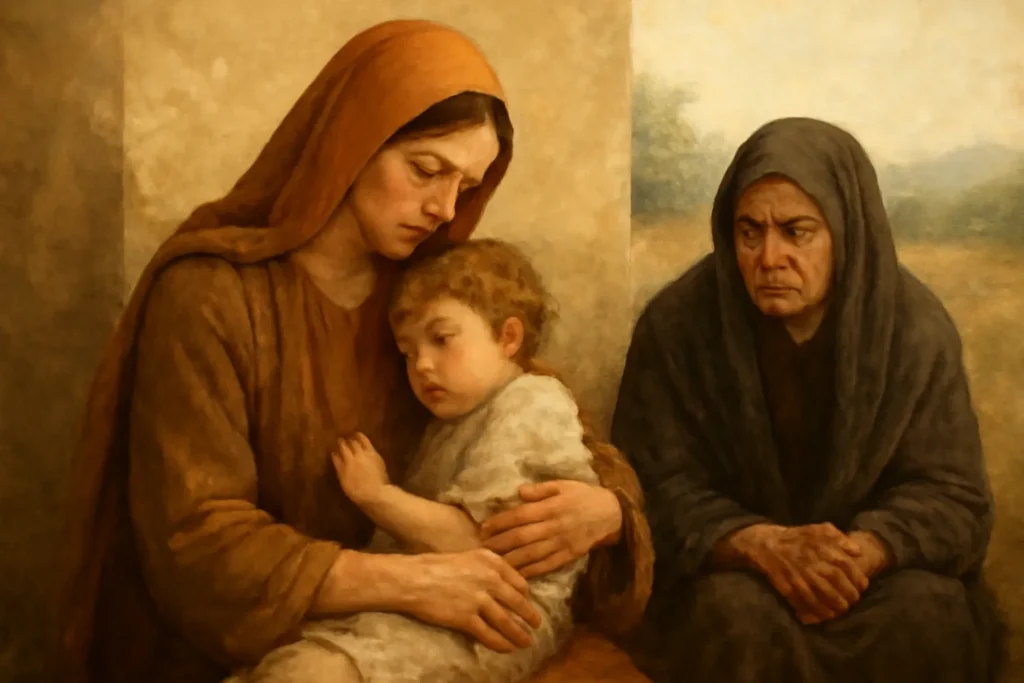
Across the biblical narrative, certain groups are singled out as especially vulnerable, and two of the most consistently highlighted are widows and orphans.
The call to care for them sits at the intersection of justice, mercy, and community life. In many passages, the vulnerability of the widow and the orphan is not just a social circumstance but a spiritual invitation to trust in God’s righteousness and to reflect that righteousness in concrete actions.
This article surveys a wide range of biblical verses about caring for widows and orphans, including Old Testament laws, prophetic exhortations, and New Testament instructions. It will highlight variations across translations, explore the theological implications, and offer practical ways to live out these principles in churches, families, and communities today.
Old Testament Foundations: Law, Mercy, and Social Responsibility
The Hebrew Bible establishes care for the vulnerable as a core aspect of covenant loyalty. The commands are practical, social, and theological: do not oppress a widow or an orphan; leave gleanings for the poor; and remember that God himself defends the weak.
Protecting the vulnerable: explicit prohibitions
Exodus 22:22–24 warns against afflicting or mistreating a widow or an orphan and threatens Divine judgment on those who do so. This is not merely a social admonition; it is a warning about the ethical consequences of harming those who cannot defend themselves.
Deuteronomy 24:17 and related passages emphasize that justice must be accessible to the vulnerable, including the widow who appears in court or in society at large.
Provision and gleaning: a culture of generosity
Leviticus 19:9–10 commands farmers to leave the edges of their fields for the poor and the foreigner, demonstrating a communal economy in which the vulnerable participate and are cared for within the land’s bounty.
Deuteronomy 24:19–22 instructs generous gleaning—when you reap your harvest, you shall not reap to the very edges or gather the gleanings of your harvest; you should leave them for the stranger, the fatherless, and the widow.
Character of God and the right ordering of society
Psalm 68:5 proclaims that God is “a father of the fatherless, a protector of widows.” This verse ties God’s identity to care for the most vulnerable, implying that human communities modeled on God’s character must reflect that care.
Psalm 82:3 calls the assembly to do justice and defend the poor and the afflicted, reinforcing that social righteousness is a virtue repeatedly pressed by the biblical authors.
New Testament Emphasis: Faith That Works in Community have Widows and Orphans
In the Christian scriptures, care for widows and orphans transitions from a general ethic of justice to specific instructions about church life and the household of faith. The emphasis remains the same: genuine religion is practical, relational, and oriented toward the vulnerable.
Explicit commands: James, Paul, and the shape of a lived faith
James 1:27 is a foundational verse for contemporary discussions: “Religion that is pure and faultless before God the Father is this: to look after orphans and widows in their distress and to keep oneself from being polluted by the world.” This concise statement has generated countless reflections on what it means to practice authentic faith through acts of mercy and personal integrity.
1 Timothy 5:3–16 lays out concrete rules for supporting widows within the early church. It draws a distinction between “worthy” widows who should be given material support and those who should be helped in other ways, while also emphasizing that the community’s care should be orderly and sustainable.
Luke 4:18 situates Jesus’ ministry in the prophetic tradition of caring for the marginalized, including the poor, the widowed, and the oppressed. While not addressing widows directly in every line, the verse reinforces the motif of mercy as a central component of Jesus’ mission.
Parallels and echoes in other New Testament passages
Matthew 25:35–40—Jesus identifies acts of mercy to the hungry, the thirsty, the stranger, the naked, the sick, and the imprisoned as services performed to Him. Widows and orphans frequently appear in this ethical matrix because they symbolize vulnerability and dependence upon communal care.
Galatians 6:2 encourages believers to “bear one another’s burdens,” a principle that includes the responsibilities to those who lack support, including widows and orphans.
Hebrews 13:3 exhorts readers to remember those in bonds as though in prison with them and to show hospitality to strangers. The care of vulnerable people often requires solidarity, advocacy, and practical aid.
Variations across translations and paraphrases
Across the NIV, ESV, and KJV, the core idea of caring for orphans and widows remains constant, but wording shifts: phrases like “look after,” “care for,” “visit,” and “defend” reflect nuances in how English translators convey the Greek and Hebrew terms for mercy, justice, and action.
In paraphrase-friendly renderings, you may encounter formulations such as “tend to the needs of widows and orphans” or “stand up for those who have no one to defend them.” These variations help broaden the semantic field of what it means to practice true religion.
Theological Threads: Mercy, Justice, and Community
The biblical motive behind caring for widows and orphans weaves together mercy and justice. It is not enough to feel compassion; the text presses for concrete actions that affirm human dignity and challenge structures that leave vulnerable people exposed to harm.
Mercy as a lived practice
The biblical ethic treats mercy not as sentiment but as ongoing, reliable support—measurable in acts of generosity, hospitality, and personal investment in the welfare of others.
Care for widows and orphans often requires relational commitments—visiting, listening, accompanying, and advocating—rather than mere financial transfer.
Justice as social responsibility
Many biblical passages link compassion for the vulnerable with justice in the community. When people lack protection or provisioning, the church is invited to respond with fairness, accountability, and reform where needed.
The care of widows and orphans frequently implies upholding the rights of those without power, ensuring due process, and resisting coercive or neglectful practices within a society.
Hospitality and kinship as frameworks
The Bible often casts the community as a family that welcomes and sustains those who are isolated or disenfranchised, including widows and orphans. Hospitality is not just a courtesy; it is a form of social architecture that stabilizes families and neighborhoods.
The broader concept of “family of God” expands the circle of care to include vulnerable people who may be relationship-poor and resource-poor, inviting a broader practice of solidarity.
Historical and Cultural Context: Why This Theme Appears So Often
The intensity of care for widows and orphans in biblical times reflects a concrete social reality. In antiquity, a widow’s livelihood often depended entirely on her late husband’s family protections, or on the charitable structures of the community. Economic systems, tribal structures, and social norms left many vulnerable once other adults with authority and resources were removed.
Social safety nets in biblical times
Gleaning laws enabled vulnerable individuals to access food by leaving field margins intact and by not taking every last fragment of harvest.
Household networks and clan affiliations provided some level of security; yet, the biblical writers consistently argued that reliance on the mercy and justice of the community was essential when family and property could not meet needs.
Why the language is singularly persistent
Widows and orphans symbolize vulnerable sectors of society that require protection to prevent exploitation, neglect, or coercive control.
The repeated emphasis in both Testaments suggests that caring for these groups is more than a charitable gesture; it is a reflection of the character of God and the identity of Israel and the church.
Practical Applications: How to Live This Ethic Today
Reading verses about widows and orphans should lead to concrete action. Below are practical pathways for individuals, families, churches, and communities to embody the biblical call in contemporary settings.
Individual actions
Pray with intention for vulnerable people in your community and for wisdom to see needs that are not obvious.
Offer time and presence—a visit, a listening ear, or companionship for someone who is isolated or in distress.
Share resources respectfully with practical support (groceries, transportation, or home repairs) while honoring personal agency and dignity.
Advocate for justice by learning about local policies that affect welfare, elder care, and child welfare services and speaking up for reforms when necessary.
Create a care plan for neighbors who are widows or single parents—consider rotating assistance, meal trains, and practical help with errands or childcare.
Include vulnerable voices in family decisions that affect community life, ensuring that the concerns of those outside the immediate family circle are heard.
Teach children and youth about biblical care in age-appropriate ways, instilling a sense of responsibility and compassion.
Church and faith-community life
Institutionalize care teams within church structures to identify and coordinate support for widows and orphans, including regular check-ins, practical help, and spiritual nourishment.
Establish sustainable care models that emphasize dignity, consent, and long-term assistance rather than temporary fixes.
Partner with local agencies to connect congregants with social services, foster care programs, and emergency relief initiatives.
Support laws and programs that provide financial stability, healthcare access, and safe housing for families and individuals facing vulnerability.
Promote vocational training and education to empower families toward self-sufficiency and resilience.
Fund scholarship and assistance programs for children in need and families experiencing hardship.
Words that Shape the Conversation: Variations of the Verse in Practice
Because Bible verses about caring for widows and orphans appear in various contexts and translations, it is helpful to reflect on how these phrases can be understood in multiple ways. The variations below illustrate how readers might paraphrase or apply the same core idea in different settings.
“Pure religion means visiting and supporting widows and orphans in their distress” — a paraphrase of James 1:27 emphasizing action and presence.
“Care for those who have lost their partners and the young who have no guardians” — a broader expression drawn from the same sentiment, useful in sermons or study materials.
“Defend the vulnerable in the community—give them justice, shelter, and hope” — a thematic rendering that aligns with Deuteronomy 24:17 and Psalm 82:3.
“Provide for the widow and the orphan within your local church, and let generosity become a habit” — a church-oriented practical restatement reflecting 1 Timothy 5:3–16.
Key cross-references for study and reflection
Exodus 22:22–24 (Protection of widows and orphans as a non-negotiable duty).
Leviticus 19:9–10 (Gleaning as a form of social welfare).
Psalm 68:5 (God’s fatherly care for the vulnerable as a model for human conduct).
Proverbs 19:17 (Lending to the poor as lending to the Lord).
Luke 4:18 (Christ’s mission to preach good news to the poor and oppressed).
1 Timothy 5:3–16 (Church-defined criteria for supporting widows).
Conclusion: A Biblical Ethic That Transforms Lives
The Bible’s repeated exhortations to care for widows and orphans present more than a list of duties; they reveal a theology of community, where each member bears responsibility for the welfare of others. The verses discussed show how care for the vulnerable becomes a lens through which we see God’s justice, mercy, and faithfulness. When a faith community embodies these biblical principles, it becomes a living witness to a world that often measures worth by power or wealth.
Modern readers can draw from both the moral clarity of the Old Testament injunctions and the New Testament call to community life. The goal is not merely to assist in crisis moments but to build sustainable patterns of support, advocate for fair systems, cultivate hospitality, and nurture a culture in which every person is valued and protected.
By integrating these biblical ideas into daily practice—through personal acts of mercy, responsible church governance, and public advocacy—believers can honor the timeless charge to care for widows and orphans. The verse that begins as a directive to care becomes, in action, a witness to the transformative power of a faith that moves from belief to deeds.
As you study biblical verses about caring for widows and orphans, consider how your own tradition, congregation, or community can translate the ancient call into modern life. Whether through direct service, policy engagement, or the creation of enduring support networks, the biblical invitation remains: care for the vulnerable as an outward sign of faith in a God who cares for the downtrodden and who invites his people to do the same.







Leave a Reply