Introduction: Bible Quotes for the Poor and Needy — Comfort and Hope
In the pages of Scripture, the poor and the needy appear not as a distant audience but as a central concern of God’s
redemptive plan. Across both the Old and New Testaments, comfort and hope are offered to those who have little in material wealth but much in spiritual hunger. This article gathers Bible quotes about the poor and needy in a way that is both devotional and practical—showing how the biblical message speaks into poverty, vulnerability, and marginalization with enduring relevance.
The breadth of these passages spans cries for justice, promises of divine care, and calls to generous living. Whether you are yourself facing hardship, ministering to someone who is, or studying the biblical texture of compassion, these verses provide voices of reassurance, dignity, and action. We will explore key themes, present representative verses in their familiar King James Version wording, and offer brief reflections on their meaning for today.
Old Testament Foundations: Covenant Care for the Vulnerable
The Bible routinely links the predicament of the poor to God’s covenant love and faithfulness. From the law to the prophetic writings, God’s people are given explicit instructions to respond with mercy and generosity, rooted in the conviction that God himself cares for the weak and that our own well-being is bound up with the welfare of the vulnerable.
Care as Covenant Obligation
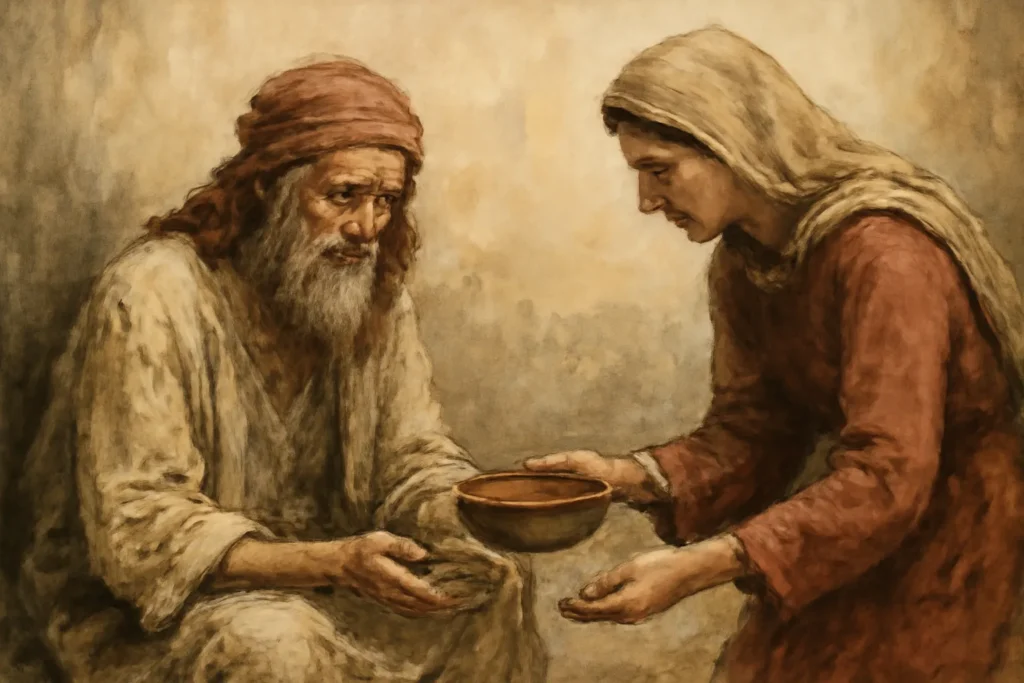
Several passages ground assistance for the poor in a moral and communal obligation rather than a mere act of kindness. In the Deuteronomic law, a rule stands out: if there is a poor man among you, you must not harden your heart or shut your hand, but you should open it generously to your brother. This directive frames generosity as an expression of living in harmony with God’s will.
God as Defender of the Vulnerable
The Old Testament portrait of God is one of a rescuing Father who lifts up the downcast. The Psalms and prophetic books repeatedly insist that God is close to the afflicted and a refuge for the lonely and oppressed.
New Testament Comfort and Hope: Jesus, the Church, and the Poor
The teaching of Jesus expands the horizon from a social code to a personal relationship with the Father who cares for the needy. The Beatitudes, parables of generosity, and exhortations to practical acts of mercy invite believers into a life of shared grace. The New Testament does not merely offer spiritual consolation; it models a generous, faith-filled response to poverty, hunger, and neglect.
In the Sermon on the Mount, Jesus pronounces blessing on the poor in spirit, underscoring that spiritual poverty is not a stigma but a doorway to the kingdom of heaven. The language shifts the focus from economic status to dependence on God, inviting trust, humility, and faith as the true riches of life.
Practical Mercy as Evidence of Faith
The practice of mercy—feeding the hungry, giving clothing to those in need, and welcoming strangers—is not a sidebar but a core expression of discipleship. The Gospel authors place emphasis on tangible deeds that reflect God’s mercy toward humanity.
Key Passages: Verses About the Poor and Needy (Selected, KJV)
Below are curated texts from the King James Version that highlight the experiences of the poor, needy, and those who suffer want. Each item pairs a verse with a brief note on its significance, helping readers see both the enduring truth and its practical application.
Matthew 5:3 — “Blessed are the poor in spirit: for theirs is the kingdom of heaven.” Meaning: Spiritual poverty is honored by Jesus and opened to divine blessing; humility before God is central to the kingdom life.
Luke 6:20 — “And he lifted up his eyes on his disciples, and said, Blessed be ye poor, for yours is the kingdom of God.” Meaning: Jesus blesses those who experience want, reminding us that divine reversal includes the outcast and underserved.
James 2:5 — “Hearken, my beloved brethren, Hath not God chosen the poor of this world, rich in faith, and heirs of the kingdom which he hath promised to them that love him?” Meaning: God’s favor often rests with those who are economically vulnerable, highlighting a distinctive divine economy of grace.
Psalm 34:18 — “The LORD is nigh unto the brokenhearted, and saveth such as be of a contrite spirit.” Meaning: God draws near to those who bear emotional and spiritual pain, offering restoration and hope.
Psalm 37:25 — “I have been young, and now am old; yet have I not seen the righteous forsaken, nor his seed begging bread.” Meaning: The faithful often endure hardship, but God sustains the righteous and provides for future generations.
Psalm 68:5-6 — “A father of the fatherless, and a judge of the widows, is God in his holy habitation.” Meaning: God is the ultimate advocate for the vulnerable, especially orphans and widows.
Psalm 41:1-3 — “Blessed is he that considereth the poor: the LORD will deliver him in time of trouble.” Meaning: Compassion toward the needy is rewarded with divine deliverance and care.
Isaiah 41:17 — “When the poor and needy seek water, and there is none, and their tongue faileth for thirst, I the LORD will hear them, I the God of Israel will not forsake them.” Meaning: God commits to hearing and sustaining those who have exhausted all human resources.
Isaiah 58:10-11 — “And if thou draw out thy soul to the hungry, and satisfy the desire of the afflicted, thy light shall rise in obscurity, and thy darkness be as the noonday.” Meaning: Generosity toward the hungry brings illumination and steadiness in life’s darkest moments.
Deuteronomy 15:7-8 — “If there be among you a poor man, one of thy brethren, within any of thy gates... thou shalt not harden thine heart, nor shut thy hand from thy brother.” Meaning: The call to generosity is a concrete, communal imperative, not an optional virtue.
Proverbs 19:17 — “He that hath pity upon the poor lendeth unto the LORD; and that which he hath given will he pay him again.” Meaning: Generosity toward the needy is ultimately an investment in God’s economy of reward.
Proverbs 22:9 — “A bountiful eye shall be blessed: for he giveth of his bread to the poor.” Meaning: A generous disposition brings blessing, both to the giver and the recipient.
Psalm 9:18 — “For the needy shall not always be forgotten: the hope of the poor shall not perish forever.” Meaning: God keeps the memory of the afflicted and assures lasting hope.
Psalm 12:5 — “For the oppression of the poor, for the sighing of the needy, now will I arise, saith the LORD.” Meaning: Divine intervention arises in response to oppression and suffering.
2 Corinthians 8:9 — “For ye know the grace of our Lord Jesus Christ, that, though he was rich, yet for your sakes he became poor, that ye through his poverty might be rich.” Meaning: Christ’s poverty models ultimate generosity and invites believers into solidarity with the vulnerable.
Matthew 25:35-40 — “For I was hungry, and ye gave me meat... Verily I say unto you, Inasmuch as ye have done it unto one of the least of these my brethren, ye have done it unto me.” Meaning: Caring for the hungry and unseen is a direct service to Christ himself.
Luke 3:11 — “He that hath two coats, let him impart to him that hath none; and he that hath meat, let him do likewise.” Meaning: The early church identified sharing as an essential practice of discipleship.
Psalm 107:9 — “For he satisfieth the longing soul, and filleth the hungry soul with goodness.” Meaning: God fulfills deep longings and meets the needs of the hungry with generosity.
1 Samuel 2:8 — “The LORD maketh poor, and maketh rich: he bringeth low, and lifteth up.” Meaning: Wealth and poverty are under God’s sovereign care; he positions people and provides for their needs.
What These Passages Teach About Comfort, Hope, and Action
The selected verses illuminate several overlapping themes that recur across the biblical narrative, each offering its own
kind of comfort and a call to practical action.
A recurring note is that God is near to those who hurt, to the brokenhearted, and to the needy.
This nearness is not abstract; it is powerfully experienced as deliverance, healing, and presence in times of trouble.
Divine Justice and Reversal
The biblical visions often flip the script: the poor are not forgotten, and the wealthy are called to respond with mercy. This is a message of justice woven into the fabric of God’s character.
Faith, Worship, and Generosity
Faith is not merely belief in propositions; it is trust expressed in acts of generosity, hospitality, and sharing with the vulnerable.
Hope That Endures
Even in seasons of scarcity, these scriptures offer a persistent note of hope: God hears the cries of the needy, and
he acts. The promise that “the poor… shall not perish forever” anchors endurance in hardship.
Practical Reflections: How to Apply These Truths Today
The biblical witness to the poor and needy isn’t only about interpretation; it invites concrete living. Here are several
ways readers can engage with these themes in daily life, church communities, and public life.
Personal mercy: Begin with the immediate circle—neighbors, coworkers, and family members who experience hunger, housing instability, or isolation. Small acts of compassion can reflect the heart of God to those closest to us.
Church and community outreach: Churches and faith-based organizations can design care programs that address both physical needs (food, clothing, shelter) and emotional-spiritual support (counseling, mentorship, and prayer).
Advocacy and justice: The biblical ethic calls believers to work for systems that reduce poverty and oppression, while protecting the dignity of every person as made in God’s image.
Stewardship and generosity: The passages about lending to the Lord and blessing the poor highlight a worldview where material possessions are entrusted by God for blessing others, not hoarded for self.
Hospitality to the stranger: Welcoming foreigners and the marginalized mirrors the posture of God toward humanity and reflects the inclusivity of the gospel.
Prayer and intercession: Bring your requests for the vulnerable before God, asking for wisdom, resources, and transformative justice that honors the dignity of every person.
Verse-Based Prayers and Meditations
For readers who want to turn verses into personal prayers or meditations, these prompts may help structure daily devotions. Use the
Scriptural anchors below to frame prayers for yourself, your family, your church, or your community.
In times of need, pray: “The LORD is nigh to the brokenhearted, and I trust Him to bring comfort where it is most needed.” (Psalm 34:18)
Ask God to provide practical help: “Let me be a conduit ofYour mercy, for I want to be faithful to those who are hungry and thirsty.” (Matthew 25:35-40)
Proclaim hope in hardship: “Though I may be weary, I remember that the poor shall not be forgotten; the Lord’s justice endures.” (Psalm 9:18)
Intercede for leaders: “May those who govern with power and wealth be stirred to generosity toward the vulnerable, as commanded by God’s word.” (Deuteronomy 15:7-8; Proverbs 22:9)
Announce divine provision: “We trust that the One who makes rich and poor will supply all our needs according to His riches in glory.” (1 Samuel 2:8; Philippians 4:19; if quoting a broader canonical sense)
These meditations are designed to help readers anchor practical compassion in the deep truths of Scripture. When life gets busy or burdensome,
returning to these verses can steady the heart and reframe our priorities around God’s generous character.
A Practical Guide: Building a Culture of Care That Reflects Scripture
Churches, ministries, and households can cultivate a culture of care that reflects biblical priorities for the poor and needy.
The following actions are concrete ways to translate biblical counsel into everyday life.
Assess needs with humility: Conduct listening sessions or anonymous surveys to identify real needs within your community, rather than assuming what people require.
Develop sustainable programs: Create programs that address recurring needs (e.g., food security, housing, job training) rather than one-off relief efforts.
Partner with existing organizations: Leverage the expertise and networks of nonprofit groups to multiply impact while preserving dignity.
Practice hospitality: Open your home and community spaces for meals, conversations, and mutual support, following the biblical pattern of welcome toward outsiders.
Teach generosity: Include budgeting and stewardship in discipleship, helping families allocate resources to aid the vulnerable without compromising essential needs.
Celebrate and reflect: Regularly tell stories of mercy and justice within your community to reinforce the meaning and impact of compassionate living.
Conclusion: Comfort and Hope for the Poor and Needy
Across the breadth of Scripture, the message remains clear: God cares deeply for the poor and the needy, and his people are invited to participate
in that care. The verses quoted here offer both comfort in personal hardship and a compelling invitation to action in the world. They remind us that poverty is not just a material condition but a moral and spiritual reality that calls for mercy, justice, and a shared life of faith.
As you reflect on these passages, you may find yourself drawn to one or more biblical themes—God’s nearness to the brokenhearted, the call to generosity, the hope that oppression will be overturned, or the promise of divine provision for the hungry. Each theme points to a fuller, more compassionate way of living that honors God and dignifies every person made in his image.
May the comfort of these scriptures be a lamp to your feet and a strength for your hands as you go about serving, sharing, and praying for the poor and needy in your own time and place.









Leave a Reply