Bible Verse About Night Prayer: Uplifting Passages for Evening Devotion
Night prayer has long been a cornerstone of personal faith and communal worship. Across generations, believers have turned to the quiet hours of evening to lift their anxieties, recenter their hearts, and entrust tomorrow to God. The Bible speaks to this practice in a variety of voices—from the psalmist’s intimate dialogue with God to Jesus’s disciplined discipline of nightly or near-nightly prayer. In this article, you’ll find a rich collection of night prayer verses, practical guidance for an evening devotion, and thoughtful reflections on how to cultivate a habit of prayer that remains meaningful in both calm and storm.
The verses gathered here are offered in the spirit of encouragement, not as a rigid checklist. They reveal a simple pattern: acknowledge God’s presence, pause in the day’s last light, choose to trust, and listen for the gentle movements of the Spirit as you lay down. Whether you are seeking peaceful sleep, protection through the night, or a focused time of intercession, these passages provide words that can anchor your heart and shape your practice.
Throughout this article, you will see bolded phrases highlighting themes such as peace, refuge, meditation, and perseverance. The verses cited are presented in a traditional King James Version-inspired rendering for familiarity, with paraphrastic notes to help you apply them to modern daily life. Feel free to adapt these verses into your own language of prayer as you reflect on them at the close of your day.
Old Testament Foundations for Nighttime Prayer
The psalms are a treasury of language for night devotion. They invite us to speak to God in the intimate hours when the world quiets down, and they remind us that God’s care endures through darkness as surely as it does in daylight.
Peaceful rest and divine safety: Psalm 4:8
I will both lay me down in peace, and sleep: for thou, LORD, makest me to dwell in safety. (Psalm 4:8, KJV)
This verse is often used as a benediction at day’s end. It offers a compact theology: true night peace comes not from the absence of trouble but from the presence of a protecting, gracious God. In your evening devotion, you can pause to receive God’s assurance, naming your concerns and then surrendering them into God’s keeping. A simple practice is to recite the line aloud or softly, letting the cadence of the words recalibrate your breathing and your posture toward trust.
Trusting in God’s sustaining power during sleep: Psalm 3:5
I laid me down and slept; I awaked, for the LORD sustained me. (Psalm 3:5, KJV)
Here we glimpse a rhythm: sleep is not passive resignation but an act tethered to God’s sustaining faithfulness. When you pray at night, you can adopt a posture of gratitude for God’s preservation through the night and tomorrow’s uncertainties. Consider pairing this verse with a moment of confession for anything you fear, followed by an affirmation that the Lord’s constancy grounds you as you rest.
Remembering God at night: Psalm 63:6
When I remember thee upon my bed, and meditate on thee in the night watches. (Psalm 63:6, KJV)
This verse explicitly ties night to meditation. It invites us into a deliberate practice: recalling God’s character, recounting blessings, and listening for guidance. In your routine, you might close your eyes with a mental inventory of God’s faithfulness—names, moments, and mercies—rehearsed as if you were keeping a “note” on your heart’s screen for the night watches.
Nighttime protection and wisdom: Psalm 91:5-6
Thou shalt not be afraid for the terror by night; nor for the arrow that flieth by day; Nor for the pestilence that walketh in darkness;nor for the destruction that wasteth at noonday. (Psalm 91:5-6, KJV)
This iconic passage names fear and danger, but it does so in order to ground us in God’s safeguarding presence. In your evening prayers, you can claim this promise as a shield against anxiety—acknowledging what unsettles you while choosing to trust God’s nearness in the dark. A practical practice is to name your fears briefly and then declare, “I trust in God’s protection as I rest.”
I will bless the LORD, who hath given me counsel: my reins also shall guide me in the night. (Psalm 16:7, KJV)
The phrase about counsel suggests that nighttime can be a time for interior guidance—a quieting of the heart to hear the inward nudges of the Spirit. In your evening devotion, you might invite God to lead your decisions for tomorrow, or simply seek the wisdom needed for the next steps you face. The verse frames night as a space where inner wisdom can be surfaced and trusted.
Rest, safety, and peace: Proverbs 3:24
When thou lie down, thou shalt not be afraid: yea, thou shalt lie down in peace, and sleep. (Proverbs 3:24, KJV)
This proverb offers a practical wisdom: fear subsides when trust deepens. In your nightly routine, you can pair a short confession of fear with a deliberate turn toward faith: inhale with gratitude, exhale with release, and invite peace to rule your thoughts. It’s a simple ritual that aligns body and soul toward rest in God’s care.
New Testament Perspectives on Night Prayer
In the New Testament, prayer remains central to Jesus’ life, the church’s practice, and the personal rhythms of believers. Nighttime or early-morning prayer is pictured as both a discipline and a form of ongoing relationship with God.
Persevering in prayer: Luke 18:1
And he spake a parable unto them to this end, that men ought always to pray, and not to faint. (Luke 18:1, KJV)
This verse functions as a guiding banner for any night-prayer rhythm. It invites you to view prayer as a continuous posture rather than a sporadic announcement. Your evening devotion can be a practical expression of "always praying"—a daily habit that strengthens faith and resilience, especially during trying days.
Jesus’ night and early-morning prayers: Luke 6:12 and Mark 1:35
And it came to pass in those days, that he went out into a mountain to pray; and continued all night in prayer to God. (Luke 6:12, KJV)
And very early in the morning, while it was still dark, Jesus rose and went out to a deserted place, and there he prayed. (Mark 1:35, NIV)
Both passages highlight a pattern of sustained prayer or early start. They acknowledge that meaningful spiritual focus often comes in quiet hours—whether you devote the late night or the pre-dawn minutes to God. In your own practice, you might experiment with a “night watch” (late-night prayer) or a “pre-dawn vigil” (early morning prayer) and observe how the hour shapes your perspective for the day ahead.
And at midnight Paul and Silas prayed, and sang praises unto God: and the prisoners heard them. (Acts 16:25, KJV)
This striking picture from the Book of Acts shows prayer as a source of resilience in hardship. Night prayer here becomes not only a personal discipline but a public witness—that in the darkest conditions, praise and petition remain a testimony of faith. Your own evening devotion can carry that witness by including intercession for others who share your day’s burdens or for communities in need around the world.
Continuous prayer and vigilant living: 1 Thessalonians 5:17-18; Colossians 4:2
Continue in prayer, and watch in the same with thanksgiving. (Colossians 4:2, KJV)
These instructions emphasize an ongoing posture of prayer—one that doesn’t end with the night’s last breath. In practical terms, you can carry a sense of continual communication with God into your night routine by concluding with a short, sincere gratitude and then trusting that prayer continues in the quiet as you fall asleep. It’s a seamless rhythm: talking to God, listening, resting, repeating tomorrow.
The Poetic Language of Night: Meditation, Incense, and Sacred Stillness
Beyond explicit verses, the Bible paints night as a time of meditative attention and fragrant prayer. The language of incense and the imagery of watches convey a sense of intimate worship that transcends the day’s busyness.
Incense and evening devotion: Psalm 141:2
Let my prayer be set forth before thee as incense; and the lifting up of my hands as the evening sacrifice. (Psalm 141:2, KJV)
This verse beautifully links prayer with sensory imagery—fragrance rising to God just as smoke rises from an altar. In practice, you can treat your night prayers as an offering, a deliberate, fragrant act of worship that fills your room with a sense of sacred presence. Consider pairing your prayers with a brief moment of silence and a calm, upright posture to echo the reverence of an ancient sacrifice.
Night watches and meditation: “the night watches”
Several psalms refer to “the night watches”, signaling seasons for sustained focus on God in darkness. This phrase invites you to slow down and examine your day’s events in the light of God’s sovereignty. A practical approach is to choose a verse or two, repeat them slowly, and allow God’s Spirit to sift your thoughts as you breathe evenly in the quiet hours.
How to Practice Night Prayer: A Practical Guide
To make night prayer a meaningful habit rather than a perfunctory ritual, consider establishing a simple framework. Here is a practical guide you can adapt to your life:
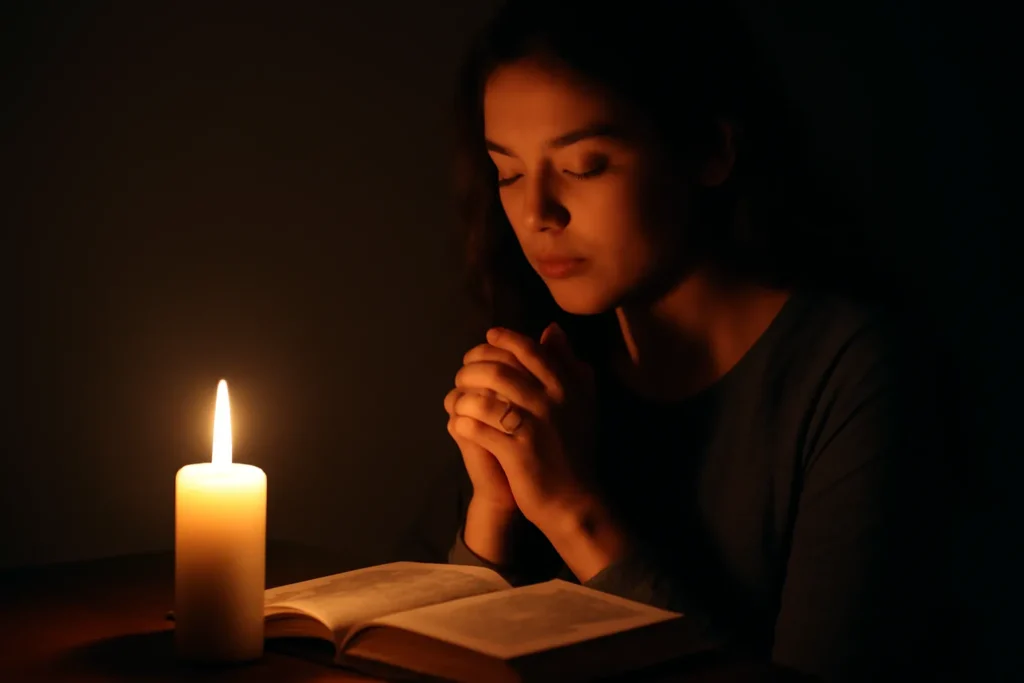
Set a quiet space: Choose a time and place where distractions are minimized. A chair by a window, a bedside corner, or a small prayer nook can become sacred space.
Prepare your heart: Begin with a brief moment of stillness. Breathe slowly, letting go of the day’s busyness and inviting God’s presence.
Choose a verse or two: Select one or two verses from the list above (or another trusted passage) as anchors for your meditation and prayer. Read them slowly a couple of times.
Structure your prayer: A simple template works well: praise, confession, gratitude, intercession, and surrender. You can add a brief petition for sleep, protection, and guidance for tomorrow.
Incorporate confession and gratitude: Naming sins or burdens, then celebrating blessings, helps keep prayer honest and hopeful.
Include intercession: Pray for others—family, friends, churches, communities, and leaders. Even a short list can become a meaningful ministry of care.
End with rest in God: Close your time with a word of trust (e.g., “I trust you, Lord”) and a physical posture that invites sleep, such as hands folded, eyes closed, shoulders relaxed.
As you grow in this practice, you may also want to vary the routine by introducing a short reading, a brief song or hymn, or a moment of silent listening for God’s gentle voice. The key is to keep the practice regular, personal, and deeply anchored in Scripture.
Verses by Theme: Night Prayer for Different Needs
Sometimes you may want to tailor your night devotion to a particular need. Here are some thematic prompts with corresponding verses and suggested prayers.
For anxious nights: Psalm 4:8 and Psalm 91:5-6 can anchor peace and courage. Suggested prayer: “Lord, quiet my heart. Let your peace guard my thoughts as I lie down.”
For gratitude and worship: Psalm 63:6 and Psalm 141:2 invite meditation and incense-like prayer. Suggested prayer: “I praise you for your faithfulness today; let my rest honor you.”
For seeking guidance: Psalm 16:7 and Proverbs 3:24 remind us that God’s counsel informs our night and our dreams. Suggested prayer: “Lead me with wisdom into tomorrow’s choices.”
For intercession: Acts 16:25 demonstrates the power of night prayer as response to hardship. Suggested prayer: “Be near those who suffer; bring relief and hope through the night.”
For confession and restoration: Luke 18:1’s call to persistent prayer can be paired with 1 John-like honesty. Suggested prayer: “Forgive my ways, renew my heart, and strengthen my faith.”
Sample Evening Prayers: Short, Readable Models
Here are a couple of brief, ready-to-use prayers you can adapt. They weave together the verses and themes discussed above and can be spoken aloud or prayed in your heart.
“Lord, I come to you in the quiet of this night. You are my refuge and my shelter. I lay me down in peace, for you make me to dwell safely. I thank you for your faithful protection through today. As I rest, I remember thee upon my bed, and I meditate on you in the night watches. If fear comes, help me to trust, for you are with me. In Jesus’s name, amen.”
Sample Prayer B
“Creator of light, though darkness surrounds me, your love remains. Pray without ceasing, I will lift up my heart to you. Please guide my steps for tomorrow and calm my anxious thoughts. Let my sleep be sweet and my heart be ready to serve you again. Amen.”
Frequently Asked Questions About Night Prayer
What is night prayer, and why is it important?
Night prayer is a focused moment—often at the close of the day—when a person or a community turns to God in praise, confession, intercession, and gratitude. It is important because it re-centers the heart before sleep, aligns tomorrow’s plans with God’s will, and acknowledges dependence on God amid daily trouble and fatigue.
Is night prayer only for certain traditions?
No. While some traditions emphasize fixed night prayers (vespers, compline), the broader biblical pattern invites all believers to bring their hearts before God at day’s end. The practice can be adapted to any tradition or family rhythm, always rooted in Scripture and desperation for God’s presence.
How long should a night prayer take?
There is no universal length. Some nights may be brief—3 to 5 minutes—while others could be longer, especially when intercession or spiritual discernment require more time. The key is consistency and depth, not duration.
Can I use a single verse for the entire night prayer?
p>Yes. A single verse can anchor your reflection, especially if you’re tired. For example, Psalm 4:8 or Psalm 3:5 can be the seed for a longer meditation on God’s faithfulness and protection.
How do I maintain a meaningful night prayer routine with a busy schedule?
Start small and be consistent. Even 3–5 minutes nightly, at the same time, can build a durable habit. Use a simple structure, repeat a chosen verse, and gradually add a few lines of prayer for others or for tomorrow. Over time, the habit becomes a sanctuary you carry into sleep.
Conclusion: Night as a Time of Covenant and Care
Night prayer is more than a routine; it is a covenant moment. The Bible presents night as a time to remember God’s faithfulness, to seek protection, to meditate, and to align tomorrow under God’s gracious rule. From the imperative to pray without ceasing in the New Testament to the intimate, watchful meditation of the Psalms, Scripture invites us to bring our whole selves before God when the day ends and the night begins.
As you cultivate a practice of evening devotion, let these verses be a bridge between your daily life and the unseen realities of God’s kingdom. Whether you are a beginner or a seasoned practitioner, the proof of meaningful night prayer is not in the length of your list but in the tenderness, honesty, and dependence you offer to God in the quiet hours. May your nights be blessed with peaceful rest, profound trust, and renewed hope for whatever tomorrow holds.








Leave a Reply