What Does the Bible Say About Nicodemus? A Devotional Look at His Questions
Quick Answer: What does the bible say about nicodemus? It shows a sincere Pharisee who came to Jesus by night, asked real questions, and received teaching about being born again of water and the Spirit. Nicodemus is also portrayed as respectful in debate, and finally as a secret disciple who honors Jesus’ body with costly spices.
When people ask what does the bible say about nicodemus, they’re usually looking for more than biography—they want to understand a real man whose questions drew him toward Jesus. Nicodemus appears in the Gospels as a respected Pharisee who approached Christ by night, then wrestled with what it means to be born again. In John, his story becomes a window into spiritual awakening: Jesus reveals God’s plan for salvation and explains that new life comes through the Spirit, not religious status. Later, Nicodemus shows up again in a public moment of cautious defense, and finally in the tender care he gives to Jesus’ body. Studying his words and actions helps believers see that God can use seekers, even those who begin with hesitation, to move them toward faith, light, and obedience.
At a Glance — Verses in This Article
John 3:1-21
John 3:9-15
John 7:50-52
John 19:38-40
Bible Verses
John 3:1-21 (King James Version)
“There was a man of the Pharisees, named Nicodemus, a ruler of the Jews: The same came to Jesus by night, and said unto him, Rabbi, we know that thou art a teacher come from God: for no man can do these miracles that thou doest, except God be with him. Jesus answered and said unto him, Verily, verily, I say unto thee, Except a man be born again, he cannot see the kingdom of God. Nicodemus saith unto him, How can a man be born when he is old? can he enter the second time into his mother’s womb, and be born? Jesus answered, Verily, verily, I say unto thee, Except a man be born of water and of the Spirit, he cannot enter into the kingdom of God. That which is born of the flesh is flesh; and that which is born of the Spirit is spirit. Marvel not that I said unto thee, Ye must be born again. The wind bloweth where it listeth, and thou hearest the sound thereof, but canst not tell whence it cometh, and whither it goeth: so is every one that is born of the Spirit. Nicodemus answered and said unto him, How can these things be? Jesus answered and said unto him, Art thou a master of Israel, and knowest not these things? Verily, verily, I say unto thee, We speak that we do know, and testify that we have seen; and ye receive not our witness. If I have told you earthly things, and ye believe not, how shall ye believe, if I tell you of heavenly things? And no man hath ascended up to heaven, but he that came down from heaven, even the Son of man which is in heaven. And as Moses lifted up the serpent in the wilderness, even so must the Son of man be lifted up: That whosoever believeth in him should not perish, but have eternal life. For God so loved the world, that he gave his only begotten Son, that whosoever believeth in him should not perish, but have everlasting life. For God sent not his Son into the world to condemn the world; but that the world through him might be saved. He that believeth on him is not condemned: but he that believeth not is condemned already, because he hath not believed in the name of the only begotten Son of God. And this is the condemnation, that light is come into the world, and men loved darkness rather than light, because their deeds were evil. For every one that doeth evil hateth the light, neither cometh to the light, lest his deeds should be reproved. But he that doeth truth cometh to the light, that his deeds may be made manifest, that they are wrought in God.”
This passage records Nicodemus coming to Jesus by night and receiving Jesus’ teaching on being born again and coming to the light.
John 3:9-15 (King James Version)
“Nicodemus answered and said unto him, How can these things be? Jesus answered and said unto him, Art thou a master of Israel, and knowest not these things? Verily, verily, I say unto thee, We speak that we do know, and testify that we have seen; and ye receive not our witness. If I have told you earthly things, and ye believe not, how shall ye believe, if I tell you of heavenly things? And no man hath ascended up to heaven, but he that came down from heaven, even the Son of man which is in heaven. And as Moses lifted up the serpent in the wilderness, even so must the Son of man be lifted up: That whosoever believeth in him should not perish, but have eternal life.”
These verses highlight Nicodemus’ honest confusion and Jesus’ response about spiritual truth and God’s gift of eternal life.
John 7:50-52 (King James Version)
“Nicodemus saith unto them, (he that came to Jesus by night, being one of them,) Doth our law judge any man, before it hear him, and know what he doeth? They answered and said unto him, Art thou also of Galilee? Search, and look: for out of Galilee ariseth no prophet.”
Here Nicodemus speaks carefully in debate, showing respect for truth even while others dismiss Jesus.
John 19:38-40 (King James Version)
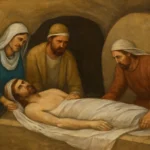
“And after this Joseph of Arimathaea, being a disciple of Jesus, but secretly for fear of the Jews, besought Pilate that he might take away the body of Jesus: and Pilate gave him leave. He came therefore, and took the body of Jesus. And there came also Nicodemus, which at the first came to Jesus by night, and brought a mixture of myrrh and aloes, about an hundred pound weight. Then took they the body of Jesus, and wound it in linen clothes with the spices, as the manner of the Jews is to bury.”
This scene shows Nicodemus’ costly, courageous devotion as he helps prepare Jesus’ body for burial, after previously coming by night.
Nicodemus Comes to Jesus: A Nighttime Journey Toward Light
Nicodemus is introduced as “a man of the Pharisees, named Nicodemus, a ruler of the Jews,” which means he was known, educated, and influential. Yet he still needed Jesus. That is why the Gospel emphasizes that he came “to Jesus by night.” In other words, faith often begins in the quietest hours, when someone is honest enough to admit, “I don’t fully understand.” Nicodemus addresses Jesus as “Rabbi,” and he does something important: he begins with recognition. He says they know Jesus is “a teacher come from God” because of the miracles.
But Jesus does not stop at outward proof. He meets Nicodemus at the deeper need of the heart. Jesus’ words cut through religious confidence: “Except a man be born again, he cannot see the kingdom of God.” The phrase born again is not presented as an optional spiritual hobby; it is the requirement for seeing God’s kingdom.
Nicodemus responds with a question that is both sincere and limited by human thinking: “How can a man be born when he is old?” Jesus answers by redirecting him to God’s work: “Except a man be born of water and of the Spirit, he cannot enter into the kingdom of God.” Then Jesus clarifies the nature of this change—“That which is born of the flesh is flesh; and that which is born of the Spirit is spirit.”
So what does the Bible show us about what the Bible teaches about Nicodemus? It shows a man who moves from observation of miracles to wrestling with spiritual transformation. Nicodemus’ night journey becomes a pattern for all believers: the path to light may start with fear, but Jesus offers life through the Spirit.
Jesus Explains the Kingdom: Questions Are Not the Enemy
Nicodemus is not condemned for asking. In fact, his questions give Jesus the opportunity to teach. In John 3:9-15, Nicodemus says, “How can these things be?” And Jesus responds not with anger, but with a deeper invitation: “Art thou a master of Israel, and knowest not these things?” This is both a rebuke and a compassion—Jesus is showing that spiritual realities cannot be learned only through human knowledge.
Jesus then ties everything to divine truth revealed from heaven. He says, “We speak that we do know, and testify that we have seen,” and He warns that unbelief blocks understanding. If Nicodemus cannot receive “earthly things,” Jesus asks how he will receive “heavenly things.” This means that spiritual growth involves a posture of trust, not just intellectual curiosity.
Then Jesus points Nicodemus to the purpose of God’s salvation plan. The teaching shifts to hope: “For God so loved the world, that he gave his only begotten Son.” God’s love is not vague sentiment; it produces a gift that brings eternal life: “That whosoever believeth in him should not perish, but have eternal life.”
Finally, Jesus emphasizes belief as the dividing line: “He that believeth on him is not condemned: but he that believeth not is condemned already.” Nicodemus’ journey matters because it shows that God’s truth exposes what light can’t ignore: people may “love darkness rather than light, because their deeds were evil.” Yet Jesus also shows an encouraging direction: “But he that doeth truth cometh to the light, that his deeds may be made manifest.”
In this way, Nicodemus’ role and faith in Scripture becomes more than a story of one man—it becomes a living lesson. Honest questions can become stepping-stones when they are met by the truth of God’s love and the call to come to the light.
From Cautious Words to Costly Devotion: Nicodemus Responds
Nicodemus appears again in John 7, not now at Jesus’ feet in private, but in the atmosphere of debate. Some are arguing about Jesus, and Nicodemus speaks up with a measured concern: “Doth our law judge any man, before it hear him, and know what he doeth?” Even though others respond sharply, the point stands—Nicodemus cared about truth enough to question the rush to judgment.
This matters because many people treat faith as either quiet or bold. Nicodemus shows that faith can be slow and cautious, but still real. He wasn’t the loudest voice in the room, yet he spoke with integrity.
Then comes the final scene in John 19. Nicodemus is still described as having come to Jesus by night. But now his earlier hesitance has turned into compassion and action. He brings “a mixture of myrrh and aloes, about an hundred pound weight.” This is not a small contribution. He helps Joseph of Arimathaea take Jesus’ body and prepares it “with the spices, as the manner of the Jews is to bury.”
Here the Bible illustrates what spiritual transformation can look like over time. Jesus taught that birth of the Spirit changes a person’s direction. Nicodemus’ movement—from nighttime seeking, to public questioning, to costly devotion—mirrors that inward change becoming outward faithfulness.
So what does the Bible reveal about what happened to Nicodemus when he met Jesus? It reveals that meeting Jesus does not end with a single conversation. It becomes a trajectory. Nicodemus begins in partial understanding and fear, yet he grows into honoring Christ even when it is risky.
This is encouragement for every believer: Jesus’ words about coming to the light don’t just describe an idea—they call for a life that increasingly reflects truth.
How to Apply Nicodemus’ Story to Your Walk With Christ
Nicodemus teaches us that real faith can begin in private and still lead to public obedience. Start by bringing your questions to Jesus. If you are wrestling, you are not alone—Nicodemus asked, “How can these things be?” Jesus answered with truth rooted in God’s love and the Spirit’s work. So practice asking in prayer, not postponing your need for God.
Next, examine what you love. Jesus warned that people may “love darkness rather than light.” Ask yourself: Are you hiding parts of your life to avoid exposure, or are you willing to let God make your deeds “manifest”? Coming to the light is not about pretending; it is about honesty before God.
Then, move from understanding to response. Faith is meant to show up. Nicodemus’ story includes a measurable step: in John 7 he spoke up for fairness and truth; in John 19 he honored Jesus with costly care. Today, that might look like speaking up when truth matters, helping a struggling believer, or serving where it costs you time, energy, or comfort.
Finally, remember that spiritual birth is a work of the Spirit. Jesus said, “Except a man be born of water and of the Spirit.” That means you can’t manufacture new life with willpower alone—bring yourself to Christ and trust Him to transform you. Trust the Spirit’s work even when growth feels slow.
As you do these things, let Nicodemus’ movement encourage you: Jesus meets seekers, answers hearts, and eventually produces devotion.
Frequently Asked Questions
What the Bible teaches about Nicodemus—was he saved?
The Bible doesn’t label Nicodemus with a single word like “saved,” but it shows genuine movement toward Jesus. He comes to Christ for instruction, asks questions, speaks with integrity in a public debate, and later honors Jesus’ body with costly care.
Nicodemus in the Bible explained: why did he come to Jesus by night?
John records that Nicodemus approached Jesus by night, suggesting caution or fear of public exposure. Yet his nighttime approach did not keep him stuck there—his story grows from private seeking to truthful speech and faithful devotion.
What happened to Nicodemus when he met Jesus?
When Nicodemus met Jesus, Jesus taught that entrance to God’s kingdom requires new birth: “born of water and of the Spirit.” Nicodemus questioned how this could be, and Jesus directed him toward God’s love and the promise of eternal life through belief.
Nicodemus’ role and faith in Scripture—what can we learn from his actions?
Nicodemus shows that faith can be careful but still courageous. He challenges unfair judgment in John 7 and later honors Jesus’ burial in John 19 with a costly offering, demonstrating that true belief produces tangible care.
A Short Prayer
Lord Jesus, You met Nicodemus in the quiet of night and answered his questions with truth. Teach me to come to You honestly, even when I’m afraid or unsure. Please let Your Spirit bring new life within me—real birth, not just religious talk. Make me willing to come to the light, to love truth, and to serve You with actions that cost me nothing less than comfort. Amen.
Key Takeaway: Nicodemus shows that sincere questions and Spirit-given transformation can grow into visible devotion to Jesus.

 Por Fernando Ortiz