What Does the Bible Say About Jehu? God’s Zeal and Judgment
Quick Answer: what does the bible say about jehu? The Bible presents Jehu as a king who carried out God’s word against Ahab’s house and later acted decisively against Baal worship. Scripture highlights both the fulfillment of prophecy and Jehu’s strong zeal—especially when he gathered worshippers of Baal, destroyed their idols, and removed Baal from Israel.
When people ask what does the bible say about jehu, they often want to understand whether he was simply ruthless or whether his actions had a deeper spiritual purpose. The book of 2 Kings portrays Jehu as a leader who acted in response to God’s word and judgment. In the account, Jehu follows God’s declared outcome for Ahab’s house, and Scripture also shows him taking bold steps to end Baal worship. Even more, Jehu’s meeting with Jehonadab and his insistence on wholehearted zeal connect his mission to personal integrity and commitment to the LORD. At the same time, the narrative is sobering: it describes sweeping violence and the removal of entire lines associated with Ahab and Baal. These verses matter because they confront us with questions about God’s holiness, obedience, and the difference between zeal that honors the LORD versus zeal that serves self.
At a Glance — Verses in This Article
2 Kings 10:10-11
2 Kings 10:15-17
2 Kings 10:18-28
Bible Verses
2 Kings 10:10-11 (King James Version)
“Know now that there shall fall unto the earth nothing of the word of the LORD, which the LORD spake concerning the house of Ahab: for the LORD hath done that which he spake by his servant Elijah. So Jehu slew all that remained of the house of Ahab in Jezreel, and all his great men, and his kinsfolks, and his priests, until he left him none remaining.”
This passage shows Jehu fulfilling what the LORD had spoken, underscoring that his actions were tied to divine judgment.
2 Kings 10:15-17 (King James Version)
“And when he was departed thence, he lighted on Jehonadab the son of Rechab coming to meet him: and he saluted him, and said to him, Is thine heart right, as my heart is with thy heart? And Jehonadab answered, It is. If it be, give me thine hand. And he gave him his hand; and he took him up to him into the chariot. And he said, Come with me, and see my zeal for the LORD. So they made him ride in his chariot. And when he came to Samaria, he slew all that remained unto Ahab in Samaria, till he had destroyed him, according to the saying of the LORD, which he spake to Elijah.”
These verses emphasize Jehu’s zeal and his role in destroying what remained of Ahab and Baal’s influence, according to God’s word.
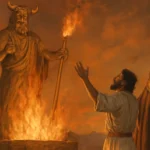
“And Jehu gathered all the people together, and said unto them, Ahab served Baal a little; but Jehu shall serve him much. Now therefore call unto me all the prophets of Baal, all his servants, and all his priests; let none be wanting: for I have a great sacrifice to do to Baal; whosoever shall be wanting, he shall not live. But Jehu did it in subtilty, to the intent that he might destroy the worshippers of Baal. And Jehu said, Proclaim a solemn assembly for Baal. And they proclaimed it. And Jehu sent through all Israel: and all the worshippers of Baal came, so that there was not a man left that came not. And they came into the house of Baal; and the house of Baal was full from one end to another. And he said unto him that was over the vestry, Bring forth vestments for all the worshippers of Baal. And he brought them forth vestments. And Jehu went, and Jehonadab the son of Rechab, into the house of Baal, and said unto the worshippers of Baal, Search, and look that there be here with you none of the servants of the LORD, but the worshippers of Baal only. And when they went in to offer sacrifices and burnt offerings, Jehu appointed fourscore men without, and said, If any of the men whom I have brought into your hands escape, he that letteth him go, his life shall be for the life of him. And it came to pass, as soon as he had made an end of offering the burnt offering, that Jehu said to the guard and to the captains, Go in, and slay them; let none come forth. And they smote them with the edge of the sword; and the guard and the captains cast them out, and went to the city of the house of Baal. And they brought forth the images out of the house of Baal, and burned them. And they brake down the image of Baal, and brake down the house of Baal, and made it a draught house unto this day. Thus Jehu destroyed Baal out of Israel.”
Here Scripture details Jehu’s confrontation with Baal worship and the destruction of Baal’s presence in Israel.
God’s word fulfilled through Jehu’s mission
In the Bible’s account, Jehu is not introduced merely as a political reformer—he is a man caught up in the outworking of God’s spoken judgment. The narrative explicitly ties the outcome to what the LORD had declared: the text says nothing of the word of the LORD would fall to the ground. That means Jehu’s campaign is framed as the LORD doing what He had promised through His servant Elijah.
This matters when you wonder what the Bible says about Jehu’s actions. The verses don’t treat Jehu’s rise as random or accidental; instead, they present his authority as aligned with divine timing and divine purpose. Jehu “slew all that remained” of Ahab’s house, along with great men, kinsfolks, and priests, until “none” remained. The language is absolute—because the message is also absolute. Ahab’s influence wasn’t just a leadership problem; it had become a spiritual corruption that called for God’s final reckoning.
At the same time, the story forces a careful heart-question: What does obedience look like when God’s word is serious? Jehu’s mission shows that obedience may require courage and decisive action, but it must be rooted in the LORD’s command, not in personal preference. The text repeatedly points away from Jehu’s self-exaltation and toward God’s faithfulness.
So, from these verses we learn that God’s judgment is never arbitrary. When the LORD speaks, it comes to pass. Jehu is portrayed as an instrument in that process—an example of how God can accomplish His declared purposes through human leadership, even when the outcome is terrifying to behold.
Zeal for the LORD and shared commitment
One striking scene in Jehu’s story is his encounter with Jehonadab the son of Rechab. Jehu asks a very direct question: “Is thine heart right, as my heart is with thy heart?” Jehonadab answers, “It is,” and then he gives his hand—symbolizing trust and alignment.
This moment helps explain the spiritual atmosphere surrounding Jehu’s mission. Jehu is not portrayed as zeal without discernment. Instead, Scripture shows him checking for inward sincerity. If Jehu’s mission involves confronting spiritual corruption, then the people involved must share a genuine allegiance to the LORD. The account emphasizes that they made Jehonadab ride in the chariot, and Jehu invites him: “Come with me, and see my zeal for the LORD.”
From here, consider how the Bible links zeal with integrity. Jehu’s zeal is not portrayed simply as rage, swagger, or desire for conquest. It’s tied to the LORD and connected to a relationship of shared purpose. The question “is thine heart right” is a reminder that spiritual actions flow from spiritual realities.
Then the narrative moves to Jehu’s destruction of what remained in Samaria, “according to the saying of the LORD.” Again, Scripture keeps returning to the same anchor: the LORD’s word governs the mission.
So, in lessons from Jehu in 2 Kings, we see a twofold pattern: (1) zeal that is directed by God’s command, and (2) sincerity that is checked at the level of the heart. That combination is essential. You can’t separate external obedience from internal devotion. Jehu’s example challenges believers to ask not only, “What should I do?” but also, “Why am I doing it—and is my heart right before the LORD?”
The most detailed section about Jehu centers on Baal worship. Scripture records that Jehu gathered the people and made a bold claim: “Ahab served Baal a little; but Jehu shall serve him much.” This statement is shocking on the surface, but the narrative clarifies the intention—Jehu did it in subtilty “to the intent that he might destroy the worshippers of Baal.”
Jehu then orchestrates a solemn assembly, calling for prophets, servants, and priests of Baal across Israel. The house of Baal is full—indicating how widespread and normalized the false worship had become. Next, Jehu instructs the men responsible for clothing and the ritual space, and he goes into the house of Baal.
One of the most sobering elements follows: Jehu searches and commands that none of the servants of the LORD be present—only the worshippers of Baal. Then, when the offering and burnt offering conclude, Jehu orders the guards and captains to go in and slay them: “let none come forth.” After that, the images are brought out, burned, and the house of Baal is broken down and turned into a “draught house.” The narrative concludes with a direct summary: “Thus Jehu destroyed Baal out of Israel.”
This is not a casual or symbolic moment. It’s a confrontation designed to end an entire system of worship.
For Christians today, this part of the story raises both urgency and discernment. It demonstrates that false religion is not something the LORD treats as harmless. It also shows that God’s people must sometimes take decisive steps to remove what has captured the heart, the home, or the community.
However, we must be careful to interpret the Bible responsibly. We are not called to replicate Jehu’s violence. Instead, we are called to apply the spiritual principle: God-honoring faithfulness may require firm separation from what dishonors Him. When false worship is entrenched, true zeal seeks real change—not polite coexistence.
Practical ways to respond to Jehu’s example today
Jehu’s story can feel intense, but it offers practical spiritual guidance. Here are a few ways to respond without missing the core message.
1) Anchor your zeal in God’s word. Jehu is repeatedly connected to what the LORD spoke. Ask yourself: Is my motivation shaped by Scripture, or by impulse? If your “zeal” is not aligned with God’s revealed will, it won’t produce lasting faithfulness.
2) Check the heart before committing to action. Jehu’s question to Jehonadab—“is thine heart right?”—shows that spiritual leadership begins internally. Take time for self-examination: Do I actually love what the LORD loves?
3) Take decisive steps against spiritual compromise. The account shows Jehu confronting Baal worship head-on. Christians face modern “Baal-like” influences—anything that competes with worship of the LORD in the heart and life. The lesson is not to panic, but to be intentional: remove what fuels false allegiance and choose obedience.
4) Trust God’s faithfulness, even when outcomes are severe. The text insists that nothing of God’s word fails. When God’s discipline or judgment is discussed in Scripture, the conclusion is not despair—it’s trust in God’s truth.
A balanced response, then, is faith-filled courage with a purified heart, and practical willingness to reject what dishonors the LORD. Let Jehu’s story sharpen your reverence and your commitment to worship God alone.
Frequently Asked Questions
What the Bible says about Jehu’s actions and why he acted so decisively
In 2 Kings, Jehu’s actions are repeatedly tied to what the LORD had spoken. The Scripture portrays him as fulfilling divine judgment against Ahab’s house and as taking firm steps to end Baal worship. His decisiveness is presented as obedience to God’s declared purpose.
How Jehu is portrayed in Scripture—was it only political power?
The passage emphasizes spiritual purpose and alignment with God’s word. Jehu meets Jehonadab with a focus on the heart being right, and the narrative frames the destruction of Baal worship as removing false allegiance from Israel. The account is therefore more than politics—it is spiritual confrontation under God’s instruction.
Jehu’s story in the Bible explained: what does “destroyed Baal out of Israel” mean?
The text describes Jehu gathering Baal worshippers, ordering the removal of images, burning them, and breaking down Baal’s house until it became a “draught house.” In Scripture’s terms, it means Baal worship was forcibly ended and its symbols were dismantled throughout Israel.
What lessons from Jehu in 2 Kings can Christians apply today?
Christians can learn to anchor zeal in God’s word, examine the heart for sincerity, and take decisive steps to reject spiritual compromise. Jehu’s example challenges believers to honor the LORD with genuine commitment rather than empty ritual or divided allegiance.
A Short Prayer
Lord, thank You for Your holy word and for how You keep Your promises. Help us to respond with true zeal—zeal shaped by Scripture and a heart that is right before You. Teach us to reject whatever competes with Your worship in our lives and to take honest, faithful steps toward obedience. When Your purposes are severe, strengthen our trust in Your goodness and truth. In Jesus’ name, amen.
Key Takeaway: Jehu’s story shows that God’s word governs real spiritual zeal—requiring inward sincerity and outward obedience that rejects false worship.