The verse often cited as a key hinge in Jesus' teaching about how people are measured at
the end of time is found in Matthew 25:35. This line—spoken within the broader parable of
the sheep and the goats—anchors a practical and hopeful vision of faith in action. In
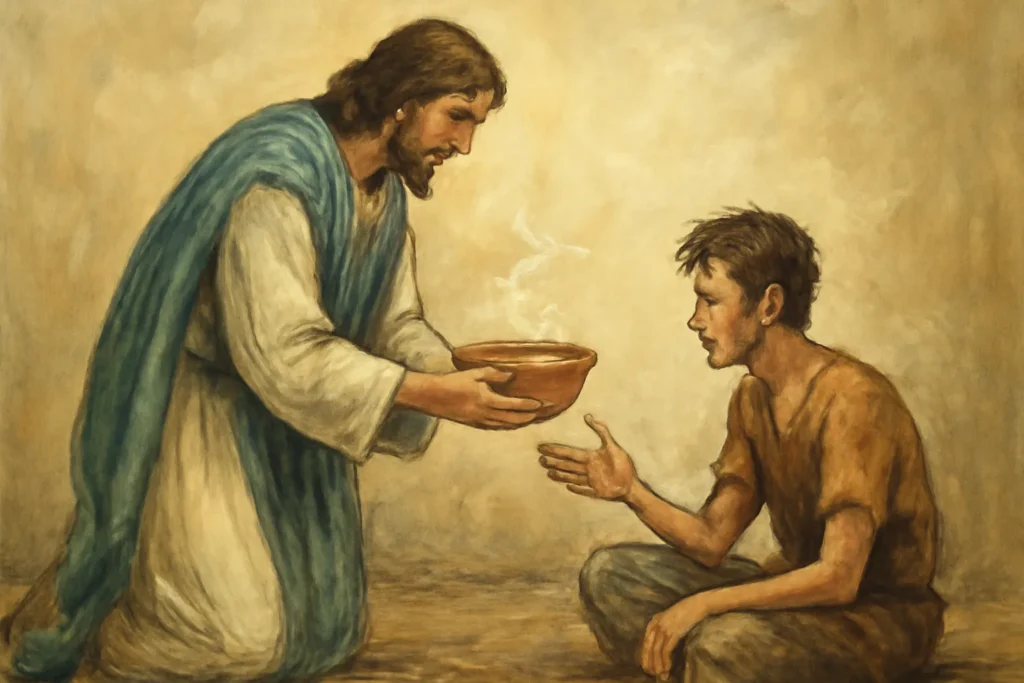
simple, vivid terms, it connects acts of ordinary hospitality to eternal significance: feeding the hungry, giving drink, welcoming the stranger, clothing the naked, and other acts of mercy are framed as service to the
living presence of Christ.
In this article, we explore the verse from multiple angles: what it says, how its
immediate context shapes its meaning, and how readers today can interpret and apply
it in personal life, church life, and public compassion. We will look at linguistic
variations of the verse across translations and paraphrases to broaden semantic
understanding, while keeping the core message intact: merciful action toward others
is an encounter with Christ Himself.
What Matthew 25:35 Says, In Core Terms
The core sentiment of Matthew 25:35 is succinct and powerful. In many English translations,
Jesus says, or implies, that people are welcomed—or judged—according to whether they
have provided for others in need. A compact rendering captures the essential idea: “I was hungry and you fed me; I was thirsty and you gave me drink.”
Short variations preserve the same logic: giving food, giving water, sharing hospitality.
The verse invites readers to notice Christ in the hungry, thirsty, and needy person standing before them.
It reframes mercy not merely as an optional virtue but as a concrete duty tied to relationship with Christ.
Contextual Grounding: The Parable of the Sheep and the Goats
To grasp the full meaning of Matthew 25:35, it helps to situate it within the larger
narrative that Jesus tells in Matthew 25:31–46. The scene unfolds at the final judgment,
when the Son of Man separates people as a shepherd separates sheep from goats. The criterion
for entry into the kingdom is not merely belief in abstract terms, but tangible, wayfaring
mercy extended to those in need.
The surrounding verses emphasize several key dynamics:
Presence of the hungry, thirsty, strangers, naked, sick, and imprisoned as the litmus test for genuine discipleship.
Christ identifies himself with the vulnerable: I was hungry; you fed me is not a private deed but a meeting with the Lord.
The judgment highlights both responsibility and reward—not for
high-minded theory but for concrete mercy.
Hospitality as a Central Virtue
A fundamental thread in Matthew 25:35 is hospitality—the welcome
of the stranger and the provision of basic needs. In the ancient Near East, hospitality
carried immense social and ethical weight. The command to feed the hungry and offer shelter
(even to a stranger) reflects a vision of community where care for the vulnerable
is a marker of true discipleship.
Mercy as a Public and Private Practice
The verse challenges readers to see mercy both as individual acts—sharing a meal,
giving water—and as a relational posture toward society. It is not merely a private
piety but a public ethic that shapes how communities respond to hunger, poverty, and
insecurity.
The passage invites a devotional awareness: when we serve the hungry, we are serving Christ Himself.
This theological claim moves acts of mercy from actions to encounters with the risen Christ
who identifies with the least of these. The language invites believers to imagine the hungry
as a revelation of Jesus, not simply as recipients of charity.
Justice, Mercy, and Faith
Interpreters often ask how this passage relates to debates about faith and works. The
teaching here emphasizes that mercy is inseparable from authentic faith.
James famously argues that “faith by itself, if it is not accompanied by action, is dead.” In
Matthew 25:35, mercy is the living out of faith—action that reveals the authenticity of a
person’s trust in God.
The precise wording of Matthew 25:35 can shift by translation, but the core idea remains
consistent: caring for basic human needs is a way to honor Christ. Here are some paraphrase-style
and translation-inspired variations that help broaden semantic breadth without changing the core meaning:
I was hungry, and you fed me, a simple expression of tangible mercy.
I was thirsty, and you gave me something to drink.
I was a stranger, and you welcomed me—hospitality as holy action.
You provided food for the hungry; you offered shelter to the vulnerable.
When I was in need, you met my basic needs—bread, water, shelter, and care.
In feeding the hungry, you fed Christ—an invitation to see divine presence in acts of mercy.
Acting with mercy toward those in need is acting toward Him—a call to embodied faith.
Different translations may render the sequence with emphasis on food, drink, hospitality, clothing,
care for the sick, and visits to prisoners. Variations may also reflect nuances in how the
final judgment scene is framed, but all keep the central logic: mercy toward the vulnerable
is the mark of genuine discipleship.
Hunger and thirst in first-century Palestine were daily realities for many. The social
and economic structures—agrarian economies, seasonal scarcity, and varying degrees of
wealth—made compassion toward the hungry not only a moral obligation but often a practical
necessity for communal survival. In this light, the command to feed the hungry carries both
spiritual and social weight.
Hospitality to strangers was a norm in many ancient cultures, but Jesus’ teaching elevates
it to a theological act. Inviting someone in, sharing a meal, and ensuring a person’s basic
needs were met reflected communal integrity. When readers today reflect on this background, the
exhortation to feed the hungry becomes a call to stewardship of community resources, advocacy
for the vulnerable, and personal generosity that does not discriminate by status or ethnicity.
The following practical notes translate the theological exhortation into everyday action. Each item represents a way to embody the spirit of Matthew 25:35.
Simple, reliable habits: keep a modest budget for staple groceries to share with neighbors in need or to contribute to a local food pantry.
Small acts of hospitality: welcome a visitor in your neighborhood, offer a meal to someone passing through hard times, or host a community meal at your church or community center.
Mindful generosity: notice the hunger signals around you—food deserts, long lines at food banks, or families skipping meals—and respond with steady, practical help.
Build relationships, not just charity: accompany people in need toward resources, listen to their stories, and walk with them toward sustainable support, such as employment assistance or healthcare access.
Practice hospitality in daily life: open your table, your time, and your home to others, turning meals into opportunities for connection and care.
Educate and advocate: raise awareness about food insecurity, support policies that reduce hunger, and work with local organizations to strengthen community safety nets.
Role of Personal Reflection
Reflection on this passage invites a posture of humility and accountability. It asks a person to
consider: How do my resources, time, and energy translate into acts of mercy? Do I see Christ in those who
are hungry or alone, and do I respond with courage and generosity?
Beyond individual acts, Matthew 25:35 speaks to congregational and community life. When
churches organize around mercy, they enact the verse in institutional ways that can multiply
impact. Here are practical models that align with the spirit of the text:
Community meals and food distribution programs: weekly or monthly gatherings that provide meals and groceries to neighbors in need while building relationships.
Emergency aid partnerships: collaborating with food banks, shelters, and clinics to coordinate fast, dignified assistance for those facing crises.
Hospitality ministries: welcoming travelers, students, refugees, and the unhoused with meals, blankets, and a listening presence.
Advocacy and justice initiatives: organizing around policies that address root causes of hunger, such as poverty, wages, housing, and access to healthcare.
Volunteer pipelines: creating pathways for congregants to engage in service, with clear training and accountability to keep mercy initiatives sustainable.
The church’s response to hunger, when grounded in this passage, becomes more than charity;
it becomes a form of worship—recognizing Christ in the vulnerable and creating spaces where
mercy can flourish as a corporate witness.
Matthew 25:35 sits within a wider biblical tapestry that weaves mercy, justice, and faith
together. Cross-references help illuminate its broader theological arc:
James 2:14–17 emphasizes that faith without works is dead— deeds of mercy are
the natural outflow of genuine faith, consistent with the Matthew 25 call to action.
Isaiah 58:7–10 links fasting with social righteousness—feeding the hungry and caring for
the oppressed as a form of true worship that pleases God.
Proverbs 21:13 warns against neglecting the poor, noting that “those who close
their ears to the cry of the poor will themselves call out, but there will be no answer.”
Luke 3:11 echoes a practical ethic: share your resources if you have two coats; help
those in need with the things you possess.
Reading these passages together reinforces a consistent message: a living faith expresses itself
through concrete acts of mercy, especially toward the hungry and vulnerable. This is not a mere
line of moral instruction; it is a framework for living in alignment with the heart of the gospel.
Q: Does this verse imply that salvation is earned by good works?
The passage is best understood as describing the observable fruit of authentic faith rather than
a raw works-based merit system. It portrays mercy as the natural outcome of a surrendered life in
Christ. In other words, good works follow genuine faith, they do not create faith
from scratch.
Q: How should churches balance charity with systemic justice?
A balanced approach recognizes both immediate relief and long-term justice. Immediate relief
meets urgent needs, while systemic justice addresses root causes of hunger—poverty, education,
jobs, healthcare, and housing. The Matthew 25 framework supports both, inviting mercy that also
advocates for structural change.
Q: Can one person do everything, or is this meant for communities?
While individuals can and should practice mercy, the text’s logic is communal as well as personal.
A healthy faith community mobilizes resources, coordinates volunteers, and speaks up for the
vulnerable. Together, communities can magnify the impact of mercy in ways that single acts cannot.
To translate the theology into daily life, consider a few practical steps that align with the spirit
of Matthew 25:35:
Identify local needs: learn what hunger looks like in your area and which organizations serve those needs.
Create repeatable programs: establish monthly food drives, community kitchens, or grocery delivery for homebound neighbors.
Invite participation: involve people from diverse backgrounds in mercy initiatives to cultivate shared ownership and broaden impact.
Measure impact, not just intent: track meals provided, people served, and stories of transformation to learn and improve.
Teach and train: equip volunteers with sensitivity training so acts of mercy honor the dignity of every person served.
Language matters when translating sacred texts. Subtle shifts in wording can highlight different
facets of the same truth.
Emphasis on presence: some renderings stress that the hungry or needy are in the presence of Christ.
Hospitality foregrounded: other versions foreground inviting the stranger and offering shelter.
Action-oriented: several paraphrases highlight concrete actions like sharing meals, providing drink, or giving clothing.
Regardless of translation, the consistency across readings is clear: mercy toward the vulnerable is central to discipleship.
This shared core invites readers to embody compassion in both word and deed.
Matthew 25:35 calls us beyond sentiment into deliberate, embodied action. When we
feed the hungry, offer water, welcome strangers, and care for the vulnerable, we encounter Jesus
in a tangible way. This is not merely an ancient moral tale; it is a living invitation to join God
in healing a world marked by hunger and need.
For individuals, communities, and faith-based organizations, the verse remains a steady
compass: mercy expressed in practical ways becomes a beacon of hope, a sign of authentic faith,
and a conduit for grace to flow through ordinary acts of daily life.
Commentaries on the Gospel of Matthew that focus on chapters 25 and the theme of judgment and mercy.
Texts and studies on the social and cultural context of hospitality in the ancient world.
Practicums, curricula, and volunteer guides for food security programs and community meal initiatives.
Cross-references in the Bible study that connect James, Isaiah, and Luke with Matthew 25:35.











Leave a Reply