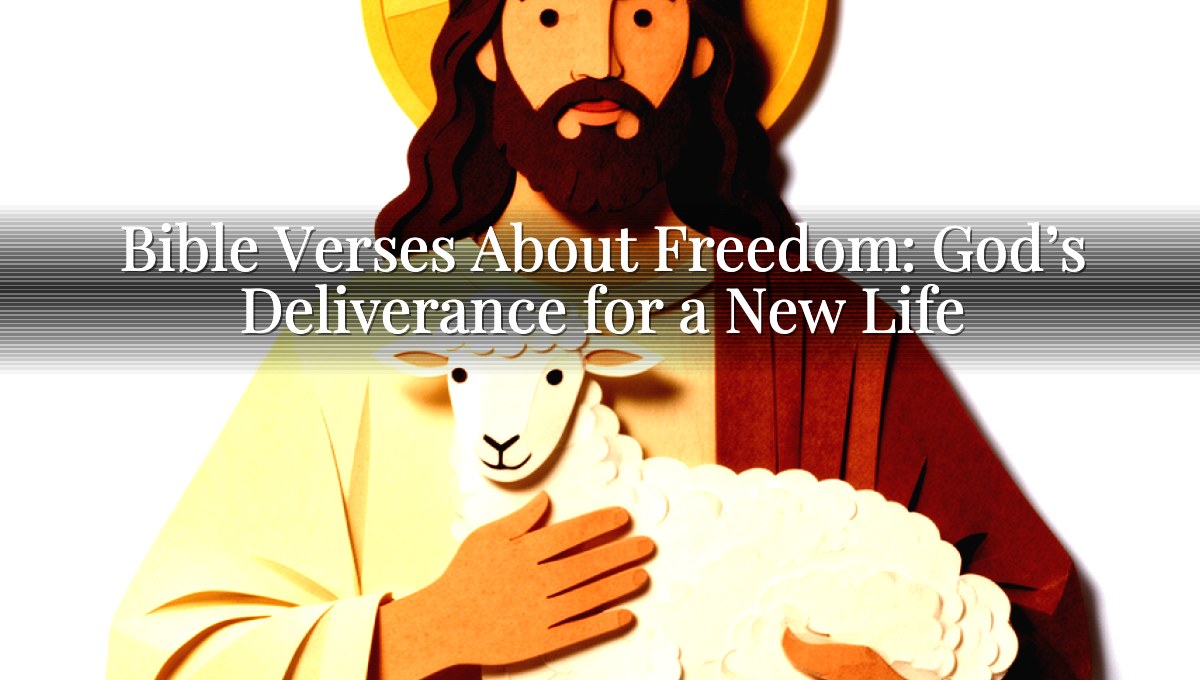
Bible Verses About Freedom: God’s Deliverance for a New Life
Quick Answer: If you’re searching for bible verses about freedom, these passages point to deliverance that comes through Christ. Jesus promises real freedom when the Son makes you free. The Spirit of the Lord brings good news, healing, and release to captives. God also delivers believers from darkness and translates them into His kingdom. Freedom is spiritual, healing, and transformative.
Many people long for freedom, yet feel trapped by fear, guilt, habits, or circumstances. Scripture doesn’t minimize those struggles—it speaks directly to bondage and offers hope. In bible verses about freedom, God shows that liberation is not only an emotional relief, but a real spiritual turning point. Jesus declares that true freedom comes through the Son. The Spirit of the Lord brings deliverance that reaches hearts, minds, and lives. And God Himself rescues people from the power of darkness and moves them into a new belonging—the kingdom of His dear Son. When you read these words, you’re invited to stop striving in your own strength and instead receive what God promises: freedom that can be trusted, lived, and shared with others. As you continue, let these verses renew your confidence that Christ can break chains and lead you into light.
At a Glance — Verses in This Article
John 8:36
Luke 4:18
Colossians 1:13
Bible Verses
John 8:36 (King James Version)
“If the Son therefore shall make you free, ye shall be free indeed.”
This verse teaches that freedom is truly possible because it is granted by the Son, resulting in real freedom indeed.
Luke 4:18 (King James Version)
“The Spirit of the Lord is upon me, because he hath anointed me to preach the gospel to the poor; he hath sent me to heal the brokenhearted, to preach deliverance to the captives, and recovering of sight to the blind, to set at liberty them that are bruised,”
This passage describes the Spirit’s mission to bring deliverance, healing, and setting captives free, matching the heart of freedom.
Colossians 1:13 (King James Version)
“Who hath delivered us from the power of darkness, and hath translated us into the kingdom of his dear Son:”
Here we see that God delivers us from darkness and transfers us into His Son’s kingdom, highlighting freedom as a change of power and rule.
Freedom begins with who Christ is
When you feel bound, it’s easy to think freedom depends on circumstances changing. But the gospel takes you deeper: freedom begins with who Jesus is and what He does. In John 8:36, Jesus speaks with certainty: “If the Son therefore shall make you free, ye shall be free indeed.” That phrase matters—“the Son…shall make you free” places the source of liberation in Christ’s work, not in human effort. Freedom is not merely a temporary escape; it is a divine act that results in genuine transformation.
This kind of promise invites personal response. Jesus isn’t describing an abstract idea; He is addressing people who can receive what He offers. If you are battling recurring thoughts, cycles of shame, or invisible fears, remember that Christ’s freedom is not limited to outward behavior. It reaches the inner life—your identity, your allegiance, and your ability to live in the truth.
John 8:36 also gives you hope for tomorrow. If the Son makes you free today, your future is not governed by the same chains. Even when struggles remain, freedom means you are no longer owned by them. You may still feel pressure, but you are not under the same power.
So as you seek freedom, start by turning your gaze to Christ. Ask Him to apply His promise to your heart. Let “free indeed” become more than words—let it be your confident expectation that God can break what has held you.
The Spirit’s work reaches every kind of captivity
Luke 4:18 shows that God’s freedom is holistic. Jesus reads from Scripture and announces His mission: the Spirit of the Lord is upon Him to preach good news, heal brokenhearted people, proclaim deliverance to captives, recover sight to the blind, and set at liberty the bruised. Notice how freedom is described across emotional, spiritual, and practical dimensions.
First, Jesus says the Spirit comes to “preach deliverance.” Deliverance implies an enemy and a rescue. If you’ve ever felt powerless, this is your reassurance: God does not treat bondage as normal. Second, the Spirit brings healing—“heal the brokenhearted.” Sometimes captivity is not only external; it can be internal pain that distorts how you see God and yourself.
Next, Jesus speaks of “recovering of sight.” That suggests that freedom also includes clarity. Bound people may live in confusion, misinterpretation, or distorted hope. God’s work can restore perspective, so you recognize truth and respond faithfully.
Finally, Jesus declares liberty for those “that are bruised.” This portrays real damage—hurt that may have accumulated over time. Yet the gospel doesn’t respond with denial or distance. It responds with release.
So when you think about verses about spiritual liberation, remember that the Spirit’s mission is compassionate and purposeful. Freedom isn’t only the absence of trouble; it’s the presence of God’s healing and truth.
As you pray, invite the Spirit to apply Luke 4:18 to your specific needs: your heart, your mind, your wounds, and your fears. Jesus’s mission is still active because He is still Lord.
Many people want freedom but underestimate what it costs to change direction in life. Colossians 1:13 clarifies that God’s deliverance is not cosmetic—it is a decisive transfer: “Who hath delivered us from the power of darkness, and hath translated us into the kingdom of his dear Son.” This is freedom with a clear background and a clear destination.
First, God “delivered us from the power of darkness.” Darkness isn’t just a setting; it is influence, authority, and governing sway. The idea of “power” means bondage is not only about weakness—it’s about rule. When you feel trapped, it can be because something has been acting like a ruler over you: sin patterns, fear, destructive thinking, or spiritual oppression. Colossians teaches that God acts decisively against that rule.
Second, God “translated us into the kingdom of his dear Son.” Translation means movement to a new realm, a new citizenship. Freedom, therefore, includes belonging. You are not only rescued out of something; you are brought into someone. The phrase “kingdom of his dear Son” shows that the new life is relational and centered on Jesus.
This changes how you interpret your identity. If you are in the Son’s kingdom, you are called to live consistently with that transfer. Even if darkness still tempts, it no longer has the final claim.
So hold onto this truth when you feel weighed down. God has already delivered you and translated you. Your freedom is grounded in what God has done, not in how strong you feel that day. Let “translated…into the kingdom” shape your daily decisions—what you feed, what you chase, and who you obey.
Practice freedom as you speak, pray, and obey
Freedom becomes real in daily rhythms, not only in moments of inspiration. Here are practical ways to respond to these truths.
1) Speak faith back to your heart. When you feel bound, take Jesus’s promise personally: “If the Son…shall make you free, ye shall be free indeed.” Speak it aloud. Let “free indeed” become a declaration over your inner life rather than a wish you hope will come true.
2) Pray the Spirit’s mission over your situation. Use Luke 4:18 as a prayer pattern: ask God to bring good news to you, heal your brokenhearted places, set you at liberty from what bruises you, and restore your sight—clarity to see the truth. This turns worship into targeted hope.
3) Remember your transfer, not just your struggle. Colossians 1:13 says you are delivered from the power of darkness and translated into the kingdom of the Son. In practice, ask: “Which authority is directing my next step—the old power or the Son’s kingdom?” When temptations rise, choose responses shaped by the new realm you belong to.
4) Take one obedience step. Freedom is not passive. It calls for action that matches your identity. After you pray, choose a concrete step of obedience—reach out for help, put boundaries in place, forgive someone you’ve been carrying, or replace a harmful habit with a faithful one. Small obedience protects freedom.
5) Encourage others with what God has revealed. Share that Christ can set captives free and that God’s deliverance is real. Encouragement reinforces your own hope and helps someone else take the next step.
Make these practices simple and repeatable. As you do, you will discover that freedom grows stronger through consistent trust in Christ.
Frequently Asked Questions
What are the best bible teachings on being set free?
Jesus teaches that freedom is real when the Son makes you free. Luke shows the Spirit’s mission to preach deliverance and set captives free. Colossians explains that God delivers you from darkness and transfers you into the kingdom of His dear Son—so freedom includes a new power and belonging.
How do scripture on freedom in Christ help when I feel stuck?
Scripture redirects your focus from circumstances to Christ’s authority. John 8:36 reminds you that freedom comes from the Son. Luke 4:18 assures you that the Spirit brings healing and liberty. Colossians 1:13 helps you remember you’ve been transferred out of darkness’s power.
Are there verses about spiritual liberation that deal with emotional pain?
Yes. Luke 4:18 explicitly says the Spirit of the Lord is sent to heal the brokenhearted and set at liberty those who are bruised. That means God’s deliverance reaches inside, not only outside—offering comfort, restoration, and release for hurting hearts.
What does God’s deliverance verses say about authority and ownership?
Colossians 1:13 describes deliverance as being freed from the power of darkness. That implies bondage is linked to rule and influence. It also says God translated believers into the kingdom of His dear Son, meaning your life now belongs to a new authority and destination.
A Short Prayer
Dear Lord Jesus, thank You that freedom is not wishful thinking but Your promise. Make me free indeed. Send Your Spirit to heal the brokenhearted and deliver me from every captivity that bruises my life. Remind me that You have delivered me from the power of darkness and translated me into Your kingdom. Teach my heart to live according to Your authority today. In Your name, amen.
Key Takeaway: God’s freedom—given by the Son, empowered by the Spirit, and grounded in deliverance—can break bondage and lead you into a new kingdom life.

 Por Fernando Ortiz