Introduction: Bible Verses About Praying for Each Other
In a faith rooted in love for neighbor, the discipline of intercession stands as a concrete expression of
care. The Bible repeatedly teaches that praying for one another strengthens individuals, fosters
unity, and advances God’s purposes in families, churches, and communities. Intercession is not simply a private habit;
it is a communal responsibility that invites us into a shared spiritual journey. Across both Testaments, believers are
invited to carry one another’s burdens in prayer, to lift up leaders, to plead for mercy, and to stand in the gap on
behalf of those who cannot stand for themselves. In this article, you will find a broad survey of verses about praying
for each other, with explanations, practical reflections, and pointers on how to practice intercession today.
What intercession means in Scripture
The word intercession comes from a sense of standing in the middle, between God and people, on behalf of
others. Biblical intercession often involves three elements:
Compassion for others — a genuine burden for their needs, struggles, or circumstances.
Faith that God can act — trusting in His sovereignty and mercy.
Words spoken to God — petitions, prayers, supplications, and sometimes confessions on behalf of others.
When these elements come together, intercession becomes a doorway to communal blessing, spiritual growth, and
mission alignment—because what affects one member of the body affects all. The following sections highlight
verses that teach, model, and encourage such intercession.
Key verses that teach us to pray for one another
The Bible contains direct commands and heartfelt prayers that model intercession. Here are foundational verses, with brief notes on their meaning and application.
1 Thessalonians 5:25 — "Brethren, pray for us."
James 5:16 — "Confess your faults one to another, and pray one for another, that ye may be healed."
1 Timothy 2:1 — "I exhort therefore, that, first of all, supplications, prayers, intercessions, and giving of thanks, be made for all men."
Romans 15:30 — "Now I beseech you, brethren, for the Lord Jesus Christ's sake, and for the love of the Spirit, that ye strive together with me in your prayers to God for me."
Ephesians 6:18 — "Praying always with all prayer and supplication in the Spirit, and watching thereunto with all perseverance and supplication for all saints."
Colossians 4:12 — "Epaphras, who is one of you, a servant of Christ Jesus, salutes you, always laboring fervently for you in prayers, that ye may stand perfect and complete in all the will of God."
2 Thessalonians 3:1 — "Finally, brethren, pray for us, that the word of the Lord may have free course, and be glorified."
John 17:9-11 — Jesus says, "I pray for them: I pray not for the world, but for them which thou hast given me."
2 Corinthians 1:11 — "Ye also helping together by prayer for us."
These verses, drawn from different contexts, show a pattern: intercession is relational, it rises from
concern for others, and it moves believers to unite their prayers for the sake of the gospel, the church, and the
needs of people. The tone is both intimate and expansive—an invitation to the ongoing practice of lifting others up
to God.
New Testament foundations for interceding: patterns and passages
In the New Testament, intercession is woven into the life of the church. The apostles urge believers to
intercede for leaders, for the spread of the gospel, and for the spiritual health of the entire body. Here are
some representative patterns and contexts:
Interceding for church leaders and gospel proclamation — The requests to pray that the word of God would
run freely and be honored appear repeatedly in Paul’s letters (for example, 1 Thessalonians 5:25, 2 Thessalonians 3:1),
emphasizing that the health of the church and the advance of the gospel are closely tied to sustained prayer.
Praying in the Spirit for all saints — The exhortation in Ephesians 6:18 to pray at all times in the Spirit,
with perseverance for all the saints, invites believers to adopt a posture of continual intercession as part
of spiritual warfare and spiritual formation.
Intercession that bears fruit — Prayers offered for others are not abstract; they are connected to
God’s will and the growth and maturity of believers (see Colossians 4:12 where Epaphras’s prayers are connected
to standing mature in God’s will).
Christ’s intercessory work as model — Jesus’s high-priestly prayer in John 17 models praying for His
disciples and for future believers, highlighting the continuity between Christ’s intercession and the church’s
intercessory calling.
The overarching message is clear: intercession is a vital expression of Christian love that aligns
the praying community with God’s purposes and enters the believer into the ongoing story of salvation history.
Old Testament foundations and intercession as a family practice
While the term “intercession” is more often associated with the New Testament, the Old Testament provides powerful
narratives of individuals who interceded on behalf of others, often turning the community toward mercy and repentance.
Moses interceding for Israel — In several pivotal moments, Moses pleads with God on behalf of the people
(for example, Exodus 32:11-14 and Exodus 33:11-14). His heart-breaking plea, grounded in God’s promises,
demonstrates the posture of a mediator who bears the people’s burden before the throne.
Daniel’s intercession for Israel — In the prophetic prayers of Daniel 9, the prophet lays out a heartfelt
prayer for the restoration of Jerusalem, confessing the nation’s sins and seeking God’s mercy in anticipation of divine
intervention.
Nehemiah’s burden for the city — When Nehemiah learns of Jerusalem’s ruin, he prays, confesses, and then acts,
seeking God’s favor while preparing to rebuild the wall (see Nehemiah 1).
Job’s intercession for friends — After Job’s trials, God blesses him when he prayed for his friends (see Job 42:10),
illustrating that intercession can release blessing even after suffering.
These stories illustrate that intercession is not only a spiritual discipline but a practical means by which God’s people
care for one another and cooperate with divine redemptive plans. The Old Testament invites believers to carry others’
burdens in prayer as a demonstration of covenant loyalty and communal integrity.
Practical ways to practice intercession today
Understanding the biblical basis is only the first step. The next step is to translate these verses into daily habits that
strengthen your prayer life and bless others. Here are actionable patterns for contemporary intercession:
Pray for leaders and spiritual authorities — Regularly lift up your pastors, teachers, elders, missionaries,
and church staff, asking God to grant them wisdom, protection, clarity, and fruitfulness in their ministry.
Pray with a focus on the gospel’s advance — Intercede for opportunities to share Christ, for
open doors, for courage to speak, and for receptive hearts among neighbors, coworkers, and friends.
Pray for restoration and healing — Include those facing illness, grief, relational strain, or financial
hardship, asking God to bring comfort, restoration, and provision according to His will.
Pray with Scripture — Let the Bible guide your petitions. When praying for others, quote or reflect on verses
that align with their needs, inviting God to fulfill His purposes in their lives.
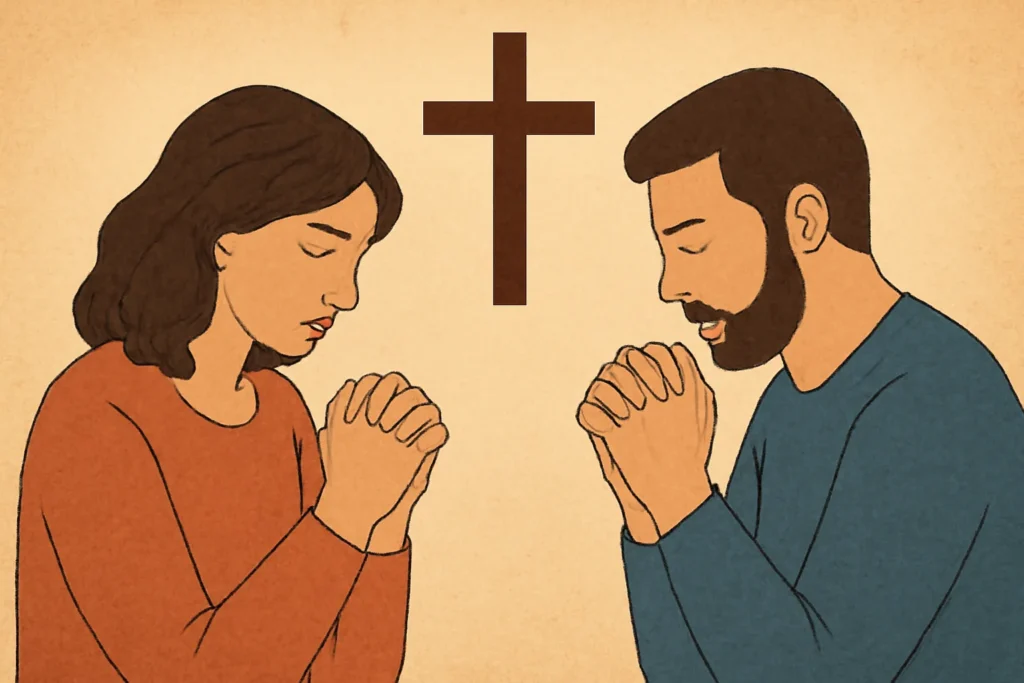
Pray with others — Schedule times to pray with a spouse, friend, or a small group, practicing mutual
faith and accountability. Intercessory prayer often grows more powerful when shared.
Keep a prayer list — Track requests and answers. A living list helps you see God’s faithfulness over time
and motivates you to continue bearing others’ burdens in prayer.
Pray for spiritual discernment — Ask for wisdom to understand God’s will for people’s lives and for the
strength to persevere in faith and hope on their behalf.
As you adopt these practices, you may notice a deeper sense of unity, compassion, and spiritual sensitivity.
Intercession becomes not only a duty but a joy—the way believers participate in God’s plan for others.
Examples of intercession in daily life
Real-life examples help us see how the principle works in ordinary settings—home, work, school, and church. Here are
scenarios and suggested prayers that mirror biblical patterns:
In the home — Pray for a spouse or child facing illness, for guidance in important decisions, or for
reconciliation in strained relationships.
In the workplace — Pray for coworkers who are overwhelmed, for fair treatment, and for opportunities
to demonstrate integrity and hope in challenging environments.
In the church — Lift up ministries, missions, and vulnerable members— widows, orphans, the elderly,
and those new to faith—so that the body grows in love and maturity.
In the community — Pray for leaders, schools, first responders, and neighbors; seek God’s mercy
for the city, the nation, and the world, while living out practical compassion.
These scenarios remind us that intercession is flexible and relational, able to adapt to different contexts while
remaining anchored in biblical truth. The core remains the same: come before God with care for others, aligned with His will.
Common questions about praying for one another
As you grow in intercession, you may encounter questions about practice, boundaries, and effectiveness. Here are some common concerns with concise guidance:
How often should I intercede for someone? — Make it a habitual part of your prayer life, but respect
boundaries and listen for God’s guidance. Some needs require ongoing, sustained prayer; others may be addressed with
occasional intercession as circumstances change.
What about repeating prayers for the same need? — It is good to return to God with persistent, honest
requests, but pair persistence with trust in God’s timing and sovereignty. Avoid prayer that becomes anxious or ritualistic.
How do I guard against becoming controlling in prayer? — Pray with humility, acknowledge God’s ultimate
lordship, and seek to align your petitions with His will. If a concern is clear to you but not to the person you’re
praying for, respect their agency and guard their dignity in your prayers.
Is it okay to pray for non-believers? — Yes. Scripture urges prayers for all people and for those who
do not yet know Christ, with the aim of showing the love of God and inviting them toward His grace.
Conclusion: The transforming power of interceding for others
When believers commit to pray for one another, they enter a rhythm that echoes the biblical
narrative: God’s people bearing one another’s burdens, pleading for mercy, and inviting God to work in lives that are
often beyond their own capacity to change. Intercession is not a passive act; it is a dynamic, faith-filled practice
that grows the spiritual family, strengthens churches, and extends God’s mercy into the world.
Whether you are new to prayer or seeking to deepen an established practice, the Bible offers a clear invitation: take
seriously the charge to intercede, combine your prayers with compassionate action, and trust God to answer in ways that
surpass human expectations. By embracing verses like 1 Thessalonians 5:25, James 5:16, 1 Timothy 2:1, and John 17, you join a long and living tradition of believers who have learned to carry others to God with faith,
diligence, and love.
As you move forward, consider keeping a simple prayer plan: a small group or partner for regular intercession, a
remember-to-pray list for family and church, and a commitment to pray for those in leadership and for opportunities to
witness. In time, you may discover that intercession is a transformative practice that enriches your own
spiritual life as you bless the lives of others.











Leave a Reply