Bible Verses About Public Prayer: What the Bible Teaches About Praying in Public
Bible Verses About Public Prayer: What the Bible Teaches About Praying in Public
Public prayer is a prominent theme throughout the Bible, spanning the temple courts, house churches, and city streets. It can be as quiet and reflective as a solitary supplication spoken aloud in a gathered assembly, or as bold and intercessory as a community prayer that voices petition for mercy, guidance, and justice. This article explores what the Bible teaches about public prayer—its purposes, boundaries, and best practices—so readers can understand how praying together in public fits within a biblical framework. We will survey Jesus’ teaching and example, the practice of the early church, and the guidance given in the apostolic letters, all with an eye toward applying these truths in contemporary worship and prayer meetings.
Foundations: What the Bible Teaches about Public Prayer
At its core, public prayer is not a performance but a communal act of speaking with and to God in the hearing of others. Several biblical themes underline how public prayer should be approached: motive, order, clarity, and a shared aim of building up the church and glorifying God. The Bible distinguishes between prayers offered to impress others and prayers offered to honor God; it also provides practical guidance on how to conduct prayer in public settings so that it remains edifying and accessible to all who participate.
One foundational distinction is between prayers offered in secret and those spoken aloud in public. Jesus teaches that God reads the heart behind the words and that public displays of prayer done to gain human praise miss the point of worship. Yet the Bible also holds up public prayer as a legitimate, expectation-filled practice of the church when it arises from genuine devotion and flows from a heart surrendered to God. In public worship, the church’s voice joins together in supplication, thanksgiving, and intercession, acknowledging dependence on God and inviting His presence among His people.
Jesus and Public Prayer: Teachings and Examples
A warning against showy public prayer
In teaching about prayer, Jesus addresses the danger of drawing attention to oneself through ostentatious prayer. In a well-known passage, He cautions against praying “to be seen by others” and urges followers to pray in secret, where the Father who sees what is done in secret will reward what is done in secrecy. The principle is not that prayer must always be private, but that public prayer should not be driven by a desire for human acclaim. When prayer in a public setting becomes showmanship, the message of prayer—communion with God and intercession for others—gets distorted.
From this frame, public prayer is rightly ordered when it aims to glorify God, unite the assembly, and magnify His name. The goal is not to elevate the person praying but to invite the people of God to participate in lifting their petitions and praise to the Father together. The moral is simple: the posture of the heart matters in public prayer as much as the words themselves.
Public prayers Jesus offered in public contexts
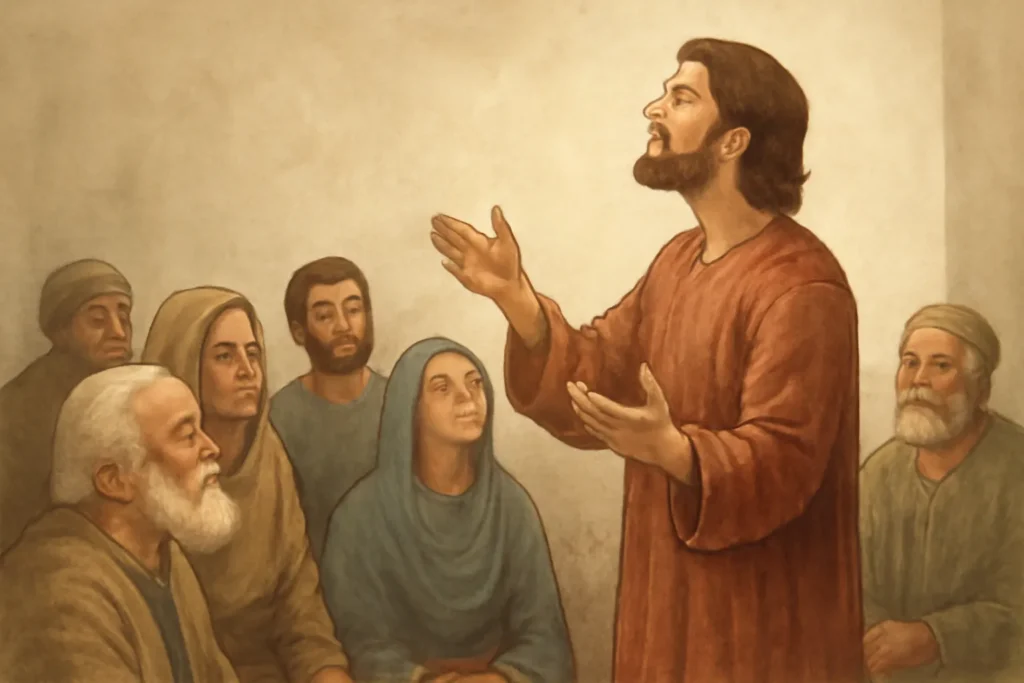
Jesus also prays aloud in public on certain occasions, modeling a corporate rhythm of prayer. At the tomb of Lazarus, for example, He lifts His voice to the Father in the presence of witnesses, expressing gratitude and confidence in God’s hearing. This public prayer demonstrates a number of helpful patterns: content that honors the Father, a clear declaration of dependence on God, and confidence that God is listening. While Jesus’ public prayers were seldom the main point of a scene, they show how public prayer can be integrated into public acts of worship and revelation of God’s power.
Another significant public prayer in the Gospel accounts is Jesus’ high-priestly prayer in John 17. This extended public prayer, offered aloud to the Father on behalf of His disciples, shows the depth and breadth of intercession that can take place within a gathered adoration. It models praying for unity, protection, sanctification, and mission, presenting a blueprint for corporate intercession and mission-focused prayer in today’s churches. While the exact circumstances differ, the underlying impulse—Christ’s intercession on behalf of the gathered faith community—remains a compelling paradigm for public prayer.
Public Prayer in the Book of Acts and the Early Church
The rhythm of prayer in the early church
The book of Acts provides several vivid pictures of public prayer in the early Christian assemblies. In Acts 2:42, the believers “devoted themselves to the apostles’ teaching and to the fellowship, to the breaking of bread and to prayer.” This description places prayer at the center of the church’s life, not merely as a private habit but as a communal discipline that anchors the life of the church, shapes its witness, and sustains its mission. Public prayer in Acts is often tied to teaching, shared meals, and mutual care—creating a holistic rhythm of worship and service.
Public petitions in response to threats and needs
Acts 4:24-31 presents a powerful example of public prayer in a moment of pressure. The infant church gathers with their companions to cry out to God in the face of opposition. They lift their voices together to God, acknowledging His sovereignty and requesting boldness to continue speaking His word. The prayer itself is public, formulaic in its unity, and accompanied by awe as the place is shaken, and the Holy Spirit fills the believers for renewed proclamation. This event demonstrates that public prayer in Scripture can serve as a catalyst for renewed courage, unity, and mission—especially in times of trial.
These accounts together illustrate how the early church expected public prayer to function: as a shared practice that aligns the church with God’s will, sustains faith under pressure, and empowers believers for witness and intercession in the world. Public prayer in Acts is not a spectator activity; it is a communal act that seeks God’s direction and boldly invites His intervention.
Guidance for Public Worship in the Letters
Prophetic and orderly prayer in Corinth
Paul’s letters to the churches provide concrete instructions for praying in public worship, particularly within the gathered assembly. In 1 Corinthians 14, Paul emphasizes both the Spirit-led nature of prayer and the need for understanding. He urges believers to pray with the Spirit and to pray with their understanding, so that the whole congregation can participate meaningfully. This flexibility allows for both private devotional depth and public intelligibility—an approach that honors both sincerity and clarity in communal prayer.
Paul also addresses the importance of order in public worship. In 1 Corinthians 14:26-28, he outlines how diverse spiritual gifts should contribute to a public gathering: each person may bring a contribution—be it a hymn, a teaching, a tongue, or an interpretation—but all things should be done decently and in order. If someone speaks in tongues, there should be an opportunity for interpretation so that the church can be edified. If there is no interpreter, the speaker should keep silent in the church. These verses offer a practical framework for maintaining reverence, accessibility, and edification in public prayer and other forms of corporate worship.
Further, in 1 Corinthians 14:15-17, Paul underscores the balance between personal spiritual depth and communal comprehension: praying with the spirit should be complemented by praying with understanding so that the gathered church can say “Amen” in agreement. In practical terms, this means that public prayers should be intelligible to ordinary believers, while still allowing room for heartfelt expression and moments of genuine intercession that may be led by different voices within the body.
Prayer in every place: 1 Timothy 2:8
Another important anchor for public prayer is 1 Timothy 2:8, where the apostle exhorts that in every place “the men should pray, lifting up holy hands, without anger or disputing.” This directive highlights two enduring themes: the universality of prayer in Christian life (“in every place”) and the dignity of public prayer as a masculine leadership posture in the gathered assembly (context on leadership styles and gender debates requires careful interpretation today). The broader takeaway is not a rigid stereotype about who may speak in prayer, but the principle that prayers offered in public worship should be conducted in a posture of reverence, unity, and focus on God’s holiness, with the lived-out unity of the community showing in how people relate to one another during prayer.
Important Verses for Public Prayer: Quick Reference
Matthew 6:5-6 — Jesus warns against praying to be seen by others and invites private, focused communion with the Father, while not denying that public prayer can occur when done with the Father’s glory in view.
Luke 11:1-4 — The disciples request Jesus to teach them to pray; the Lord’s Prayer is given as a model for prayer that is fitting for both private devotion and corporate recitation in some contexts, emphasizing clarity, worship, and dependence on God.
Luke 18:9-14 — The contrast between the self-righteous public prayer of the Pharisee and the humble, penitential prayer of the tax collector cautions against pride in public worship and highlights genuine humility.
John 11:41-42 — Jesus prays aloud in public at the tomb of Lazarus, expressing gratitude to the Father and acknowledging that He always hears Him; this prayer models public confession of faith and reliance on God’s authority in a visible moment.
John 17:1-26 — Jesus’ high-priestly public prayer for His disciples and for all believers showcases intercession, unity, sanctification, and mission as central themes in corporate prayer.
Acts 2:42 — The early church’s devotion to prayer as a core practice that shapes communal life and mission.
Acts 4:24-31 — A bold, corporate prayer in the face of persecution, highlighting united petition, reliance on God’s sovereignty, and the Spirit’s empowering presence.
1 Corinthians 14:15-17 — The tension and harmony between praying with the Spirit and praying with understanding, enabling the whole congregation to participate faithfully.
1 Corinthians 14:26-28 — A practical framework for orderly participation in public worship, including prophetic utterances, tongues, and interpretation.
1 Corinthians 14:40 — All things should be done decently and in order, a principle that extends to prayers offered in corporate settings.
1 Timothy 2:8 — A call to public prayer in the gathered assembly, with emphasis on reverence and unity.
James 5:16 — The practice of confessing sins to one another and praying for one another, fostering accountability and communal care through intercession.
Practical Guidelines for Public Prayer Today
Translating biblical principles into contemporary practice requires wisdom and sensitivity to culture, context, and church tradition. Here are several practical guidelines drawn from the biblical motifs above, intended to help local churches cultivate meaningful and biblically faithful public prayer:
Lead with humility and reverence: Public prayers should lift up God’s name and seek His will, not showcase personal eloquence or spiritual status.
Keep prayers intelligible and accessible: Even when people pray with the Spirit, they should aim for words that the whole congregation can understand and join in—so that the body can offer a sincere “Amen.”
Maintain order and decency: In line with 1 Corinthians 14:40, public prayer should be orderly, with clear transitions between voices, appropriate pacing, and respect for time constraints in gathered worship.
Encourage a diversity of voices: Scripture’s examples show multiple participants in prayer. Encourage varied prayer leadership—leaders, families, and lay members—while ensuring all contributions align with the gospel message and the church’s mission.
Balance private devotion and corporate intercession: Public prayer should not replace private, secret prayer; rather, it should complement it by joining the church in intercession and praise as a community.
Use the Bible as a guide for content: Incorporate Scripture, confessions of faith, intercession for needs, and expressions of gratitude. Biblical language can ground public prayer in God’s promises and character.
Practice intercessory focus: Public prayers should often include petitions for leaders, neighbors, missionaries, and those in need, reflecting the church’s broader mission in the world.
Be ready to listen and discern: Public prayer is not only about speaking; it also involves listening—for God’s Spirit, for the needs of the gathered body, and for a sense of spiritual resonance that fosters unity.
Pastoral leadership and accountability: Church leadership should model prayer, teach about biblical prayer, and create space for feedback and growth in the life of prayer.
Putting It All Together: How to Practice Biblical Public Prayer
For churches and prayer groups seeking to apply biblical principles, a practical approach might include the following steps:
Plan with purpose: Decide the purpose of the public prayer segment—worship, intercession, confession, or thanksgiving—and allocate time accordingly. Avoid filler prayers that do not advance the church’s aims of seeking God and benefiting the body.
Invite varied voices within clear boundaries: Invite lay leaders, elders, women and men, or representatives from different ministries to participate in prayer, ensuring that everyone understands the scope and limits of their contribution.
Provide guidance and structure: Use a simple format—call to prayer, a short Scripture reading, a brief intercession with specific categories (the church, leaders, missions, the vulnerable), a closing doxology or benediction. This mirrors the biblical pattern of order and unity.
Encourage Spirit-led but discerning participation: Allow room for spontaneous intercession while maintaining guardrails to prevent disruption or confusion, consistent with 1 Corinthians 14’s emphasis on intelligibility and order.
Cultivate humility in the room: Emphasize that public prayer is a communal act of worship and service, not a platform for personal performance or advantage.
Equip new participants: Teach new members how to pray succinctly, biblically, and with substance, including how to intercede for needs, confess sin, and offer gratitude in a way that blesses the body.
Common Questions About Public Prayer
As churches wrestle with how to incorporate public prayer into worship, several questions frequently arise. Here are concise answers grounded in Scripture:
Does the Bible permit long public prayers? Yes, public prayer can be lengthy when it serves the church’s needs—confession, intercession, and praise—provided it remains edifying, Christ-centered, and clear to the listeners. Jesus’ public prayers and the early church’s petitions in Acts show prayer can be both reflective and robust, as the Spirit leads.
Who should lead public prayers? Scripture opens space for varied voices in public prayer, guided by church leadership and the Spirit. The key is unity, reverence, and alignment with God’s Word rather than a narrow enforcement of gender or gifting that would hinder the church’s participation in prayer.
How long should public prayer last in a service? There is no one-size-fits-all duration; the length should reflect the context and purpose of the gathering, but it should never overshadow the Word, preaching, or the overall flow of worship. The emphasis remains on edification and participation, not performance.
How does public prayer relate to private prayer? Public prayer is the outward expression of a life of prayer. It should flow from private devotion, just as private confession and thanksgiving should inform the church’s corporate prayers. The two realms complement one another, shaping a holistic devotional life.
Conclusion: Public Prayer as a Vital Part of Biblical Life
The Bible presents public prayer as a meaningful and integral aspect of Christian life. It is not merely a ritual to be observed; it is a shared conversation with God that strengthens faith, fosters unity, and advances God’s purposes in the world. From Jesus’ sober warnings about seeking human praise to His own public petitions and intercessions, to the early church’s bold, Spirit-filled prayers in the face of opposition, to Paul’s careful instructions about order and participation, the biblical witness provides a robust framework for public prayer today.
As you read the Scriptures and shape the prayer life of a local church or prayer gathering, remember these core truths: public prayer should be God-centered and others-focused; it should be carried out with humility, clarity, and order; and it should honor the fullness of biblical truth while embracing the diversity of voices in the body of Christ. By keeping these anchors in view, congregations can experience the fullness of what the Bible envisions when believers come together to pray aloud in public: a community that speaks with one voice to the One who hears, intercedes, and empowers.







Leave a Reply