Introduction: A Practical Guide to Biblical Foods to Eat
Food shapes culture, ritual, and daily life. For readers seeking to align their meals with
scriptural principles, the Bible offers a rich tapestry of foods to eat, dietary guidelines, and culinary traditions. This article serves as a
comprehensive guide to biblical foods to eat—not as a ceremonial rule book,
but as a resource for understanding what the Bible considers clean, permissible, and
nourishing. We will explore categories of food, the historical and theological context behind
these choices, and practical ideas for applying these ancient patterns to modern kitchens.
Understanding the Foundations: Clean, Unclean, and the Noahic Principle
Central to biblical dietary discourse are two interwoven strands: the distinction between
clean and unclean foods in the Law given to Israel, and the broader, post-flood authorization
for eating many creatures under the Noahic covenant. Together, these strands form the backbone
of how many readers today think about biblical nourishment.
Old Testament Foundations: Clean and Unclean
In books such as Leviticus and Deuteronomy, God provides laws about which animals, birds, and
sea creatures may be eaten. The primary criterion for land animals is practical and symbolic: the animal must chew the cud and have a split hoof. Animals that do not meet both
criteria are deemed unclean. Common clean examples include cattle, sheep, goats, and deer, while
pigs, camels, and rabbits are typically cited as unclean in traditional readings.
Among creatures of the sea, a different standard applies: fish must have fins and scales.
Shellfish and other water-dwelling creatures without fins and scales are considered unclean. The
result is a carefully circumscribed list of foods that faithful households in ancient Israel could
eat, sacrifice, or offer.
Noahic Covenant: A Broader Permission After the Flood
After the flood, the biblical text suggests a broader permission regarding meat: “Everything that lives and moves about will be food for you”, while adding a crucial
caveat: you must not eat meat with its lifeblood still in it. This covenantal shift
broadened the frame beyond the specific Israelite purity laws and is often cited in discussions of biblical diet versatility. It does not, however, erase the later, more specific
distinctions in the ceremonial law; rather, it situates meat consumption within a larger moral and
spiritual context.
In the New Testament, readers encounter a nuanced development. Some passages (for example, Acts 10
and Mark 7:19) are interpreted as indicating a relaxation of ceremonial barriers around food for
early Christians. The practical takeaway for a modern audience is this: while the dietary
rules of the Old Covenant are not universally binding on Christians today, many people still
value the biblical categories of clean and unclean as a framework for understanding food quality,
ethical sourcing, and communal meals.
Categories of Biblical Foods to Eat: A Practical Framework
The Bible presents a broad menu of nourishing foods that appear across narratives, laws, and poetic
passages. To make the material actionable, we can group these foods into several practical
categories: grains and bread, fruits and vegetables, oils
and sweeteners, dairy products, meat from land animals, and seafood. Each category includes examples that appear in Scripture and that remain
culturally and nutritionally relevant today.
Grains and Bread: The Staple of Biblical Nourishment
Grains and bread are among the most enduring symbols of sustenance in the Bible. They appear in
daily meals, ceremonial offerings, and festive gatherings. In many biblical narratives, grain
products are a primary source of nutrition and a vehicle for hospitality and worship.
Wheat and barley are repeatedly referenced as staple crops and forms
the basis of flour for bread.^
Unleavened bread plays a central role in Passover observances, symbolizing rapid
deliverance and obedience.
Other ancient grains, such as spelt and millet, appear in historical
and agricultural contexts, illustrating a wider grain-based diet in antiquity.
Bread is not merely sustenance; in biblical language it is a symbol of daily provision and
hospitality. The Lord’s Prayer (in the Christian tradition) and various Psalms celebrate bread as
a gift from God, reminding readers that nourishment is both practical and spiritual.
Fruits, Nuts, and Honey: The Rich Palette of Plant-Based Provisions
The biblical landscape is dotted with fruit trees, edible botanicals, and sweeteners that together
form a vibrant biblical diet in which flavor and nourishment go hand in hand.
Many of these foods have enduring cultural significance in the Middle East and surrounding regions.
Representative Fruits and Plant-Based Foods
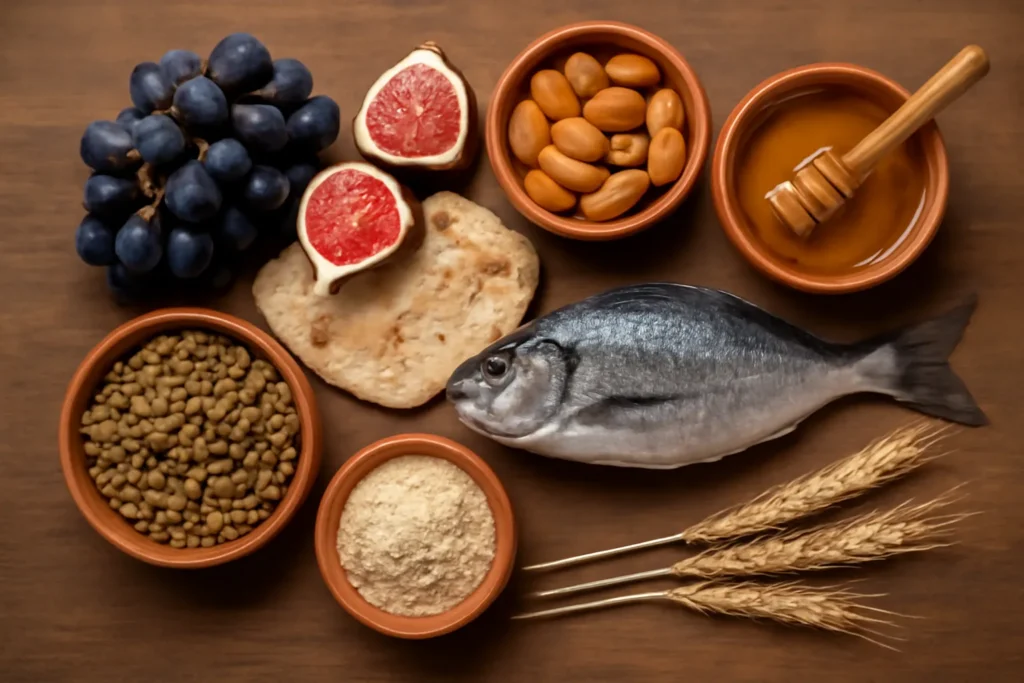
Grapes and grape products (including wine) feature prominently in celebrations and offerings.
Figs and other dried fruits appear in seasonal markets and religious symbolism.
Dates and pomegranates are frequently referenced as symbols of abundance and covenantal blessing.
Olives and olive oil form the heart of cooking, lighting, and ceremonial offerings.
Honey is celebrated as a symbol of sweetness and divine provision, often used poetically to describe abundance.
Legumes such as lentils and beans appear as protein-rich staples in meals and descriptions of daily life.
In a modern kitchen, these foods translate into a pantry that emphasizes fresh produce, dried fruit,
olive oil, and honey. A biblical foods to eat approach in this category values a spectrum
of plant-based nourishment, seasonal produce, and the cultural memory embedded in fruit symbolism.
Olive Oil, Wine, and the Seasoning Palette
Oils and beverages carry symbolic and practical weight in Scripture. Olive oil is a
cornerstone of cooking, lighting, and ritual anointing. It is praised for its preservative and healing
qualities, and it often represents vitality and blessing.
Wine and Fermented Beverages
Wine (grape juice that ferments) appears in both ceremonial contexts and social hospitality.
It is celebrated in weddings and festivals, with warnings about excess in ethical and moral discussions.
Avoiding misuse is a common thread in biblical wisdom literature; the scriptural stance favors
responsible consumption and temperance over intoxication.
When thinking about biblical diet patterns today, wine and olive oil can be viewed as
culinary enhancers that connect us to ancient practices, particularly in celebratory meals, and in
modest, moderate consumption that aligns with a humble and grateful posture toward food.
Dairy and Meat: Balancing Provisions and Practices
The biblical record includes both allowances and cautions regarding dairy products and meat. Milk, cheese, yogurt, and butter are common in many scriptural narratives, while
meat is governed by rules about clean animals and humane preparation, as well as prohibitions against
consuming blood or ritual sacrifices offered to other gods.
Dairy: Milk, Cheese, and Everyday Dairy
Dairy products appear in various feasts and daily meals, often signifying hospitality and plenty.
In many biblical passages, dairy is presented as a legitimate, nutritious component of a balanced diet, provided it is prepared and shared in ways consistent with communal norms.
Meat: What Counts as Clean and How It Is Prepared
Clean land animals include those that chew the cud and have a split hoof, such as cattle, sheep, goats, and deer.
Unclean animals include many others, such as pigs and certain birds or reptiles, depending on the
specific biblical lists and interpretations.
The dietary practice of not eating blood remains a persistent theme in both ancient and modern readings.
In a modern context, readers can incorporate biblical foods to eat by choosing meat
from animals that are raised with humane, sustainable practices and by ensuring proper preparation that
respects the biblical caution around blood and purity. Additionally, many readers interpret the New
Testament as shifting the emphasis from ceremonial purity to concerns about love, justice, and
stewardship—principles that guide how meat is sourced, prepared, and shared in community meals.
Seafood: Fin Fish versus Shellfish
The biblical classification of seafood is straightforward in terms of dietary rules: fish
with fins and scales are considered clean. This standard excludes shellfish such as shrimp, crabs, and
oysters, which are commonly restricted in traditional dietary codes.
Cod, salmon, tuna, and other fin fish are frequently cited by readers
as representative clean seafood options in Scripture-informed meal planning.
Choosing seafood that is responsibly sourced aligns with an ethic of stewardship—an overarching biblical principle.
For modern tables, this means a preference for ethically caught or farmed fin fish, avoiding shellfish and
other unclean sea creatures when applying a Scripture-informed framework. It also invites consideration of
how seafood complements other biblical foods to eat in a balanced, nutritious way.
Special Foods, Festivals, and Communal Meals
Beyond everyday nourishment, the Bible is rich with special foods associated with feasts, festivals, and
sacred times. These ceremonial foods illustrate how food functions as worship, memory, and community
bonding.
Festival Foods and Sacred Meals
Passover lamb and unleavened bread symbolize deliverance and obedience in the ancient festival.
Firstfruits offerings and harvest feasts celebrate clement seasons and divine provision.
Feasts of tabernacles or booths feature a variety of seasonal foods, often emphasizing gratitude and hospitality.
While the specific ceremonial foods belong to historical ritual contexts, their underlying themes—gratitude,
hospitality, and communal blessing—remain instructive for contemporary practice. A modern household can honor
these themes by prioritizing neighborly meals, sharing food with guests, and celebrating produce from local farms.
New Testament Perspectives: Diet in the Early Christian Community
The New Testament presents a shift in how Christians understand food, purity, and conscience. While the
Mosaic dietary laws are not universally binding for all believers, the teachings emphasize ethical
conduct, sacrificial love, and discernment in matters of freedom.
Jesus, Meals, and the Expanding Table
Jesus participates in meals with diverse groups, modeling hospitality and inclusion. Food around a table becomes a setting for teaching, transformation, and solidarity.
In several passages, Jesus intensifies the call to inner righteousness rather than external ritualistic food rules, suggesting that true cleanliness comes from the heart.
Early Church Practice: Freedom with Responsibility
The Jerusalem Council and subsequent writings illustrate a move toward freedom in dietary practice for Gentile believers, coupled with a shared call to avoid idolatry and to respect matters of conscience.
Paul’s letters often encourage believers to consider how their food choices affect the weak, the hungry, and the marginalized, emphasizing love and stewardship over absolutist rules.
In practical terms for today, many Christians understand biblical foods to eat as those that
align with personal conscience, health, and ethical sourcing, while avoiding behaviors or practices that
undermine communal harmony or worship.
Practical Guide: Building a Modern Pantry Aligned with Scripture
If you want to assemble a pantry that reflects the Bible’s biblical foods to eat in a practical
way, consider organizing around core categories, with a focus on quality, stewardship, and tasteful variety.
Core Pantry Staples
Grains (wheat, barley, oats, spelt) and their products (flour, cereals, dried grains).
Legumes (lentils, beans, chickpeas) for protein and versatility.
Fruits (grapes, figs, dates, olives, pomegranates) in fresh, dried, or preserved forms.
Vegetables (cucumbers, onions, garlic, leeks, leafy greens) for everyday meals.
Olive oil as a primary cooking oil and for dressings, dipping, and flavor.
Honey as a natural sweetener and a symbol of abundance in Scripture-inspired cooking.
Seafood (fin fish) sourced responsibly, plus a few vegetarian protein options for variety.
Dairy options like milk, yogurt, and cheese, depending on dietary preferences and tolerance.
Meal Planning Principles
Moderation and gratitude—cultivating a habit of gratitude for provision and avoiding waste.
Ethical sourcing—favoring humane farming, sustainable fishing, and fair labor practices.
Seasonal eating—aligning meals with harvest cycles and local availability.
Balance—combining grains, legumes, vegetables, and healthy fats to support wellbeing.
Hospitality—sharing meals with guests and neighbors as a spiritual practice of welcome.
Frequently Asked Questions: Clarifying Common Points
In this section, we address a few common questions readers often have when thinking about biblical foods to eat.
The answer depends on theological tradition. In many Christian interpretations, the ceremonial aspects of the
Mosaic dietary laws are not binding for believers today. However, the questions of how to source food ethically,
how to respect neighbors, and how to honor God through responsible eating remain. Many writers encourage treating
biblical categories as a framework for decision-making rather than a strict lab test.
Is there a prohibition against combining meat and dairy today?
The specific biblical injunction against cooking a kid in its mother’s milk has been understood in various ways across
historical and contemporary Jewish and Christian communities. Some traditions extend the separation to all meat-and-dairy
combinations, while others allow it with careful preparation. For many Christians, this is a matter of personal conviction
and cultural practice, rather than a universal command.
How can I apply biblical guidance to a modern grocery list?
Start with the core foods described above and aim for a balanced, varied diet that emphasizes real food,
farmers' market produce, minimally processed items, and humane animal-sourcing practices. Use Scripture-based principles
to guide choices about generosity, stewardship, and temperance, while recognizing that personal health needs and cultural
contexts shape practical decisions.
The world of biblical foods to eat offers more than a list of do’s and don’ts. It invites readers to
see food as a gift from God, a context for community, and a locus for spiritual formation. From the ancient tables of Passover
and temple feasts to the family table today, the core ideas endure: provision, hospitality, gratitude, and responsibility.
Whether you are cooking a simple weeknight meal or planning a festive gathering, the Bible’s food-related passages can guide
choices toward nourishment that honors God, respects neighbors, and sustains body and spirit.
If you enjoy exploring the biblical foods to eat as a guiding framework, consider keeping small
anchors in your kitchen: a few staples from each category, a pantry stocked with olive oil and honey, a selection of
clean seafood choices, and a rhythm of meals that celebrate hospitality and gratitude. In doing so, you’ll not only
nourish your body but also connect with a long tradition that has shaped religious memory, culinary art, and communal story
across generations.








Leave a Reply