Kosher in Judaism: A Comprehensive Guide to Jewish Dietary Laws and Practices
Kosher in Judaism: A Comprehensive Guide to Jewish Dietary Laws and Practices
Kosher, also called kashrut in Hebrew, represents a comprehensive system of Jewish dietary laws that governs what may be eaten, how food is prepared, and how meals are combined. Across centuries and diverse communities, these laws have shaped everyday life, shopping choices, meal planning, and religious identity. This guide offers an in-depth look at the origins, concepts, and modern applications of kosher status, explaining how Jews observe these rules in homes, synagogues, schools, restaurants, and secular settings. It also explains related terms such as kashering, glatt kosher, pareve, and treif, and it addresses common questions about how kosher practices adapt to contemporary life.
The commandment framework for keeping kosher is rooted in the Torah and elaborated in the rabbinic literature of the Talmud and Halacha. While the word kashrut literally denotes correctness or fit, in practice it designates the system that determines which foods are permissible and which are prohibited, as well as how to prepare and serve them. The core agricultural and animal rules establish categories that require interpretation and ongoing practical decisions for daily life. Jewish scholars have long explained that these laws are not merely about ritual purity; they also express ethical concerns, health considerations, and a distinctive covenantal identity that every generation can understand and apply in changing circumstances.
Key scriptural and rabbinic sources
Two foundational components shape the kosher framework. First are the explicit prohibitions and allowances in the Torah, including lists of animals deemed clean or unclean, and restrictions on eating blood or certain fat. Second are the vast discussions in the Talmud, which interpret, refine, and expand those rules in light of practical realities. Later decisors, such as the Rishonim and Acharonim, further codified rulings that help communities resolve modern questions—ranging from how to kasher a kitchen to whether new food technologies comply with Halacha. Across generations, the interplay between scriptural instruction and rabbinic interpretation has produced a flexible yet coherent practice that many Jews consider a compelling way to sanctify daily life.
Categories of kosher foods and non-kosher foods
Understanding what is permitted begins with recognizing three broad categories: meat (flesh from land animals or birds), dairy products, and parve foods (neither meat nor dairy). The rules also define which creatures and products are entirely forbidden (often called treif), and which foods require special handling to maintain their kosher status.
To be considered kosher meat, an animal must meet several criteria: it should be a land animal that chews its cud and has split hooves (for example, cows, sheep, and llamas in contemporary contexts), while birds fall into specific permitted categories. In addition, the animal must be slaughtered according to shechita, a swift, humane ritual slaughter performed by a trained shochet under the supervision of a rabbi or rabbinic authority. Blood may not be eaten, so meat must be properly salted and soaked to remove blood. Certain fats and glands are prohibited, and the meat must be processed in a way that preserves its kosher status from slaughter to table. Notably, some families and communities refer to particularly strict standards as glatt kosher, indicating additional attention to the removal of certain lesions from the lung, though the exact standards can vary by certifying agency.
Dairy products
Dairy products come from milk or dairy while the animal is alive, and they must be derived from an animal that is slaughtered under the same general rules as meat. Dairy foods cannot be eaten in the same meal as meat, and separate utensils and dishes are typically used to avoid cross-contamination. Many products that contain milk derivatives have specific supervision marks, called hechsher (certification), to confirm that no meat-based ingredients were involved in processing. Some people observe additional restrictions in certain circumstances, but the baseline rule is clear: no mixing meat and dairy in the same course, meal, or kitchen area, without careful separation and kashering practices.
Fish and other seafood
Fish with fins and scales are generally considered kosher, while shellfish and other seafood are forbidden. This category invites some practical questions for observant households near coastal or inland markets, especially when evaluating processed products that might include non-kosher fish or gelatin. In practice, many kosher consumers rely on reliable hechsherim for processed fish items to ensure compliance with the standard rules around fish and seafood. Some variations exist in different communities regarding the interpretation of the fish laws, but the basic requirement of fins and scales remains a common denominator in mainstream Halacha.
Fresh fruits and vegetables are naturally kosher, but they may require careful inspection for insects or contamination from non-kosher processing equipment. Grains, legumes, and cereals are generally permitted, provided they are free of non-kosher additives and processed in facilities under proper supervision. Special caveats can apply during Passover (see below) when the status of certain grains (kitniyot) and leavened products (chametz) becomes stricter for many Jewish communities.
Separation of meat and dairy: rules in daily life
A core principle across most Jewish communities is the complete separation of meat and dairy products. This separation influences kitchen design, meal planning, and even holidays. The separation is not merely symbolic; it is a practical framework intended to prevent crossing the streams of meat and milk in cooking, serving, and consumption.
Basic rules for meat and dairy separation
Do not cook or serve meat and dairy together in the same dish or on the same plate.
Use separate cooking utensils, pots, pans, cutting boards, and dishes for meat and dairy, or kashering when appropriate.
Store meat and dairy products in different areas of the refrigerator or pantry to avoid cross-contact.
Even foods that are neutral or pareve require mindful labeling to prevent accidental mixing in meals or recipes.
After consuming meat or fish, many households wait a designated period before eating dairy, and vice versa. Waiting times vary by community and tradition, with common periods ranging from 1 to 6 hours for meat, depending on the custom and the type of meat.
Practical implications for kitchens and services
Many households invest in practical layouts that reinforce these rules, such as two separate sinks, two set of dishwashers, and clearly labeled sections in the pantry. In restaurants and event catering, kashrut supervision becomes essential for maintaining trust and consistency. Staff training, color-coded utensils, and careful inventory management help ensure adherence to the kosher standards of the establishment.
Supervision, certification, and the role of hechsherim
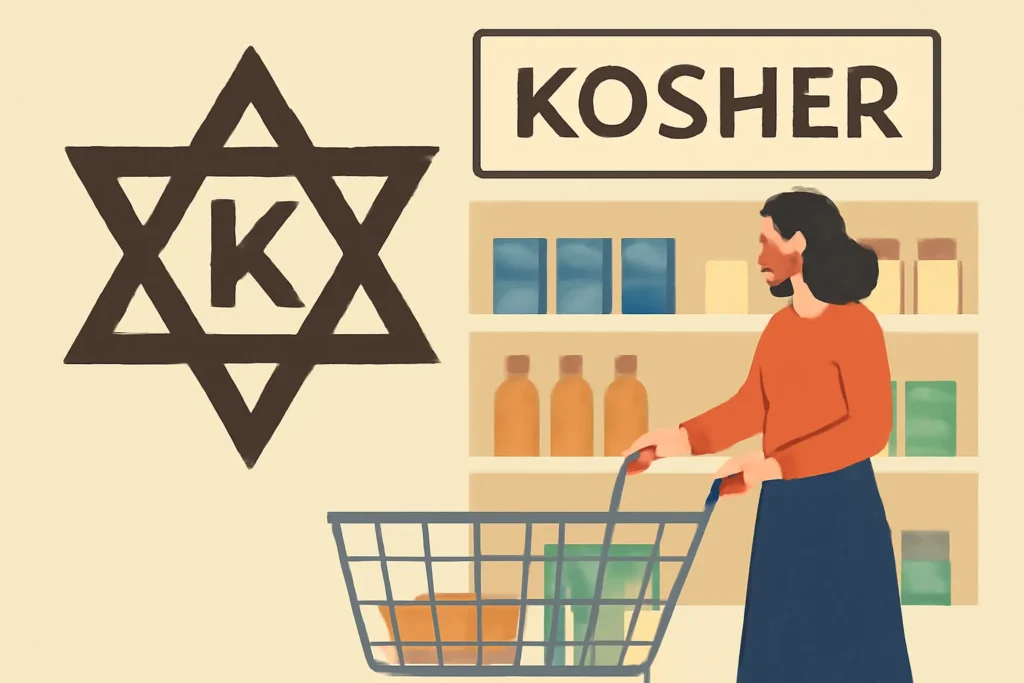
A key element of maintaining kosher status across foods and establishments is supervision by a rabbinic authority. A hechsher is a certification mark that indicates a product, facility, or service complies with Halacha and is supervised. Hechsherim appear on packages, in restaurant windows, and on websites, providing consumers with confidence about the kosher integrity of what they purchase and consume.
OK, OU, K, and Star-K are some of the widely recognized marks globally, each representing a specific supervising rabbinic authority and standards.
Certifications may indicate a general kosher status or a stricter standard such as glatt kosher, which suggests additional stringency in meat processing and adherence to specific practices.
Some agencies certify dairy products, beverages, or wines, while others focus on meat products or restaurants. It is common to see multiple marks on a single product if it is produced in a facility with diverse lines.
What to expect when relying on a hechsher
For consumers, understanding a hechsher’s scope is essential. Some marks certify that a product is kosher for Passover in addition to standard kosher certification, while others indicate year-round certification only. Some products may be certified by a local rabbinic authority and used only in specific communities. It is helpful to read the label and, when in doubt, consult with a local rabbi or trusted authority about the product’s status in your particular community or tradition.
Keeping kosher at home: practical guidance
Maintaining a kosher kitchen involves thoughtful planning, organization, and ongoing habit-building. The following practical steps are commonly used by households seeking to live in accordance with kashrut.
Kitchen setup and equipment
Maintain separate meat and dairy sets of utensils, cutting boards, knives, pots, pans, and bakeware.
Label and store items clearly to prevent accidentally mixing flesh and milch ingredients.
Use dedicated dishwashers or arrange for careful kashering between cycles if a single machine is used for both meat and dairy items.
Consider having a separate sink or clearly separated areas within a single sink for meat and dairy tasks, along with ritual washing requirements as appropriate to your community.
Food preparation and handling
Before cooking meat, ensure it has undergone proper shechita and is certified as kosher.
Wash produce thoroughly, check for insects, and use supervised processing for processed produce when needed.
When preparing dairy, use clean equipment and avoid contact with meat products unless proper kashering is performed.
Keep a clear separation of ingredients, especially when cooking meals with mixed components such as soups, gravies, or baked goods that may include dairy or meat derivatives.
Kosher terminology and concepts you will encounter
Many terms recur in discussions of Jewish dietary law. Below is a concise glossary of common terms you may encounter in product labels, synagogue discussions, or cooking guidelines.
Pareve — foods that are neutral with respect to meat and dairy; they can be eaten with either meat or dairy in most contexts.
Milchig — dairy foods or dishes; the term is often used in Yiddish-speaking communities.
Fleischig — meat foods or dishes; used similarly to milchig but referring to meat items.
Treif — non-kosher; forbidden foods or foods prepared in non-kosher ways.
Glatt kosher — a stricter standard for meat production, historically focusing on lung cleanliness in slaughtered animals; the exact requirements vary by certification.
Kashering — the process of making utensils and surfaces fit for use with kosher foods after they have been used with non-kosher products; can involve boiling or heating methods, depending on the material and use.
Hekhsher — certification by a rabbinic authority, often used interchangeably with hechsher, indicating kosher compliance.
Shechita — ritual slaughter performed by a trained professional in accordance with Halacha.
Chametz — leavened products forbidden during Passover; many households engage in chametz sale or removal before the holiday.
Kitniyot — legumes and grains that Ashkenazi Jews traditionally avoid during Passover, while Sephardic communities may permit or interpret this differently.
Kosher and Passover: special considerations
Passover introduces a distinct layer to the kosher framework. The transformation from a general kosher standard to a Passover-specific regime involves prohibitions and customs that affect both food preparation and culinary routines. The central concept is hametz, which refers to leavened products made from the five grains that may have fermented or risen. Observant Jews avoid hametz during the holiday and search for chametz in the home before the holiday begins. Some households also limit or avoid certain grain products during Passover based on tradition, especially concerning kitniyot for Ashkenazi communities. In addition to dietary rules, preparations for Passover often intensify supervision and labeling, as many foods and beverages carry both year-round kosher symbols and Passover-specific marks.
Kitniyot and regional practice
The decision to avoid or permit kitniyot varies by community. Ashkenazi tradition generally forbids kitniyot during Passover, while Sephardi and Mizrahi communities may permit them, interpreting the prohibition differently. This variation highlights how diverse Jewish communities interpret the same foundational laws in light of culture, geography, and historical development. The practical impact is that shoppers need to read labels carefully and understand which tradition informs the product’s certification.
Chametz sale and removal
Many Jews participate in a ceremonial sale of chametz to a non-Jew prior to Passover, allowing them to legally possess chametz during the period while the sale is in effect, and then it is removed or burned at the holiday’s outset. In practice, this process enables households to comply with the prohibition on hametz while preserving a sense of normal daily life in the weeks before the holiday. Matzah serves as the central symbol of Passover, replacing bread with unleavened bread that is both a reminder of the Exodus narrative and a practical constraint on leavening during the festival.
Common questions and myths about kosher
As with any longstanding tradition, questions arise and myths circulate about how kosher rules apply in real-life situations. Here are some commonly asked questions, answered concisely to help clarify practice without oversimplifying the complexity of Halacha.
Can a product be kosher if it contains non-kosher ingredients labeled as “natural flavors” or “enzymes”? Yes, but only if those ingredients are certified as kosher by a reliable hechsher; otherwise, it may be uncertified or non-kosher depending on the source and processing.
Is it necessary to maintain separate utensils for all meals? Many households do, especially when observing strict proprietary standards or in families with multiple generations where tradition is strong; others use kashering methods to adapt equipment between meat and dairy cycles.
What about food produced in mixed facilities? Certification on the product or facility is crucial; if the facility processes both meat and dairy items, the product may require additional supervision to ensure no cross-contact occurs.
Are all kosher foods processed identically around the world? Standards vary by certification agency and jurisdiction. Consumers should rely on a trusted hechsher appropriate to their community and the specific product.
How kosher practice varies across Jewish communities
Jews around the world observe the dietary laws with varying customs, emphasizing shared principles while honoring local traditions. Differences can appear in meat and dairy separation practices, in how Passover is observed, and in how certain foods are prepared or certified. These variations reflect a dynamic tradition that maintains cohesion through shared language and symbols, even as communities interpret rules in slightly different ways.
Ashkenazi, Sephardi, and Mizrahi perspectives
Ashkenazi communities often emphasize specific ritual practices tied to European and Middle Eastern histories, including the prominent use of formal seals and a tradition of strict separation in kitchens.
Sephardi and Mizrahi communities may have different interpretations for certain foods, with more varied approaches to kitniyot and sometimes different sources of kosher supervision.
In all streams, it remains common to rely on recognizable certifications while adapting to local grocery options and the availability of different products.
Kosher in the modern world: restaurants, schools, and institutions
In contemporary life, kosher practice extends beyond the private home to approve a spectrum of public and communal spaces. Restaurants, schools, hospitals, and events increasingly adopt formal supervision to meet community expectations and legal requirements. The availability of certified products, as well as the presence of certified kitchens and catering services, has made it easier for observant Jews to participate in social, educational, and professional settings without compromising dietary standards.
Kosher in restaurants and catering
For restaurant dining, kosher certification provides a signal to customers about the establishment’s adherence to Halacha. Some venues maintain a fully kosher kitchen with strict separation of meat and dairy, supervised by a rabbinic authority, while others offer selected items that carry specific certifications. In events, such as weddings or conferences, caterers may work with a hechsher to ensure compliance, including separate serving lines or utensils for meat and dairy courses, appropriate wine or grape product supervision, and proper handling of pareve dishes.
Schools and hospitals that serve meals often rely on certified suppliers and onsite kitchens, balancing nutrition, budget, and religious observance. Children who keep kosher may benefit from cafeteria options labeled with a reliable hechsher, while families can feel confident that meals align with their kashrut standards. The presence of supervised snack options, dairy-free and meat-free choices, and clearly labeled ingredients helps create inclusive environments for students and patients who observe these laws.
Challenges and considerations in modern kashrut practice
While the framework of kosher laws remains robust, modern life brings practical challenges that require conscientious decision-making and flexible problem-solving. Below are some of the prominent issues and how communities address them.
Cross-contamination in shared facilities: Factories and commercial kitchens often handle both meat and dairy or non-kosher ingredients. Relying on certified products and on facility reviews helps ensure compliance.
Processing aids and enzymes: Some additives may require rabbinic scrutiny; many producers work with kosher-certified suppliers to avoid doubt in the product’s kosher status.
Wine and grape products: Some wish to avoid non-kosher processing in wine production, which is why many kosher markets prioritize kosher wine with a suitable hechsher.
Customization for dietary restrictions: Families may need to adapt recipes to accommodate allergies, vegan or vegetarian diets, or other cultural considerations while maintaining kashrut.
Glossary of essential terms
To support readers who are new to the topic, here is a compact glossary of core terms used throughout this guide.
Kashrut — the set of Jewish dietary laws governing what is permissible to eat and how foods are prepared.
Kosher — permissible according to the dietary laws; a product or establishment that adheres to these rules.
Kashering — the process of making utensils and surfaces fit for use with kosher foods after they have been used with non-kosher materials.
Pareve — foods that are neutral with respect to meat and dairy (e.g., fruits, vegetables, grains, eggs, fish); can be eaten with either category under most circumstances.
Milchig — dairy products or dishes; often used in Yiddish-speaking communities.
Fleischig — meat products or dishes; the corresponding term in Yiddish usage.
Treif — non-kosher or prohibited foods or preparations.
Glatt kosher — a stricter standard of meat production, signaling heightened scrutiny of animal lungs or other internal factors, according to the certification.
Shechita — the ritual slaughter performed by a trained professional in accordance with Halacha.
Hechsher — certification mark indicating kosher compliance, issued by a rabbinic authority.
Chametz — leavened products forbidden during Passover; common practice includes removal or sale before the holiday.
Kitniyot — legumes and certain grains that are restricted during Passover for Ashkenazi Jews, though views differ among communities.
Putting it all together: a practical overview
For Jews who keep kosher, the practice intertwines with daily life, community, and ritual. It shapes grocery shopping, meal planning, hospitality, and social participation. A modern approach to kosher observance emphasizes informed consumer choices, clear labeling, and responsible culinary practices while recognizing that families and communities may interpret and implement rules with nuance. The aim is not to isolate or complicate life but to elevate ordinary acts—shopping, cooking, sharing meals—into expressions of reverence, discipline, and communal connection. Whether one is studying in a yeshiva, managing a family kitchen, running a kosher restaurant, or navigating a secular workplace, the underlying aspiration of kashrut remains the same: to honor a covenantal relationship through mindful and respectful dietary practice.






Leave a Reply