Baptism is one of the most foundational rituals in Christian life, woven into the fabric of the New Testament narrative and the early church’s practice. Across the Gospels, the book of Acts, and the Epistles, baptism is presented not merely as a ritual action but as a spiritual correlation to renunciation of sin, death to the old self, and new life in Christ. This article surveys essential biblical passages about baptism, offering a cohesive map of how Scripture describes its meaning, its timing, and its role in faith. The verses below are cited in brief, with notes to help readers grasp their theological breadth and practical implications.
Foundational Gospel Narratives
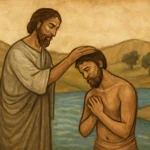
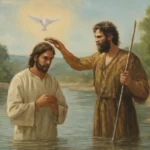
Matthew 3:11-17 and the baptism of Jesus inaugurate a pattern for all believers: baptism as a transition from anticipation to fulfillment. In the words of John the Baptist, I indeed baptize you with water unto repentance, but the one who is coming after him will baptize you with the Holy Ghost and with fire. This juxtaposition signals a move from symbolic cleansing to a more profound spiritual immersion in God’s Spirit. When Jesus is baptized, the narrative culminates in a divine affirmation: a voice from heaven saying, This is my beloved Son, in whom I am well pleased. The scene highlights both the conformity of Jesus to righteousness and the divine endorsement of the baptismal event as a significant act in the life of the Messiah and of his people.
Matthew 28:19-20, often called the Great Commission, expands the scope: baptizing them in the name of the Father, and of the Son, and of the Holy Ghost, and teaching them to observe all that Jesus commanded. This passage situates baptism within the missional life of the church—an outward sign that affirms inward faith and allegiance to the Triune God. The ongoing presence of Jesus with his followers, “even unto the end of the age,” emphasizes that baptism is not a solitary act but a lifelong disciple-making process that continues until Christ’s return.
Mark 16:16 distills a core eschatological truth: He that believeth and is baptized shall be saved; but he that believeth not shall be damned. The verse foregrounds belief as the essential prerequisite and baptism as the customary accompaniment in the response to the gospel. It invites readers to reflect on the relationship between faith, obedience, and salvation in a concise, memorable way.
Key takeaway: In the Gospels, baptism accompanies proclamation of the kingdom, a turning from sin, and an identification with Jesus’ own life, death, and resurrection.
Baptism and the Early Church’s Practice
Acts 2:38 stands as a seminal pastoral directive in the earliest Christian sermon: Repent, and be baptized every one of you in the name of Jesus Christ for the remission of sins, and ye shall receive the gift of the Holy Ghost. Here baptism is linked with repentance, forgiveness, and the reception of the Spirit—dimensions that mark the new covenant community. The sequence emphasizes conversion as a whole-person transformation that includes public confession and divine reception.
Acts 8:12-13 (as the Samaria gospel expansion proceeds) notes that when they believed Philip preaching the things concerning the kingdom of God and the name of Jesus Christ, they were baptized, both men and women. This reinforces baptism as a normative response to gospel hearing and belief, expanding the early church’s reach beyond Jerusalem to diverse communities.
Acts 8:36-39 provides the intimate moment with the Ethiopian eunuch: And as they went on their way, they came unto a certain water: and the eunuch said, See, here is water; what doth hinder me to be baptized? The reply affirms belief: I believe that Jesus Christ is the Son of God, and they both went down into the water and he was baptized. This vignette highlights the immediacy of baptism upon profession of faith and the portability of the practice across miles of travel and cross-cultural encounter.
Acts 10:46-48 (Cornelius’ household) shows a Gentile receiving the Holy Spirit just as Jewish believers did, followed by baptism: Can any man water, that these should not be baptized, who have received the Holy Ghost as well as we? This passage underlines that baptism completes the Spirit-enabled inclusion of Gentiles into the people of God and reflects the sign-value of baptism as a public welcome into one body.
Key takeaway: In Acts, baptism is consistently presented as an immediate, public response to genuine faith, opening the door to the Spirit, community life, and mission.
Baptism in Paul’s Letters: Union with Christ and New Life
Romans 6:3-4 offers a profound theological framing: Know ye not that so many of us as were baptized into Jesus Christ were baptized into his death? Therefore we are buried with him by baptism into death, that like as Christ was raised up from the dead by the glory of the Father, even so we also should walk in newness of life. Baptism symbolizes union with Christ in his death and resurrection, marking a decisive transition from the old life to the new life that characterizes Christian living.
Colossians 2:12 complements this by saying, Buried with him in baptism, wherein also ye are risen with him through the faith of the operation of God, who hath raised him from the dead. The image of burial and resurrection is a vivid depiction of the spiritual transformation associated with baptism, achieved through faith in God’s working power.
Galatians 3:27 adds a concise phrase: For as many of you as have been baptized into Christ have put on Christ. Baptism, in this light, is the putting on of a new identity, a spiritual wardrobe that defines one’s allegiance and belonging in Christ.
1 Corinthians 12:13 broadens the ecclesial dimension: For by one Spirit are we all baptized into one body, whether we be Jews or Gentiles, whether we be bond or free; and have been all made to drink into one Spirit. The universal scope of baptism unites diverse peoples into a single spiritual body, sustained by the Spirit’s work.
Ephesians 4:5 proclaims a unifying note: One Lord, one faith, one baptism. This capsule verse underlines doctrinal unity as a hallmark of baptism within the broader framework of Christian faith and practice.
Key takeaway: Paul’s letters present baptism as the symbol and means of spiritual identification with Christ, incorporation into the church, and the release of a life shaped by resurrection power.
Baptism and the Hope of Salvation: Soteriology in Key Texts
1 Peter 3:21 presents baptism as more than a ceremonial wash but as an appeal to God for a good conscience: The like figure whereunto even baptism doth also now save us (not the putting away of the filth of the flesh, but the answer of a good conscience toward God), by the resurrection of Jesus Christ. The emphasis is on inward transformation, conscience, and faith activated by the Spirit’s work through Christ’s resurrection.
Titus 3:5-7 emphasizes mercy over merit: Not by works of righteousness which we have done, but according to his mercy he saved us, by the washing of regeneration, and renewing of the Holy Ghost. Baptism is not a mere human act to earn favor; it is a response to grace that manifests God’s regenerating work and the Spirit’s renewal within the believer.
John 3:5 adds a Jesus-centered criterion for entrance into the kingdom: Except a man be born of water and of the Spirit, he cannot enter into the kingdom of God. This verse has sparked rich theological discussion about the relationship between baptism and spiritual birth, and it is often explored in conjunction with the Spirit’s transformative activity in a believer’s life.
Key takeaway: The New Testament repeatedly links baptism to salvation, regeneration, and new life by the Spirit, while distinguishing it from human works and emphasizing the gracious work of God in fulfilling the promise of new birth.
Theological Reflections: Baptism’s Sign, Seal, and Symbolic Depth
Across the New Testament, baptism operates on multiple levels: as a sign (an outward declaration of inward faith), a seal (a tangible assurance of belonging to Christ’s people), and a symbol of a decisive spiritual reorientation. The symbolic progression from death to life is central to Romans 6 and Colossians 2, where immersion or water-based ceremony represents burial with Christ and rising to walk in newness of life. The public nature of baptism also helps explain why baptism is often linked with confession, repentance, and a life of following Jesus in the community of faith.
Additionally, baptism in early Christian writings is closely tied to the reception of the Holy Spirit in empowering mission and ethical transformation. In Acts, the Spirit’s outpouring and baptism are frequently connected in a way that shows baptism as a doorway into communal life and divine empowerment. The Pauline corpus, meanwhile, frames baptism as the rite through which believers participate in Christ’s redemptive work and are knit into the body of Christ. This layered theological fabric helps Christians today approach baptism not only as a rite of passage but as a living symbol and catalyst of faithfulness to Christ.
Key takeaway: Baptism serves as a meaningful, multi-dimensional expression of faith—signifying cleansing, new life, union with Christ, and incorporation into the church’s mission.
Infant Baptism vs. Believer’s Baptism: Historical and Theological Variations
Across Christian traditions, debates about the appropriate recipient and mode of baptism have a long history. Some traditions practice infant baptism, arguing that households in the New Testament (for example, household of Lydia or Cornelius’ household) likely included infants and that baptism represents God’s covenant sign to the whole household. Other traditions emphasize believer’s baptism, teaching that baptism is an outward response of personal faith and hence should follow an explicit profession of faith.
Mode is another area of discussion. Immersion is often associated with the imagery of death and resurrection described in Romans 6 and Colossians 2, while pouring or sprinkling is understood in various historical and theological contexts as equally valid signs of cleansing and regeneration. The biblical texts describe the action of baptism rather than specifying the exact mechanism, which invites careful theological reflection and local church discernment about practice and pastoral care.
Key takeaway: The scriptural basis for baptism emphasizes faith and response to the gospel, but traditions differ on the timing (infant vs. believer) and the mode (immersion vs. pouring/sprinkling) based on historical interpretation and ecclesial context.
Practical Applications: How to Read and Apply these Passages Today
For readers seeking to engage these verses in personal study, worship planning, or teaching, here are several practical angles:
Study with a theme map: Group verses by how they describe baptism’s relation to faith, forgiveness, Spirit, and community.
Use verse snapshots in teaching: Create short, memorable quotes from the passages to guide discussions about baptism’s meaning.
Consider historical context: Understand how first-century audiences would have heard terms like “baptize,” “remission of sins,” and “the gift of the Holy Ghost.”
Practice pastoral sensitivity: In modern church life, baptism often serves as a teachable moment about discipleship, commitment, and spiritual growth, not merely a rite to be completed.
The following list gathers essential baptism verses with brief notes to help readers quickly locate themes across the New Testament. This is not an exhaustive catalog, but a practical starting point for study and reflection.
– John’s baptism with water and the coming baptism with the Holy Ghost and fire.
Matthew 3:16-17 – Jesus’ baptism and the Heavenly Father’s affirmation.
Matthew 28:19-20 – The Great Commission: baptize in the name of the Triune God and teach obedience.
Mark 16:16 – Belief and baptism as the pathway to salvation.
Acts 2:38 – Repent and be baptized for the remission of sins; receive the Holy Spirit.
Acts 8:12-13 – Belief leads to baptism in the expanding church.
Acts 8:36-39 – The Ethiopian eunuch’s baptism after confession of faith.
Acts 10:47-48 – Gentile believers receive the Spirit and are baptized.
Romans 6:3-4 – Baptism as participation in Christ’s death and resurrection, resulting in new life.
Colossians 2:12 – Buried with Christ in baptism and raised through faith in God’s power.
Galatians 3:27 – Baptized into Christ; believers have put on Christ.
1 Corinthians 12:13 – One Spirit, one body through baptism into the church.
Ephesians 4:5 – One Lord, one faith, one baptism.
1 Peter 3:21 – Baptism as an appeal to God for a good conscience, grounded in the resurrection of Jesus.
Titus 3:5-7 – Salvation by mercy, washing of regeneration, and renewing of the Holy Spirit.
Conclusion: The Centrality of Baptism in the Christian Story
Across the biblical witness, baptism functions as more than a ritual ritual. It is a divinely oriented, church-shaped response to the gospel that embodies cleansing, identification with Christ, and entry into a life of discipleship. The passages summarized above reveal baptism’s multi-faceted significance: as a sign of repentance, a seal of faith, a grace-mediated entrance into the Spirit-filled life, and a communal rite that binds believers into the body of Christ. Whether understood literally as immersion or rendered in other modes depending on tradition, the core message remains clear: faith in Christ answers the call to baptism, and baptism in turn strengthens faith as believers publicly declare their allegiance to the crucified and risen Lord.
For students and pastors, these essential verses provide a robust foundation for preaching, teaching, and theological reflection. They invite readers to consider how baptism functions in today’s church—how it relates to personal conversion, communal life, and the divine promise of renewal in Christ. As you reflect on these passages, may you discern how the ancient witness speaks into modern faith, encouraging a life that is faithful, hopeful, and deeply rooted in the grace of God.
Final takeaway: Baptism is a biblically rich act that embodies the gospel’s core realities—repentance, forgiveness, new life, and communion with Christ—inviting continual growth in faith and mission.








Leave a Reply