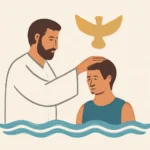
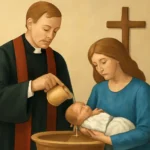
Biblical baptism is a foundational practice in the Christian faith that signals a person’s entry into the life of faith and into the community of believers. In its most precise sense, baptism involves more than a ritual washing; it is a symbolic act that embodies a spiritual reality. Across the New Testament, baptism is portrayed as an outward sign of an inward transformation—the believer’s union with Christ in his death, burial, and resurrection, and an entry into the people of God through the Spirit. This article explores the meaning, practices, and scriptural basis for baptism as it appears in the Bible, while also addressing longstanding questions about mode, eligibility, and contemporary application.
Meaning and Significance: What Baptism Represents
At its core, baptism communicates a set of interwoven truths. First, it is a declaration of repentance and belief—a public profession that the person has trusted Jesus as Lord and Savior. Second, it is a dramatic symbol of identification with Christ, especially his death, burial, and resurrection. Third, it functions as a visible sign of the new covenant in which the Holy Spirit regenerates and unites believers into the body of Christ.
The Bible uses a variety of terms and imagery to describe baptism, but the central motifs recur: cleansing from sin, burial with Christ, rising to new life, and inclusion within the community of faith. The language in the New Testament often links baptism with faith, obedience, and allegiance to Jesus. As such, baptism is best understood not as a mere formality, but as a meaningful response to the gospel.
Symbolic Dimensions: Death, Burial, and Resurrection
Many passages frame baptism through the lens of Christ’s decisive act and the believer’s participation in it. For example, the apostle Paul describes baptism as a symbolic burial with Christ and a rise to new life through faith:
Romans 6:3-4 — “Or don’t you know that all of us who were baptized into Christ Jesus were baptized into his death? We were therefore buried with him through baptism into death in order that, just as Christ was raised from the dead, through the glory of the Father, we too may live a new life.”
Colossians 2:12 — “Having been buried with him in baptism, in which you were also raised with him through your faith in the working of God, who raised him from the dead.”
Galatians 3:27 — “For all of you who were baptized into Christ have clothed yourselves with Christ.”
These verses together emphasize that baptism is not merely a ritual wash but a powerful symbol of belonging to Christ—dying to the old self, being buried with him, and rising to new life by faith.
Scriptural Basis: Key Terms, Concepts, and Passages
The biblical vocabulary around baptism originates with a Greek word baptizō, usually translated as “to baptize” or “to immerse.” The form and function of the act derive from the sense of being fully immersed or dipped, which has shaped much of the evangelical understanding of baptism as immersion. The noun baptismē translates to “baptism” or “immersion,” signifying the rite itself as well as the spiritual reality it represents.
Foundational scriptures address both the sequence of belief and baptism and the broader mission of baptizing new disciples:
Matthew 28:19-20 (the Great Commission) — “Go therefore and make disciples of all nations, baptizing them in the name of the Father and of the Son and of the Holy Spirit, teaching them to observe all that I have commanded you.” This passage situates baptism within the larger act of mission and discipleship.
Mark 16:16 — “Whoever believes and is baptized will be saved, but whoever does not believe will be condemned.” This verse links belief and baptism with salvation, though many scholars emphasize that belief precedes baptism and that baptism serves as an outward confession of an inward trust.
Acts 2:38 — Peter’s exhortation at Pentecost: “Repent and be baptized, every one of you, in the name of Jesus Christ for the forgiveness of your sins. And you will receive the gift of the Holy Spirit.” Here baptism follows repentance and belief and is tied to forgiveness and the Spirit’s reception.
Acts 8:36-39 — The Ethiopian official’s inquiry: “See, here is water; what hinders me from being baptized?” Their immediate response shows baptism as a step of obedience following belief, often accompanied by immersion in scriptural accounts.
Romans 6:3-4 and Colossians 2:12 (above) — Thematic ties between baptism and union with Christ in his death and resurrection.
The New Testament also highlights baptism as a sign of being entered into the church—the people of God—through the Spirit. For example:
1 Corinthians 12:13 — “For we were all baptized by one Spirit so as to form one body.” This emphasizes the corporate dimension of baptism: it marks inclusion into Christ’s body, the church.
1 Peter 3:21 — “Baptism, which corresponds to this, now saves you.” The verse clarifies that baptism is not merely outward but is connected to a sincere appeal to God for a clear conscience through the resurrection of Jesus Christ.
Historical Practice in the Bible: How Baptism Was Carried Out
In the New Testament record, baptism is consistently portrayed as a public, purposeful rite associated with the proclamation of the gospel and the reception of the Holy Spirit. The specific mode—how the water is applied—varies in the textual account, but several passages convey a sense of immersion:
John the Baptist’s ministry in Israel authored a baptism of repentance that prepared people for the coming Messiah (Matthew 3:1-6; Luke 3:3-8). The narrative centers on people going into the Jordan River and being baptized—an image that implies submersion and immersion in the water.
Jesus’ baptism by John in the Jordan (Matthew 3:13-17; Luke 3:21-22) provides a paradigm of baptism within the mission of God. While the text emphasizes the Spirit’s anointing at the baptism and the Father’s declaration, it also reinforces baptism as part of the righteousness of obedience to God’s plan.
Acts’ account of baptisms shows multiple instances in which new converts are baptized after placing faith in Jesus. The Ethiopian official’s baptism in Acts 8:36-39 is a notable example of a rapid and uncomplicated baptism after belief, including the act of entering into the water and rising up from it.
Household baptisms—in several instances, households are baptized after hearing the gospel (e.g., Acts 16:15; 1 Corinthians 1:16). The historic record does not always specify the ages of those baptized, so debates about infant baptism arise when considering whether children within households were included.
The early church’s practice typically reflected immersion when feasible, but the scriptural data do not offer exhaustive procedural details for every instance. What is consistently evident is the combination of faith, confession, and inclusion into the local church through baptism as a public step of obedience and a spiritual sign of union with Christ.
Modes of Baptism: Immersion, Pouring, or Sprinkling?
The Bible’s language and early church practice point most clearly toward immersion as the primary mode of baptism. The Greek verb baptizō conveys the sense of dipping or immersing, which aligns with several biblical descriptions such as “going down into the water” and “coming up out of the water” (as seen in multiple accounts of baptism in Acts and the Gospels). Nevertheless, historical Christians sometimes practiced other forms in various cultures or circumstances.
Immersion — The most explicit biblical imagery depicts baptism as burial with Christ and rising to new life, which fits a full submersion into water and emergence from it (Romans 6:3-4; Colossians 2:12).
Pouring — In some cases, Scripture or tradition describes pouring water on the candidate’s head. This mode has been used in contexts where immersion was impractical or unavailable, and it appears in some later Christian writings and liturgies as a valid alternative in the broad sense of biblical baptism as an act of faith and cleansing.
Sprinkling — Sprinkling has its own biblical precedent in ritual cleansing in the Old Testament, and some Christian traditions have adapted baptismal rites to sprinkling in certain circumstances. However, the biblical portrait in the New Testament emphasizes immersion most clearly through its symbolic language.
The important theological point is not primarily the mechanical method but the meaning and faith behind the act. While the mode can shape pastoral and liturgical sensibilities, it should not obscure the core motifs: confession of faith, forgiveness of sins, reception of the Spirit, and incorporation into the church.
Who Should Be Baptized? Believer’s Baptism, Infant Baptism, and Their Perspectives
The biblical record presents baptism as something that follows a personal response to the gospel—namely, faith. This sequence raises distinct questions about eligibility and timing:
Believer’s baptism — The predominant pattern in the New Testament is baptism upon profession of faith. Believer’s baptism emphasizes that one responds to the gospel with personal trust in Christ, followed by baptism as a public declaration.
Infant baptism — Some traditions practice infant baptism, arguing that households in the New Testament story likely included children and that baptism is the sign of the covenant with God. They often parallel baptism with circumcision in the Old Testament as a sign of inclusion in God’s family. Critics of infant baptism point to the explicit link between belief and baptism in many New Testament passages, suggesting that faith should precede baptism.
The Bible’s direct statements favor belief preceding baptism (for example, Mark 16:16; Acts 2:38; Acts 8:12), but the broader church history shows a variety of expressions across time and cultures. In evaluating different practices, readers often weigh:
Scriptural clarity — Do the passages clearly require belief before baptism?
Covenantal theology — Does infant baptism reflect inclusion in God’s covenant people?
Pastoral considerations — How does baptism function within a local church’s discipleship and spiritual formation?
Baptism in the Early Church: Practice and Purpose
The early Christian communities embraced baptism as a first act of discipleship after hearing the gospel. Several patterns emerge from the book of Acts:
Public proclamation — Baptism accompanies the proclamation that Jesus is Lord and that salvation is found in him.
Response to the gospel — Believing the message precedes baptism, and baptism acts as the outward sign of inward faith.
Inclusion into the church — Baptism is the rite that welcomes new believers into the body of Christ, the church, and the Spirit’s corporate life.
The Rite: Components, Symbols, and Liturgical Context
Across traditions, the practice of baptism often includes several common elements, though the exact form varies:
Water as the central symbol of cleansing and new life.
Faith confession or explicit belief in Jesus Christ as Lord and Savior, often articulated by the candidate or by the community on the candidate’s behalf.
Public declaration within the gathered faith community, signaling entry into the church and alignment with Christ’s mission.
Name invocation in the name of the Father, the Son, and the Holy Spirit, which anchors baptism within the triune identity of God (as seen in Matthew 28:19).
The liturgical context can shape the meaning as well. In some churches, baptism is followed by membership vows, confirmation, or reception into a local congregation. In others, baptism is primarily an individual act of obedience that is integrated into the life of church fellowship.
Baptism and Salvation: How Scripture Frames the Question
A central question many readers ask is whether baptism saves a person. The biblical answer is nuanced and oriented around the relationship between faith, grace, and obedience:
Faith precedes baptism in most gospel presentations. The belief that Jesus is Lord and the confession of faith typically come before baptism, highlighting faith as the receptacle of God’s grace in salvation.
Baptism as a means of salvation? — Some passages, notably 1 Peter 3:21, say that baptism now saves you, which is read by many scholars as highlighting baptism as a worshipful act of faith that accompanies a spiritual transformation rather than as a magical agent apart from faith. The surrounding context emphasizes an appeal to God for a good conscience through the resurrection of Jesus Christ.
Calibrated by grace — The New Testament consistently teaches that salvation is by grace through faith in Christ. Baptism is an obedient response to that grace, a public sign of the interior transformation the Holy Spirit has produced.
Common Misunderstandings and Clarifications
Like many biblical practices, baptism has been the subject of questions, debates, and misunderstandings. Here are a few clarifications that scholars and pastors often highlight:
Not a mere ritual — Baptism is not an independent source of salvation; it is a sacramental sign that testifies to God’s grace received by faith.
Not a private ceremony — In the New Testament, baptism is typically performed within a gathered community, reinforcing its public and corporate dimension.
Not exclusive to a single age — Debates about infant baptism vs believer’s baptism reflect different theological convictions about covenantal inclusion, faith, and church practice.
In today’s churches, baptism remains a decisive and meaningful step for believers. It functions as:
A proclamation to the world — A public confession of allegiance to Christ in a society that often marginalizes faith.
A rite of initiation into the church — Joining a local body of believers who share a common faith and mission.
A visible sign of transformation — Demonstrating the internal work of the Spirit in the life of the believer.
A cue for ongoing discipleship — Marking a person’s early steps in learning, obedience, and service in Christ.
Across Christian traditions, baptism has developed a spectrum of practices while retaining core biblical themes. Here is a practical overview:
Traditional immersion churches — Emphasize full immersion as the most faithful representation of the biblical model, typically practiced with adult or adolescent believers who have professed faith.
Infant baptism traditions — Emphasize covenant continuity from the Old Testament to the New Testament, with baptism seen as the sign of God’s covenant and grace extended to households and families.
Pouring traditions — Use pouring or affusion as a valid form, especially when immersion is impractical, while still maintaining the symbolic meanings of cleansing and new life.
Sprinkling in liturgical contexts — In some historical and liturgical settings, sprinkling has been adopted for reasons of practicality or theological emphasis, while keeping baptism as a sacramental act.
If you are exploring baptism, you may consider several practical questions:
What is the biblical order? — Most presentations place belief in Christ before baptism, with baptism following as a public confession.
Who can be baptized? — Christians typically recognize baptism for those who profess faith, though the exact policy about age and maturity varies by tradition.
What form should be used? — The choice of immersion, pouring, or sprinkling often reflects historical context, theological emphasis, and practical constraints.
How is baptism celebrated within the church? — It can be a private moment or part of a public worship service, often accompanied by testimonies, preaching, and a formal welcome into the community.
To read the Bible’s baptismal passages as a coherent whole, one notes several interlocking truths:
Faith comes first — The gospel calls for belief in Jesus Christ as Lord and Savior.
Baptism is the obedient response — Baptism signals alignment with Christ and entrance into his church.
Water imagery matters — Water serves as a compelling symbol of cleansing, renewal, and the Spirit’s work in new birth.
Community anchors the rite — Baptism belongs to the church’s life and mission; it is never a solitary rite but a communal proclamation of faith.
Biblical baptism remains a central rite that encapsulates the gospel’s core claims: forgiveness of sins, transformation by grace, and entry into God’s people. Its meaning is deeply theological—rooted in Christ’s death and resurrection, rooted in faith, and expressed within a faith community. Its practice has varied through history and across cultures, yet the essential symbol endures: a believer’s public confession, a sign of the Spirit’s work, and a new life entered through obedience to Christ.
For readers seeking to understand how biblical baptism interacts with life today, the questions to ask are not merely about method but about faith, discipleship, and mission. How does baptism shape the way a person relates to God and to the church? How does it propel a believer into a life of worship, service, and witness? And how can a local congregation welcome new believers with clarity, grace, and truth as they take their place in the body of Christ?

 Por Laura Jara