Catholic Night Prayers: The Essential Guide to Evening Prayer, Reflection, and Peace
The close of the day is a sacred threshold for many Catholics. Night prayers, in their various forms, invite us to pause, turn our minds to God, and entrust ourselves to divine care as we prepare for rest. This guide offers a comprehensive overview of Catholic night prayers, with a focus on Compline, the traditional Liturgy of the Hours, and practical adaptations for families and individuals. You will find explanations of the purpose, structure, and variations, along with clear steps and sample prayers to help you cultivate a peaceful, prayerful end to the day.
What are Catholic Night Prayers and why do they matter?
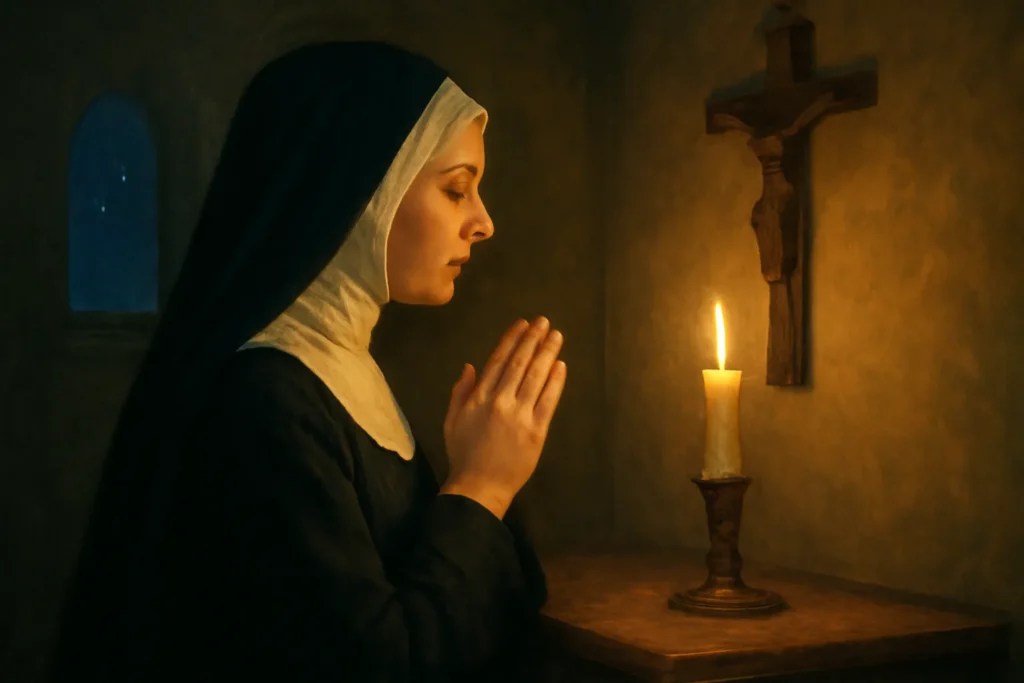
Night prayers are prayers spoken or sung at the end of the day to thank God for the hours lived, seek forgiveness for faults, entrust the night to God’s protection, and prepare for sleep. In Catholic life, they help us cultivate contemplative awareness amid daily distraction. The most formal form is Compline, the final prayer of the Liturgy of the Hours, but many families and individuals also practice short evening prayers, a personal Examen of conscience, or a simple bedside blessing.
Key aims of night prayer include: grounding the day in gratitude, seeking God’s mercy, asking for protection during the night, and fostering inner peace so that rest becomes a space for renewal in Christ. The practice is deeply rooted in Scripture, tradition, and the lived experience of countless Christians who have turned to God as they lay their heads to sleep. Whether you pray in a parish church, in your living room, or beside a child’s crib, the essentials remain consistent: humility, attentiveness, and trust.
The core form: Compline in the Liturgy of the Hours
The most canonical form of Catholic night prayer is Compline, the last of the Liturgy of the Hours (also called the Breviary in historical usage). Compline has its own ancient rhythm, but contemporary practice often adapts it to home life or shorter formats. The core components of a traditional Compline include an opening prayer, a psalmody, a Canticle, intercessions, a concluding prayer, and a short blessing. The language may vary, but the spirit remains the same: surrender to God’s care and confident rest in divine protection.
Typical structure of a traditional Night Prayer (Compline)
Opening prayer or antiphon, often beginning with the sign of the cross and a short invocation of God’s mercy.
Psalmody — one or two psalms (or short psalm verses), sometimes with a brief canticle or responsorial line.
Scripture reading — a short passage from Sacred Scripture (often 1–3 verses) reflecting God’s truth for the day’s end.
Canticle of Simeon (Nunc Dimittis) or another canticle — a prayer of praise and trust as one nears sleep.
Intercessions — brief petitions for the Church, the world, the sick, the departed, and personal intentions.
Concluding prayer — a prayerful summary asking for a peaceful night and a good tomorrow.
Blessing or dismissal — a sign of peace and blessing as the night begins.
In practice, many people adapt this structure to fit family life or personal routine. The essential elements to preserve are a focus on gratitude, mercy, protection, and peace. Some readers also add a short Examen question or reflection as part of the Intercessions or just before the Concluding prayer.
Variations of night prayers for different traditions and needs
Across Catholic households and religious communities, night prayers take a variety of forms. The core themes—gratitude, mercy, protection, and peace—remain the same, but the expressions differ to fit daily life, energy levels, and spiritual temperament. Here are several common variations you may encounter or choose to adopt.
The classic monastic Compline
In monasteries and convents, Compline is often sung or chanted in a formal tone. The prayer may include additional reverent silences, a brief examination of conscience, and a ceremonial refrain. The psalms chosen for Compline emphasize trust and rest, and the Canticle of Simeon (Nunc Dimittis) is typically recited with particular solemnity. The benediction is given with the blessing of the night and often with a sense of communal peace. This form cultivates a rhythm of life where the day’s work yields to a quiet, contemplative sleep.
Family night prayer at home
For families, night prayer becomes a shared, relational practice. A practical advantage is keeping prayers short, accessible, and engaging for children. A typical family night prayer might include:
A brief Opening Sign of the Cross and simple blessing for each family member.
A short psalm fragment or a single verse from Scripture.
A children’s friendly Canticle of Mary or Nunc Dimittis with paraphrase, or even a brief David/Saint story that relates to the day.
One or two intercessions focused on family members, neighbors, and those in need.
A concise Concluding prayer offered aloud by a parent or spoken together as a family.
A gentle blessing and the sign of the cross as everyone prepares for sleep.
In this format, the examen can be introduced as a simple question: “What one moment in today’s day brought me closer to God?” or “What am I most grateful for today?” This approach keeps the prayer meaningful without becoming a heavy obligation.
Not every night yields time for lengthy prayer. A short form night prayer can be a powerfully effective practice when life is busy. A compact version might include:
Sign of the cross and a closing phrase like “Into your hands, Lord, I commend my spirit.”
A single psalm verse or a brief verse from Scripture (e.g., Psalm 4:8 or Psalm 91:11).
A one-sentence intercession for a modern concern (health, job, safety, mercy, etc.).
An uncomplicated concluding prayer and the sign of the cross.
Even in this streamlined form, the practice remains a rhythm of trust, allowing God to accompany us through the night and into tomorrow.
Examen-based night prayer
The Examen is a method of reflection popularized by St. Ignatius of Loyola, often used at the end of the day. An Examen-based night prayer blends the classic Compline structure with five simple steps: gratitude, review, sorrow for sins, forgiveness, and resolve for tomorrow. In the evening practice, you might structure it as follows:
Gratitude — recall three things from the day for which you are grateful.
Review — briefly review your actions and thoughts with honesty and humility.
Contrition — acknowledge sins or faults, asking God’s mercy.
Forgiveness — forgive yourself in God’s mercy and offer forgiveness to others where needed.
Resolve — face tomorrow with a concrete resolution to grow in virtue.
Following the Examen with a short prayer to God and a final blessing creates a cohesive practice that nourishes both night peace and ongoing formation.
Evening prayer with spiritual reading
Some Catholics incorporate a brief meditation on Scripture or a short spiritual reading into night prayer. A typical pattern might be:
Opening prayer
Psalm or psalm fragment
Scripture passage (a few verses) or a short reflection from a saint or spiritual author
Canticle of Simeon or a related canticle
Intercessions
Concluding prayer
This approach blends the scriptural nourishment of the Liturgy of the Hours with the personal contemplation of a private devotion, allowing readers to carry forward God’s word into the night.
How to pray night prayers well: practical guidance
Prayer is not merely a ritual; it is a relationship. The following practical tips can help you cultivate a thoughtful and peaceful experience whenever you practice Night Prayer.
Set a routine — choose a consistent time and place. A quiet corner, a chair near a lamp, or a bedside space can become a dedicated sanctuary for your prayers.
Keep a simple liturgical framework — even a small pocket edition of the Breviary or a reputable app can guide the order and help you stay focused.
Use the space and silence — allow a moment of quiet after the opening sign of the cross; listen for God’s presence in the stillness.
Engage the body — a gentle bow, a posture of rest, and a consistent cadence can help your mind settle. The physical act of prayer can become a tangible sign of inner surrender.
Pray with Scripture — the psalms and canticles bring God’s word into your night, shaping your reflections and expectations.
Use meaningful imagery — a crucifix, a rosary, or a small icon can anchor your prayer in the mystery of faith and help your focus during intercessions.
Adapt for children and guests — simplify language, invite participation, or offer a short parent-led blessing to involve everyone in the household.
Make room for forgiveness and protection — explicitly entrust others and yourself to God’s mercy and protection during the night.
End with blessing and rest — close with a blessing (e.g., “May the Lord bless us, protect us, and keep us from all harm”) and a final sign of the cross to seal the prayer.
Consistency matters more than length. A brief, sincere nightly prayer that you return to daily is more fruitful than a long session punctuated by weeks of inconsistency. The goal is a regular habit that orients your heart toward God even as you close your eyes to sleep.
Practical resources and tools for night prayer
Whether you are just starting or you want to deepen a well-established practice, several resources can support your journey with Night Prayer:
Liturgy of the Hours (the official daily prayer of the Church) — a comprehensive resource for the breviary texts and structure of Compline in monastic settings and in some lay communities.
Breviary apps or online prayer books — handy for mobility and quick access to the night prayers, psalms, and canticles.
Family prayer guides — pages or books designed to help parents pray with children at the end of the day.
Scripture commentaries and devotional readings — short reflections that fit into the Examen or the night’s prayer, helping you connect Scripture to daily life.
Parish resources — local Catholic parishes often offer guidelines, leaflets, or group night prayer sessions that can inspire and support personal practice.
If you prefer a minimal approach, a single psalm verse plus a short intercession and a concluding prayer can be practiced almost anywhere. For those seeking historical depth, exploring the Breviary and the historical Compline can reveal the origins of the prayers and their evolution over centuries.
Sample texts: original, practical prayers you can use tonight
Below are original, user-friendly sample texts you can adopt or adapt. They are not liturgical copies but practical living prayers intended to assist your own nightly conversations with God.
Original opening prayer for Night Prayer
Opening Prayer
O gracious and eternal God, who watches over me while I sleep, I thank you for the gift of today. Guide my thoughts, purify my heart, and grant me rest in your mercy. May your protection shield me from every danger, and may your love renew me for tomorrow. Through Christ our Lord. Amen.
Psalm fragment — A comforting line to reflect on as the day ends: “Let me lie down in peace, for you alone, O Lord, make me dwell in safety.”
Nunc Dimittis (Canticle of Simeon) — a brief paraphrase
Canticle — Lord, now you let your servant go in peace; your word has been fulfilled. My eyes have seen your salvation, a light for revelation to the nations, and the glory of your people Israel. Keep me safe through the night and grant me a peaceful morning to serve you again.
Intercessions — A few short petitions you can adapt:
For the Church and its leaders: may wisdom guide their service to truth and mercy.
For those who suffer in body or spirit: may God’s healing grace bring comfort and hope.
For families and communities: may love increase and conflicts be resolved with patience and understanding.
For the dying and the departed: may they rest in eternal peace with the Lord.
For personal intentions: silently offer any needs or gratitude you hold in your heart.
Concluding prayer
Concluding Prayer — A closing appeal for God’s grace and protection: “Merciful God, give me a tranquil night and a blessed dawn. Let me wake in your grace and live today with renewed faith, hope, and love. Through Christ our Lord. Amen.”
Some families add a short blessing over the home and its inhabitants. Example: “May the Lord bless us, protect us, and keep us safe this night. Amen.”
Common questions about Catholic night prayers
Below are answers to frequent questions that people ask as they begin or refine their night prayer practice.
Is night prayer required? — In Catholic life, night prayers are not mandatory for laypeople, but they are highly encouraged as a spiritual discipline and a way to grow in a personal relationship with God. The Church’s tradition values regular prayer at the close of day as a form of sanctifying one’s rest.
Can I pray night prayers if I’m not a monk or nun? — Yes. Compline and other night prayers are for all the faithful. The Liturgy of the Hours offers a framework, but it is common for laypeople to adopt shorter forms that fit family life and personal devotion.
What if I miss a night? — If you miss a night, return to prayer the next evening without judgment. The practice is about ongoing conversion and relationship with God, not perfection. A simple, sincere prayer is always appropriate.
What role does the Examen play in night prayer? — The Examen is a tool for reflecting on the day’s experiences with gratitude and honesty. When combined with night prayer, it invites a more contemplative, transformative end to the day.
How long should night prayer take? — It varies. A brief form can take 5–10 minutes, while a more extended version might take 15–20 minutes or longer, depending on the length of the psalms, readings, and intercessions you choose.
Putting it all together: a suggested weekly rhythm
To help you incorporate night prayers into a busy life, consider a simple weekly rhythm that blends consistency with flexibility. Here is a practical template you can adapt:
Monday–Wednesday: Short Night Prayer — a concise opening, one psalm verse, one intercession, and a concluding prayer.
Thursday: Examen Night Prayer — gratitude, review, contrition, forgiveness, and a closing prayer, followed by a brief blessing.
Friday: Reading-Integrated Night Prayer — a brief Scripture passage or reflection with the Canticle and intercessions.
Saturday: Family Night Prayer — a shared prayer with children, including a simple blessing for each family member.
Sunday: Extended Night Prayer — longer psalms, a more developed intercession, and a reflective blessing of rest.
This framework provides structure while allowing for personal spontaneity. The key is to keep the heart humble, the voice sincere, and the mind open to God’s peace as you prepare for rest.
There is beauty in liturgical language, but accessibility matters more. When practicing Night Prayer, use words that resonate with your everyday life. It is perfectly valid to adapt liturgical phrases into plain language that expresses your faith honestly. The goal is a bridge between tradition and personal devotion, where the timeless truths of the Church meet your current day-to-day experience.
Night prayers offer the opportunity to end the day in alignment with God’s love. By embracing Compline or its practical variants, you invite a sense of peace that prepares body and soul for rest. The discipline of reflecting on the day, giving thanks, seeking mercy, and entrusting tomorrow to God’s providence fosters a deep spiritual reliability. Whether you practice in silence, with family, or in a communal setting, the essential movement remains the same: humility before God, attentiveness to the Holy Spirit, and a confident surrender to the mercy that sustains us through the night. May your nights be marked by that gentle, faithful presence, and may your sleep be a source of grace for the life you live tomorrow.








Leave a Reply