Por Laura Jara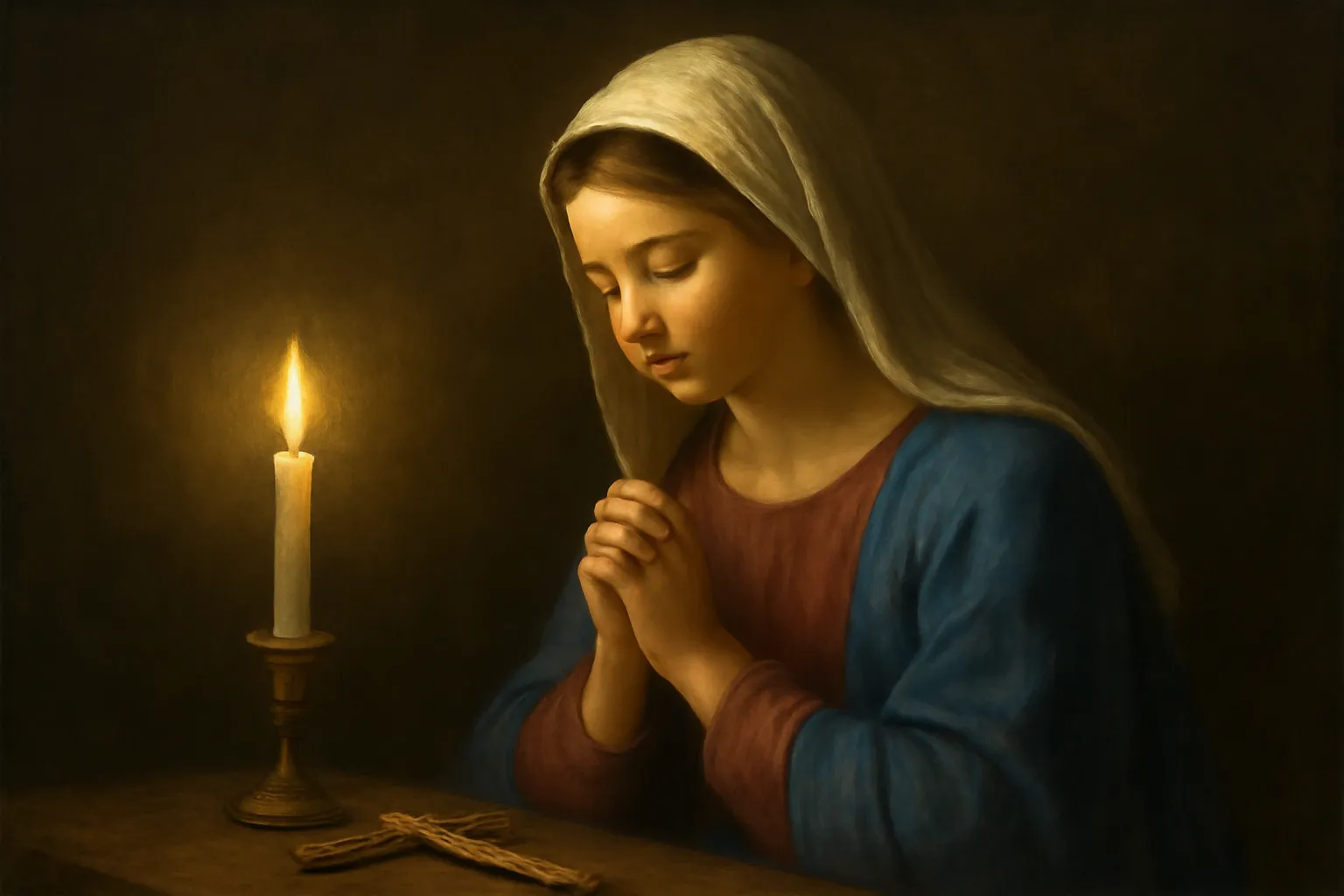
Catholic Evening Prayer for Today: A Simple Night Prayer
In the rhythm of Catholic devotion, the day closes with a prayerful pause that invites grace, gratitude, and discernment. Evening Prayer—also known as Vespers in the traditional vocabulary of the Church—forms a key part of the Liturgy of the Hours. This article offers an in-depth, practical guide to today’s Catholic evening prayer, including how to approach a simple night prayer version at home, how to adapt it to the liturgical season, and how to make this daily practice both meaningful and accessible for individuals, families, and parish groups.
Whether you are a longtime participant in the Liturgy of the Hours or a curious beginner seeking a reliable nightly practice, this guide aims to be both informative and ready to use. We will explore what Evening Prayer is, how it is structured, how to prepare, and how to pray it well—along with variations that reflect today’s date, season, and personal circumstances.
What is Catholic Evening Prayer (Vespers) and Why It Matters Today
Defining the practice
- Evening Prayer is the daily Office in the Catholic liturgical tradition reserved for late afternoon or evening hours. It is part of the Liturgy of the Hours, the official set of prayers sung or recited in the course of the day by clergy, religious, and lay people who pray the Divine Office.
- In common parlance, many people refer to it as tonight’s Vespers or the night prayer. The aim is to give thanks for the day, acknowledge God’s presence, seek forgiveness, and entrust the night to God’s care.
- As a daily discipline, Evening Prayer helps cultivate gratitude, recollection, and a habit of turning from the day’s bustle toward God’s mercy and guidance.
The spiritual purpose of tonight’s Evening Prayer
- To look back over the day with honesty, naming gifts and moments of grace as well as failures or misses, in a posture of humility.
- To offer intercessions for others and the world, joining our prayers with the universal Church.
- To receive guidance for the next day, asking for light to discern God’s will in ordinary moments and major decisions alike.
- To share in the quiet rituals of Christian spirituality—psalms, canticles, and prayerful silence—that connect the individual with the whole Body of Christ across time and space.
Structure of Evening Prayer (Vespers) in the Liturgy of the Hours
Evening Prayer has a recognizable architecture that makes it approachable even for beginners. While the exact wording and antiphons vary each day according to the liturgical calendar, the typical structure remains consistent enough to provide a reliable framework.
Opening blessing, invitation, and hymn or canticle
- The session typically opens with a brief invocation or a verse from Scripture, followed by an opening prayer or the sign of the cross. In many communities, a short hymn or canticle introduces the night’s themes—often colors like gratitude, mercy, and peace.
- In a home practice, this moment can be a short, deliberate pause: a breath, a simple confession of faith, and a verbal or mental invitation to the Lord to be present.
Psalmody and canticles
- Two primary components dominate this section: a psalm or psalms and a canticle from the Old or New Testament. The psalms are a traditional way of praying with Scripture, expressing joy, lament, praise, trust, and petition.
- Tonight’s selection often includes a pair of psalms or a psalm and a canticle. The canticle may be the Magnificat (the Song of Mary) or another text that articulates the themes of salvation, mercy, or faithfulness.
- Even when you pray a simplified version at home, the rhythm of psalmody invites you to pray with the Church across continents and generations, joining a shared liturgical cadence.
New Testament canticle: Magnificat or another canticle
- The Magnificat (Luke 1:46-55) is the classic New Testament canticle used in Evening Prayer, though seasonal variants may substitute other canticles with related themes. This canticle usually follows the psalms and is a powerful expression of praise and trust in God’s promises.
- In a home or school setting, you may include a short reading from Luke or another New Testament canticle that aligns with the day’s theme, fostering scriptural engagement beyond the psalms.
Intercessions and the concluding prayer
- The intercessions (prayers of petition) are a distinctive feature of Evening Prayer. These petitions can be read or recited, and they often include prayers for the Church, the world, the local community, and special needs of family and friends.
- The session concludes with a short concluding prayer, asking for God’s protection through the night, followed by the Our Father and the final blessing or dismissal in some traditions.
Optional elements: the intercessions and spiritual reflections
- Many communities and households add a moment of examination of conscience or a brief reflection on the day’s experiences before or after the intercessions.
- Even in a simplified version, you can incorporate a minute of silent contemplation, listening for the Lord’s gentle guidance before closing with the Lord’s Prayer and a blessing.
Today’s Evening Prayer for Today: Tailoring to the Date, Season, and Daily Context
One of the great advantages of Catholic evening prayer is its adaptability. The text and prayers of the Office change with the liturgical calendar, so today’s evening prayer naturally reflects the current season and feast days. Here are practical ways to tailor tonight’s Vespers to the present moment.
Ordinary time vs. feast days
- In Ordinary Time, Evening Prayer tends to highlight general themes of discipleship, steadfast faith, and daily sanctity. The antiphons and canticles emphasize God’s faithfulness in ordinary life and the ongoing mission of the Church.
- On feast days or during special seasons (for example Advent, Christmas, Lent, Easter), the mood of Evening Prayer shifts to reflect the saint or mystery being celebrated. Antiphons, psalms, and canticles may point more explicitly to the event or figure being honored, such as Mary, the apostles, or a particular saint.
Seasonal colors and themes
- During Advent and Lent, the themes of anticipation, repentance, and hope may shape the evening prayers with imagery of waiting, conversion, and mercy.
- In Eastertide, the emphasis often centers on new life, resurrection, and the joy of Christ’s triumph over sin and death.
- In Ordinary Time, the emphasis is on growth in faith and living out the Gospel in daily life.
Practical tips to align today’s prayer with the calendar
- Check a reliable source for that day’s official antiphons or readings, or use a trusted app or print edition of the Liturgy of the Hours to determine the correct psalms and canticles.
- When a feast day is observed, consider briefly noting the saint or mystery in your prayer, perhaps with a line or two of reflection about what their life teaches you today.
- Use a short line of Scripture relevant to the season as an opening or closing thought to anchor the evening in the day’s context.
How to Pray a Simple Night Prayer at Home: A Practical Guide
For many people, a simple night prayer that remains faithful to the spirit of Evening Prayer is a practical, accessible way to end the day. Here is a user-friendly approach you can adopt tonight, whether you are alone or with family.
Preparing your space and heart
- Choose a quiet, comfortable space where you will not be interrupted for about 10–15 minutes.
- Place a Bible or a small Scripture passage nearby, a candle or a soft light, and a notebook or journal for reflection if you wish.
- Silence or soft instrumental music can help set a contemplative mood, but you may also prefer complete quiet as you pray.
A straightforward sequence you can follow
- Opening verse or confession: A brief line affirming faith, followed by a simple sign of the cross and an invitation to God to be present.
- Short Psalm or Psalm fragment: Choose one Psalm or a short excerpt that resonates with gratitude, trust, or repentance. Focus on the act of praying with the psalms rather than reciting memorized phrases.
- Canticle: If possible, include a canticle such as the Magnificat (in your own words or a short paraphrase) or another Scriptural canticle that matches the day’s mood.
- Intercessions: Name a few urgent concerns—family, friends, the Church, world needs—and offer a simple petition for peace, wisdom, or mercy.
- Personal reflection: Take a moment to reflect on the day: what you are grateful for, what you want to change, and where you experienced God’s presence.
- Concluding prayer: A closing petition for God’s protection through the night and a commitment to carry today’s mercy into tomorrow.
- Dismissal (if you are in a group setting) or a final blessing offered to God in your own quiet way.
A sample “tonight’s simple night prayer” you can use
Note: This is an original, paraphrased prayer designed for a practical, informal home setting. It is not a quoted liturgical text, but it follows the spirit of Evening Prayer and the intention of a peaceful night with God.
Dear Lord, thank You for Your steadfast love that has carried me through this day. I pause now to name Your gifts—moments of kindness, opportunities to learn, and the grace that kept me gentle when I was tempted to rush or harshly judge. Forgive me for my faults, for the times I spoke or acted without love, and for the times I forgot to seek Your wisdom in the small choices. Tonight I place my trust in Your mercy and promise to grow in patience, courage, and faith. May my sleep refresh my body and renew my spirit, and may tomorrow be a day of greater love for You and for my neighbor. I entrust myself, my family, and all who need Your care to Your protection this night. Through Christ our Lord, Amen.
You can end with a simple “Our Father” or a short blessing, as your custom or tradition suggests. The goal is to cultivate a posture of gratitude, repentance where needed, and openness to God’s presence as you rest.
Practical Tips for Beginners and Families
Making Evening Prayer a habit
- Set a consistent time in the evening, even if it is brief. Consistency helps form a spiritual habit that becomes a natural part of daily life.
- Involve family members by assigning small roles—reader, psalmist, or person who prays the intercessions—so everyone participates.
- Keep a small prayer space prepared with a Bible, a candle, and a notebook for reflections.
Using resources to enrich your practice
- Consider a printed Breviary or an online version of the Liturgy of the Hours to follow the official structure and readings for your locale.
- There are reputable apps and websites that provide daily antiphons, psalms, canticles, and readings. When using digital resources, verify dates and season to stay in sync with the Church calendar.
- For families, a simple family-friendly version or a children’s prayer book can help younger participants engage with the text in a meaningful way.
Common questions and how to address them
- Can I pray Evening Prayer without the full breviary? Yes. A simplified, home-friendly version that follows the general pattern (opening prayer, psalm, canticle, intercessions, concluding prayer) is perfectly valid and spiritually enriching.
- What if I miss a day? Do not worry. You can resume the next evening. The practice is flexible and meant to foster ongoing relationship with God, not to add pressure.
- What if I’m alone and tired? A short version, even 5–7 minutes, focusing on gratitude and a single petition, can be deeply nourishing.
Variations of the Evening Prayer for Today across the Calendar
Feasts and memorials
- On a feast day dedicated to a saint or a Marian title, you can add a brief reflection about the saint’s example and how you are called to imitate their virtues in your daily life.
- In some communities, the Magnificat may be the central canticle, while in others a different canticle complements the day’s theme.
Advent and Christmas season
- Expect an emphasis on waiting for Christ, light in darkness, and the mercy of God. Antiphons and readings may highlight Mary’s role and the mystery of the Incarnation.
Lent and Easter season
- Anti-accounts of sin and repentance may be more pronounced, with readings inviting conversion, hope, and the joy of the Resurrection as the season progresses.
Ordinary Time
- A steady rhythm of discipleship, service, and daily holiness; reflections focus on living the Gospel in family life, work, and community involvement.
A Quick Reference: Key Terms and Concepts in Tonight’s Evening Prayer
- Vespers — common name for Evening Prayer, especially in the traditional sense.
- Liturgy of the Hours — the official daily prayer of the Church that encompasses Morning, Evening, and Night Prayer, along with other hours for specific communities.
- Psalms — ancient prayers and hymns that express a wide range of human emotion before God.
- Canticles — Scriptural canticles, such as the Magnificat, that complement the psalms during Evening Prayer.
- Antiphon — a short refrain that frames a psalm or canticle, providing a thematic focus for the prayer.
- Intercessions — prayers for the needs of the Church, the world, and individuals.
- Concluding Prayer — a short prayer that closes the Office and commits the day to God’s care.
To grow in fidelity and accuracy, many readers consult official sources and trusted Catholic outlets. Here are some recommended resources for today’s evening prayer and all future evenings.
- Official Catholic publishers’ editions of the Liturgy of the Hours or user-friendly paraphrase guides that reflect the same structure and themes.
- Online platforms that offer daily breviaries, with updated readings and antiphons according to the local liturgical calendar.
- Apps and websites that provide audio or text versions of Evening Prayer, including options for beginners and families.
- Local parish bulletins and diocesan resources often contain practical tips for praying the Divine Office at home or in small groups.
Practicing Catholic Evening Prayer for today—in its traditional sense as Vespers or in a simple night prayer form—opens a door to a deeper rhythm of grace. It is not merely reciting words; it is a daily encounter with God’s mercy, a way to examine the day with honesty, and an invitation to live tomorrow with greater clarity and courage. By understanding the structure of Evening Prayer, identifying how to tailor it to today’s date and season, and embracing a practical approach that fits your life, you can cultivate a meaningful nightly prayer that lasts beyond the page and into the hours of rest and renewal.
Whether you are praying alone, with your family, or with a faith community, the most important element is openness—to God’s presence, to gratitude for today’s blessings, and to mercy for today’s shortcomings. The simple night prayer you adopt can become a cherished anchor in a busy world, a source of peace amidst worry, and a hopeful sign that tomorrow, too, holds God’s grace. May your evenings be filled with light, mercy, and faith as you close the day in prayer.