Nighttime Prayer Catholic: Simple Evening Prayers for a Peaceful Night
Nighttime Prayer Catholic: Simple Evening Prayers for a Peaceful Night
In Catholic households around the world, the night prayer marks the close of the day with grace and contemplation. The phrase Nighttime Prayer Catholic often refers to a simple routine or the formal Compline of the Liturgy of the Hours. This article explores the many forms of night prayers in Catholicism, why they matter, and how to practice them in modern life. Whether you are new to Catholic prayer or seeking to enrich an established routine, the practice of praying at night offers rest for the body and renewal for the soul.
Understanding the Catholic practice of night prayers
The Catholic tradition carries a long history of praying at the close of the day. Nighttime prayer in Catholic life is not merely a habit; it is a catechetical and spiritual discipline. It helps believers review the day, surrender results to God, and entrust tomorrow to the tender protection of the Holy Spirit. This practice can be expressed in various forms—ranging from a brief personal nightly prayer to the formal ritual of Compline, the traditional Night Prayer of the Liturgy of the Hours.
Nighttime prayer Catholic is flexible enough to fit different family situations, ages, and circumstances. Some people use it as a private moment of silence, others as the final activity of a family devotional. The underlying intention remains the same: to end the day in gratitude, to seek forgiveness for faults, and to place trust in God’s merciful presence.
Why Catholics say night prayers
The practice of ending the day with prayer helps in several concrete ways. Here are common reasons Catholics cultivate a nighttime Catholic prayer routine:
Gratitude for the day’s blessings, big and small.
Confession and contrition for sins or failings, helping to restore peace with God and neighbor.
Seeking protection and rest in God’s care for the night and the hours to come.
Entrusting loved ones and vocations to the Blessed Virgin Mary, the saints, and the Holy Family.
Forming a habitus of prayer that strengthens conscience, virtue, and hope.
Core elements of a Catholic night prayer
A Catholic night prayer—whether a brief private practice or the fuller Night Prayer of Compline—often includes several universal elements. You can think of them as the ACTS of the evening: Adoration, Contrition, Thanksgiving, and Supplication.
Adoration and praise for God’s majesty, acknowledging God as Creator and Father.
Contrition for sins, with longing for God's mercy and forgiveness.
Thanksgiving for the day’s gifts, graces, and opportunities to love.
Supplication for oneself, family, the Church, and the world, especially for peace, healing, and divine guidance.
Beyond ACTS, a nighttime Catholic prayer often includes:
A short scripture Reading or a familiar verse to meditate on.
A canticle from Luke’s Gospel or a Psalm sung or prayed aloud.
A moment of quiet examen—a gentle review of the day to notice God’s presence and ways to grow.
A closing blessing or personal blessing on loved ones, or a short prayer to the Blessed Virgin Mary or the saints.
Common forms and variations of night prayers
Compline: The traditional Night Prayer
Compline (also called Night Prayer) is one of the canonical hours of the Liturgy of the Hours and has a long history in the Catholic Church. It is designed to be said at the end of the day, ideally before sleep, and it emphasizes trust in God’s protection through the night. The structure can vary by tradition, but common components include:
Opening prayers and a brief penitential rite or confession of sins.
A psalm or a short pair of psalms—often one of the "evening" psalms that speak of watchfulness and deliverance.
A canticle from the Bible, such as the Canticle of Simeon (the Nunc Dimittis): “Lord, now you let your servant go in peace...”
A short Reading (from Scripture or a spiritual text) followed by a short responsory.
A concluding prayer for protection through the night and an optional blessing.
In many parishes and homes, Compline remains a beloved ritual, especially during the Lenten and Advent seasons. While some communities use the full liturgical text, others adapt the form to a simple, personal practice while preserving the essential intention: to surrender the day into God’s care and to rest in God’s peace.
For individuals who prefer a private nighttime prayer routine, the structure can be much simpler and tailored to personal needs. A typical evening prayer routine might include:
A moment of silence to settle the mind and body.
A short confession or expression of sorrow for sins, especially those most burdensome today.
A short reading or reflection on a Scripture verse or a favorite verse from the saints.
A brief Gratitude prayer for grace received, people loved, and opportunities to grow in virtue.
A closing petition for rest, protection, and a holy night for all whom one holds in prayer.
Family night prayers
Praying together as a family is a powerful form of Catholic evening prayer. A family routine might include:
A shared reading from a children’s Bible or a short spiritual reflection.
A simple bedside blessing for children or siblings.
A recitation of commonly loved prayers, such as the Our Father, Hail Mary, and Glory Be.
A brief moment to name intentions and offer a prayer for the day’s graces and tomorrow’s needs.
A closing blessing or Marian prayer, inviting the family to entrust themselves to Mary’s maternal care.
A simple step-by-step routine for a peaceful night
If you are new to nighttime prayer or looking to establish a reliable rhythm, here is a practical, beginner-friendly sequence that blends traditional elements with modern life:
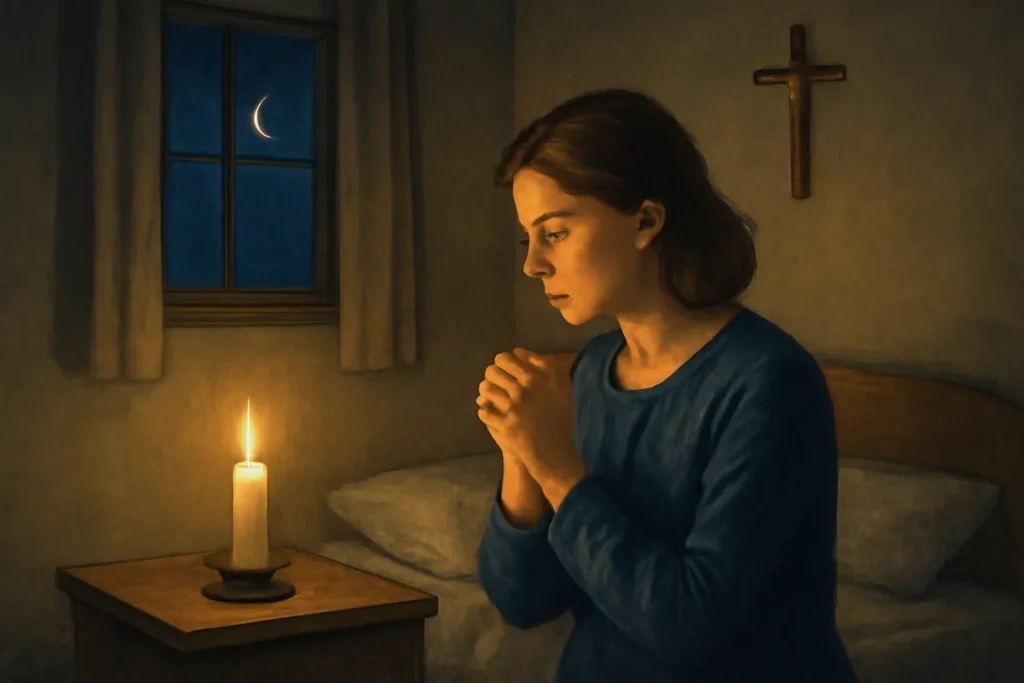
Prepare the space: dim the lights, kneel or sit comfortably, and turn off distracting devices. Create a quiet environment that invites inner stillness.
Begin with the Sign of the Cross and a short invocation to God’s presence.
Adoration: acknowledge God’s love and sovereignty, perhaps with a one-sentence reflection like, “Glory to you, O Lord, for your steadfast love.”
Contrition: name one or two sins or faults from the day and entrust them to mercy, saying a brief Act of Contrition or a personal confession of fault.
Thanksgiving: recall blessings and moments of grace; thank God for people you love and the gifts of the day.
Examen of conscience: kindly review choices, noting where God was near and where you missed the mark, without harsh self-criticism.
Scripture or reflection: read a short verse or meditation (e.g., Psalm 4, Psalm 91, or a verse of John 14).
Petitions: offer needs for yourself, loved ones, and the world, especially for peace, healing, and wisdom.
Canticle or prayer: recite a canticle such as the Nunc Dimittis or pray a familiar closing prayer (e.g., the Hail Mary).
Closing blessing: finish with a blessing over yourself and loved ones, and end with the Sign of the Cross.
Sample prayers and texts for night time Catholic prayer
Short nightly prayer for individuals
Here is a concise prayer you can adapt for a bedtime routine:
“Lord Jesus Christ, I thank you for your love this day. I confess my faults and ask for your mercy. Grant me a peaceful night and a safe dawn. May your holy angels keep watch over me and all whom I hold dear. Amen.”
Act of Contrition (Catholic form)
A common form used by many Catholics for evening prayer is the Act of Contrition. One well-known version says:
“O my God, I am heartily sorry for having offended you, and I detest all my sins, because of your just punishments, but most of all because they offend you, my God, who are all-good and deserving of all my love. I firmly resolve, with the help of your grace, to sin no more and to avoid whatever leads me to sin.”
A brief Psalm and a canticle can anchor the night in Scripture. For example:
Psalm 4 or Psalm 91 can be prayed or read. Then, the Canticle of Simeon (the Nunc Dimittis) is a traditional choice:
“Lord, now you let your servant go in peace; your word has been fulfilled. My own eyes have seen the salvation which you have prepared in the sight of every people, a light to reveal you to the nations and the glory of your people Israel.”
Prayer for protection and peace
If you want a short, protective prayer, consider:
“Stay with me, Lord, for it is evening. The day has ended, and I commit the night to your loving care. Keep watch over my heart and my family. Through Christ our Lord. Amen.”
Praying the Liturgy of the Hours at night: Compline overview
For Catholics who participate in the Liturgy of the Hours, the Compline is designed to be the day’s final prayer. Some tips to approach this form:
Choose a simple version that fits your schedule so it becomes a predictable habit rather than a burdensome ritual.
Use a pocket or home prayer book, or a digital app that provides the text and structure for Night Prayer.
Remember that Compline emphasizes God’s protection during the night, so place trust in God’s care as you sleep.
While the exact words can vary by edition and culture, the spirit remains constant: a quiet resting in the love of God, the hope of mercy, and the confidence that God holds the night in divine hands.
Practical tips for making nighttime prayer meaningful
Consistency over length: a few focused minutes each night build a durable habit faster than a longer session done irregularly.
Personalize your intentions: write down a few names or concerns you want to lift in prayer and renew them nightly.
Music and silence: a gentle hymn or a brief period of silence can deepen the encounter with God.
Accessibility: vary the form—some nights include a Psalm; other nights a short reading or a prayer card.
Pair with a morning or daily view: nights prayer can complement morning prayer to form a fuller spiritual rhythm.
Family adaptation: rotate who leads the prayer, incorporate children’s prayers, and keep the flow simple and reassuring.
Guidelines for forming a healthy nighttime prayer practice
Building a healthy nocturnal prayer routine involves attention to both the heart and the schedule. Consider the following guidelines:
Keep your expectations realistic; the goal is a peaceful end to the day, not a perfect spiritual performance.
Respect rest: if you are exhausted, a brief blessing and a quick Act of Contrition can be enough for the night.
Invite the Blessed Virgin Mary or the saints into your nightly prayers as patrons of the home and guardians of families.
Use simple language you understand; God desires sincere, heartfelt conversation rather than ornate phrases that feel distant.
Common questions about nighttime Catholic prayers
What is the difference between night prayer and other Catholic prayers? Night prayer is specifically intended to close the day in communion with God. It often includes particular elements such as a psalm, a canticle, and a closing blessing, though individual practice can be flexible and personalized.
Can I pray night prayers if I’m not sure about every aspect of doctrine? Yes. Prayer is about relationship with God. You can begin with simple prayers, trust in God’s mercy, and grow in understanding over time with study and participation in community life.
Is Compline mandatory? No. The Liturgy of the Hours includes Compline as one option among many forms of prayer. For many laypeople, it is a recommended but optional practice that aligns with the Church’s tradition.
What if I forget to pray at night? Do not judge yourself harshly. Pick up the next night and begin again. The mercy of God is greater than any missed day.
What if I’m in a parish that emphasizes a different form of night prayer? Adaptation is common. The core is to cultivate a disposition of listening to God, gratitude, contrition, and hope for tomorrow.
Catholics come from many cultural backgrounds, family structures, and life stages. The practice of nighttime prayer catholic should reflect this diversity:
For singles, a brief nightly examen and a couple of verses can be deeply nourishing.
For young families, a short five-minute routine with a child-friendly cadence can establish a lifelong habit.
For aging adults or caregivers, a gentle, slower pace that honors fatigue is perfectly appropriate, prioritizing rest and mercy.
In the Catholic worldview, Nighttime Prayer Catholic practice is not a mere routine but a spiritual discipline that mirrors the rhythm of creation: day gives way to night, and in the quiet that follows, God’s presence can come most tenderly. The practice invites believers to lay down the day with gratitude, to admit faults with humility, and to open the heart to God’s renewed grace for the hours ahead. Whether you call it Compline, Night Prayer, or evening prayers, the essential aim remains the same: to end the day in peace and to wake with hope.
If you would like to deepen your understanding and practice of nighttime Catholic prayers, here are several approachable avenues:
Consult the Catechism of the Catholic Church for a fuller understanding of prayer and conscience.
Explore a local parish’s guidance on Compline or Night Prayer within the Liturgy of the Hours.
Use a Catholic prayer app or a pocket prayer book that includes the Night Prayer or a short nightly script.
Read spiritual writings from saints who emphasize prayer at the close of the day, such as St. Francis de Sales or St. Therese of Lisieux, for inspiration on simple, heartfelt prayers.
Regardless of your specific form, the heart of nighttime prayer catholic is the ongoing conversion of the heart toward God. The patience that comes with regular practice is itself a sign of divine grace at work. May your nights be filled with quiet, your mornings with renewed hope, and your days with the peace that only prayer can bring.










Leave a Reply