Catholic Prayer for Meals: Blessings Before Eating
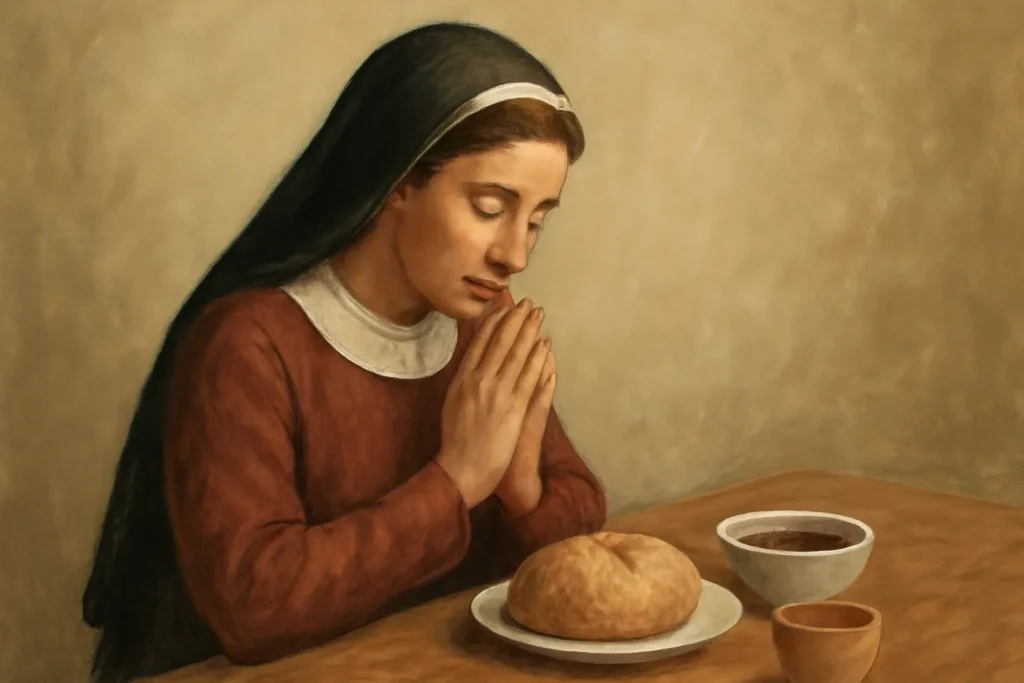
In Catholic life, saying a blessing before meals is a humble, daily reminder that every bite is a gift from God. The practice is simple to adopt, yet deeply meaningful: it invites gratitude, aligns the family or community around a shared purpose, and anchors the act of eating in faith. A meal blessing is not a performance or a mere formality; it is a brief act of worship that recognizes God as the source of all creatures, provision, and abundance. When families gather around a table, the prayer before meals becomes a doorway into moments of conversation, blessing, and communal solidarity that can extend into the rest of the day.
Across the Catholic world, you will find a variety of expressions used before meals. They share common elements—gratitude for food, acknowledgment of God’s generosity, and a petition that the nourishment be a source of strength to serve God and neighbor. The language may vary, but the spirit remains the same: to bless what has been given and to offer thanks for the hands that prepared it. In this article, we explore the traditional pre-meal blessing, its Latin roots, and a spectrum of variations in English, Spanish, Italian, Polish, and other languages. We also offer practical guidance for families and communities who wish to incorporate this practice into daily life, along with ready-to-use sample prayers and guidance for meaningful sharing around the table.
Foundations of the practice in Catholic life
The custom of giving thanks before meals has deep roots in Christian tradition. While the Mass remains the primary liturgical celebration of thanksgiving to God, individual families and parishes have long maintained the domestic rite of grace at mealtimes. This practice reflects Catholic teaching on gratitude, stewardship, and communion. The Catholic concept of grace encompasses more than a moment of thanks; it is a posture of recognizing God as the giver of all good things and a call to live charitably toward those who provide and share food with others.
Key theological themes associated with prayers before meals include:
Gratitude for the abundance and for the labor that produced the meal.
Blessing of the food, the cooks, and the diners, asking for God’s care over the nourishment.
Intercession for those who are hungry, for the sick, and for the virtue of generosity toward the vulnerable.
Union around the table as a community of love and solidarity in Christ.
Acknowledgment that all good things come from God and are ultimately sustained by Him.
In Catholic households, the ritual is often intentionally brief so that it can be recited at the start of a busy day or a simple family meal. The brevity does not diminish its seriousness; rather, it highlights a simple act of faith that can be repeated with sincerity in diverse family settings, schools, monasteries, and parish halls.
The traditional pre-meal blessing
The most widely known English form of the pre-meal blessing is compact, memorable, and easy to recite at the table. It reflects the ancient pattern of blessing the food with a concluding petition that the nourishment supports the body and the day ahead. The traditional version is:
Bless us, O Lord, and these Thy gifts, which we are about to receive from Thy bounty, through Christ our Lord. Amen.
This sentence appears in many Catholic homes, schools, and community meals and is used as a standard, plain-language expression of thanks and supplication. It centers on two core ideas: gratitude for the gifts provided by God’s bounty, and the invocation of Christ as the mediator through whom all grace is received. When recited aloud, the prayer invites all at the table to join their voices in a shared act of worship and family solidarity.
In addition to the English version, there are traditional forms in Latin and in other languages that have become part of Catholic heritage. The Latin form, for example, is close in spirit to the English version and is often used in Catholic education and in communities with a Latin liturgical tradition:
Benedic, Domine, et haec munera tua, quae sumpturi sumus ex tua benignitate, per Christum Dominum nostrum. Amen.
The Latin text preserves the elegance and rhythm of Catholic liturgical language, reminding participants of the prayer’s roots in the broader liturgical life of the Church. Across generations, these words have provided a bridge between family life and the richness of Catholic sacramental life, helping ordinary meals become occasions of contemplation and devotion.
Variations for a broader spectrum of settings
While the standard form remains common, many Catholic families and communities adapt the language to fit different contexts while preserving the essential intention of the prayer. Below are several variations that reflect regional language, tradition, and nuance. Each variation keeps the central idea of gratitude and blessing while offering different emphases that may resonate with particular communities or circumstances.
In addition to the classic form, you may encounter shorter or more expansive English versions. Some families prefer to begin with a brief invocation and then a slightly longer blessing that includes a request for blessing on the cooks or on those who prepare the meal:
Short version:Bless us, O Lord, and these Thy gifts, which we are about to receive from Thy bounty. Amen.
Extended version:Bless us, O Lord, and these Thy gifts, which we are about to receive from Thy bounty. May they nourish our bodies and renew our spirits for Your service. Through Christ our Lord. Amen.
Gratitude-centered version:Thank you, Lord, for this food and for all who prepared it. Bless this meal and bless our family as we share it together. Amen.
Latin and multilingual variants
Some Catholic families use Latin at home, while others use modern languages that reflect their heritage. The Latin form remains a traditional anchor for many, and modern translations can be used in family gatherings. A multilingual approach can be a catechetical moment as well, teaching children about the universality of the Church’s prayer:
Latin:Benedic, Domine, et haec munera tua, quae sumpturi sumus ex tua benignitate, per Christum Dominum nostrum. Amen.
Spanish:Bendice, Señor, estos alimentos que vamos a recibir de tu bondad. Bendícelos a todos los que participaron en su preparación. Por Cristo Nuestro Señor. Amén.
Italian:Benedici, Signore, questi alimenti che stiamo per ricevere dalla tua bontà. Per Cristo nostro Signore. Amen.
Polish:Błogosław, Panie, te pokarmy, które mamy otrzymać z Twojej dobroci. Przez Chrystusa Pana naszego. Amen.
Prayers for different settings
Home meals: A gentle, family-oriented blessing that invites everyone to participate and to offer personal intentions for the day ahead.
School or parish meals: A concise version that can be recited in a classroom or hall before lunch or dinner, emphasizing gratitude for the work of food preparation and the sharing of God’s gifts.
Travel or simple meals on the go: A brief, easy-to-memorize line that can be whispered or spoken aloud in a moment of pause while traveling.
Prayer with intentions: A version that explicitly includes prayers for the hungry, for peace, or for persons in need around the world.
Alternative family prayers before meals
Many households adopt an alternative family prayer that maintains the thrust of thanksgiving while inviting broader intentions. Here are a few examples:
Example 1:We thank You, Lord, for these foods and for the hands that prepared them. May this meal strengthen us in Your love and lead us to serve others with generosity. Through Christ our Lord. Amen.
Example 2:O God, we thank You for Your gifts and for Your faithfulness. Bless this food to our bodies and bless our family with harmony, courage, and compassion. Through Jesus Christ, our Lord. Amen.
Example 3:Lord, we gather at this table with grateful hearts. Bless this meal, the cooks, and all who share it with us. Keep us mindful of those who hunger and move us to help where we can. Amen.
Guidance for practical use in families and communities
If you are introducing or renewing the practice of saying grace before meals, these practical tips can help make the moment meaningful and sustainable over time:
Keep it brief and sincere: A short blessing is often more heartfelt and easier to repeat daily. A minute or less of focused prayer helps the moment maintain its dignity without feeling like a burdensome obligation.
Involve everyone: Invite children and guests to participate, perhaps by repeating a phrase or offering a personal intention. This fosters ownership and a sense of belonging.
Set a cadence: A consistent habit—same time, same place—helps embed the practice into daily life. It also provides a predictable rhythm for family members and guests.
Include intentions: Pause briefly to silently offer intentions for the day, such as gratitude for family, strength for work, or relief for those in need.
Be mindful of context: In larger gatherings or settings where prayer may feel unfamiliar, a brief blessing that emphasizes gratitude to God for food can be shared respectfully without pressuring anyone to participate beyond their comfort level.
Educate gently: For children, explain that the blessing is an expression of gratitude to God and a way of acknowledging the dignity of work and the generosity of others who provided the meal.
For teachers, catechists, and group leaders, an accessible approach is to begin with a short, standard blessing and then invite participants to add a personal intention. This keeps the practice alive in classrooms and parish dining halls, turning a routine moment into an opportunity for faith formation and communal bonding.
Prayers before meals as part of Catholic spiritual life
Prayers before meals belong to a broader grid of Catholic spiritual practices that cultivate gratitude, generosity, and awareness of God’s presence in everyday life. These practices include:
Grace before meals as part of a larger rhythm of prayer at home.
Gratitude journals in which family members reflect on the blessings of the day, including the meal itself.
Formal and informal grace in religious education settings, where children learn the words of blessing alongside an understanding of their meaning.
Liturgical awareness that ties everyday meals to the Eucharist and the Church’s call to feed the hungry and care for creation.
Across cultures, these practices adapt to local customs while preserving the core intention: to acknowledge God’s generosity and to unite the household in a moment of shared prayer. The ritual can be a bridge between family life and the larger Catholic community, linking the dinner table to parish life and to the universal Church’s mission of service and love.
Intercessions and intentions at the table
Many Catholics like to include specific intentions while giving thanks before meals. These may be:
The needs of family members, friends, and neighbors.
The work of missionaries and charitable organizations that help alleviate hunger and poverty.
Healthcare workers, teachers, and community leaders whose labor sustains daily life.
Peace, justice, and relief for those affected by hardship, conflict, or natural disasters.
When you include intentions, you can keep them brief and focused. For example, you might say a quick line aloud after the core blessing or invite a family member to offer a personal intention before concluding with Amen. This approach helps transform the meal blessing into a living practice of faith and solidarity.
Incorporating various cultural expressions
The Catholic Church is universal, and the practice of blessing meals reflects this diversity. In addition to English and Latin, many families use the local language and customs. Some communities incorporate short lines in the language of the family’s heritage, which can be a powerful way to pass on faith traditions to children and guests. Whether in Spanish, Italian, Polish, French, Filipino, Portuguese, or Vietnamese communities, the essential aim remains the same: to give thanks and to seek God's blessing for the meal and for those who share it.
What to avoid and what to emphasize
As you cultivate a habit of saying grace, you may encounter questions about what to include or exclude. Some guidelines that help maintain reverence and accessibility include:
Avoid overly long prayers that may feel performative; simplicity often carries more grace and sincerity.
Avoid excluding anyone by making participation optional without pressuring others to join.
Avoid focusing on food as consumer pleasure to the neglect of God as Creator and of those who suffer from hunger.
Embrace a spirit of humility and gratitude, acknowledging both the gifts received and the hands that prepared them.
By centering the moment on gratitude, intercession, and generosity, the meal blessing becomes a form of daily catechesis—a way to teach children (and remind adults) that life is a gift continually sustained by God’s mercy and love.
Here are ready-to-use samples that cover a spectrum of contexts. You may recite them exactly as written or adapt them to suit your family’s language, culture, and preferences. Each sample preserves the core Catholic intent: gratitude for the food, blessing on those who prepared it, and a request for ongoing grace in daily life.
Standard English prayer
Bless us, O Lord, and these Thy gifts, which we are about to receive from Thy bounty, through Christ our Lord. Amen.
Short acknowledgment with intentions
Thank you, Lord, for this meal and for all who prepared it. Bless this food to nourish our bodies and our souls for Your service. Amen.
Latin form
Benedic, Domine, et haec munera tua, quae sumpturi sumus ex tua benignitate, per Christum Dominum nostrum. Amen.
Spanish form
Bendice, Señor, estos alimentos que vamos a recibir de tu bondad. Bendícelos a todos los que participaron en su preparación. Por Cristo Nuestro Señor. Amén.
To cultivate a rich and meaningful habit of blessing meals, approach the moment as an invitation to gratitude, a call to generosity, and a reminder of our shared faith. The pre-meal blessing, whether spoken in English, Latin, or another language, can become a thread that ties daily life to Catholic spiritual life. It helps us acknowledge God’s providence, thank those who prepare food, and renew our intention to use the gifts we receive for the good of others.
As you continue this practice, consider inviting family members to contribute personal intentions, teaching children how to articulate their thanks, or sharing a moment of silent reflection before the final Amen. You may also pair the blessing with a brief discussion about the origin of the meal, the importance of sharing, or a reflection on today’s Gospel reading or church teaching. In doing so, the simple act of blessing a meal becomes a small but powerful doorway into daily faith, formation, and fellowship.
Whether at a bustling family table, in a quiet prayer corner of a home, or in a parish hall after a community gathering, the Catholic practice of praying before meals invites all present to pause, turn their hearts to God, and embrace the grace of the moment. It is a humble yet profound gesture—one that nourishes not only the body but also the spirit, uniting people in gratitude, hope, and service to others. May these blessings accompany your meals, today and every day.









Leave a Reply