Catholic Wedding Prayer: Texts, Blessings, and Ceremony Ideas
Catholic Wedding Prayer: Texts, Blessings, and Ceremony Ideas
Catholic weddings are rich in prayer, symbolism, and meaning. The prayers spoken during the ceremony are not merely decorative words; they are the heartbeat of the rite, inviting God’s grace into the couple’s life together and inviting the gathered community to support the marriage in faith. This article explores the variety of Catholic wedding prayers—texts that are commonly used, different blessings that can accompany the rite, and ceremony ideas for incorporating prayer in meaningful, pastorally appropriate ways. Whether you are planning a Nuptial Mass, a simple ceremony, or a celebration in a parish church, you will find practical guidance, sample language that respects liturgical norms, and ideas to help you craft a ceremony that is both reverent and deeply personal.
In the Catholic tradition, prayer is both a response to God and a means of asking for God’s grace. A wedding is, at its core, a sacred covenant before God and the Church. The prayers of the couple, the ministers, and the assembly are not mere formality; they are acts of worship and supplication. They acknowledge the presence of the Holy Spirit guiding the couple, plead for steadfast fidelity, and celebrate the vocation of family life. In a well-planned Catholic wedding, the prayers align with the twofold purpose of the rite: (1) to worship God and (2) to ask for God’s blessing on the couple as they enter marriage.
There are several canonical places where prayers appear in a Catholic wedding, depending on whether the ceremony is a Nuptial Mass, a rite without Mass, or a Mass with a different structure. Regardless of the format, the core elements typically include a blessing of the couple, a blessing of the rings (if used), prayers of the faithful (universal prayers), and a closing blessing. In all cases, the prayers are meant to be hopeful, faithful, and in keeping with Catholic teaching on marriage as a sacramental vocation.
Texts: traditional and contemporary variations
The following sections describe common prayer texts you may encounter in a Catholic wedding. To respect liturgical copyright, the descriptions provide paraphrased language and guidance for crafting original, respectful wording that captures the spirit of Catholic nuptial prayers. If you wish to use official, published texts, consult your priest or your diocese’s rite book for the approved English translation and local adaptations.
Nuptial Blessing (Blessing of the Couple)
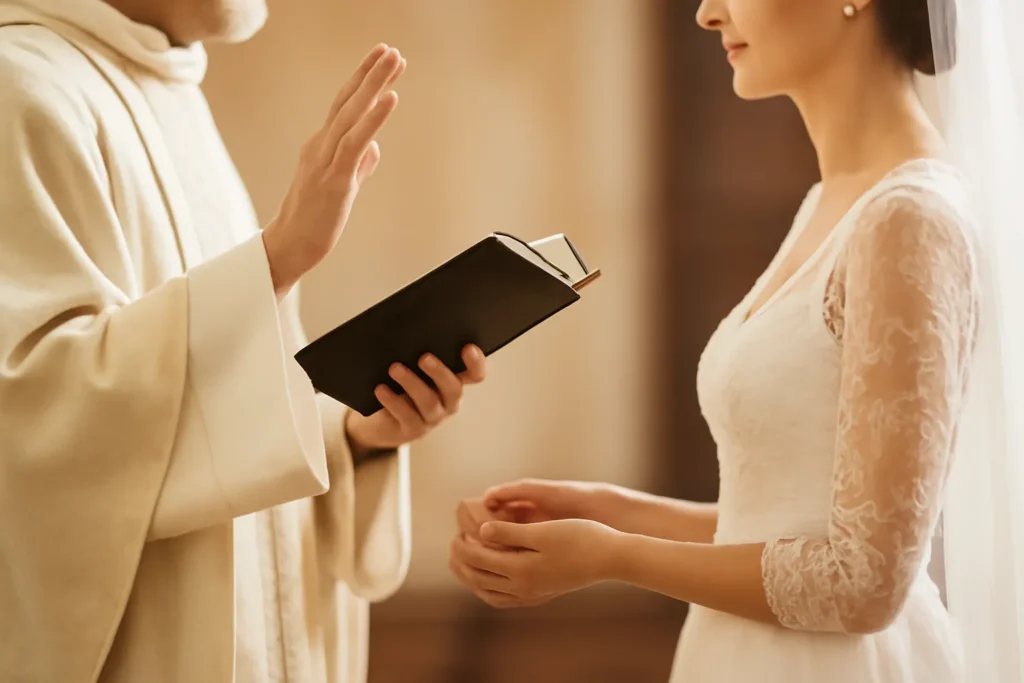
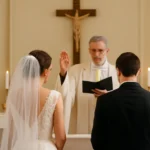
The central liturgical blessing for Catholic weddings is the Nuptial Blessing, given by the priest or deacon after the couple has exchanged vows and rings (in most parishes). The blessing asks for God’s grace to be poured out upon the couple, granting fidelity, mutual support, love, and openness to life. In many communities, the blessing is a distinct, solemn moment that closes or follows the exchange of rings and is followed by the universal prayers and the concluding rites.
Paraphrased sample language you might hear or adapt in a parish setting includes ideas like these:
Invocation of grace and the presence of the Holy Spirit upon the couple as they begin their life together in faith.
A request for fidelity, patience, and generosity in the face of life’s ordinary and extraordinary challenges.
Blessing for openness to life and the blessing of the couple’s future children, if that is part of their family plan.
Prayer that the couple’s love may reflect the love of Christ for the Church, becoming a sign of God’s presence in the world.
In practice, you might present this as a formal blessing with language like: “May the Lord pour out his grace upon you, may you grow in love and trust, may you support one another in charity, and may your home be a beacon of faith, hope, and mercy.” If a Nuptial Mass is celebrated, this blessing often occurs after the exchange of vows and rings and just before or after the Eucharist, depending on local custom.
Prayer of Blessing for the Rings
Rings are powerful symbols of marital unity and fidelity. In Catholic weddings, the blessing of the rings is an important moment, especially when the couple is exchanging rings as a public sign of their vows. The priest or deacon blesses the rings so that the couple may wear them as signs of enduring love and as reminders of God’s presence in their married life. Paraphrased samples emphasize fidelity, constancy, and the turning of the couple’s hearts toward one another and toward God’s plan for their family.
Representative paraphrase for a ring blessing might include: “May these rings be a sign of your love and fidelity. May they remind you to honor your vows, to cherish one another, and to seek God in all things. May your home be filled with peace, mercy, and joy.”
Another distinct family of prayers within Catholic weddings includes prayers of thanksgiving for the couple’s families, for the Church, and for the grace to be faithful spouses. These intercessions are often offered by the celebrant or read by a chosen layperson, and they may include intentions such as gratitude for the gift of marriage, requests for strength in times of difficulty, and prayers for the couple’s future children. Paraphrase examples include requests such as: “We give thanks for the gift of marriage, for the lives that have formed the couple, and for the grace to build a home rooted in faith.”
In some rites, a succinct prayer of intercession may be included after the Our Father or after the vows. These intercessions emphasize the communal dimension of marriage—the couple’s life is not only their own but a sign and a service to the wider Church and world.
Prayers from the Liturgy of the Word and the Mass
When a Nuptial Mass is part of the ceremony, the readings themselves are acts of prayer—the Word of God proclaimed to the assembly, inviting contemplation and response. The prayers that accompany the Mass—the Prayer over the Offerings, the Preface, the Eucharistic Prayer, and the Doxology—are themselves prayers that frame the marriage as a sacramental act within the life of the Church. In accompaniment to these, couples often add personalized intentions or short prayers that reflect their own spiritual journeys, family histories, and hopes for the future. Paraphrased or paraphrased-inspired language for these prayers can emphasize gratitude, mercy, and the transformation that love seeks to bring about in the world.
Variations and adaptations of Catholic wedding prayers
Different parishes, dioceses, and cultural traditions shape how prayers are spoken, sung, and celebrated. Here are common variations and flexible approaches that maintain fidelity to Catholic doctrine while allowing for meaningful personalization:
Nuptial Mass vs. simple ceremony: If the wedding includes Mass, prayers are integrated into the Eucharistic rhythm, and the couple’s vows occur within the rite that culminates in the kiss and the blessing. In a ceremony without Mass, the prayers are more concise, and the focus is on the blessing and intercessions that directly accompany the vows.
Language and translation: Teams of parish leaders often adapt the wording to reflect local languages while preserving the essential meaning of the prayers. The result can be a beautifully spoken rite that speaks to the cultural context while remaining within the liturgical boundaries.
Local customs and devotions: Some families choose to incorporate Marian prayers, saints’ intercessions, or contemplative moments (such as a moment of silent prayer) in a way that does not conflict with liturgical norms.
Participation of families and communities: It is common to invite parents, sponsors, or other family members to offer a short blessing or a signed remembrance as part of the ceremony, so long as it does not replace the priest’s liturgical role.
Open to life and family discernment: In modern expressions of Catholic marriage preparation, prayers may explicitly acknowledge the couple’s openness to family life and the spiritual vocation of parenthood, if it aligns with the couple’s goals and church teaching.
When designing prayers for a Catholic wedding, it is important to consult with the parish priest or the diocesan guidelines. They can provide approved language, clarify what is permissible in the local rite, and help tailor the prayers to the couple’s life while respecting doctrinal boundaries.
Ceremony ideas: making prayer a lived experience
A successful Catholic wedding ceremony is both liturgically correct and personally meaningful. Here are ideas for incorporating prayers in ways that feel authentic and reverent:
Nuptial Mass structure: If the couple celebrates a Nuptial Mass, plan the prayers so that they flank the Eucharistic prayer, with a blessing of the couple and rings placed prominently in the liturgical sequence. In this format, the congregation participates in the prayers for the couple as part of the broader worship of the Church.
Rite of Matrimony without Mass: In ceremonies that do not include a Mass, the prayers can be shorter but still full of intention. The focus is on the vows, the blessing of the rings, and at least one or two concise intercessions that reflect the couple’s hopes and needs.
Sequence of prayers: Consider a deliberate sequence: opening blessing and invitation to prayer, the exchange of vows, the blessing for the rings, intercessions, the Our Father, the final blessing, and the dismissal. A thoughtful order helps the assembly experience prayerful participation.
Intercessions tailored to life stages: In the universal prayers, include intentions for the couple’s spiritual growth, their future family, extended family, the sick and poor, and the local church community. Personalizing the intentions can deepen the meaning without altering liturgical integrity.
The role of the assembly: Invite the assembly to participate actively—responses, sung or spoken prayers, and mutual blessing at the sign of peace. The community’s participation emphasizes the shared vocation of marriage within the Body of Christ.
Symbolic prayer moments: Some couples incorporate moments of silent prayer for the couple’s intentions, or a short moment of lighting a unity candle or incense as a symbolic gesture, only if such symbols are approved by the parish and align with liturgical norms.
Decoration, music, and liturgical movement can support prayer without distracting from the sacred purpose of the rite. For example, a brief instrumental introduction before the prayers or a short canticle after the ring blessing can deepen the communal prayer ritual while preserving reverence and focus on the vows.
Sample language: original, paraphrased prayers for weddings
Below are original, paraphrased examples you can adapt or use as inspiration. They are not direct quotations from official liturgical texts, but they capture the tone and intent of Catholic wedding prayers. If a parish requires exact liturgical wording, consult the priest for approved texts.
Sample language for a Nuptial Blessing (paraphrased)
May God grant you the strength to honor your vows each day, the courage to forgive, and the grace to seek what is good for one another. May your home be filled with joy and mercy, and may your love become a sign of God’s faithful, enduring care for all people. May your love grow through service to one another and to your family, reflecting Christ’s love for the Church. Amen.
Sample alternative: “May the love you share be a living reminder of God’s covenant, strengthening your bond through patience, kindness, and mutual respect. May you be abundant in mercy toward one another and toward your neighbors, and may your hearts be united in the service of the truth that love never ends.”
Sample language for a Ring Blessing (paraphrased)
As you wear these rings, may they be for you a circle of fidelity and a reminder of the unbreakable bond you have chosen. May they bless your home with peace, your work with integrity, and your family life with generosity. May your love reflect Christ’s love for the world, steadfast, hopeful, and ever generous.
Sample language for the Prayers of the Faithful (paraphrased)
For the couple, that they may be steadfast in faith, patient in hardship, and joyful in years of shared service; for their families, that they may be sources of support and blessing; for the Church, that it may accompany and sustain all marriages with mercy and truth; for the hungry and vulnerable, that God’s mercy may be shown through acts of charity inspired by this wedding; and for peace in the world, that love may prevail over fear and division.
Discuss preferences early: Talk with your priest about the structure (Nuptial Mass or rite without Mass) and about the types of prayers you’d like to emphasize. This helps ensure that the prayers align with the parish’s guidelines and liturgical norms.
Respect the liturgical rhythm: If you include a unity ritual or additional prayers, make sure they complement the liturgy rather than interrupt it. The celebrant can advise on what is appropriate for your parish.
Customization with care: It is possible to personalize the intentions and some language, but avoid altering core doctrinal statements. Use paraphrased or original language that preserves the meaning of fidelity, grace, and the sacramental nature of the vocation.
Participation of family and community: Consider inviting a family member to offer a brief blessing, read a scripture passage, or lead a short prayer during the intercessions, if this fits the parish policy.
Music and prayer: Choose hymns or songs that reflect the themes of love, faith, and grace. Music can support prayer by guiding the assembly into contemplation and praise without overshadowing the liturgy.
Preparation resources: Use sacramental preparation materials, parish offerings, and diocesan guidelines to accompany your planning. A well-prepared plan reduces stress and helps the moment feel sacred and coherent.
Putting together a balanced prayer plan for the ceremony
To craft a prayer plan that feels cohesive, consider these steps:
Begin with a sacred welcome: a short invitation to prayer that acknowledges God’s presence in the gathering.
Move into the exchange of vows and the blessing of the rings as the central outward signs of the covenant.
Include one or two universal prayers (intercessions) that reflect the couple’s life situation and their responsibility to others.
Conclude with the final blessing and a dignified dismissal, sending guests in a spirit of grace and thanksgiving.
Remember that simplicity and reverence often yield the most powerful impact. A clear procession, thoughtful readings, and well-timed prayers can create a ceremony that feels both authentic and enduring.
Blessings for the couple and for families
In Catholic teaching, marriage is a sacrament that blesses not only the couple but the entire family and community. The prayers targeting blessings emphasize several key outcomes:
Fidelity and mutual respect as a daily choice and practice.
Mutual sanctification as spouses grow closer to God and to one another through shared life and service.
Openness to life as part of a generous response to God’s gift of family and future children.
Strength in trial and the grace to weather difficulties with mercy and courage.
Justice, charity, and service within the home and toward others in the wider community.
These desires for blessing are commonly woven into the prayers, ensuring that the couple’s vows are framed not only by personal affection but by the Church’s ongoing witness to the gospel of love and mercy.
Conclusion: praying the Catholic wedding as a living vocation
A Catholic wedding is more than a ceremony; it is a spiritual inauguration of a shared life in Christ. The prayers of the rite are the language of grace—inviting God to bless, guide, and sustain the couple as they forge a home of faith, hope, and love. Whether you choose a Nuptial Mass, a simple ceremony, or a rite with a blend of both, you can honor the tradition while making it a personal witness to God’s presence in your relationship. By carefully selecting and crafting the prayers—whether standard, paraphrased, or newly written—you can ensure that the ceremony remains deeply Catholic, pastorally warm, and spiritually moving for all who attend.
If you are currently planning with a parish, a canonically correct approach is to consult the priest or deacon early in the process. They can provide approved texts, guidance on translations, and recommendations for how best to integrate personalized prayers in a way that honors the sacredness of the rite and the unique story of the couple. With thoughtful planning, the wedding prayers will not only bless the couple but also lift up the faith of the entire assembly, inviting everyone to celebrate, be renewed in faith, and carry the memory of the day as a source of grace for years to come.




Leave a Reply