Catholic Funeral Blessing: A Practical Guide to Prayers, Rites, and Comfort
A Catholic funeral blessing is more than a moment of ceremony. It is a spiritual journey that accompanies a person who has died and the family and friends who continue to live with loss. In the Catholic tradition, a funeral blessing is deeply rooted in the Church’s understanding of life, death, and eternal life. It blends solemn prayers, sacred rites, and comforting rituals designed to honor the deceased, support mourners, and entrust the soul to God. This practical guide explains the core elements of Catholic funeral rites, the typical order of events, the prayers most commonly used, and how families can participate in a way that preserves the dignity and hope of the Christian faith. It also offers guidance on how to plan and prepare for a Catholic burial blessing, the roles of clergy and lay ministers, and how to find comfort within the liturgical framework.
The Purpose and Meaning of the Catholic Funeral Blessing
In the Catholic Church, the funeral blessing is an act of worship, a proclamation of faith, and a pastoral gift. It serves several important purposes:
Commemoration of the life of the deceased in the presence of God and the faith community.
Prayers for the deceased that God’s mercy may be poured out and that the departed may be united with Christ in eternal life.
Assurance of hope for the grieving, grounded in the resurrection and the Communion of Saints.
Sacramental signs such as Holy Water, incensation, and the Liturgy of the Word and the Eucharist, which point to the mysteries of faith.
Pastoral care that offers consolation, meaning, and a structure for the community to gather, mourn, and pray together.
Different phrases may be used to describe these rites, including Funeral Mass (or Mass of Christian Burial), Rite of Christian Burial, Funeral Service, or Vigil and Committal. The essential element in every case is the same: a luminous presentation of the Catholic faith about life, death, and the hope of resurrection, shared with the grieving in a compassionate and respectful manner.
Key Prayers and Prayers Moments in a Catholic Funeral
A Catholic funeral blessing draws from a wellspring of prayers and liturgical texts that have been shaped by centuries of Christian worship. While local customs and parish practices may vary, several core components are common to most Catholic funeral rites:
Opening prayers and the Penitential Rite at the start of the liturgy, inviting God's mercy and invoking the Spirit.
Liturgy of the Word, with readings from Scripture, a responsorial Psalm, and a homily that reflects on Christ’s victory over death.
Liturgy of the Eucharist, if the funeral is celebrated as a Mass, in which the faithful are united with Christ in the sacrament of the Eucharist.
Prayers for the deceased, including the Eternal rest prayer and petitions for mercy and peace.
The Rite of Commital (at the graveside or cemetery), which includes a final blessing and entrustment of the body to the earth and to God.
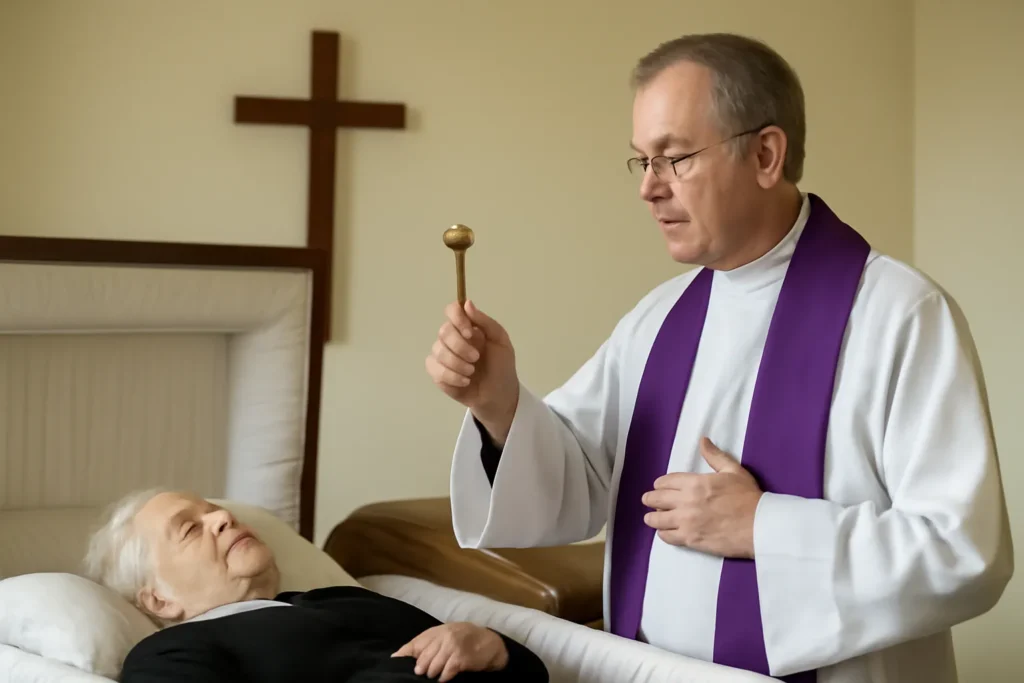
Some of the most beloved and meaningful elements include the Blessing with Holy Water as the casket enters or leaves the church, an Incensing of the casket and mourners in some communities, and the Litany of the Saints or other devotional prayers that recall the prayers of the Church for the departed.
The Practical Structure: Typical Order of Catholic Funeral Rites
The precise order can vary by parish, diocese, and the wishes of the family, but a typical Catholic funeral sequence is as follows:
Vigil Service or Wake (often held the evening before or a few hours before the funeral): a time for family and friends to gather, pray the Rosary or other devotions, and share memories. It often includes a brief Scripture reading, psalms, and prayers for the deceased.
Funeral Liturgy at the Church (the Mass of Christian Burial, if celebrated as a Mass): the entrance rite, readings, responsorial psalm, homily, prayer of the faithful, the Eucharist (if a Mass is celebrated), and concluding blessing. This is the central act of worship in which the community prays for the deceased and draws strength from the Eucharist.
Blessing of the Body (in the church or at the entrance): the priest blesses the body with Holy Water, and sometimes with incense, recognizing the sanctity of life and the hope of the resurrection.
Rite of Committal (at the cemetery or crematorium): the final blessing and committal, entrusting the departed to God as the family and friends accompany the body to its final resting place.
Optional post-liturgy tributes (such as an opportunity for sharing memories or a reception): these should be kept separate from the liturgical rites in many parishes to preserve the sacred character of the liturgy, though notes and stories may be shared afterward in a suitable setting.
Differences Between a Funeral Mass and a Funeral Service
In many places, families choose a Funeral Mass when the deceased was a practicing Catholic who regularly attended Mass. The Eucharist is a central feature of the Mass, and it communicates the belief in Christ’s real presence. If the funeral is conducted without a Mass, it is typically called a Funeral Service or Mass of Christian Burial (without a Mass), depending on local customs. In either format, the prayers and readings are chosen to reflect faith in Christ’s victory over death and the hope of eternal life.
Practical Guidance: How to Prepare for a Catholic Funeral Blessing
Planning a Catholic funeral blessing can feel overwhelming, but thoughtful preparation helps ensure the liturgy is meaningful and reverent. Here are practical steps and considerations for families and close friends:
Contact the parish early to inform them of the death, request a funeral blessing, and learn about the parish’s specific rites and local customs. The priest or a designated cantor can guide you through the choices and scheduling.
Choose the rite (Funeral Mass, Funeral Service, or a Mass without a full liturgy): discuss with the priest which option best suits the deceased’s life and the family's needs, including whether cremation is involved and how the burial or committal will follow.
Readings and music: select biblical readings and a responsorial psalm, as well as appropriate music. The priest can suggest suitable options that fit the liturgical season and the parish guidelines.
Selections for the homily: while the homily is the priest’s responsibility, families may share brief biographical notes or testimonies in separate times or gatherings, if the parish permits.
Liturgical roles: identify people who will serve as lectors (readers), commentators, or extraordinary ministers of Holy Communion (if a Mass is celebrated). Ensure
they are comfortable with their roles and receive guidance from the pastor or liturgical coordinator.
Vigil details: plan the vigil or wake with attention to the time, place, and the tone desired. Some families prefer a simple, contemplative vigil, while others choose a more devotional or rosary-centered format.
Personal touches: you may request a brief eulogy or a memory-sharing session after the liturgy; however, confirm with the parish whether such sharing is appropriate within the liturgical setting and if it should occur after Mass or at a separate reception.
Prayers and devotions for mourners: consider arranging a season-appropriate devotional plan for the days after the funeral—such as a novena, the Rosary, or a weekly Memorial Mass—to help families process grief within a faith-filled framework.
Logistics: coordinate with the funeral home, cemetery, and parish regarding the transport of the body, the order of the processional, and any special requirements (e.g., modest cantorial or instrumental music, use of incense, or the inclusion of a rosary).
Prayers, Devotions, and Texts You May Encounter
The Catholic funeral blessing incorporates a variety of texts that carry timeless comfort. Here are representative examples and the way they typically function in the rites:
Eternal rest prayer: “Eternal rest grant unto them, O Lord, and let perpetual light shine upon them.” This famous plea is often recited by the assembly after the procession or during the closing rites, reminding all present of the Church’s hope in the resurrection.
Memorial prayers and the Liturgy of the Word: selections from Scripture such as Psalm 23, Psalm 46, or 2 Corinthians 4 can be used to reflect the shepherding care of God and the certainty of the Resurrection.
Liturgy of the Eucharist prayers: if the Mass is celebrated, the prayers of the Eucharistic prayer, the Lord’s Prayer, and the Agnus Dei become central expressions of faith in the sacrificed and risen Christ.
Prayers for the family: during the Mass or the Vigil, the priest can offer prayers specifically for those who mourn, seeking comfort, strength, and grace in the days ahead.
Final commendation: at the end of the Rite of Committal, prayers ask God to receive the deceased into the peace of the eternal kingdom and to grant comfort to the bereaved.
What to Expect at the Cemetery or Crematorium: The Rite of Committal
The Rite of Committal is the concluding part of the Catholic funeral blessing. It often takes place at the cemetery or crematorium and includes:
Sprinkling with Holy Water and sometimes the presentation of a pile of earth or a symbolic gesture of placing soil on the casket, symbolizing the return of the body to the earth.
Final prayers for the deceased, asking God to grant eternal rest and to comfort the grieving in their loss.
Sign of the Cross and a final blessing from the priest, followed by the dismissal of the assembly.
The Procession to the grave (or to the cremation site) is a customary moment for quiet reflection and prayer as the community accompanies the deceased on the path to final rest.
Rites and Rituals: Variations Within Catholic Traditions
Across the global Church, there are variations in how Catholic funeral blessings are celebrated, reflecting liturgical norms, cultural expressions, and diocesan guidelines. Some noteworthy variations include:
Roman Rite funerals: the most common form in Western Catholic communities, typically including a Vigil, a Funeral Mass, and the Rite of Committal, with a strong emphasis on the Paschal mystery and the hope of the resurrection.
Eastern Catholic rites (such as the Ukrainian Greek Catholic, Maronite, or Melkite traditions): these may incorporate distinctive liturgical languages, music, and ceremonial gestures while preserving the core belief in the resurrection and the community’s solidarity with the bereaved.
Cremation considerations: since the early 21st century, the Church allows cremation, provided it is not chosen for reasons contrary to Christian faith. The Church still recommends burying the cremated remains in a solemn cemetery facility with a dignified container and a formal committal rite.
Lenten or Advent circumstances: in seasons of penance, the homily and some prayers may reflect the liturgical mood of the season, while preserving the essential message of life in Christ.
Local customs and parish practices: many communities blend traditional devotion with contemporary expressions, such as a brief eulogy or a moment for personal testimony after the formal liturgy, always within the guidelines of the diocese.
Comfort and Pastoral Care: How the Catholic Church Supports Grieving Families
Grief is a profound human experience, and the Catholic Church seeks to support mourners through:
Pastoral presence: clergy, lay ministers, and parish communities offer ongoing pastoral care, visiting the home, praying in the parish chapel, and accompanying families through the grieving process.
Liturgical consolation: the funeral rite itself is designed not only to honor the deceased but to comfort those who mourn by anchoring their sorrow in faith, hope, and charity.
Sacraments of consolation: the Church encourages the reception of the Sacrament of Reconciliation or anointing of the sick, where appropriate, to provide spiritual healing and grace during times of suffering.
Communal prayer: the parish provides opportunities for the community to come together in prayer after the funeral, offering memories, mutual support, and shared faith.
Practical guidance: the parish often offers resources on grief counseling, books, and referrals to trusted pastoral care professionals to help families navigate their loss over time.
Teleology of the Catholic Funeral: Theological Foundations
While practical and pastoral matters are essential, the theological heart of the Catholic funeral blessing is the belief in God’s love, the victory of Christ over death, and the promise of the resurrection. Three theological anchors recur consistently:
Christ is risen: the Scriptural testimony and liturgical affirmations declare that Jesus has conquered death, and those who die in Christ are called into eternal life.
The Communion of Saints: the living and the dead are united in Christ, and the prayers of the faithful accompany the deceased as a sign of unity within the Body of Christ.
Hope in eternal life: the prayers do not deny grief but point beyond it to the fulfillment of God’s promises in the life to come.
Frequently Asked Questions About Catholic Funeral Blessings
To help clarify common concerns, here are answers to typical questions families and friends may have:
Is a eulogy appropriate during a Catholic funeral? In Catholic liturgy, formal eulogies are traditionally not part of the liturgical act itself. However, many parishes allow a separate time after the liturgy for sharing memories or a brief tribute, or the family may provide a printed biographical sketch to accompany the program. Discuss options with the parish priest to honor local norms while remaining within liturgical guidelines.
Who can preside over a Catholic funeral? Generally, a priest or bishop presides over the funeral liturgy. A deacon may assist, and in certain circumstances a lay liturgist or approved layperson may lead readings with priestly supervision. Always consult the local parish to understand who can officiate in a given diocese.
What role do lay ministers play? Lectors read Scripture; cantors lead song or respond to prayers; and extraordinary ministers of Holy Communion assist during the Mass if one is celebrated. The parish will train and assign these roles according to liturgical norms.
What should I bring or prepare for a Catholic funeral blessing? Bring the preferred readings, music selections, and any personal notes for the homily, as well as contact information for pallbearers or other participants. Confirm with the parish about any restrictions on memorabilia, candles, or flowers inside the church.
How can non-Catholics participate respectfully? Non-Catholics may participate by joining in prayers, songs, and moments of silence, respecting the priest’s guidance for when to stand, kneel, or sit. If a reception or wake follows, non-Catholic friends can participate in the communal prayer or simply share in the comfort and fellowship provided by the faith community.
A Note on the Language of Blessings: Variations and Synonyms
In different regions and languages, terms are used interchangeably or with subtle nuance. You may hear:
Funeral blessing as a general description of the solemn prayers and rites held for the deceased.
Blessing and committal to emphasize the two sacral acts: the blessing in the church and the final committal at the grave.
Rite of Christian Burial as an ecclesial title for the set of rites that accompany burial or interment.
Mass for the Dead or Mass of Christian Burial when a full Mass is celebrated, highlighting the Eucharist as the central act of worship.
Closing Reflections: Finding Comfort in the Catholic Funeral Blessing
For families and friends, the Catholic funeral blessing is a tangible invitation to trust in God’s plan and to find peace in the mystery of dying and rising. It is a unified expression of faith that brings together Scripture, tradition, and the lived experience of grief. In times of sorrow, the liturgy offers not only solemn words but also a shared presence—the Church as a living community that sustains one another with prayer, memory, and hope. The practice of blessing the body, praying for the deceased, and entrusting the person to God’s mercy is a reminder that while life on earth is finite, the bond of love endures in Christ.
Appendix: Quick Reference Guide for Families
The following quick reference can help ease the planning process by outlining the essential elements of a Catholic funeral blessing:
Contact the parish to schedule the service and discuss the preferred form (Funeral Mass, Funeral Service, or Mass without a Mass).
Choose readings and music aligned with Catholic liturgy and the season of the Church year (Ordinary Time, Advent, Christmas, Lent, Holy Week).
Confirm roles for lectors, cantors, and ministers of Holy Communion with the liturgical coordinator.
Decide on the order of events (Vigil, Funeral Liturgy, and Committal) and whether eulogies or personal tributes may be included.
Prepare the environment for a reverent setting: modest floral arrangements, appropriate seating for mourners, and a schedule that respects the liturgical flow.
Care for the bereaved plan follow-up support and consider arranging a post-funeral reception or memorial Mass to sustain community ties and healing over time.
By understanding the Catholic funeral blessing, families can actively participate in a rite that is both solemn and hopeful. The guidance offered by the priest, the rhythm of the prayers, and the shared witness of faith all contribute to a blessing that is not merely an ending, but a journey toward consolation, healing, and the promise of eternal life in Christ.





Leave a Reply