Catholic Wedding Prayers: A Complete Ceremony Guide
Catholic Wedding Prayers: A Complete Ceremony Guide
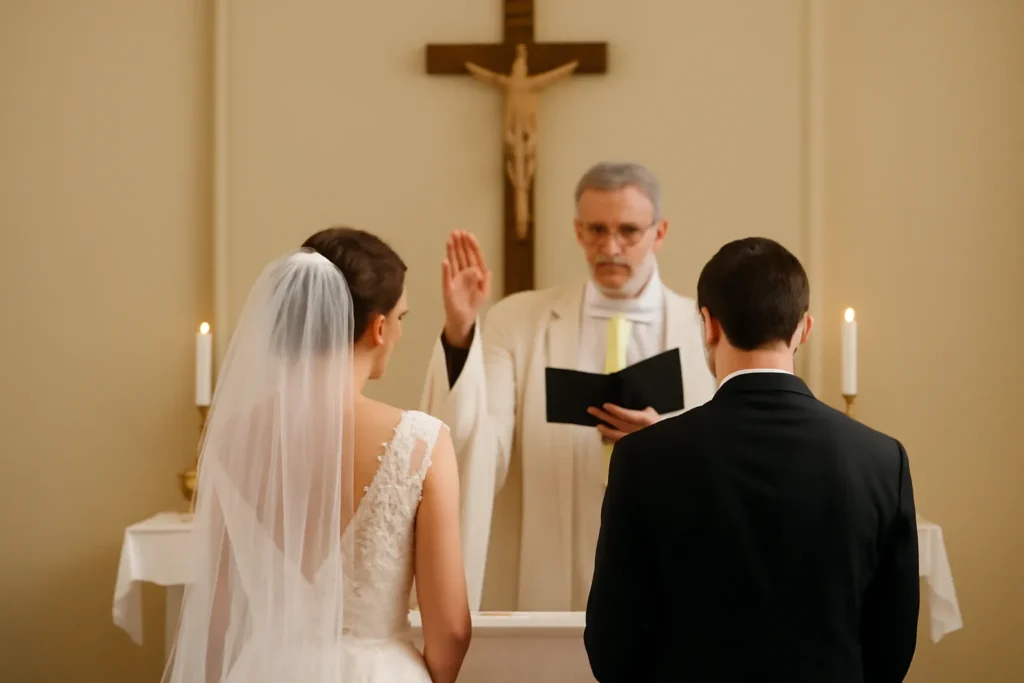
Catholic weddings are more than a social ceremony; they are a sacramental rite that invites God’s blessing on a couple as they begin a shared life. The prayers that accompany the ceremony carry the heart of Catholic spirituality—petition, thanksgiving, blessing, and commitment. This guide offers a comprehensive, practical overview of Catholic wedding prayers, including the structure of the ceremony, the key prayers involved, common variations, and sample paraphrased texts to help couples plan with reverence and clarity.
Understanding the Catholic wedding ceremony: Mass and non-Mass options
In the Catholic tradition, there are two principal forms a wedding ceremony can take depending on whether it is celebrated within a Nuptial Mass or as a ceremony without a Mass. Each form centers on the exchange of consent between the spouses, the blessing of the rings, and a prayerful invocation of God’s grace for the couple.
Nuptial Mass: This form takes place within the context of a celebratory Mass (the Eucharist). It follows the full flow of a Catholic Mass, including the Liturgy of the Word, the Liturgy of the Eucharist, and the Nuptial Blessing after the Communion, or, in some rites, a separate blessing of the couple within the Mass. The prayers emphasize the sacramental character of marriage in the life of the Church.
Ceremony without a Mass: Also called the Wedding Ceremony outside Mass or the Rite of Matrimony without the Eucharist, it centers on the exchange of vows, the blessing of the rings, and the Nuptial Blessing. This form is often chosen when a Mass setting is not practical due to time, availability, or pastoral considerations.
Both forms share the same spiritual purpose: to witness the couple’s vow before God and the Church and to invite grace into their marriage. The prayers in either form are designed to be accessible to families and guests, while remaining deeply rooted in Catholic liturgical language.
The backbone of the ceremony: structure and key prayers
A Catholic wedding follows a recognizable liturgical pattern. While the exact order can vary by region, diocese, or parish, the core prayers and moments consistently appear in most ceremonies. Below is a practical outline with the main prayer moments identified, along with notes on variations.
Entrance and Opening Rites – The couple, witnesses, and entourage process in. An opening prayer or collect often sets the tone, inviting God’s presence at the outset.
Liturgy of the Word – Readings from Scripture (and a Gospel) followed by a homily. While not a prayer in the strict sense, the Word primes the couple and the assembly for prayer and reflection.
Penitential Act (optional) – A brief moment of confession or a reminder of God’s mercy, inviting the assembly to prepare to pray. Variations exist depending on liturgical norms.
Gloria (optional) – In most Mass settings, the Gloria is included, except during seasons of penitence such as Advent or Lent. In non-Mass ceremonies, this is typically not used.
Opening Prayer (Collect) – The priest’s or deacon’s short prayer that gathers the intentions of the faithful and calls God’s grace to be present for the couple.
Rite of Matrimony – The central heart of the ceremony, comprising the couple’s Exchange of Vows, Blessing/Presentation of the Rings, and the Nuptial Blessing. In a Nuptial Mass, the Eucharist follows, with a Prayer after Communion.
Prayers of the Faithful (Universal Prayer) – A series of intentions offered by the assembly, including the couple, the Church, and the world, to which the priest or deacon responds “Lord, hear our prayer.”
Conclusion – A final blessing and the end of the ceremony, with the couple sent forth to begin married life in the Church’s peace.
Across these moments, the prayers are designed to be adaptable to local customs, languages, and pastoral preferences while preserving their sacred character. The following sections examine the most important prayers in greater detail and offer variations you may encounter or consider when planning.
Key prayers and variations you’ll likely encounter
Penitential Act
The Penitential Act offers the faithful an opportunity to acknowledge human frailty and seek God’s mercy before entering prayer. In practice, some parishes begin with a short Act of Penitence, while others may skip it if the Mass’s shorter rite is used or in contexts where the ceremony is tightly timed. Paraphrased forms you may hear or adapt include:
“Lord, have mercy on us.”
“Christ, have mercy on us.”
“Have mercy on me, a sinner.” (Adapted for collective use in a wedding context.)
Why it matters: The Penitential Act reminds the assembly that mercy accompanies the couple’s vows and invites humility and gratitude for God’s grace in marriage.
Opening Prayer (Collect)
The Opening Prayer, or Collect, is a short, focused prayer that gathers the intentions of the day. For a Catholic wedding, the priest or deacon prays for the couple and all involved. A paraphrase of a typical form might read:
“God of love, bless this couple who come before you today. May they grow in faith, hope, and charity, and may their home be a place where you are worshiped, where mercy is shown, and where peace abides.”
Variations: Some parishes include a specific intention for family formation, for children, and for the couple’s witnesses. In bilingual or multilingual ceremonies, the prayer may be offered in several languages.
Rite of Matrimony: Exchange of the Vows
Two essential moments define the heart of the ceremony: the couple’s exchange of vows and the blessing of the rings. The vows articulate the couple’s consent to the lifelong commitment of marriage. Paraphrased examples include:
“I, [Name], take you, [Name], to be my spouse, to have and to hold from this day forward, for better, for worse, for richer, for poorer, in sickness and in health, to love and to cherish, until death parts us.”
Variations you may encounter:
"I Promise to be faithful, to love you, and to honor you all the days of my life."
"I give you my heart and my life, as long as we both shall live."
For interfaith couples or intercultural weddings, the vows may be adapted with care to preserve the theological sense while reflecting the couple’s context, always under pastoral guidance.
Important note: Even when paraphrased for personal use, the vows must retain their sacramental sense and be produced with the guidance of the officiating priest to maintain liturgical integrity.
Blessing of the Rings
The Blessing of the Rings is a short, symbolic act in which the rings are blessed and then exchanged. The prayers emphasize fidelity, constancy, and the couple’s call to witness Christ through daily life. Paraphrased forms might include:
“Bless, O Lord, these rings, that they who wear them may always remember as a sign of their love the unending love you have for them. May they be a reminder of their vocation to serve one another in charity.”
Some ceremonies include a second blessing after the exchange, asking God to grant the couple perseverance in the face of trials.
In Mass, the blessing of rings may occur after the couple has exchanged vows and before the Nuptial Blessing.
Nuptial Blessing
The Nuptial Blessing is the central blessing prayed over the couple, pronounced by the priest. In a Nuptial Mass, it usually follows the Prayer over the Offerings and the Sacred Silence that accompanies the Eucharistic Prayer. In a non-Mass ceremony, it stands as the principal blessing of the couple. Paraphrased forms often emphasize:
Strength to live out the vows with faithfulness and mercy
Joy and witness to the sacrament within the family and the wider community
Divine grace to nurture a home filled with faith, hope, and love
Sample paraphrase:
“May the Lord bless you in your life together, keeping you safe in his care and guiding you to love with patience and humility. May your home be filled with God’s peace and may you discover joy in serving one another and your family.”
Prayers of the Faithful (Universal Prayer)
In a Catholic wedding, especially one celebrated within a Mass, the Prayers of the Faithful (Petitions) follow the Homily. They are offered for several intentions: the couple, the Church, the world, government leaders, the ill, the poor, and families. A typical structure includes:
Intentions for the couple’s wisdom, patience, and growth in grace
Intentions for family life and children
Intentions for peace and justice in the world
Variations often reflect the local needs and the families gathered for the ceremony. A common approach is to invite a family member or guest to offer a short intention, followed by the celebrant’s response, “Lord, hear our prayer.”
Prayer after Communion (in a Nuptial Mass)
When the ceremony is part of a Mass, a Prayer after Communion may be offered. It connects the reception of the Eucharist with the couple’s vocation. Paraphrased forms typically express gratitude for the Body and Blood of Christ and request the grace to live the Gospel in marriage, serve the Church, and raise children in faith.
Practical variations by context and rite
Catholic weddings occur in diverse contexts: parishes, cathedrals, chapels, and places of significant meaning to the couple. Some practical variations to note include:
Rite within the Latin Church vs. smaller Eastern Catholic Churches
Use of vowel liturgies or adaptations for bilingual ceremonies
Differences in whether the couple receives Communion, and whether a Mass setting is chosen
Local customs, such as a communion wine offering or a unity candle, which are not required but may be included with the celebrant’s blessing
Regardless of these variations, the essential prayers and the solemnity of the vows remain central. Couples should work closely with their priest or deacon to understand what is appropriate for their parish and to ensure that any adaptations honor liturgical norms.
Sample paraphrased prayers you can use for planning
Below are non-verbatim, paraphrased forms you can consider as planning aids. They are designed to be respectful of liturgical language while offering clarity for couples writing their own ceremony booklets or talking with their pastor. Always consult your priest for approval before using any text in a live ceremony.
Opening Prayer (paraphrase): “God of love, we bless this couple as they begin their life together. Grant them faith to guide their home, hope to endure challenges, and charity that shines in daily service. May their lives together reflect your covenant love.”
Vows paraphrase (two versions):
Version A: “I, [Name], take you, [Name], to be my partner for life, to share all that I am and all that I have, to love and to care for you in joy and in sorrow, in strength and in weakness, as long as we both shall live.”
Version B: “With God as my witness, I promise to love you, respect you, and remain faithful to you, in good times and in bad, for as long as we both shall live.”
Blessing of the Rings (paraphrase): “Bless these rings so that they may remind us of the promise made today. May they be a sign of unending fidelity and a symbol of the couple’s shared life in Christ.”
Nuptial Blessing (paraphrase): “May God bless you with the courage to love generously, the wisdom to forgive readily, and the grace to build a home filled with peace, joy, and service.”
Prayers of the Faithful (paraphrase):
“For the couple, that God may grant them perseverance and grace to live out their vows daily.”
“For families, friends, and witnesses, that they may support the couple with patience and encouragement.”
“For the Church’s mission in the world, that marriages may be a beacon of hope and mercy.”
These paraphrased examples can be helpful as you draft a booklet or guide for guests, but they should be approved by the celebrant to ensure they align with diocesan norms.
Practical tips for couples planning Catholic wedding prayers
Consult early: Meet with your priest or deacon months in advance to discuss the form of the ceremony, whether you will have a Nuptial Mass, and preferred prayers and readings.
Respect liturgical norms: Some prayers have fixed wording in the Roman Missal depending on the form (Mass vs. non-Mass). Use approved texts or authorizations when selecting the exact language.
Consider language and accessibility: If you are hosting a bilingual ceremony, consider translations of prayers and responses to ensure full participation for all guests.
Involve the couple and families: Consider the role of family members in offering prayers of the faithful, readings, or song selections to foster a collaborative, meaningful liturgy.
Prepare a ceremony booklet: A well-organized booklet helps guests follow the prayers, responses, and transitions. Include a short note on the significance of each prayer and moment.
Practice the responses: Rehearsals help everyone participate confidently in the liturgy, especially in the exchange of vows and the responses of the assembly.
As you plan, you may have questions about the prayers that appear in Catholic weddings. Here are brief answers to some frequently asked questions:
Can couples personalize their vows? Yes, within the Catholic framework. The vows must express a lifelong, exclusive commitment and are typically presented in a form approved by the parish priest. Some customization is allowed, often with the priest’s guidance.
Is communion required for a Nuptial Mass? No. A Nuptial Mass can be celebrated with or without the reception of Holy Communion by the bride and groom or by participants, depending on pastoral and liturgical circumstances.
What about non-Catholic participants? The Church welcomes non-Catholics to participate in the ceremony. The prayers remain Catholic in tone, and those not receiving Communion may participate through prayer and blessing.
Glossary of terms you’ll hear in a Catholic wedding
: A wedding ceremony celebrated within a Mass, incorporating the Eucharist.
: The sacramental rite including vows, ring blessing, and the Nuptial Blessing in a Catholic context.
: A blessing pronounced by the priest over the couple, acknowledging their vocation to marriage in the Church.
: A set of intercessions offered for the couple, the Church, and the world.
: A hymn of praise used in Mass, not typically used in wedding rites outside Mass during penitential seasons.
: A short act of repentance and mercy at the start of Mass or ceremony in certain liturgical contexts.
Concluding thoughts
A Catholic wedding is a public, sacred declaration of love before God and the Catholic community. The prayers chosen for the ceremony are more than formal words—they are a living expression of the couple’s faith, their intention to live in covenant with one another, and their openness to receiving God’s grace. Whether you choose a Nuptial Mass or a solemn rite without Mass, thoughtful selection and pastoral guidance can help you craft a ceremony that is both deeply reverent and personally meaningful.
For couples seeking to honor Catholic tradition while reflecting their own story, engaging with the local parish well ahead of the wedding date is essential. A thoughtful combination of prayers, vows, and blessings can create a timeless celebration that communicates not only love but the sacred call to love in the eyes of God and in the witness of the Church.




Leave a Reply