Christ Mediator: A Comprehensive Guide to Jesus' Role in Christian Theology
Christ Mediator: A Comprehensive Guide to Jesus' Role in Christian Theology
Christ Mediator: A Comprehensive Guide to Jesus' Role in Christian Theology
The figure of the Mediator occupies a central place in Christian thought. Across different traditions and historical periods, scholars and pastors have described how Jesus the Messiah bridges the gulf between God and humanity, how he reconciles sinners, and how his life, death, and resurrection enact a redemptive drama that shapes worship, ethics, and eschatology. This article surveys the theology of the Christ as Mediator, or more broadly the mediatorial work of Christ, tracing its biblical roots, its doctrinal development, and its practical implications for faith and practice. We will use a range of terms to capture semantic breadth: Christ as mediator, the Mediator, Christ, Jesus the Mediator, the mediatorial role of Christ, and the Mediation of the Incarnate Word, among others.
Overview: Why a Mediator is Central to Christian Faith
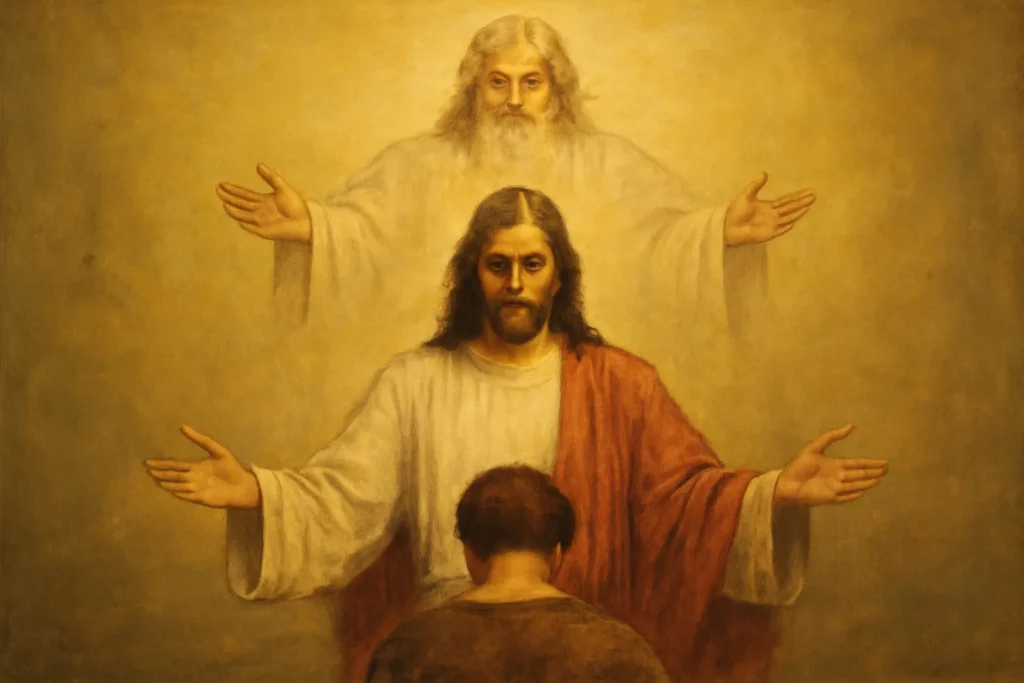
In Christian teaching, God’s holiness and human fallenness create a barrier that only a mediating figure can cross. The Mediator is not merely an intermediary who translates a message; he is the converging point of divine initiative and human response. Through the person and work of Christ, Christians understand a revelation that unites knowledge of God with an invitation to relationship, a reconciliation that restores peace between a holy Creator and rebellious creatures, and a salvation that opens access to God “with confidence.” In this sense, the Christ-centered mediation is not an incidental feature of Christian faith but its organizing principle. The figure of the Messiah as Mediator shapes how believers interpret prophecy, how they understand the meaning of the atonement, how they approach worship, and how they anticipate the renewal of all things.
Biblical Foundations: The Mediating Presence of Christ
Old Testament Foreshadowings of Mediation
Prophetic expectations concerning the one who would establish a new covenant and restore the broken relationship between God and humanity (e.g., passages that anticipate a righteous king and priest-king who embodies justice and mercy).
Typologies and shadows in the Levitical system, where mediators arise in the form of priests who offer sacrifices on behalf of the people, foreshadowing a greater Mediator who will accomplish the true atonement.
The concept of a go-between who reconciles estranged parties appears in wisdom and prophetic writings, laying groundwork for the idea that God’s relational aim includes restoring harmony with humanity through a chosen agent.
Although the Old Testament does not name Jesus as Mediator in the New Covenant sense, it prepares the reader for the advent of a mediatorial Messiah whose person and work will resolve humanity’s separation from God.
New Testament Fulfillment: Christ as the Mediator
1 Timothy 2:5 proclaims that “there is one God and one mediator between God and men, the man Christ Jesus.” This verse anchors the insistence that Jesus is the one and only mediator who brings God and humanity into a rightly ordered relationship.
In the Gospels, Jesus teaches as the self-revealing Son who embodies God’s presence with humanity, inaugurating the Kingdom and calling disciples to live in light of this new order.
Hebrews develops a dense mediatorial portrait: Christ as High Priest who intercedes before the Father and as the author of a better covenant, making mediation continuous and transformative rather than ceremonial and temporary.
Across these strands, the mediator’s work is presented as the hinge of salvation history: a unique, once-for-all accomplishment that applies to all who believe.
The Person of the Mediator: Christ’s Two Natures and the Ground of Mediation
One of the key doctrinal insights about the Mediator is the twofold nature of Christ: he is both fully God and fully human. This hypostatic union—the union of divine and human natures in the one person of Jesus—provides the ground for mediation that is truly effective for humans and truly meaningful in God’s own life. The divine nature preserves the authority and impeccable holiness necessary to bear the Father’s verdict and to accomplish redemption. The human nature makes the Mediator a true representative of humanity, able to stand in solidarity with sinners and to bear their burdens.
Divine authority: As the eternal Son, Jesus possesses the authority to enact salvation according to the Father’s purpose.
Human solidarity: In assuming human nature, the Mediator bears the human condition, including temptation, suffering, and mortality, thereby making redemption comprehensible and accessible to humans.
Intercessory sovereignty: The Mediator’s intercession is not a distant advocacy but a present and ongoing work, securing grace for believers at the Father’s right hand.
From this perspective, the moral and spiritual efficacy of Christ’s work depends on his two natures working in concert. Some traditions emphasize the kerygma of the cross (atonement through sacrificial death), while others emphasize the priestly intercession and the ongoing high-priestly ministry. In all, a coherent doctrine of Christ as Mediator connects the cross, the resurrection, the ascension, and the heavenly session in a single salvific act that continues to apply to the church through the Spirit.
The Mediator’s Work: Atonement, Reconciliation, and Renewal
Central to the teaching about the mediatorial work of Christ is the atonement, the act that reconciles humanity to God and removes the barrier created by sin. The Reconciliation effected by the Mediator is not merely a legal settlement but a transformation of relationship, heart, and community. The cross and resurrection are interpreted as the decisive acts in which God’s love and justice converge to bring about new life for creation.
Substitutionary atonement: Jesus bears the penalty deserved by sinners, satisfying divine justice and demonstrating God’s love.
Redemptive reconciliation: Through his death, Jesus reconciles God with humanity, enabling a restored relationship and new life in the Spirit.
Cosmic renewal: The Mediator’s work extends beyond individuals to the entire cosmos, a renewal that culminates in the final restoration of all things.
In this framework, the intercession of Christ—his ongoing advocacy before the Father—serves as the means by which believers are kept in grace and enabled to persevere in faith. The mediational work thus has both soteriological (salvation) and ecclesial (church life) dimensions: it secures personal salvation and sustains the covenant community through worship, prayer, and mission.
Roles and Expressions: Priest, Prophet, and King in the Mediated Ministry
Within biblical and theological language, the Mediator is often described with multiple roles that illuminate different aspects of his work:
Priest: The Mediator offers himself as a sacrifice and intercedes for believers, making a way into God’s presence. The priestly function in Christ’s work is central to Hebrews and to the broader understanding of salvation as a liturgical reality.
Prophet: Jesus communicates the will and character of God, reveals divine truth, and interprets the Father’s plan for humanity. This prophetic dimension grounds revelation, guidance, and discernment within the life of the church.
King: As King, Christ exercises sovereignty and leads his people; his rule inaugurates a new order that breaks the power of sin and creates a community oriented toward righteousness and peace.
Collectively, these roles provide a robust portrait of the mediating Christ who governs, reveals, and reconciles. When theologians speak of the multi-faceted mediatorial office, they are highlighting the fullness of Jesus’ work—cross, resurrection, ascension, and ongoing intercession—as it relates to salvation history and the life of faith.
Key Passages and Theological Constructs
Several biblical passages are foundational for understanding the Mediator’s work. A few are especially influential in shaping doctrine and devotion:
1 Timothy 2:5—“There is one God and one mediator between God and men, the man Christ Jesus.” This declaration anchors the unique mediatorship of Jesus within monotheistic faith and centers Christ as the exclusive avenue to fellowship with God.
Hebrews 7–10—A rich meditation on Jesus as High Priest who offers a superior sacrifice and mediates a better covenant, surpassing the Old Covenant’s typology and the Levitical priesthood.
Romans 5:10–11—Reconciliation and peace with God through Jesus Christ, highlighting the transformative impact of mediation on relationship and salvation.
John 14:6—“I am the way, and the truth, and the life; no one comes to the Father but through me.” This statement is often discussed in relation to the mediator’s exclusive access to God and the necessity of Christ for salvation and knowledge of God.
2 Corinthians 5:18–19—The ministry of reconciliation entrusted to believers, rooted in what Christ has accomplished as Mediator and enacted through the church’s mission.
These texts have led to a range of theological emphases, from penal substitutionary atonement to the more relational and covenantal understandings of reconciliation. In every case, the central idea remains that Jesus the Mediator is the divine-human bridge by which humanity receives grace and enters into communion with God.
Traditions and Divergences: How Different Traditions Conceptualize the Mediator
Across Christian traditions, there is broad agreement on the essential claim that Christ is the Mediator between God and humanity. Yet there are differences in emphasis regarding how his mediation is understood and applied within the life of the church.
Catholic View
The mediatorial work is deeply connected to the sacraments, which are seen as visible signs and instruments of grace through which Christ communicates saving grace to the faithful.
Mary’s role, in certain Catholic formulations, is described in terms of co-mediatorship (though this is a contested and nuanced topic). The Catholic tradition emphasizes the continuous mediation of Christ through the Church, the saints, and the sacraments.
The priesthood in Catholic theology reinforces Christ’s ongoing mediation in the world, especially through the Eucharist as the sacramental re-presentation of Christ’s once-for-all sacrifice.
Protestant Perspectives
Most Protestant traditions affirm solo Christo—Christ alone as the Mediator—yet they differ on how grace is conveyed (scripture, faith, and the Word’s internal work of the Spirit).
Many emphasize penal substitution or other atonement theories, while others highlight the righteousness of faith and the imputation of Christ’s righteousness to believers as part of the mediatorial work.
Worship and prayer are often seen as conducted through Christ’s mediation, with a strong emphasis on the personal and direct access to God through Jesus.
Eastern Orthodox Perspective
The Orthodox tradition highlights the perichoresis of divine and human life in Christ and the cosmic scope of mediation, including the renewal of creation and the church’s liturgical life.
Mediation is often understood in the context of the theosis—the process of divine-human union—where Christ’s mediatorial work enables humanity to become partakers of the divine nature.
The role of the Virgin Mary and the saints is treated with reverence but within a framework that does not grant them the same mediatorial status as Christ; Christ remains the sole Mediator in the strongest theological sense.
Practical Implications: How the Mediator Shapes Faith, Prayer, and Ethics
The doctrine of the mediation of Christ is not a purely speculative topic. It informs daily life, worship, and mission in several concrete ways:
Worship: Because Christ is the Mediator, prayer and praise flow through him to the Father. The church’s liturgy, hymnody, and sacraments are oriented toward approaching God in and through Jesus.
Prayer life: Believers address God with confidence, recognizing that Christ intercedes for them and stands as their advocate before the Father.
Confession and repentance: Understanding mediation underscores the seriousness of sin and the necessity of grace; believers turn not to themselves but to Christ for cleansing and renewal.
Ethics and mission: The mediator’s example—humility, obedience, love, and justice—shapes Christian ethics and drives the church’s outreach to the world as participants in Christ’s reconciliation mission.
Unity of the church: Christ the Mediator is the basis for unity among believers; his work creates a reconciled community that transcends human divisions.
The Mediation in Eschatology: The End of All Things
Christian eschatology frequently returns to the mediator’s work as the means by which God’s plan is fulfilled. The final consummation involves the reconciliation of all things to God through Christ, the defeat of sin and death, and the creation of a new heavens and a new earth where God dwells with humanity in uninterrupted fellowship. In this sense, the Mediator’s work is not exhausted by individual salvation but extends to cosmic renewal. Believers are invited to participate in this ongoing redemptive plan by growing in Christlikeness, bearing witness, and eagerly awaiting the new creation, where mediation takes on a new fullness as the faithful dwell with God forever.
Common Questions About the Mediator and How to Understand Them
To clarify common points of confusion, here are concise answers to a few frequently asked questions about the Mediator and Christ’s role in Christian theology:
Who is the mediator between God and humanity? The Mediator is Jesus of Nazareth, identified in the New Testament as the unique and sufficient bridge between God and people. The phrase “one mediator” emphasizes his exclusivity and effectiveness.
What does mediation accomplish? Mediation reconciles humanity to God, justified by grace through faith, and sustains the relationship through intercession and continued grace in the Spirit.
How does Christ’s two natures affect mediation? The divine nature ensures the sufficiency and glory of the work; the human nature ensures the relevance and identification with humanity. The union enables a genuinely effective mediation to both God and humans.
Is Christ still mediating today? Yes. The New Testament depicts Christ as interceding for believers, advocating before the Father, and continuing to bless the church through his priestly ministry in heaven.
Concluding Reflections: Why the Mediator Matters Now
In a world marked by brokenness, injustice, and violence, the doctrine of Mediator Christology offers a compelling answer to humanity’s deepest questions: How can a holy God dwell with imperfect humanity? How can humans be reconciled to their Creator? How does God’s love overcome the power of sin? The message of Jesus as Mediator affirms that God has not left humanity to reach up to him on its own; instead, God has drawn near in the person of the divine Word made flesh, who has lived among us, died for us, risen for us, and now intercedes for us. The mediatorial work of Christ thus becomes the lens through which Christians read Scripture, celebrate the gospel, and participate in God’s mission in the world.
As believers reflect on the life and work of the Mediator of the new covenant, they are invited to deepen their understanding and to grow in trust, worship, and service. Whether one emphasizes the cross, the priestly ministry, the intercession, or the hope of glory, the figure of Christ as Mediator remains the focal point of Christian confession and the wellspring of Christian hope. The Christ-centered mediation proclaims that God has drawn near to humanity not by abstract philosophy but by a person—Jesus Christ—who is both God and man, who lived, died, and rose again, and who now rules as the enthroned Lord who makes peace possible for all who believe.
In a world hungry for reconciliation, the claim that Christ the Mediator stands as the one reliable mediator between heaven and earth offers a coherent, hopeful, and transformative vision. It invites readers to study Scripture with fresh eyes, to worship with renewed gratitude, and to engage in mission with the confidence that the God who reconciled the world to himself in Christ continues to work through his church to bring creation to its intended, harmonious end.






Leave a Reply