Introduction: Why Bible Find-a-Word Puzzles Captivate Readers and Learners
Bible find-a-word puzzles—also known as Scripture word searches or biblical word search puzzles—offer a delightful way to engage with sacred texts. They combine focus, memory, and gentle problem‑solving to help learners of all ages become more familiar with biblical vocabulary, key figures, places, and themes. Whether you are a parent guiding a child through Bible study, a teacher designing Sunday school activities, or a puzzle enthusiast seeking a meaningful challenge, these grid-based activities provide a bridge between playfulness and spiritual study. In this article, we explore the best Bible find-a-word puzzles, variations you’ll encounter, practical solving tips, and ways to design your own puzzles that reinforce learning and faith.
What is a Bible Find-a-Word Puzzle?
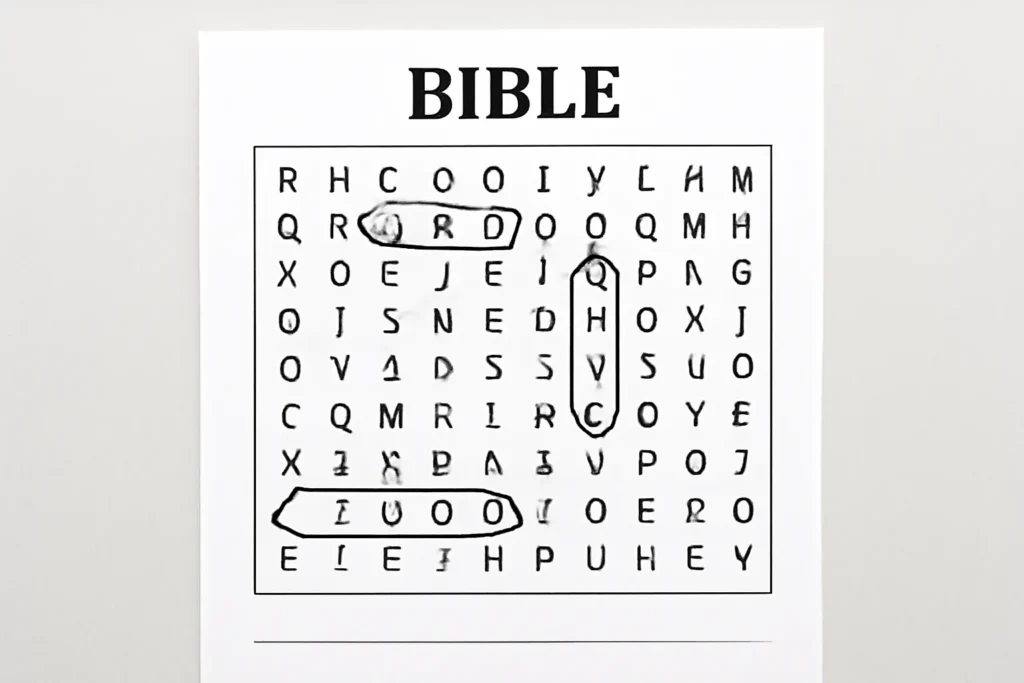
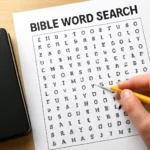
A bible find-a-word puzzle is a grid filled with letters where you search for hidden words. The words can be arranged horizontally, vertically, or diagonally, and sometimes even spelled backward. The list of hidden words typically reflects a theme—such as sacred names, biblical books, virtues, or events—providing a guided path through the material. In many versions, solving the puzzle reveals a hidden message once all the listed words are checked off. This combination of hidden words and optional reveal messages creates a satisfying sense of discovery.
The term find-a-word puzzle is widely used in puzzle communities, but when paired with a Bible context, it becomes a specialized form—one that emphasizes spiritual literacy as much as cognitive dexterity. A well-crafted Bible word search can reinforce classroom vocabulary, expose readers to less-familiar biblical terms, and encourage careful reading of the text. The best biblical word search collections balance challenge with accessibility, ensuring that beginners and advanced solvers alike can enjoy meaningful engagement.
Why These Puzzles Are Valuable: Educational and Spiritual Benefits
The appeal of word search puzzles with Biblical themes rests on a blend of educational outcomes and spiritual enrichment. Key benefits include:
Vocabulary building: Recalling biblical names, places, and terms expands vocabulary and helps with reading comprehension of Scripture passages.
Pattern recognition: Recognizing letter sequences in various directions strengthens cognitive processing and attention to detail.
Memory reinforcement: Seeing a concept repeatedly (e.g., “faith,” “grace,” “covenant”) helps memory retention and deeper reflection.
Contextual learning: The themed lists encourage learners to connect words with stories, characters, and events in the Bible.
Engagement and accessibility: Puzzle activities offer an approachable entry point for younger learners or readers who benefit from visual-spatial tasks.
Family and classroom bonding: Shared puzzle time supports discussion, collaborative problem solving, and faith-based conversations.
For teachers and parents, employing a Find-a-Words Bible-friendly approach can complement memorization of verses, introduction to biblical geography, and exploration of biblical virtues. The resulting educational value makes these puzzles a staple in curricula and devotional plans alike.
Variations of Bible Themed Find-a-Word Puzzles
To keep practice fresh and engaging, puzzle designers and educators offer a range of variations. Here are representative forms you’ll encounter in the realm of bible find-a-word puzzles:
The classic format features a square or rectangular grid with a list of bolded terms to locate. The terms may be drawn from a single book (e.g., Genesis) or from a broader biblical theme (e.g., parables, miracles). Some versions emphasize diagonal scanning and backward word placement to increase difficulty.
Themed Word Searches
Themed word searches organize words around a topic, such as the Ten Commandments, the Life of Jesus, the Psalms, or names of the Apostles. The thematic approach helps solvers build domain-specific knowledge while enjoying a puzzle-solving experience.
Hidden Message Word Searches
In these puzzles, the discovery of listed words also reveals a supplementary message or quotation. When the required words are circled, the remaining letters (read in order) form a Bible verse, a virtue, or a short devotional line. This variation adds a layer of literary design and reflective payoff.
Definition-Enhanced Word Searches
Some puzzles pair each hidden word with a brief definition or clue. Solvers use the clues to anticipate which terms will appear and then locate them on the grid. This style supports vocabulary-building and better comprehension of biblical terms.
Age-Targeted and Difficulty-Adjusted Puzzles
Puzzles are frequently categorized by target audiences—early readers, middle school students, high schoolers, and adults. Easy puzzles use shorter word lists and more straightforward layouts; advanced variants introduce longer grids, more diagonal orientations, and more obscure biblical terms.
Printable vs. Digital Experiences
Some puzzles are designed for print—with neat grids that fit standard paper sizes—while others are interactive online activities that enable highlighting, undo features, and immediate feedback. The best collections often offer both formats to maximize accessibility and use across different learning contexts.
How to Solve Bible Find-a-Word Puzzles: Quick Strategies
Solving a find-a-word puzzle with Bible themes blends methodical searching with contextual reasoning. Below are practical strategies that help you work efficiently and enjoy the process:
Preview the word list: Start by scanning the list of hidden words to become familiar with the letters you’ll be looking for and the likely themes.
Search in stages: First sweep the grid in broad directions (horizontal and vertical) to identify obvious matches, then tackle diagonals and backward words.
Look for word shapes: Some names or terms have distinctive letter patterns, such as double letters (e.g., “Abraham”) or common biblical suffixes (“-iah,” “-el”).
Use cross-checking: When you locate a word, the surrounding letters can reveal adjacent words. This cross-check method speeds up discovery and reduces backtracking.
Work with themes: If the theme is a biblical book (e.g., Psalms), anticipate that related terms (psalms titles, figures, and concepts) will appear, guiding your search.
Mark as you go: Use a pencil or digital highlight to mark found words. A clean method reduces confusion as the grid becomes crowded.
Don’t rush the finish: Especially with harder puzzles, taking your time to scan diagonals and backward placements yields better results than forcing a quick completion.
Utilize the hidden message: If the puzzle includes a final message, consider all letters you leave behind after crossing off the listed words—the message often reinforces the puzzle’s spiritual or thematic takeaway.
For younger solvers, starting with shorter word lists and larger grids can be less intimidating, while older solvers might enjoy the challenge of longer grids and obscure biblical terms. The key is to match difficulty with learning objectives and to keep the activity enjoyable.
Designing Your Own Bible Word Find Puzzle: A Practical Guide
If you’re a teacher, parent, or group leader, creating your own bible find-a-word puzzle can be a rewarding way to tailor content to your audience. Here is a practical, step‑by‑step guide to crafting a high-quality puzzle:
Choose a theme: Decide whether the puzzle will cover biblical figures, places, books, events, virtues, or a combination of these. For example, a "Life of Jesus" puzzle might include terms like Bethlehem, Miracle, Apostles, and Crucifixion.
Compile a word list: Create a curated list of 10–25 words that fit your theme. Ensure words vary in length to create a balanced grid.
Design the grid: Choose an appropriate grid size (e.g., 15x15 for intermediate puzzles, 10x10 for beginners). Place the words in the grid in random directions (horizontal, vertical, diagonal, forward and backward).
Fill the remaining spaces: Complete the grid with random letters. To avoid accidental overrepresentation, skim for accidental unintended words and adjust as needed.
Prepare the solution and clues: Create a separate answer key so you can verify solutions and provide a reference for solvers. Optional: add brief clues or definitions for each word.
Consider accessibility: Use large, clear typefaces for printable versions and ensure high contrast. For digital formats, provide keyboard-friendly navigation and screen-reader-friendly labels if possible.
Test and refine: Have a few people solve the puzzle to identify any ambiguities, overly difficult sections, or layout issues.
Tips for Effective Puzzle Design
Balance word lengths to avoid an overly crowded grid with too many long terms.
Include a mix of familiar and less common terms to maintain interest while ensuring solvability.
Provide theming cues in the puzzle’s introduction to orient solvers toward the intended focus.
Offer tiered versions with optional hints or a more challenging layout for experienced solvers.
Where to Find the Best Bible Word Find Puzzles
The landscape of best Bible word find puzzles includes printable resources, digital apps, and curated collections from religious education publishers. When searching for high-quality options, consider the following categories:
Printable activity packs: These bundles often include multiple puzzles, answer keys, and teacher notes. They’re ideal for Sunday school handouts and family devotionals.
Online puzzle libraries: Web portals host interactive word searches with adjustable difficulty levels, thematically organized lists, and optional hints.
Mobile apps: Puzzle apps frequently offer a library of Bible-themed word searches, progress tracking, and time challenges—great for on‑the‑go learning.
Educational publishers: Publishers with a faith-based focus tend to produce well-structured puzzles aligned with curriculum goals and biblical literacy standards.
Custom puzzle creators: Some platforms let you generate bespoke Bible word searches based on your chosen theme or scripture focus, which is excellent for custom study sessions.
In selecting a source, look for clarity of instructions, breadth of themes, accessibility options, and whether the platform offers answer keys or explanations. The best Bible word find puzzle collections typically combine engaging visuals with purposeful content and reasonable difficulty progression.
Accessibility and Inclusivity in Bible Word Searches
A thoughtful approach to scripture word search accessibility ensures that people with different reading levels, visual abilities, and learning styles can participate. Consider these considerations:
Clean typography with high contrast and larger font sizes for printouts.
Digital features such as adjustable font sizes, color themes, and screen-reader friendly labeling.
Alternative formats like audio versions or guided puzzles for auditory learners.
Clear instructions and a concise key or legend that explains how to identify directions and solve the puzzle.
Inclusive content: Include biblical names and terms from diverse biblical traditions and languages where appropriate, while avoiding overly obscure terms that may hinder understanding without context.
To illustrate how a Bible word find puzzle might be structured, here are a few sample word lists and thematic ideas. Use these as seeds for your own creation or as inspiration when you seek the best Bible find-a-word puzzles for a particular setting.
Life of Jesus theme: Jesus, Nazareth, Bethlehem, miracles, disciples, cross, resurrection, parables, faith, grace.
Places in the Bible theme: Jericho, Canaan, Galilee, Bethlehem, Jerusalem, Sinai, Nile, Jordan, Tarsus, Antioch.
If you’re building a puzzle with a hidden message, you might add a note like: after crossing off all the words, read the remaining letters to reveal a short devotional line. This creates a memorable conclusion to the solving experience.
Example Mini-Puzzle Concept (Word List Only)
Theme: “Promises in Scripture”
Words to locate: covenant, faith, grace, blessing, blessing, mercy, hope, keep, faithful, forever
Note: This short example is intended to demonstrate how a themed word list aligns with a devotional takeaway. In a complete puzzle, the grid would be built to accommodate these terms in varied directions, with the optional hidden message forming a concluding thought.
Educational Use Cases: Where These Puzzles Shine
Bible word find puzzles are versatile tools for educational settings and personal practice. They can be integrated into:
Sunday school curricula: As a supplemental activity that reinforces scripture memorization and thematic study.
Family devotions: A relaxed, cooperative activity that invites discussion about biblical stories and values.
Homeschool lessons: A creative exercise to accompany reading assignments and Bible geography lessons.
Church youth programs: A way to introduce new vocabulary and concepts in an engaging format.
Adult Bible study groups: A light warm-up exercise that prompts discussion and reflection.
When choosing a puzzle for these settings, consider the age-appropriateness, the thematic alignment, and whether the activity should be collaborative or individual. A well-chosen puzzle can set a positive tone for the session and support retention of key concepts.
Best Practices: Using Bible Word Searches in Classrooms and Homes
To maximize impact, adopt these best practices:
Align puzzles with learning goals: Ensure the word list supports a specific scripture passage, topic, or virtue you want solvers to explore.
Provide context: Before solvers begin, share a brief introduction to the theme and a few guiding questions to frame their exploration.
Offer guided reflection: After solving, invite participants to discuss what they learned or observed in the biblical terms they found.
Mix formats: Use a combination of printable puzzles and digital interactive puzzles to cater to different preferences and settings.
Assess and adapt: Collect feedback on difficulty and engagement to refine future puzzle selections.
Conclusion: Embracing a Rich, Playful Path to Biblical Literacy
Bible find-a-word puzzles offer more than a passing hobby. They’re a bridge between play and study, a means of enriching vocabulary, memory, and reading comprehension while deepening understanding of biblical narratives and spiritual themes. By exploring the many variants—from traditional word searches to hidden-message or clue-enhanced formats—you can tailor experiences to individual learners, classroom needs, and devotional goals. Whether you’re searching for the best Bible word find puzzles to bundle in a teaching kit, to include in a family devotional, or to enjoy as a personal challenge, the medium invites curiosity, reflection, and shared moments of discovery.




Leave a Reply