Christian Bible Puzzle: A Comprehensive Guide to Bible Riddles
Christian Bible Puzzle: A Comprehensive Guide to Bible Riddles
Christian Bible Puzzle: A Comprehensive Guide to Bible Riddles explores a vibrant niche that blends faith, language, and logic. This article serves as an in-depth resource for beginners and seasoned enthusiasts alike, offering practical guidance, historical context, and creative inspiration for engaging with sacred texts through puzzles and wordplay.
Puzzles based on the bible and related scriptures come in many shapes, sizes, and levels of complexity. The core idea is to illuminate spiritual themes, stories, and teachings by presenting them in a format that challenges the mind while honoring the sacred material. A biblical puzzle can be a riddle that points to a person or event, a word-search that hides key scriptural terms, a cryptic-style clue that encodes a verse reference, or a small game that invites discovery through interpretation. The goal is not to obscure faith but to deepen understanding, encourage study, and make learning about the Bible an active, engaging experience.
What is a Christian Bible puzzle?
At its core, a Christian Bible puzzle is a puzzle whose solution centers on biblical content—characters, places, miracles, teachings, or verses. These puzzles often emphasize biblical literacy, critical thinking, and reverence for scripture. In practice, you may encounter formats that include:
Bible riddles that describe a person, event, or object in metaphorical language.
Verse references and quotations hidden within a wordplay framework.
Crossword-style puzzles built from biblical terms, names, and themes.
Acrostics where the first letters of lines or stanzas reveal a scriptural clue.
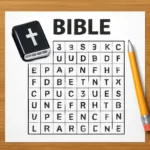
Word searches containing names, places, and terms from sacred writings.
Rebus and pictorial puzzles that combine images or symbols to evoke biblical concepts.
Cipher-based puzzles that encode verses or book names through simple substitution or pattern tricks.
Across these formats, a successful bible puzzle experience balances challenge with accessibility. It invites participation from a broad audience—children, students, families, teachers, and lifelong learners—while maintaining respect for the sacred text. The best puzzles spark curiosity, encourage exploration of context, and support a deeper appreciation of the stories and teachings that form the spine of Christian faith.
Common formats and how they work
Many puzzle designers use a mix of formats to reach different learning styles. Below is a survey of widely used bible puzzle formats and what makes each one effective.
Word-based formats
Wordplay is a natural fit for biblical material. These puzzles lean on vocabulary, word origins, and textual associations.
Riddles that describe a person, place, or event through clues. Example: “I led a nation through a desert, not by sword but by faith; my name echoes a gratitude song.” Answer: Moses.
Acrostics use acrostic clues—often the initial letters of lines or verses—to spell out a biblical term or name.
Word searches hide biblical terms, book names, or key phrases within a grid. The challenge is to find them in all directions, sometimes with a theme across the grid.
Structured reference formats
These formats lean into the canonical structure of the Bible, including chapters and verses.
Verse-lookup puzzles require identifying the correct verse from a clue. Clues may reference imagery, context, or citations.
Verse-completion puzzles present a partial verse or paraphrase and ask for the missing words or the exact quotation.
Book-name ciphers encode a chapter-verse pair—e.g., “The city of its birth, the third letter of its name, and the number of commandments” points to a specific scripture passage.
These resemble traditional word games but center biblical terms, personages, and events.
Bible-themed crosswords with clues anchored in scripture or religious history.
Cryptic crosswords that employ wordplay tactics such as anagrams and charades to hide scriptural answers.
Rebus and pictorial formats
Visual puzzles evoke biblical ideas through symbols, images, and simple icons.
Rebus puzzles combine pictures and symbols to represent a biblical name or concept (for example, a lamb + a cross to hint at the “Lamb of God”).
Iconic puzzles use familiar scenes—like an ark, a staff, or a boat—to prompt recognition and explanation.
Cipher and code-based formats
The encryption approach adds an extra layer of challenge and can teach cryptographic basics while maintaining scripture focus.
Substitution ciphers where letters are replaced according to a fixed key, revealing a verse or a book name when solved.
Initial-letter ciphers that use the first letters of a set of verses to spell a hidden message.
Design principles for a Christian Bible puzzle
Whether you are designing puzzles for classrooms, family nights, or online communities, certain principles help ensure the puzzles are engaging, respectful, and educational.
Clarity and fairness: Clues should be precise and interpretable, with enough context to enable thoughtful deduction without being unfair.
Accuracy: All biblical references, names, places, and events should be correct and properly contextualized to avoid misinterpretation.
Age-appropriate difficulty: Tailor the challenge to the audience, offering hints or multiple levels of complicity if needed.
Respect for scripture: Use language that honors the sacred text and avoids frivolous or inappropriate misrepresentation.
Educational value: Each puzzle should foster learning—whether through vocabulary, historical context, or theological insight.
Accessibility: Consider font size, color contrast, and clear formatting so that puzzles are accessible to diverse readers, including those with visual or learning differences.
Story-led coherence: When puzzles reference stories, ensure the narrative arc remains coherent and reinforces key messages rather than confusing readers with an arbitrary set of facts.
How to create a Christian Bible puzzle: practical steps
Creating a high-quality bible puzzle involves planning, research, and iteration. Here is a practical workflow for designers, educators, and hobbyists.
Choose a theme or objective: Pick a biblical book, character, event, or doctrinal concept to center the puzzle around.
Decide on a format: Select a format that suits the audience—riddles for family nights, crosswords for classrooms, or cipher puzzles for advanced learners.
Draft clues and decor: Write clues that are accurate, informative, and engaging. Include a few trap clues to encourage careful thinking, but avoid misleading information.
Build a solution key: Prepare a detailed answer key with explanations that connect clues to the correct biblical references or interpretations.
Incorporate context notes: Provide optional notes that offer historical, linguistic, or theological context to deepen understanding.
Test with a sample audience: Have others solve the puzzle and collect feedback on clarity, difficulty, and educational value.
Refine and publish: Use the feedback to refine wording, adjust difficulty, and ensure readability before sharing broadly.
Tips for designing engaging Christian puzzles
Blend scriptural literacy with general knowledge to broaden appeal.
Use story-driven clues that invite readers to revisit familiar passages in a new light.
Include a glossary or footnotes for less common terms (e.g., Hebrew or Greek names, geographic locations).
Offer a difficulty ramp by providing multiple levels or optional hints.
Solving strategies for Bible puzzles
For readers who are new to Bible puzzles or who want to improve their skills, here are practical strategies that help uncover the meaning behind clues.
Context first: Identify the book, era, and audience before diving into specifics. Context often unlocks the intended meaning.
Keyword focus: Highlight recurring terms (e.g., covenant, promise, exile) that may signal theme connections.
Cross-reference: Use other scriptures to confirm or illuminate clues—many puzzles rely on intertextual knowledge.
Narrative arc: Look for clues that align with a biblical narrative arc (creation, fall, redemption, restoration).
Symbol and imagery: Be attentive to symbolic language—the lamb, the rock, the tree of life often carry layered meanings.
Wordplay techniques: Recognize common devices such as anagrams, homophones, and acrostics that appear in puzzle clues.
Check the answer against the clue: Ensure the solution satisfies all wordplay constraints and aligns with the intended theme.
Educational value and spiritual dimensions
Bible puzzles offer more than entertainment. They can be powerful teaching tools that promote critical thinking, reinforce biblical literacy, and foster spiritual reflection. Here are several ways puzzles contribute to learning and faith formation:
Active engagement: Puzzles require you to actively search, hypothesize, and verify, which deepens processing of material.
Retention through patterning: Recurrent themes and motifs captured in clues help memory retention of key events and persons.
Contextual understanding: Solving puzzles encourages learners to connect verses with historical and cultural backgrounds.
Discussion and community: Puzzle groups spark conversation about interpretation and faith, building communal learning experiences.
Accessible spirituality: Puzzles can be used in diverse settings—schools, churches, youth camps, and online forums—supporting inclusive exploration of scripture.
Sample Bible puzzles: mini-examples and solutions
To illustrate the variety of bible puzzle formats, here are a few concise examples along with explanations. These are designed to be approachable for newcomers while still offering a moment of reflection.
Riddle me this: a classic biblical figure
Riddle: I faced a giant with simple tools, and a brave heart made me brave. My name means “saved by God,” and I trusted the One who called me. Who am I?
Answer: David. Explanation: The clue points to a shepherd boy who defeated Goliath with a sling, and the name David is associated with the idea of being “beloved” or “saved” by God in biblical tradition.
Verse-lookup puzzle
Clue: The small four-letter word that begins with “J” and signifies belief in divine healing appears at the end of a famous miracle on the lake. What verse contains this word? (Hint: It comes from the Gospel of Mark.)
Answer: Mark 5:34 includes Jesus saying, “Your faith has made you well.”
Acrostic puzzle challenge
Clue: Take the first letters of these phrases from a well-known psalm to form the name of a biblical figure: "Praise, Endurance, Light, Deliverance, Hope." What name do you get?
Answer: P.E.L.D.H. does not form a common name, but if you map to the verses and themes properly, you might instead reveal a title or reference such as “King David” or “Jesus” depending on how the acrostic is structured; the lesson is to verify with the surrounding text.
Clue: A lamb icon + the letter “L” + a circle with a cross inside. This evokes a foundational Christian image and could point toward a New Testament concept.
Answer: The “Lamb of God” (Jesus) and the emblem of crucifixion emphasize salvation through sacrifice. This kind of puzzle invites discussion about symbolism and Christology.
Digital tools and collaborative approaches
With technology, Bible puzzle enthusiasts have access to online communities, interactive apps, and printable resources that expand how puzzles are created and shared. A few practical avenues include:
When engaging with Christian Bible puzzles, it is important to maintain a posture of reverence and accuracy. Puzzles should never distort or trivialize the sacred text. Consider these guidelines:
Respect for scripture: Do not manipulate verses or characters to fit a clever twist if it distorts the original meaning.
Theological sensitivity: Be mindful of doctrinal diversity within Christianity and avoid presenting a single interpretation as the only valid one.
Age-appropriate content: Adapt themes and language to the developmental stage of the audience, especially for children and adolescents.
Inclusivity: Design puzzles that welcome diverse readers regardless of their background in church tradition or biblical literacy.
Historical roots and modern adaptations
Throughout history, puzzles and games have appeared in religious education as a way to engage communities with sacred narratives. The approach to Bible-based puzzles has evolved from simple catechetical exercises to sophisticated digital formats. Modern practitioners borrow techniques from classical cryptography, word games, and storytelling. The enduring appeal lies in turning learning into an active, reflective practice that strengthens memory, comprehension, and spiritual curiosity.
Curriculum integration: using Bible puzzles in formal settings
Educators and ministers can integrate bible puzzle activities into lesson plans, retreats, and courses. Here are some practical strategies for integration:
Begin with a brief teaching segment that introduces the puzzles’ theme and the scriptural context.
Provide a range of puzzle types to accommodate different learning styles and ensure inclusive participation.
Pair puzzles with guided reflection questions that connect the solution to broader biblical truths.
Use puzzles as assessment prompts to gauge comprehension rather than as mere entertainment.
Encourage collaborative work in small groups to foster discussion and shared discovery.
Variations of the phrase: semantic breadth in the guide
To broaden the semantic reach, this guide uses variations and synonyms for the central topic. Readers will encounter terms such as biblical puzzle, Scripture riddle, bible-based word game, Christian puzzle activity, and holy writ puzzle. Each variation highlights a facet of puzzle design or audience experience while keeping the core aim intact: unite faith, knowledge, and playful inquiry. This approach helps searchability for readers who might search with different keywords and reinforces the idea that the field is diverse and inclusive.
Whether you are creating or solving, several resources can deepen your practice in bible puzzles and biblical riddles:
Educational websites that host biblical crosswords and themed word searches tailored to Sunday school curricula.
Academic references on biblical literacy and the pedagogy of game-based learning.
Community forums and social groups where puzzle creators share templates, hints, and feedback.
Printable puzzle packs designed for family devotionals and church gatherings, often accompanied by teacher guides.
A note on accessibility and inclusivity
When designing and sharing bible puzzles, accessibility should be a baseline consideration. Puzzles should be readable by people with a range of abilities, including those with visual impairments or cognitive differences. Consider offering:
Alternative text descriptions for images in rebus puzzles.
Multiple reading levels, with optional hints or glossary entries for difficult terms.
Clear layouts, high-contrast color schemes, and large typography for readability.
Conclusion: embracing a comprehensive approach to Bible riddles
A Christian Bible puzzle or, more broadly, a bible riddle program can be a compelling path to deeper engagement with sacred scripture. By combining careful design, thoughtful pedagogy, and respectful exploration of theological themes, puzzle authors and solvers alike can experience learning as a dynamic, communal, and meaningful practice. This guide to Bible mysteries has highlighted formats, design principles, solving strategies, and practical pedagogical ideas to help you embark on or refine your journey with biblical wordplay. Whether you are building puzzles for a classroom, a family night, or a vibrant online community, the essential aim remains constant: to illuminate the riches of the Scriptures through thoughtful, creative, and faithful engagement.
End of guide: Christian Bible Puzzle, Bible riddles, and scriptural wordplay crafted for curiosity, clarity, and faith.





Leave a Reply