Overview of Christian Dress Wedding: Modest Gowns and Religious Attire Ideas
A Christian dress wedding centers on faith, community, and symbolism as much as on style. For many couples, the choice of attire is a conscious expression of the sacredness of the ceremony, a witness to modesty, and a reflection of tradition. This article surveys modest gowns, religious attire ideas, and practical considerations that help couples dress with reverence while staying stylish and comfortable. Whether you are planning a church wedding, a chapel ceremony, or a sanctuary ceremony in a faith tradition, you can find guidance here for Christian wedding attire that honors your beliefs and fits your personal taste.
Why Modesty Matters in a Christian Dress Wedding
In many Christian communities, attire for the wedding is not merely about fashion. It is a form of respect for the sacred space, a sign of humility, and a way to keep the focus on the vows being exchanged. The concept of modesty in Christian dress does not prescribe a single look; it invites couples to consider how neckline, sleeve length, silhouette, and layering communicate intention. This section explains core ideas so you can articulate your own standards with clarity and love.
Key Terminology for a Christian Dress Wedding
Before diving into styles, it helps to know the language used in this conversation. Some terms you may encounter include:
Modest gown — a dress that covers shoulders, has an appropriate neckline, and a hemline that is not overly short.
Neckline — the shape at the top of the dress; in Christian wedding attire, subdued necklines are common.
Sleeves — from cap sleeves to elbow-length or long sleeves; many traditions favor sleeves or layered coverage.
Overskirt or cape — a removable layer or drape that adds modesty and drama for the ceremony.
Mantilla — a lace head covering used in some Catholic and traditional settings.
Veil — a classic bridal accessory that can be paired with a cap or head covering in certain communities.
Color palette — while white remains traditional, ivory, champagne, and pale pastels are common alternatives.
Modest Gowns: Design Elements and Ideas
When curating a modest gown for a Christian wedding, consider how design elements work together to convey reverence and beauty. Here are the core components to explore.
Neckline Options That Honor Modesty
The neckline sets the tone for the entire look. Options that align with a modest aesthetic include:
Scoop or boat necklines that skim the collarbone without plunging.
Sweetheart with illusion panels that provide coverage while maintaining a feminine silhouette.
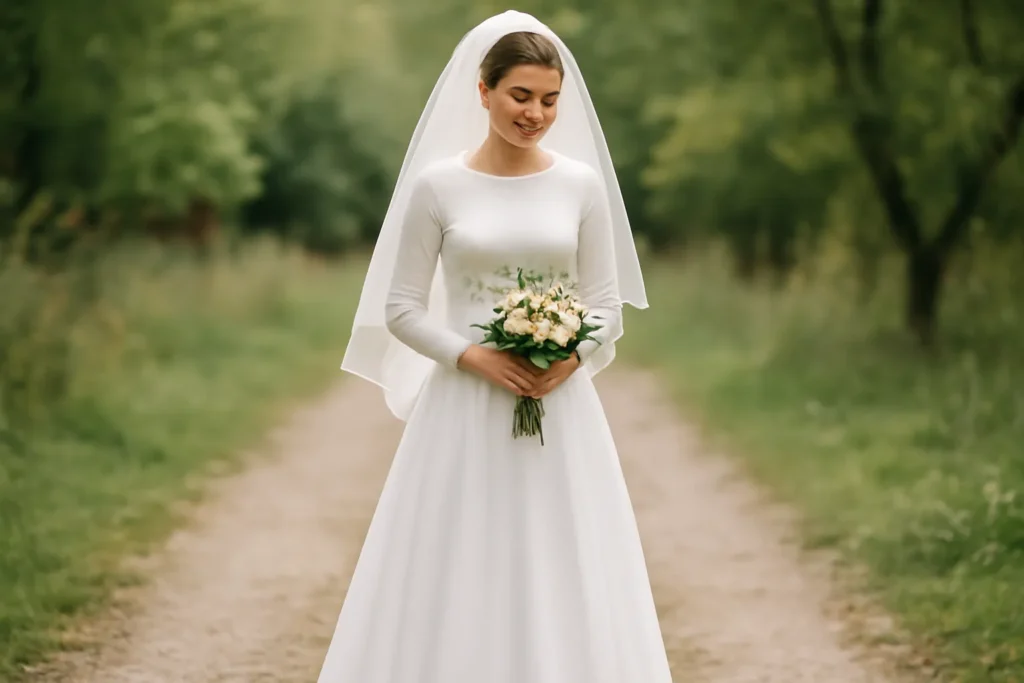
High necklines, including mandarin or jewel style, which are often favored in traditional church settings.
Covered back silhouettes with lace inserts or sheer panels that maintain modesty.
Sleeve Styles for Coverage and Comfort
Sleeve choices can dramatically affect comfort and look. Consider:
Long sleeves or three-quarter sleeves for timeless elegance.
Sheer sleeves with opaque lining for a delicate effect with modesty.
Cap sleeves or short sleeves paired with a higher neckline for a balanced silhouette.
Detachable sleeves or overlays that can be removed for the reception while preserving a reverent ceremony look.
Length, Trains, and Coverage
The length of the gown and the presence of a train can influence formality and practicality. Consider:
Floor-length gowns for classic church weddings, especially those held in traditional spaces.
A-line or empire waist fits that skim without clinging, often more comfortable for long ceremonies.
Minimal trains or detachable trains for easy movement on the way to photos.
Layered skirts with an underlayer that provides fullness while the top layer remains modest.
Fabric and Texture Considerations
The texture of the fabric can influence both modesty and atmosphere. Some thoughtful choices include:
Matte fabrics like satin-back, crepe, mikado, or duchess satin reduce glare and create a refined look.
Lace overlays add delicacy while maintaining coverage when layered over a lining.
Velvet accents or heavier fabrics for an autumn or winter ceremony in a church setting.
Double-layered skirts or lining to ensure opacity and comfort during movement.
Color Palette: Traditional White vs. Ivory and Beyond
While the classic white dress remains iconic, many Christian couples embrace a broader palette. Consider:
Ivory or champagne for a timeless warmth that still reads bridal on camera.
Pale blush or soft ivory as a modern alternative that remains ceremonially appropriate.
White with subtle embroidery or appliqué in metallic tones for a ceremonial glow.
Non-white accents such as a white dress with a modest colored sash or underlay—useful if the church tradition permits it.
Religious Attire Ideas for a Christian Ceremony
Beyond the gown, many couples explore religious attire ideas that honor their faith tradition while expressing personal style. This section highlights options that respect church expectations and offer visual richness for the wedding day.
Head Coverings and Veils: Traditional and Contemporary Approaches
Across Christian communities, head coverings can carry symbolic weight. Consider:
Mantilla or lace cap for Catholic and traditional settings, paired with a modest veil or none at all.
Veil with a chapel-length or fingertip style to echo classic bridal aesthetics while remaining comfortable.
Modern headpieces that mimic the look of a veil but stay within church etiquette.
Occasional symbolic alternatives such as a decorative tiara or jewelry that emphasizes modesty rather than opulence.
Scarves, Shawls, and Capes for Modesty
If you want additional coverage without altering the dress, consider outer layers that complement the gown:
Delicate lace shawls or boleros that cover shoulders during the ceremony.
Capes or capelets that create a regal silhouette and can be removed after the ceremony.
Stoles in coordinating colors for a cohesive look with bridesmaids.
Accessories That Align with Worship Traditions
Thoughtful accessories can amplify the spiritual atmosphere:
Cross jewelry, angel motifs, or scripture-inspired charms that reflect faith commitments.
Simple earrings and a refined necklace to avoid overpowering the gown.
Floral accents that echo the church’s color scheme and seasonal blooms.
Denominational Variations in Attire
Different Christian traditions interpret modesty, decorum, and symbolism in distinct ways. The following subsections offer a high-level guide to common expectations and how to navigate them with respect and creativity.
Catholic Ceremonies: Tradition and Elegance
In many Catholic settings, the ceremony is sacred and formal, guiding choices about attire. Key considerations include:
Gowns with fully covered shoulders and modest necklines are typically encouraged for the ceremony.
Veils and mantillas can be part of heritage, but many couples opt for a veil with a covered head during the sacrament.
Plain, tasteful accessories with minimal embellishment help keep the focus on the rites.
Orthodox Traditions: Reverence and Rich Symbolism
Orthodox weddings often emphasize ritual depth and modest attire. Consider:
Dress codes that favor long sleeves and high necklines for the ceremony.
Head coverings may be encouraged for some participants, while brides may choose a veil that aligns with tradition.
Robed or coordinated outer layers that complement the liturgical setting and preserve the solemn mood.
Protestant and Non-Denominational Traditions: Flexibility and Faith-Driven Choices
In many Protestant and non-denominational contexts, there is more room for personal expression while maintaining reverence. Practical guidance includes:
Gowns with modest silhouettes and respectful necklines suitable for the church environment.
Plain or subtly embellished accessories to keep the ceremony the focal point.
Options for color variation may be broader, while still honoring the sacred space.
Other Christian Communities: Culture, Liturgy, and Attire
Some faith communities blend traditional dress with local cultural elements. When planning, consider:
Respect for ecclesial etiquette and any dress codes posted by the church.
Incorporating color symbolism or design motifs that reflect faith heritage.
Engaging with clergy or wedding coordinators to ensure attire aligns with liturgical rhythm.
Practical Tips for Finding the Right Dress and Attire
The process of selecting a dress and complementary attire can be rewarding when approached with intention. Here are practical steps to help you move from inspiration to a finished look.
Budgeting and Planning Early
Establishing a realistic budget can prevent stress and unplanned alterations. Consider:
Budget categories such as dress, undergarments, alterations, veil or headpiece, jewelry, and accessories.
Allocating a buffer for alterations and possible customizations.
Exploring rental options or secondhand purchases for ethical and economical choices.
Shopping Strategy: Where to Look
Finding the right dress for a Christian wedding often comes down to sourcing options that align with modesty and faith preferences:
that specialize in modest or religious wedding gowns.
aligning with values beyond aesthetics.
with clear return policies, size guidelines, and modest options.
offering timeless silhouettes with character and reduced environmental impact.
Alterations: The Path to a Perfect Fit
No matter the source, alterations optimize modesty, comfort, and movement. Tips include:
Take accurate measurements and schedule fittings well in advance.
Ask for a nicer lining for opacity in certain fabrics.
Request modesty adjustments such as higher necklines or extended sleeve length.
Bridesmaids, Mothers, and Guests: Coordinated Attire with Respect
Attire for attendants and family should harmonize with the bride’s dress while maintaining modesty:
To illustrate how these principles translate to real weddings, here are several representative scenarios that blend modesty, faith, and personal style.
Catholic chapel wedding with a floor-length gown, long sleeves, and a detachable Capelet that is removed after the ceremony.
Non-denominational church wedding featuring an ivory A-line dress with a modest jewel neckline and a chapel-length veil for ceremony, followed by a simple reception ensemble.
Orthodox-inspired ceremony using understated embroidery, a high-neck gown, and a matching head covering that honors local custom while remaining comfortable.
Green wedding with a sustainable gown sourced secondhand, modest styling, and a coordinating bridesmaid palette in muted tones.
Checklist for Your Christian Dress Wedding Planning
Use this practical checklist to stay organized as you plan a Christian wedding attire that embodies modesty and faith.
Define the modesty standard you want to uphold for the ceremony and reception.
Consult with the pastor, priest, or church leadership about any dress code expectations.
Choose a gown or outfit with layering options for flexibility across seasons and ceremonies.
Prepare a budget and timeline for shopping, alterations, and fittings.
Arrange accessory coordination (veils, head coverings, jewelry) that aligns with your vision.
Consider sustainability and ethical sourcing when possible and appropriate for your values.
Conclusion: Celebrating Faith Through Attire
A Christian dress wedding is a celebration that blends spiritual intention with personal expression. By prioritizing modesty, honoring denominational norms, and choosing attire that reflects your faith journey, you can create a ceremony that feels sacred and deeply personal. Whether you opt for a traditional gown with sleeves that reach the elbow and a modest neckline, a cape or bolero for ceremonial modesty, or a contemporary dress that preserves dignity in movement, the most important element remains clear: the vows you exchange and the blessing you invite into your life together. This article has offered a broad spectrum of Christian wedding attire ideas, from classic to contemporary, to help your planning be thoughtful, intentional, and full of grace.
If you would like, I can tailor this guide to a specific denomination, season, or cultural context to better match your wedding plans. Share details like church expectations, location (indoor vs. outdoor), and the tone you wish to set, and I can provide a customized wardrobe roadmap.








Leave a Reply