Christian Head Coverings: History, Meaning, and Modern Practice
Christian Head Coverings: History, Meaning, and Modern Practice
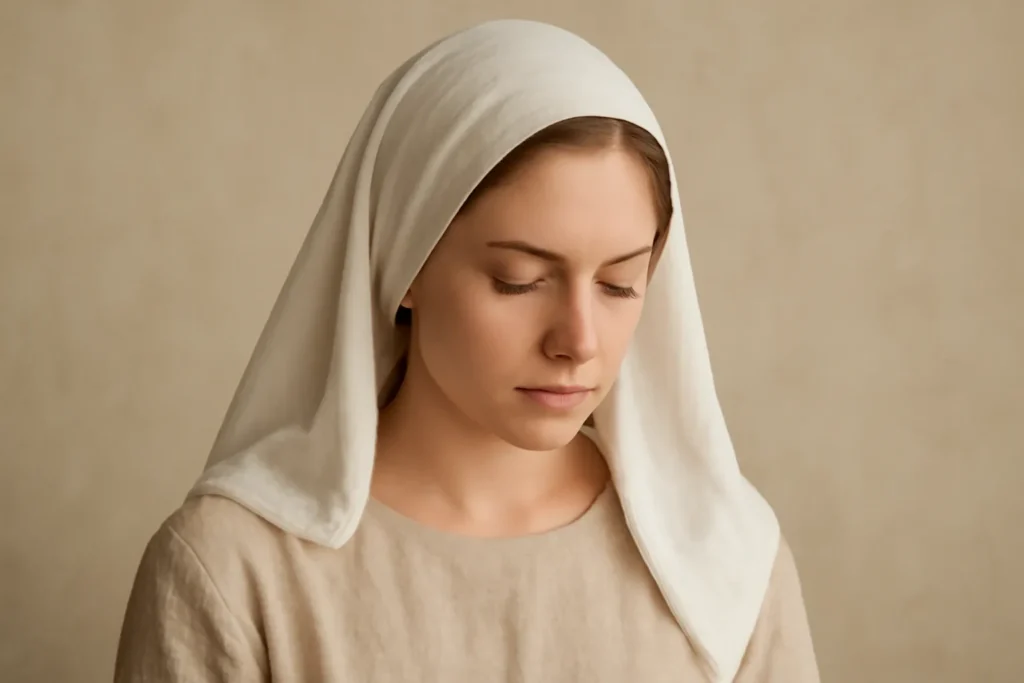
Christian head coverings have appeared in many forms across history, cultures, and church traditions. From the brief verse tucked into the Epistles to the elaborate lace mantillas worn in cathedrals, the topic intersects questions of scripture, modesty, gender roles, and worship practice. This article surveys the history, the meaning, and the modern practice of head coverings within Christianity, with attention to the diversity of terms and styles used in different communities. It aims to present an informative overview that helps readers understand why some Christian groups have emphasized head coverings at various times, and why others have moved toward different expressions of reverence and propriety.
Historical Foundations: From the Early Church to the Middle Ages
The question of whether women should wear a head covering during prayer and worship becomes prominent in the New Testament and in the patristic and medieval centuries. The most cited passage is 1 Corinthians 11:2–16, where the Apostle Paul discusses the practice of women covering their heads while praying or prophesying. Interpretations of this passage have varied widely over time and across denominations, yet it is generally acknowledged as a central biblical touchstone for later practice.
In the ancient Mediterranean world, head coverings were common for women as a sign of modesty, propriety, and social distinction. Early Christians, who lived within or beside Greco-Roman norms, borrowed and adapted those cultural cues. Some interpreters view Paul’s argument as addressing a specific social situation in public worship, while others see it as a universal command about gendered signs of authority and creation order. Either way, the symbolism of covering the head came to be linked with concepts like modesty, humility, and the order of creation.
During the patristic era, some church fathers referenced head coverings as an expression of propriety in worship. Though not every Christian community enforced a uniform rule, many early Christian worshippers observed the practice in varying degrees. The exact style and extent of coverage differed—ranging from subtle veils to more visible coverings—yet the underlying logic often linked the practice to reverence in the presence of God and to the public acknowledgment of gendered roles before God.
Moving into the medieval period, the practice of veiling became more standardized in many Christian communities, especially in Western Europe. For married women, a veil or wimple served as a visible sign of marital status and modesty, while nuns wore distinctive veils and wimples as markers of their vows. The vocabulary of coverings—wimple, veil, mantilla, and chapel veil—began to populate church and lay vocabulary. In convents and monasteries, female religious life often included explicit rules about veiling as part of consecration and devotion.
It is important to recognize that practices varied widely by region and by church order. In some locales, the wedding veil and other ceremonial veils took on additional ceremonial functions; in others, secular fashion and modesty norms influenced what Christians wore in worship. Across these centuries, the central threads remained: a sense that the head is not merely a worldly covering but a meaningful symbol in worship, corresponding to gendered expectations and a sense of order before God.
Regional variation: veils, hoods, and headscarves appeared with different textures, fabrics, and coverings depending on climate, culture, and church tradition.
Liturgical vs. everyday wear: some communities reserved veiling for church and special rites, while others extended the practice to daily prayer or worship meetings.
Symbolic meanings: beyond modesty, coverings represented grace, authority, and participation in the gathered body of Christ.
Varieties of Head Coverings in Christian Traditions
Across centuries, Christian communities adopted a wide array of terms and styles for head coverings. The vocabulary itself reveals both continuity and difference in practice:
Veil (general term): a fabric draped over the head and sometimes the face or neck; used in many denominations for worship or ceremony.
Mantilla (Spanish and Latin American Catholic contexts): a delicate lace or fabric veil worn over the head, often in liturgical or formal settings.
Chapelle veil or chapel veil (Catholic and Anglican usage): a smaller veil worn by women when attending Mass or in certain chapels.
Wimple (medieval and monastic contexts): a cloth that covers the neck, chin, and sometimes ears, worn by nuns and sometimes by laywomen in certain periods.
Headscarf or shawl (diverse Protestant and Catholic contexts): a practical and modest covering used in worship, prayer, or daily life.
Bonnet (Eastern and Western Christian communities): a fabric cap worn by women in church or in daily life during certain historical periods.
Kapp or similar regional terms (Mennonite and Anabaptist communities): a traditional head covering, often a bonnet or lace cap, worn as part of modest dress and church discipline.
Scarves and head coverings for prayer: modern adaptations in many denominations emphasize personal choice and modesty, sometimes including a simple scarf or fabric wrap.
In addition to these names, many communities describe their practice in terms of function rather than form: as a worship sign, a discipleship marker, or a household custom that signals devotion and order within the gathered body. Some groups distinguish between public worship (where covering might be customary) and private prayer (where coverings are less common). The result is a spectrum rather than a single uniform rule.
It is also worth noting that the decision to wear or not wear a head covering in modern times is often shaped by local culture, church polity, and personal conscience. Some communities preserve a strict practice; others encourage personal choice, while still others discourage the practice as culturally outdated. The diversity of practice reflects a long history of interpretation and adaptation rather than a single, unchanging mandate.
Meaning: Theological Interpretations and Symbolic Value
The theology of head coverings in Christianity is complex and multifaceted. Across traditions, several themes recur:
Sign of creation order: some interpreters tie the practice to scriptural statements about male and female roles in creation (as cited in Paul’s discussion in 1 Corinthians 11). For these readers, the head covering becomes a visible reminder of divine governance and order in worship.
Sign of modesty: many communities emphasize modesty as a virtue that protects integrity and prevents distraction in worship. The covering becomes a practical expression of inner disposition—humility before God and respect for the sacred space.
Authority and submission: in some strands of Christian thought, the practice is linked to relationships of authority within the church and family life. The head covering serves as a public symbol of alignment with God-given roles.
Participation in the gathered church: veiling or covering can mark belonging to the community of believers, noting the distinction between public worship and private life, and signaling reverence in the presence of God.
Yet the interpretation is not monolithic. Some readers argue that Paul’s instruction was culturally conditioned and tied to a specific context. In this view, the practice should not be demanded in all times or places, particularly in cultures where head coverings are not normative. Other readers insist that the underlying principle—showing respect, keeping focus on God, and honoring ordered worship—remains relevant, even if the outward form has changed.
The moral and spiritual aims associated with head coverings can be summarized as follows:
Respect for God in worship and prayer.
Respect for the liturgical setting and the presence of the divine in communal worship.
Symbolic unity with a tradition that has valued reverence and order across generations.
Gendered symbolism that has been debated, reinterpreted, and re-emphasized in differing ways across denominations.
Contemporary theologians continue to wrestle with these questions. For some, the discussion foregrounds cultural hermeneutics—the way meaning is shaped by historical context—and for others it foregrounds a more universal ethical principle: dignity in worship and respect for God, practiced in ways that are intelligible within a given community.
Modern Practice Across Christian Traditions
In the Catholic Church, the tradition of veiling has a storied history, especially in the context of liturgy and Marian devotion. While the Second Vatican Council and subsequent guidance did not make veiling mandatory for all women at all liturgical moments, many Catholics still practice wearing a mantilla or chapel veil in certain settings or when attending more formal liturgical rites. Outside of liturgy, many lay Catholics adopt a head covering as a personal devotional practice, or in adherence to family or cultural preferences.
In the Eastern Orthodox Church, women commonly cover their heads in church with a scarf or veil, particularly in traditional parishes. The practice is widely observed as a sign of reverence and modesty in sacred space. While the exact style and prevalence may vary by jurisdiction and culture, the concept of head coverings in worship remains part of the piety of many Orthodox communities today.
Among Anglican and some Lutheran churches, the historical practice of women wearing chapel veils or mantillas for Holy Communion and weddings has waned in many places, especially in North America and Western Europe. However, there are pockets of Anglican and Episcopal communities that maintain a modest practice of veiling, particularly in traditional liturgies or in churches with a strong sense of ceremonial continuity.
In Protestant families, head coverings have tended to be less universal and more diverse. Some Evangelical and Pentecostal groups encourage a form of daily modest dress that may include a scarf or headcovering during worship or prayer. Other Protestant communities emphasize the equality of men and women in Christ and therefore view external coverings as optional, cultural, or personal rather than doctrinal requirements.
The Anabaptist families—such as the Mennonites and Amish—often uphold distinctive head coverings as a symbol of congregational belonging and scriptural obedience. Women in these communities commonly wear bonnets, prayer caps, or kapp-like coverings while in church or during communal activities. Men’s attire may be less conspicuous in this regard, though dress codes are equally part of the broader ethic of modesty and separation within the community.
In modern, non-denominational settings, head coverings are frequently adopted for reasons of personal conviction, fashion, or cultural respect, particularly in churches with diverse congregations or in culturally sensitive contexts. Some Christians view head coverings as a personal choice that expresses humility before God; others prefer not to emphasize outward signs and focus on inner devotion, prayer, and care for neighbors.
Beyond congregational life, head coverings appear in Christian weddings, funerals, and devotional practices. The wedding veil, for instance, has a distinct symbolic meaning tied to promise, new roles in marriage, and the public celebration of faith commitments. While the symbolism has shifted over time, the practice remains a meaningful ritual in many Christian communities.
It is important to recognize that practice can be a matter of local custom, tradition, and pastoral guidance, rather than a universal rule. Readers will find a spectrum—from strict, formal veiling in certain parishes to virtually no head covering in others—within the broad spectrum of contemporary Christianity.
Meaning in Contemporary Practice: Cultural Sensitivity and Ethical Considerations
In today’s global Christian landscape, head coverings sometimes intersect with broader cultural and ethical questions. Culturally sensitive churches seek to:
Honor diverse backgrounds by accommodating varied forms of modesty that respect local customs while maintaining a sense of reverence in worship.
Avoid coercion or pressure that would coerce individuals—especially women—into wearing or not wearing a covering for reasons unrelated to personal faith or conscience.
Encourage education about the biblical and historical context of veiling so that decisions about practice are made with informed understanding rather than rote tradition.
Promote equality in ways that align with a church’s convictions about the dignity and worth of every person before God.
Some communities emphasize modesty and reverence in worship by adopting head coverings only in specific situations, such as during Holy Week services, at the altar, or in front of the sanctuary. Others argue that practical considerations—comfort, visibility, and ability to participate in singing and reading—favor keeping the head uncovered in many contemporary worship contexts.
The conversation about head coverings today often intersects with broader discussions about gender roles, feminine modesty, and liturgical aesthetics. Across denominations, voices explore how outward signs relate to inward faith. In some communities, the conversation centers on how to foster humility and devotion without making external signs a litmus test for spiritual standing.
Practical Guidance for Readers Interested in Head Coverings
For individuals or families evaluating whether to adopt a head covering in church or during prayer, here are some practical considerations:
Purpose: Clarify why you are considering a covering—devotion, tradition, cultural respect, or spiritual symbolism. A clear aim helps in choosing a style that feels meaningful rather than ceremonial in a superficial sense.
Style and material: Choose fabrics that are comfortable and appropriate for the climate and setting. Lace mantillas, lightweight scarves, and knit caps each convey a different tone; heavier fabrics may be suited to winter or formal liturgies.
Fit and practicality: Ensure the covering stays in place during singing, standing, and kneeling. A well-fitted veil or scarf can be secured with a simple pin, clip, or by draping over the back of the head.
Context: Consider the expectations of your local church community or denomination. In some places, veiling is a personal choice; in others, it has stronger cultural weight or no practical expectation at all.
Respect for others: If you attend a church with a longstanding tradition of head coverings, it can be courteous to participate or to ask for guidance in advance if you are unsure of expectations.
If you decide to wear a head covering, you might try a simple, unobtrusive option for regular worship—something like a lightweight scarf or a modest bonnet. For more formal rites, you might opt for a cathedral-length mantilla or a more ornate chapel veil, depending on tradition and personal devotion.
For those who are part of a community where head coverings are not customary, it is still possible to honor the broad meaning behind the practice without adopting outward signs. Focus on prayerful posture, humble speech, and acts of service that reflect reverence and love for God and neighbor.
Christian head coverings illustrate how a single practice can carry a wide range of meanings across time and place. From the earliest Christians’ debate about propriety and order to the medieval convents’ distinctive garments, to contemporary debates about modesty and gender, the practice has been a lens through which communities consider faith, culture, and worship. Whether as a biblical symbol, a cultural tradition, or a personal testimony of devotion, head coverings remain a meaningful subject for many Christians today.
The ongoing conversation invites readers to approach the topic with a combination of historical awareness, theological discernment, and pastoral sensitivity. By appreciating the history, understanding the meanings, and considering contemporary practice, one can engage with Christian head coverings in a way that honors both ancient wisdom and present-day faith communities.








Leave a Reply