Christian theologies: beliefs, traditions, and major differences
Christian theologies: beliefs, traditions, and major differences
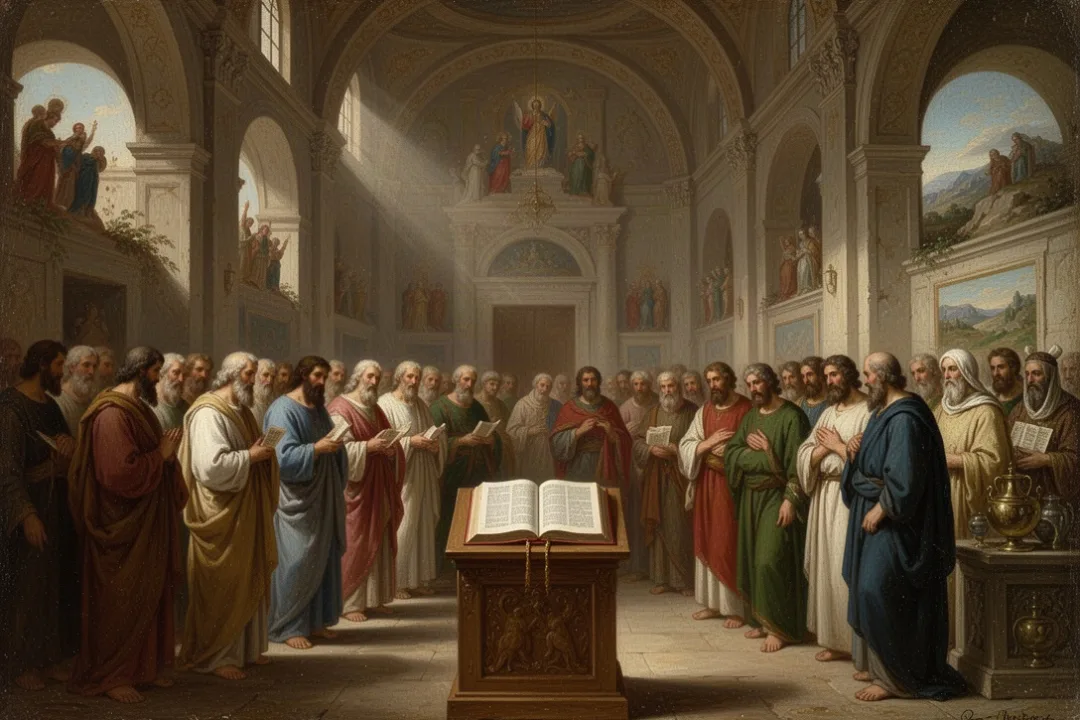
Christian theologies are diverse interpretations of a shared faith centered on the life, death, and resurrection of Jesus Christ. Christians broadly confess one God, affirm the importance of the Bible, and look to Jesus as the decisive revelation of God. They do not, however, answer every theological question in the same way.
The word theology means careful reflection on God and religious belief. “Christian theologies,” in the plural, recognizes that Christians have developed different ways to understand doctrine, worship, ethics, authority, and the church. These differences arise from Scripture, inherited traditions, philosophical reasoning, historical experience, and the practical needs of particular communities.
Christian theology asks what Christians believe, why they believe it, and how those beliefs should shape life. It is not limited to abstract ideas. Questions about prayer, forgiveness, suffering, justice, baptism, family life, death, and hope are all theological questions because they involve claims about God and the human response to God.
Most Christian theological systems include several connected areas of study:
Biblical theology examines how theological themes develop across the Bible and within particular biblical books.
Systematic theology organizes Christian teachings into topics such as God, creation, salvation, the church, and the end of history.
Historical theology traces how Christian beliefs and debates developed over time.
Practical theology connects theological ideas with worship, pastoral care, preaching, spiritual formation, and community life.
Moral theology or Christian ethics considers how faith should guide personal conduct and public responsibilities.
Philosophical theology uses philosophical reasoning to explore questions about God, knowledge, freedom, evil, and religious language.
These fields overlap. For example, a discussion of forgiveness may involve Jesus’ teachings in the Gospels, early Christian interpretations, a doctrine of salvation, pastoral practice, and ethical questions about justice and reconciliation.
Core idea: Christian theology is not one single formula. It is a family of related approaches that share central convictions while differing over authority, interpretation, worship, and doctrine.
Beliefs shared by many Christian traditions
Although Christian communities differ significantly, many affirm a common center of belief. The Nicene Creed, shaped through early church councils and still used widely in Christian worship, expresses several of these shared convictions. It describes one God, the Father, Jesus Christ as Son and Lord, the Holy Spirit, the church, baptism, resurrection, and the hope of the age to come.
Most Christian traditions teach that God is the creator of all things and that creation is fundamentally dependent on God. They also affirm that human beings possess dignity while experiencing sin, alienation, and moral disorder. Christians commonly understand the biblical story as presenting humanity’s need for reconciliation with God.
Jesus stands at the center of Christian theology. Most churches confess that he is genuinely human and genuinely divine, though they explain the relationship between his humanity and divinity through different theological formulas. His ministry, teaching, crucifixion, and resurrection shape Christian worship and beliefs about salvation.
Most Christians also profess belief in the Trinity: one God who exists eternally as Father, Son, and Holy Spirit. The doctrine does not mean three gods. Rather, it is an attempt to speak faithfully about the unity of God and the distinct personal relationships revealed in Christian Scripture and worship.
Other widely shared beliefs include the following:
God calls people into relationship, worship, and faithful service.
Jesus’ death and resurrection are central to God’s work of salvation.
The Holy Spirit is active in the church and in the lives of believers.
The church is a community called to proclaim the gospel and serve others.
Human life has moral significance before God.
God will ultimately judge evil and bring about the renewal of creation.
Shared beliefs do not erase meaningful disagreement. Christians may agree that salvation comes through Christ while differing over how grace, faith, works, baptism, church membership, and human freedom relate to salvation.
How Catholic, Orthodox, and Protestant theologies differ
The largest broad families of Christianity are commonly identified as Catholic, Orthodox, and Protestant, although each family contains substantial internal diversity. The labels describe historical and institutional traditions, not three completely uniform systems.
Catholic theology gives authoritative importance to Scripture and Sacred Tradition as interpreted within the teaching office of the church. The bishop of Rome, the pope, has a distinctive role in Catholic unity and teaching. Catholic theology also emphasizes the sacramental life of the church, including the Eucharist, baptism, reconciliation, confirmation, marriage, ordination, and anointing of the sick.
Catholic theology generally describes salvation as a life of grace that begins and continues through God’s initiative, faith, sacramental participation, and loving cooperation. It pays close attention to the church’s communal and historical identity. Catholic moral theology often uses Scripture, tradition, natural-law reasoning, and careful attention to human dignity.
Eastern Orthodox theology emphasizes the continuity of the ancient church, the authority of the ecumenical councils recognized by the Orthodox tradition, and the central role of liturgical worship. Orthodox Christians commonly speak of salvation as theosis, or participation in the life of God by grace. This does not mean becoming God by nature; it describes transformation into holiness and communion with God.
Orthodox theology often explains the meaning of Christ’s saving work through victory over death, corruption, and the powers of evil. It gives a particularly strong place to the resurrection, the mystery of worship, icons, ascetic practice, and the healing of the human person. Orthodox churches are self-governing bodies that share doctrine and sacramental communion, though they have experienced tensions over jurisdiction and recognition.
Protestant theologies developed during the sixteenth-century Reformation and later movements. Many Protestant traditions emphasize the priority of Scripture, justification by faith, the universal calling of believers, and the need for continual reform according to the gospel. The exact meaning and practical consequences of these principles vary widely.
Lutheran theology stresses justification by grace through faith and distinguishes between God’s law and gospel in explaining human sin and divine mercy. Reformed theology often emphasizes God’s sovereignty, covenant, and the ordered relationship between faith and Christian life. Anglican theology draws from Reformation convictions, Catholic heritage, historic liturgy, and the church’s formularies. Baptist theology commonly emphasizes believer’s baptism, congregational life, and religious liberty.
Methodist and Wesleyan theologies are known for emphasizing God’s prevenient grace, conversion, sanctification, and practical holiness. Pentecostal and charismatic theologies highlight the active work of the Holy Spirit, spiritual gifts, healing, prayer, and personal experience of God’s presence. Evangelical theology usually emphasizes biblical authority, the necessity of personal faith in Christ, the cross, conversion, and Christian mission, though evangelicals disagree among themselves on many doctrines.
Why Eastern and Western Christian traditions developed differently
Christian theology developed across several languages, cultures, and political settings. Greek-speaking theologians in the eastern Mediterranean often used different concepts and emphases from Latin-speaking theologians in western Europe. These differences did not always create division, but they shaped how Christians described God, salvation, the church, and human nature.
The separation commonly called the East–West Schism developed over a long period and involved disputes about authority, jurisdiction, language, and doctrine. The relationship between the churches of Rome and Constantinople deteriorated over centuries, with the traditional date of 1054 marking one important moment rather than a single event that instantly divided all Christians.
Western medieval theology developed sophisticated methods influenced by biblical interpretation, church tradition, and Aristotelian philosophy. Thinkers such as Augustine and Thomas Aquinas had lasting influence, although Western Christianity includes many theological streams beyond their work.
Eastern Christian theology retained a strong emphasis on the church fathers, liturgy, spiritual healing, and participation in divine life. It often approaches doctrine through worship and mystery rather than treating theology as a fully separable academic system. These contrasts are tendencies, not absolute rules. Catholic theologians may emphasize mystery, and Orthodox theologians also engage philosophy and systematic reasoning.
How different Christian theologies understand Scripture and authority
Christian traditions agree that the Bible is central, but they differ over how its authority operates within the church. Protestant traditions commonly give Scripture the highest or final normative authority for doctrine, while recognizing the value of historical confessions, teachers, and church practices.
Catholic theology understands Scripture and Sacred Tradition as belonging together within the life of the church. The Bible is not treated as an isolated text detached from the community that received, preserved, proclaimed, and interpreted it. Official teaching authority helps the church determine how doctrine should be expressed.
Orthodox theology also reads Scripture within the worshiping and historic church. The Bible is regarded as inseparable from the church’s liturgical, sacramental, and patristic life. Orthodox interpretation often gives substantial weight to the consensus and spiritual insight of the church fathers, while avoiding the idea that every question can be reduced to a private reading of a text.
Christians also differ over the meaning of biblical inerrancy, inspiration, and interpretation. Some teach that the Bible is without error in all that God intends it to communicate. Others focus on its trustworthiness for salvation and faithful living while recognizing genre, historical setting, textual variation, and the human authors’ distinctive voices.
Sound interpretation considers literary form and context. Poetry, wisdom literature, prophecy, parable, narrative, letters, and apocalyptic writing should not all be read in exactly the same way. A responsible reading asks who is speaking, to whom, for what purpose, and how a passage relates to the larger Christian canon.
Major Christian views of salvation
Soteriology is the theological study of salvation. Christian theologians have used several images to explain what God accomplishes through Jesus Christ: forgiveness of sin, reconciliation with God, victory over death, liberation from bondage, healing of human nature, adoption into God’s family, and restoration of creation.
The substitutionary approach emphasizes that Christ acts on behalf of sinners and bears the consequences of sin. Some versions focus on Christ satisfying divine justice, while others use broader language about representation, covenant, and self-giving love. These explanations should not be treated as identical, and different Christian traditions combine them in various ways.
The Christus Victor approach presents Jesus’ death and resurrection as God’s victory over sin, death, and the forces that enslave humanity. The moral influence approach emphasizes how Christ’s love reveals God’s character and moves people toward repentance and transformed living. The recapitulation approach, associated especially with early Christian thought, presents Christ as renewing human life by faithfully living, dying, and rising as the representative human being.
Christians also disagree about the relationship between faith and works. Protestant theology often insists that people are justified by grace through faith rather than earning acceptance through good works. Catholic and Orthodox traditions likewise reject the idea that humans can save themselves apart from grace, while emphasizing that genuine faith becomes active through love, obedience, sacramental life, and spiritual transformation.
Debates about human freedom and divine sovereignty produce additional differences. Calvinist traditions commonly stress God’s election and effective grace. Arminian and Wesleyan traditions emphasize prevenient grace and meaningful human response. Catholic and Orthodox approaches use their own frameworks, often resisting a simple choice between autonomous human freedom and mechanical determinism.
How Christian theologies understand the church and sacraments
Ecclesiology is the study of the church. Christian theologians ask what makes the church the church, how its leaders should serve, how authority should be exercised, and how the church relates to society. They also ask whether the church is best understood as a visible institution, a spiritual community, a fellowship of local congregations, or all of these together.
Catholic and Orthodox traditions usually describe the church as a visible, historic, sacramental communion with bishops and a continuous life reaching back to the apostles. Many Protestant traditions place greater emphasis on the gathered congregation, the preaching of the Word, and the spiritual unity of all believers. Some Protestant churches are episcopal, some presbyterian, and some congregational in organization.
The meaning and number of sacraments also vary. Catholic theology recognizes seven sacraments. Orthodox churches commonly speak of the same central sacramental mysteries, while sometimes using the word “mystery” more naturally than a strictly numbered system. Many Protestant traditions recognize baptism and the Lord’s Supper as the two ordinances or sacraments instituted directly by Christ, though their meaning and practice differ.
Views of the Lord’s Supper range from a strong affirmation of Christ’s real presence to interpretations that emphasize spiritual communion or remembrance. Baptism may be administered to infants, professing believers, or both, depending on the tradition. These practices express deeper beliefs about covenant, church membership, grace, faith, and the formation of Christian identity.
Christian approaches to ethics, society, and public life
Christian ethics begins with the character of God and the calling to love God and neighbor. Jesus’ teachings about mercy, truthfulness, forgiveness, peacemaking, care for the vulnerable, and enemy-love have shaped Christian moral reflection. Christians do not always agree about how these principles apply to particular social questions, but most traditions regard ethics as an essential expression of faith.
Some traditions emphasize virtue ethics, asking what kind of person a Christian should become. Others focus on divine commands, natural law, biblical rules, consequences, or the imitation of Christ. A church may use more than one approach at the same time. For example, a decision about economic justice might involve biblical commands, concern for human dignity, the formation of generosity, and likely effects on vulnerable people.
Christian political theology also varies. Some communities have supported close cooperation between church and state, while others have defended separation, religious liberty, or Christian nonparticipation in state violence. Catholic social teaching emphasizes human dignity, solidarity, the common good, care for creation, and the principle of subsidiarity. Protestant traditions range from political withdrawal to strong public engagement in reform movements and social policy.
Christian theology has also been used both to challenge injustice and to defend unjust systems. Responsible study should therefore examine historical consequences, not only stated ideals. Questions about slavery, colonialism, racism, poverty, war, gender, labor, and the environment reveal how theology can influence institutions and daily life.
Global and contextual Christian theologies
Christian theology is not produced only in Europe and North America. African, Asian, Latin American, Indigenous, Black, feminist, and other contextual theologians have asked how the gospel should be understood amid specific histories and social conditions.
Liberation theology emphasizes God’s concern for the poor and oppressed and calls the church to confront structures that produce suffering. Latin American liberation theology developed in a particular context of economic inequality and political repression, while related approaches have arisen elsewhere with different priorities.
Black theology reflects on God, Christ, freedom, and salvation in light of Black historical experience, especially racial oppression and the struggle for human dignity. Feminist theology examines how Christian language, institutions, and interpretations have been shaped by gendered assumptions and seeks more faithful accounts of women’s full participation and human worth.
African theologies often engage communal identity, ancestral traditions, colonial history, poverty, healing, and the rapid growth of Christianity across the continent. Asian theologians may address religious pluralism, poverty, migration, nationalism, and the encounter between Christianity and local philosophies. Indigenous theologians frequently focus on land, cultural survival, community, and the damage caused by colonial churches and governments.
Contextual theology does not necessarily mean abandoning historic Christian beliefs. It asks how those beliefs are heard, embodied, and tested in particular communities. It also reminds readers that every theology has a context, including traditions that present themselves as culturally neutral.
Practical tips for studying Christian theologies
Studying Christian theology becomes more manageable when you compare traditions by the same questions rather than collecting isolated definitions. Begin with the tradition’s own sources and explanations, then compare its claims with those of other communities.
Define the tradition carefully. “Protestant,” “evangelical,” “Orthodox,” and “Catholic” each include internal differences. Identify the denomination, theologian, or historical period being discussed.
Start with central doctrines. Examine beliefs about God, Jesus, salvation, Scripture, the church, baptism, the Lord’s Supper, and the Christian life before moving to secondary disputes.
Read primary sources in context. A creed, confession, sermon, or theological book should be interpreted according to its audience, purpose, genre, and historical setting.
Compare definitions, not just labels. Two groups may use the same word, such as “grace” or “tradition,” while assigning it different meanings.
Separate official teaching from popular practice. What a church formally teaches may not perfectly describe how every congregation or member understands and lives it.
Notice what each tradition emphasizes. One community may focus on justification, another on healing and participation in God, and another on sacramental communion, without completely ignoring the other themes.
Ask how beliefs shape practice. Worship, prayer, preaching, leadership, moral decisions, and community service often reveal theology more clearly than abstract statements alone.
Use charitable accuracy. Describe a position as its adherents would recognize it before evaluating it. Avoid reducing a complex tradition to its most controversial example.
Several common mistakes make comparative study less reliable. Treating one denomination as representative of all Christians can produce serious distortions. So can assuming that ancient and modern labels mean exactly the same thing, or treating a disagreement as proof that one side has no coherent theology.
Do not equate disagreement with total separation. Traditions may share the Trinity, incarnation, and resurrection while differing over church authority.
Do not treat theology as only intellectual. Liturgy, habits, relationships, and social commitments are theological expressions.
Do not use isolated verses as complete systems. Biblical interpretation requires attention to context, genre, canon, and the tradition’s wider reading.
Do not confuse historical influence with official doctrine. A famous theologian may shape a tradition without speaking for every church within it.
Useful comparison question: Ask, “What does this tradition believe, what reasons does it give, and how does that belief appear in worship and daily life?” That three-part approach prevents many oversimplifications.
How to choose reliable resources for Christian theology
A balanced study plan should include a Bible, an introductory theology text, primary documents, and resources from more than one Christian tradition. A church’s official catechism, confession, liturgical texts, or doctrinal statement can explain its position more accurately than a hostile summary.
Look for authors who identify their own tradition and distinguish established teaching from personal opinion. University presses, denominational publishers, theological seminaries, and reputable reference works can be useful starting points. Reading a short biography of each author also helps you understand the setting in which the theology developed.
When using online material, check whether a claim is supported by a primary source or merely repeated from an unsourced summary. Be cautious with statements that describe an entire tradition using words such as “all,” “never,” or “only.” Christian communities have internal debates, regional differences, and changes across history.
The most fruitful study combines intellectual clarity with humility. Christian theologies address questions that matter deeply to communities, so accurate description requires both careful analysis and respect for the people whose beliefs are being examined.
Frequently asked questions
Are Christian theologies different religions?
Usually, “Christian theologies” refers to different theological approaches within Christianity, not entirely separate religions. Catholic, Orthodox, and Protestant churches share central beliefs about God, Jesus Christ, and salvation, while differing over authority, sacraments, church structure, and interpretation. Some divisions are substantial, but the traditions remain historically and doctrinally related.
What is the difference between theology and doctrine?
Doctrine usually refers to teachings a church formally confesses or requires, such as a creed or catechism. Theology is broader: it includes the study, interpretation, development, and application of Christian beliefs. A theologian may examine a doctrine critically, compare traditions, or explore questions that have not been settled by an official statement.
Which Christian theology is closest to the early church?
No single modern tradition can make that claim without qualification. Catholic, Orthodox, Oriental Orthodox, Anglican, and other churches preserve different aspects of ancient Christian worship, teaching, and organization. Protestant traditions also appeal to early Christianity, especially when emphasizing Scripture and reform. Comparing historical sources is more useful than relying on a simple label.
Can Christians from different theological traditions worship together?
In many cases, yes. Christians from different traditions often pray, study Scripture, serve their communities, and discuss shared beliefs together. Restrictions may apply to formal communion, ordained ministry, or church membership because communities understand sacraments and authority differently. Local practices vary, so participants should ask the churches involved about their specific policies.







Leave a Reply