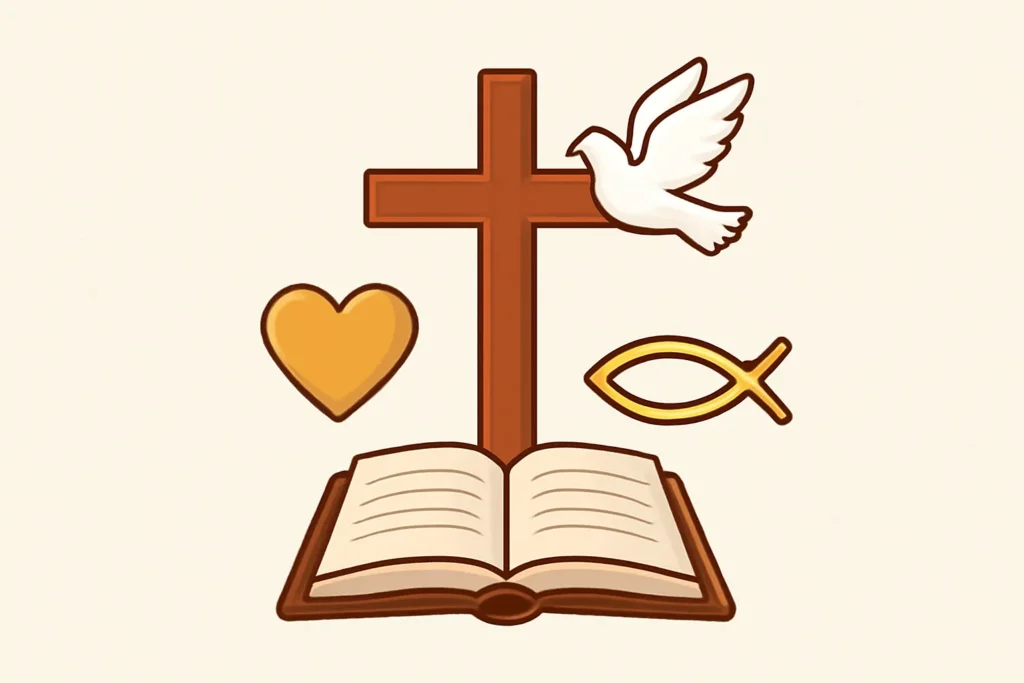
At the heart of Christian faith lies the conviction that there is one God who created the universe, sustains history, and cares for every person. Across Christian traditions, this God is understood as the eternal, personal, and holy Being who acts in history and in the heart of believers. A defining feature that shapes how Christians worship, pray, and relate to the world is the belief in the Trinity—that God exists as three persons in one divine essence: the Father, the Son, and the Holy Spirit.
The doctrine of the Trinity affirms both unity and plurality: there is one God who is not a mere force but a relational being who is Father, Son, and Spirit. Each Person is fully God, yet there is not three gods but one. This mystery has practical implications for how Christians think about creation, revelation, and the way God interacts with the world. Key attributes of God—eternality, omniscience, omnipotence, love, and holiness—are affirmed across biblical witness and creedal statements.
In relation to humanity, Christians speak of God as a personal Being who desires relationship. The Father is often understood as the source and sender of creation, the Son as the Word made flesh who reveals the Father, and the Holy Spirit as the presence of God dwelling within believers and guiding the church. This triune perspective shapes the church's worship, its mission, and its understanding of how God works through history. Although the language of the Trinity was developed in early Christian debates, the essential claim remains that God’s life is communally relational, and humans are invited into fellowship with this triune God.
Monotheism with a nuanced understanding of the triune nature of God
Creedal confidence in the Father, Son, and Spirit as Scripture bears witness to their works
Divine actions and attributes shared in perfect harmony among the three Persons
Debates about how the Trinity operates in daily life, in salvation, and in the church’s worship have produced a rich spectrum of theological expressions. Yet, across denominations, the conviction remains that God is not distant or silent but actively present in creation, in the life of Jesus, and in the ongoing work of the Spirit among believers.
The Person and Work of Jesus Christ
Jesus Christ stands at the center of Christian faith. He is both fully God and fully human, the definitive revelation of God’s character and salvation. Christians affirm the incarnation—God becoming human in Jesus—so that humanity might be reconciled to God. The identity of Jesus as the Son of God, born of the Virgin Mary in some traditions, is understood as a decisive breaking-in of divine life into human history.
The life, death, and resurrection of Jesus are interpreted as the decisive events through which humanity’s broken relationship with God is healed. In his teaching, Jesus proclaimed the arrival of the kingdom of God, offered a vision of justice and mercy, and called people to repentance and faith. In his crucifixion, Christians see the atonement—a saving act that bears sin, breaks the power of death, and reconciles humanity to the Creator. The exact model of atonement is described in various ways across traditions, including substitutionary, Christus Victor, and restorative perspectives, but they all center on the idea that Jesus bore the consequences of sin on behalf of others.
The resurrection of Jesus is not merely a historical claim but a proclamation that life defeats death and that God’s future breaks into the present. The empty tomb signals the reality of new creation and the offering of forgiveness, hope, and transformation to all who trust in Christ. Jesus’ ascension to heaven and the ongoing presence of the Holy Spirit empower the church to continue his mission, testify to him, and embody his teachings in the world.
Key aspects of Jesus’ mission
Revelation: Jesus discloses the character and will of God in a tangible way.
Redemption: His work provides release from sin and its effects.
Restoration: He inaugurates the healing of creation toward its intended purpose.
Across traditions, the person of Christ is not merely a historical figure but a living reality in the life of believers. Christians pray in his name, seek to follow his teachings, and anticipate his return. The confession of Jesus as Lord, the belief in his unique work, and trust in his authority are central to the Christian message.
Scripture, Tradition, and Canon
A coherent view of divine revelation is foundational for Christian belief. The Bible is regarded as a primary source of God's self-disclosure—an inspired record of what God has spoken and done. Different Christian families emphasize the authority of Scripture in nuanced ways. Some emphasize the principle of sola scriptura (scripture alone) as the guiding norm for faith and practice, while others hold that Scripture and Tradition together illuminate truth, with the church’s teaching office (magisterium) guiding interpretation.
The canon of scripture—the collection of inspired writings recognized as authoritative—was formed over centuries. The accepted books include historical narratives, prophetic writings, poetry, wisdom literature, and letters that address church life and doctrine. Christians affirm that the canon bears witness to God’s ongoing revelation and that it must be interpreted in light of the living Spirit and in the community of faith.
In addition to the Bible, many traditions appeal to early creeds and apostolic teaching as trustworthy summaries of essential beliefs. These creeds provide a shared framework for understanding core doctrines like the Trinity, the person of Christ, and salvation. While there can be diverse emphases across denominations, the common thread is a reverent dependence on God’s self-revelation and a commitment to faithful interpretation in the context of community.
Textual witness and interpretation
Inspiration of biblical authors by the Spirit
Historical context informing interpretation
Church tradition shaping how passages are applied to life
Salvation: Grace, Faith, and Transformation
Central to Christianity is the claim that salvation is initiated by grace—God’s unmerited favor—and received through faith. This process brings about a transformation of the heart and life. Christians believe that humans are reconciled to God not by human merit alone but by God’s gracious action in Christ. This gift is received by trust, repentance, and surrender to God’s will.
The relationship between grace and faith has been a key theme in Christian theology. In some traditions, faith is understood as trust that expresses itself in obedience and devotion, while in others faith is seen as trust plus the incorporation into a new life through baptism and continuing growth. Justification—being counted as righteous in God’s sight—serves as a foundational claim: through Christ, believers are declared righteous because of his perfect obedience and sacrificial death.
The journey of salvation continues beyond initial acceptance. Believers are called to sanctification, a process of growing in holiness, character, and obedience. This ongoing transformation, energized by the Holy Spirit, involves learning to love God with all one’s heart, soul, mind, and strength, and to love one’s neighbor as oneself. While the details of how sanctification occurs can vary, most Christian traditions affirm that faith matures, produces repentance, and manifests in acts of compassion, justice, and personal integrity.
The ordinances or sacraments associated with salvation are seen as visible signs of inward grace. The two most universally recognized rites are Baptism and the Eucharist (often called Communion or the Lord’s Supper). Baptism signifies participation in Christ’s death and resurrection and publicly identifies a person with the church. The Eucharist marks a continuing remembrance of Christ’s sacrifice and, for many traditions, a profound encounter with the presence of Christ in the gathered community.
Ways Christians express the path of salvation
Faith and repentance as the response to God’s call
Justification by grace through faith
Sanctification as ongoing growth in holiness
Adoption into God’s family and new identity in Christ
Across Christian families there is rich diversity in how salvation is celebrated and explained, but the core claim remains: salvation is a gift offered by a loving God, received by trust in Christ, and evidenced in a transformed life that participates in God’s mission in the world.
The Holy Spirit and the Christian Life
The Holy Spirit is the third Person of the Trinity and is described in Scripture as the Comforter, Counselor, and Advocate who enables believers to live in a manner worthy of the gospel. The Spirit’s presence is understood as a continuing validation of Christ’s work and as the source of spiritual vitality for individuals and for the church as a whole.
The Spirit’s work includes indwelling believers, transforming desires, and empowering them for service. Christians speak of the gifts of the Spirit (charismata) that equip the church for ministry, including teaching, exhortation, healing, prophecy, and, in some traditions, miraculous acts. The fruits of the Spirit—such as love, joy, peace, patience, kindness, goodness, faithfulness, gentleness, and self-control—describe the ethical and moral changes that characterize a Spirit-led life.
The Spirit also plays a key role in guiding interpretation, prayer, and endurance through trials. Believers are called to cultivate a personal relationship with the Spirit through regular prayer, Scripture engagement, corporate worship, and acts of mercy toward others. A Spirit-filled life, in many Christian communities, is marked by a posture of humility, dependence on God, and a willingness to serve others in love.
Christianity is not only a set of beliefs but a living community of faith gathered to worship, learn, break bread, and serve. The church is described in the New Testament as the body of Christ and the family of God on earth. Through common worship, teaching, prayer, and service, believers are formed, encouraged, and sent into the world to testify to the grace they have received.
Across traditions, there are differences in how worship is conducted, how the church structures leadership, and how sacraments are understood. In many communities, Baptism and the Eucharist are central rites that anchor the Christian life. Baptism, in some denominations, is administered to infants, while in others it is reserved for those who confess faith as adults or as new believers. The Eucharist, or Communion, is typically celebrated regularly and understood either as a memorial, a sign of spiritual participation with Christ, or in some traditions as a real presence in a special way.
The church also gathers around preaching of the Word, prayer, and mutual care. Through catechesis, catechumenate, and catechetical instruction, members grow in doctrinal understanding and practical wisdom for everyday life. Mission and social action—care for the poor, advocacy for justice, and peace-building—are also essential dimensions of church life for many Christians, reflecting the belief that faith is living and active, not merely private.
Baptism and the Lord’s Supper
Baptism as initiation into the faith community
Eucharist/Communion as memorial, thanksgiving, and fellowship
Varying interpretations across denominations about presence and meaning
In addition to these rites, many churches practice pastoral care, baptismal preparation, confirmation, and the ordination of leaders. The church’s life is thus a dynamic blend of worship, instruction, accountability, and service, all aimed at forming disciples who reflect Christ’s love in the world.
Ethics, Law, and the Christian Life
Christian ethics flow from the belief that God’s will is revealed in Scripture, embodied in Jesus’ teaching, and sustained by the Spirit within the church. The central command to love God and love neighbor serves as the basic rule of life. The ethical life is not reduced to a checklist of rules but is oriented toward character formation and faithful witness in a broken world.
The Sermon on the Mount and other Jesus-centered teachings provide a moral framework that calls believers to integrity, mercy, and justice. Christians are urged to pursue righteousness, show compassion to the vulnerable, and seek reconciliation in place of retaliation. Important areas of ethical reflection include truth-telling, sexual ethics, economic justice, care for the vulnerable, and stewardship of creation.
The diverse Christian landscape yields a spectrum of perspectives on social issues, but there is broad consensus about the dignity of every person made in the image of God and the responsibility to love, protect, and serve others. This ethical vision is not merely private piety; it expresses itself in daily decisions, public advocacy, and acts of service that demonstrate the gospel’s impact on society.
Guiding principles for Christian living
Love of God as primary, shaping every other choice
Love of neighbor expressed in acts of mercy and justice
Humility and repentance in response to failure and sin
Eschatology and Hope
A distinctive feature of Christian belief is the expectation of God’s ultimate intervention in history. Eschatology concerns how the world is moving toward its promised end and the culmination of God’s purposes. Christians anticipate the return of Jesus, the resurrection of the dead, and the final judgment, which will reveal every person’s true life before God.
The second coming of Christ is taught as a future event that will inaugurate the full realization of God’s kingdom. The judgment will evaluate how people lived in response to God’s grace, with reward or consequence corresponding to one’s relationship with Christ. In many Christian traditions, the ultimate hope is new creation—a restored order where God dwells with humanity in a world free from pain, suffering, and death.
Discussions about heaven and hell vary in emphasis but share the conviction that the fate of each person ultimately depends on whether they have received God’s grace in Christ. Some traditions stress the present experiential reality of life with God now, while others stress the future consummation of all things. In all versions, the eschatological horizon shapes how Christians view time, happiness, suffering, and mission in the present age.
Resurrection of the dead and the transformation of life
Judgment and accountability before God
New creation as the fulfillment of God’s purposes
Creeds, Tradition, and the Diversity of Belief
Across Christian communities, there is both a shared core and a spectrum of interpretations. The Apostles’ Creed and the Nicene Creed are historical summaries of essential beliefs about the Father, Son, and Holy Spirit, creation, incarnation, crucifixion, resurrection, and life in the Spirit. These creeds helped the church articulate its faith against competing beliefs and served as a common language for diverse churches to speak with one voice about the essentials.
The Christian family is marked by significant denominational varieties. In the Catholic Church, for example, tradition and the teaching office of the church (the magisterium) share authority with Scripture. The Orthodox Churches emphasize continuity with the early church’s worship, liturgy, and patristic heritage, preserving a strong sense of mystery and continuity with ancient practice. In many Protestant communities, there is a strong emphasis on scripture alone as the rule of faith (a principle known as sola scriptura), with varying interpretations on baptism, the Lord’s Supper, and ecclesial governance.
Across these traditions, there is broad agreement on the central claims about who God is, who Jesus is, how salvation comes, and what it means to live as a follower of Christ. The differences reflect diverse historical contexts, interpretive methods, and pastoral priorities. What unites Christians across this spectrum is a shared commitment to faith in Christ, participation in God’s mission, and the hope of the Spirit’s work in transforming lives and communities.
Diversity within unity
Doctrinal essentials affirmed by all major branches
Distinctive practices and governance in each tradition
Ecumenical dialogue aimed at understanding and cooperation
Living the Faith: Personal Devotion and Community Practice
Belief in Christianity is not only about doctrines; it is about a lived relationship with God that manifests in daily life. Prayer, worship, banding together with others, and service are integral to growing in faith. Personal devotional practices—such as Scripture reading, meditation, confession, and prayer—help believers align their desires with God’s purposes. In community, believers encourage one another, learn together, and participate in acts of mercy and justice that reflect God’s love in the world.
The Christian life is often described as a journey: an ongoing process of being transformed through grace, learning to live by faith, and seeking to become more like Christ in character and action. Believers are invited to trust God in all seasons—joyful and challenging alike—and to bear witness to the gospel through words and deeds. The church’s mission includes proclaiming good news to the poor, advocating for peace and reconciliation, and supporting one another as members of a global family.
The practice of faith also invites humility before the mystery of God. Christians acknowledge that finite human beings may never fully comprehend the divine, yet they strive to follow what has been faithfully handed down and tested in life with God. In this sense, Christian belief is both a translation of ancient wisdom into contemporary life and an invitation to participate in God’s ongoing work in the world.
Practices that nourish faith
Prayer—communicating with God in honesty and reverence
Worship—praising God with song, Scripture, and humility
Scripture study—encouraging understanding and obedience
Community life—participation in a local church and broader fellowship





Leave a Reply