Christians and Israel: Faith, History, and Perspectives
Christians and Israel: Faith, History, and Perspectives
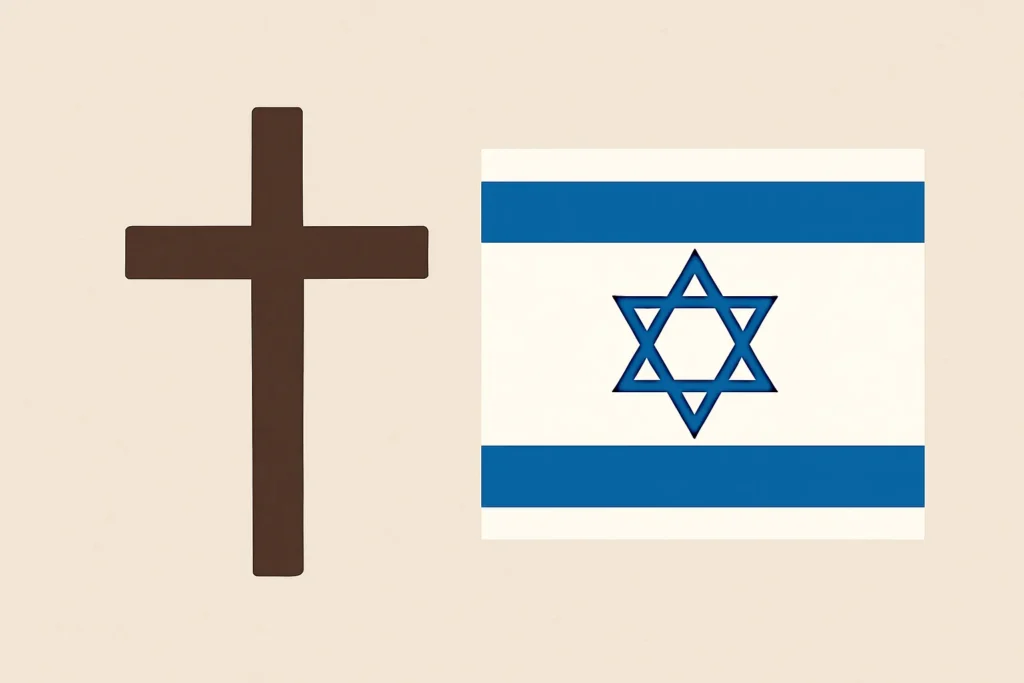
The relationship between Christians and Israel sits at the crossroads of faith, history, and perspectives. Across two millennia, diverse Christian communities have engaged with the Holy Land, the biblical legacy of the Promised Land, and the modern Jewish state with a spectrum of motives, interpretations, and commitments. This article surveys how biblical foundations, historical events, and contemporary debates shape how believers think about the land, its people, and its role in God’s plan. It also highlights the ways in which ecumenical dialogue, humanitarian concern, and interfaith friendships inform today’s relationships between the Christian world and Israel.
Foundations of faith: scripture, covenant, and the land
To understand the bond that many Christians feel with Israel, it is essential to begin with how scripture frames the land and the people who live there. In the Hebrew Bible (Old Testament), the land of Canaan and later the territory of Israel are presented as a divinely chosen homeland promised to the patriarchs and their descendants. The narratives of Abraham, Isaac, and Jacob, and the journey from Egypt to the Promised Land, lay the groundwork for a long history of covenants and expectations.
In the Christian New Testament, the story expands in two ways. First, the life and ministry of Jesus take place in a land saturated with biblical recollection and expectation. Second, the apostolic proclamation sees Jesus as the fulfillment of the scripture and as the revealer of the way to God for all peoples. For many Christians, the relation between the church and Israel pivots on how the old covenant relates to the new covenant—whether the people of God remain defined by ethnic lineage, by faith in Christ, or by a continuity of both. This theological conversation is often described in terms of σupersessionism (or replacement theology), covenantal theology, and dispensational frameworks.
Across denominations, a core value is the sense that the land remains a powerful symbol of God’s ongoing engagement with humanity. For some, the biblical promises concerning Jerusalem, the temple, and the people of Israel carry enduring significance; for others, the emphasis shifts toward the universal Christian calling to witness to love, justice, and peace for all nations, including the Jewish people and the inhabitants of the Palestinian territories.
Historical tides: from ancient roots to modern nationhood
The encounter between Christianity and Israel is not a single story but a long braid of moments in which faith communities, political realities, and biblical memory shape one another.
Early Christian presence in Jerusalem and the surrounding region emerges from the earliest followers of Jesus. The church there retained a connection to Jewish roots while distinguishing its message as a new proclamation about the Messiah.
Medieval interactions between Western Christians and the Holy Land are marked by pilgrimage, missionary activity, and occasional conflict. The Crusades exemplify a complicated chapter in which religious sentiment, territorial ambition, and spiritual imagination intersected in dramatic ways.
Reformation and ecumenical shifts reoriented how Christians read the Bible and relate to Judaism. Debates about the relation of the old covenant to the new, and the status of Jewish people, prompted new theological and pastoral questions about Christian responsibility toward Jews and the land of their ancestors.
Modern Zionism and the Jewish state—the emergence of a sovereign Israel in 1948 after centuries of diaspora—compelled many Christian communities to reassess how biblical prophecies might be understood in light of contemporary geopolitics. For some, the event is celebrated as a historic restoration; for others, it invites careful reflection on the rights and welfare of all peoples living in the region.
Post-1948 political developments, including conflicts and peace efforts, continually test how Christian groups articulate their stance toward the Jewish state, Palestinian authorities, and the prospects for regional stability and justice.
Across these epochs, a recurring theme is how Christian engagement with the land can be framed as a call to peace, justice, and respectful coexistence, rather than conquest or coercion. The perennial question remains: how to honor the biblical memory of the land while promoting the rights and dignity of all who live there?
Perspectives among Christian traditions: a spectrum of views
Christians around the world approach Israel and the Jewish people with a variety of theological lenses and pastoral priorities. The differences are not merely doctrinal but practical, influencing worship, education, philanthropy, and political engagement.
Protestant evangelicals and Christian Zionism
A significant current within global Protestantism, especially among evangelical communities in North America and elsewhere, emphasizes a belief in God's ongoing plan for the Jewish people and the eventual restoration of Israel. This outlook is often linked to dispensationalist readings of biblical prophecy, millennial expectations, and a conviction that the return of Jews to Israel signals readiness for the second coming of Christ. Advocates frequently support Jewish immigration to the Promised Land, aid charitable projects in the state, and advocate for policies that align with a pro‑Israel stance.
While this perspective has energized humanitarian and educational initiatives—such as scholarships, medical clinics, and relief work—it also invites scrutiny. Critics warn against letting eschatological narratives drive public policy, risking overpoliticization of faith, or minimizing the legitimate rights of Palestinians. A balanced approach emphasizes compassion, justice, and accurate biblical interpretation, acknowledging the dignity and security of all communities in the region.
Roman Catholic and Eastern Orthodox viewpoints
The Roman Catholic Church and the Eastern Orthodox churches approach Israel with a long-standing focus on pilgrimage, sacred sites, and the dignity of human life in the Holy Land. The Catholic tradition, especially after the Second Vatican Council, has endeavored to deepen Jewish-Christian dialogue and reject supersessionist claims that Christian faith negates the ongoing significance of the Jewish people. Catholic engagement often emphasizes cooperation for peace, humanitarian relief, and mutual respect for Jews and Christians as part of God’s wider people.
In the Orthodox world, theology centers on the continuity of biblical revelation and the sanctity of the Holy Land as a shared spiritual home for Christians and Jews alike. Churches in the region often advocate for pastoral care for refugees, support interfaith encounters, and maintain venerable liturgical ties to the land’s sacred places. Orthodox leaders frequently remind their congregations that the gospel’s call to love neighbor includes political and social responsibility toward all residents of the land.
Mainline Protestant and Anglican communities
Among many mainline Protestants and Anglicans, the emphasis is often on interfaith respect, human rights, and a cautious but hopeful approach to peace processes. These communities tend to prioritize dialogue with Jewish communities and with Palestinian Christians, grounding their work in biblical justice, humanitarian relief, and advocacy for freedom of worship. They often promote education about Jews and Christians sharing a biblical inheritance, while challenging any rhetoric that devalues the humanity of either side.
Messianic Judaism and its relationship to Israel
Messianic Jewish groups, which combine elements of Judaism with belief in Jesus as the Messiah, present a unique bridge—often drawing Christian support for the Jewish state while maintaining a distinctly Jewish identity. These communities emphasize continuity with Jewish tradition, synagogue life, and Torah observance, alongside the conviction that Jesus fulfills crucial messianic expectations. Their presence adds nuance to debates about how non‑Christian faith communities relate to Israel and the people of the land.
Israel, Christianity, and the practice of pilgrimage
For many believers, the land is a living classroom where scripture comes to life. Pilgrims travel to sites such as Jerusalem, Bethlehem, Nazareth, and other locales that anchor biblical narratives. These journeys can deepen biblical literacy and spiritual formation, while also raising practical questions about how tourism intersects with local communities and holy sites.
Jerusalem holds a multi‑faith significance, hosting sacred places for Jews, Christians, and Muslims alike. Pilgrims often visit key sites such as the Old City, the Church of the Holy Sepulchre, and the Western Wall, each offering distinct ways to reflect on faith and history.
Bethlehem and Nazareth are central to the life of Jesus in the gospels and remain important for Christian pilgrims seeking to walk in the places where the gospel story unfolds.
Beyond tourism, many Christian communities support education and healthcare projects in Israeli and Palestinian communities alike, reinforcing shared concern for the vulnerable and promoting long‑term stability.
The pilgrimage experience can be transformative when it is undertaken with humility and sensitivity to local histories and present realities. Responsible travel emphasizes mutual respect, fair economic practices, and a commitment to human dignity for all residents in the land.
Interfaith dialogue, ethics, and the common good
A healthy engagement between Christians and Israel involves constructive dialogue with Jewish communities, as well as with Palestinian Christians and Muslims. Many Christian leaders advocate for ethical engagement that does not reduce to political calculation but remains anchored in theological commitments to justice, mercy, and peace.
Participating in interfaith forums that foster mutual understanding and address misconceptions about each tradition.
Supporting humanitarian aid and relief programs that reach vulnerable families on both sides of the conflict, especially children and refugees.
Promoting educational exchanges to foster accurate knowledge of biblical history and present realities, thereby reducing stereotypes.
Advocating for religious freedom, safety, and the protection of sacred sites for all faith communities.
Critics caution against conflating faith commitments with political advocacy that overlooks the rights and dignity of Palestinians or that supports irreversible policies. A principled approach seeks equity and non‑violence, recognizing that justice involves the legitimate aspirations of both communities living in the land.
Contemporary realities: politics, peace, and people
The modern political landscape surrounding Israel and the broader Middle East has a direct bearing on how Christians relate to the land and its inhabitants. Christian institutions, denominations, and non-governmental organizations participate in dialogues about the future of Jerusalem, settlements, refugees, and the two‑state solution or other frameworks for peace. The ethical question, for many, is how to advance long‑lasting security and dignity for all people, including Jewish citizens in the state of Israel, Palestinian Muslims and Christians, and international residents.
Some Christian groups emphasize a strong, historically informed solidarity with the Jewish people, while actively supporting political policies that protect human rights and foster coexistence. Others advocate for robust engagement with Palestinian Christians and civil society organizations, stressing that peace requires addressing grievances such as displacement, economic hardship, and restrictions on movement. Across these positions, there is a shared conviction that faith should motivate compassion, respect for human life, and a commitment to non‑violence and fairness.
Key terms and concepts for readers
Promised Land: A biblical term referring to the land promised to the descendants of Abraham, central to Jewish and Christian scriptural memory.
Jerusalem: A city of profound religious significance for Jews, Christians, and Muslims; a focal point of devotion and daily life in the land.
Supersessionism (replacement theology): The view that the Christian church has replaced Israel in God’s plan, a position debated and often rejected by many contemporary Christians.
Dispensationalism: A theological framework that interprets biblical prophecy as unfolding through distinct eras and often emphasizes the regathering of Jews to the land.
Christian Zionism: A movement within some Christian communities that supports the modern state of Israel and Jewish sovereignty in the land, sometimes linked to eschatological hopes.
Interfaith dialogue: Efforts to foster respectful and productive communication among Christians, Jews, Muslims, and others about shared concerns and beliefs.
Historical ambiguity and the call to pastoral care
History teaches that partnerships between Christians and Israelis are not monolithic. There have been moments of harmony and moments of tension. The best witness emphasizes pastoral care for all people affected by conflict, education that counters prejudice, and advocacy for human rights in ways that honor both the Jewish people and Palestinian communities. The Christian narrative often invites believers to stand with the vulnerable, while remaining faithful to a vision of peace that does not negate the dignity of any group.
Profiles in faith: communities and institutions
Across the Christian world, institutions, scholars, and congregations contribute to the dialogue about Israel through education, worship, and service. Some notable strands include:
Universities and seminaries that offer courses on biblical geography, Jewish-Christian relations, and the modern state of Israel in light of the biblical narrative.
Parishes and ecclesial bodies that host interfaith sessions, canonical statements on Israel and the Palestinian territories, and prayer services for peace in the Holy Land.
Humanitarian organizations that operate in both Israeli and Palestinian communities, providing healthcare, education, and economic development in ways that emphasize human dignity and mutual benefit.
Global conversations: how different continents approach Israel
The way Christians in different regions interpret and engage with Israel often reflects local histories, ecumenical networks, and public policy landscapes. For example:
In parts of Europe, there is a strong tradition of critical solidarity with human rights and a focus on dialogue among faith communities, along with a history of relations shaped by past conflicts.
In Africa and Asia, churches may emphasize moral witness, humanitarian aid, and education as avenues to support peace, with attention to the broader regional context and religious coexistence.
In the Americas, debates often center on political advocacy, charitable partnerships with Israeli and Palestinian communities, and church‑state relations that influence public policy and social programs.
Despite regional differences, a common thread remains: faith communities exercise their public witness through prayerful discernment, informed scholarship, and practical acts of mercy that honor the value of every human life.
Historical memory and present responsibilities
The legacy of biblical memory in relation to Israel and the Jewish people invites Christians to cultivate a memory that is accurate, humble, and hopeful. The historical memory includes both the suffering of Jewish communities through centuries and the modern revival of the Jewish homeland. The present responsibilities involve protecting religious freedom, ensuring safety for all residents, and engaging in constructive cooperation that can reduce violence and promote justice.
In practice, this means Christian communities may:
Support initiatives that improve educational and economic opportunities for children and families in both Israeli and Palestinian communities.
Encourage respectful dialogue that dispels stereotypes and builds trust across faith lines.
Champion policies and programs that respect human rights, uphold the rule of law, and encourage peaceful resolution of disputes.
Promote pilgrimage and study that emphasizes historical memory, biblical literacy, and ethical reflection rather than sensational or politicized narratives.
What a thoughtful approach looks like in practice
A thoughtful, balanced approach to Israel within Christian life demonstrates several core practices:
Centering the sanctity of life and the dignity of all people in every engagement with the land and its inhabitants.
Teaching about the biblical land with attention to its biblical, historical, and archaeological richness, while avoiding triumphalism.
Supporting reconciliation efforts that invite all stakeholders to participate in healing and mutual recognition of rights and responsibilities.
Encouraging responsible journalism, scholarship, and public testimony that weighs facts carefully and avoids dehumanizing rhetoric.
Conclusion: a living witness of faith, memory, and hope
The relationship between Christians and Israel is not static. It is a living conversation shaped by scripture, by the long arc of history, and by the ongoing struggle to pursue justice and peace in a land with immense spiritual resonance. Across traditions and across borders, Christians are called to a witness that honors the biblical heritage of the land, protects the dignity of all people who live there, and works toward a future in which people of different faiths can worship, learn, and live with safety and mutual respect.
As readers explore the many voices within global Christianity, they encounter a wide spectrum of convictions about Israel and the Jewish people. Some prioritize fulfillment of biblical prophecy, others emphasize humanitarian service, and still others advocate for creative peacemaking that includes robust dialogue with Jewish and Palestinian communities. In every case, a healthy Christian witness invites humility, a commitment to truth, and an unwavering devotion to the value of every human life living in the land today.
The story of Christians and the Holy Land is far from a single chapter. It is a tapestry of worship, scholarship, activism, and prayer—woven through time by communities seeking to honor God, love neighbors, and imagine a just future for all who call the land home.







Leave a Reply