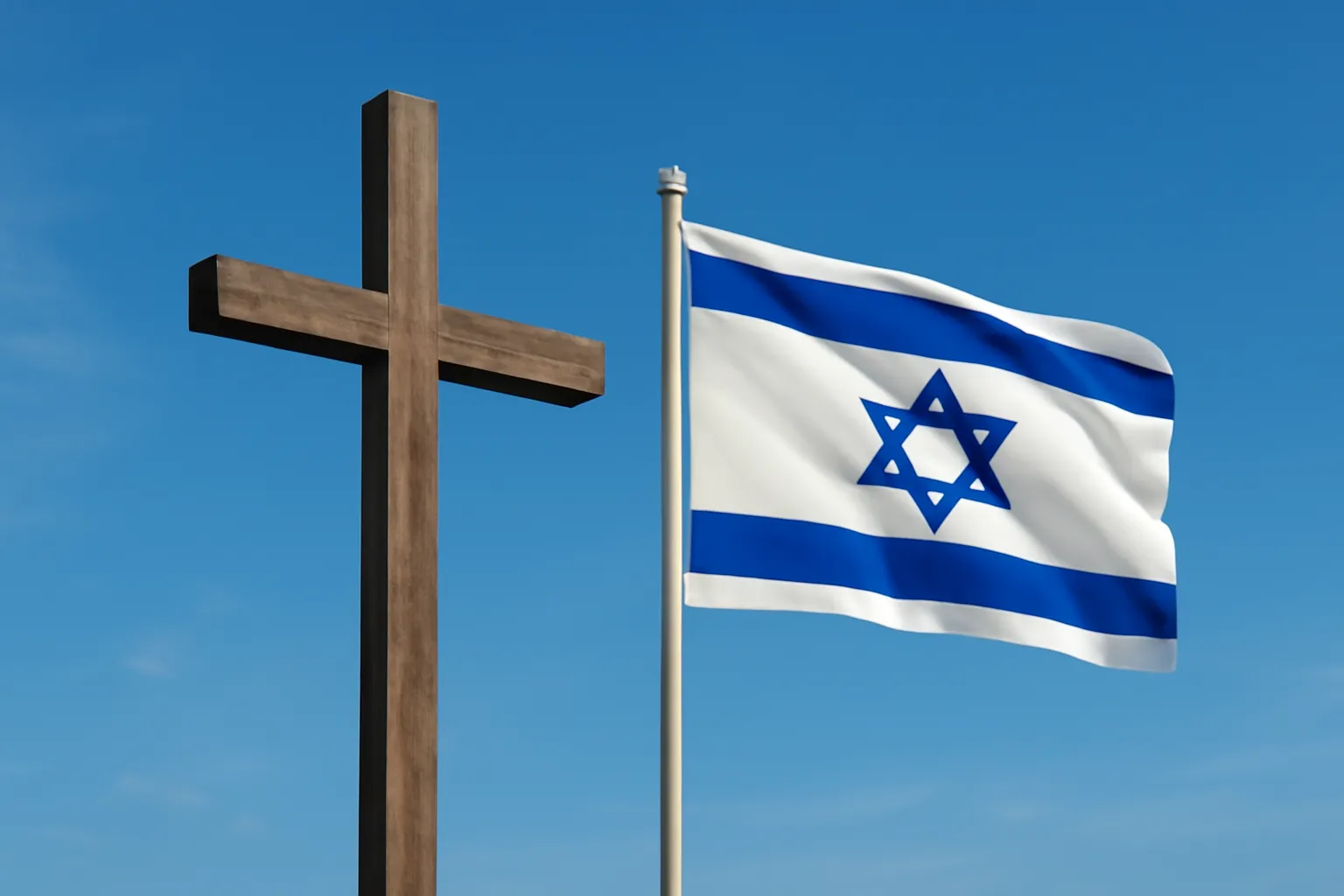
Faith Foundations for Solidarity: Why Christians Stand With Israel
Across centuries, strands of Christian teaching have located a special interest in the land and people of Israel.
For many believers, this engagement is rooted not in political convenience but in a deep sense of biblical continuity—a
conviction that God’s covenants with Abraham, Isaac, and Jacob, and the unfolding story of salvation history, connect the Church
to the Jewish homeland. When we speak of the Christian stance toward Israel, we are talking about a coherent
worldview that links faith, history, and mission in a way that many Christians
describe as solidarity and responsibility.
This article surveys the phrase Christians stand with Israel in its varied, nuanced expressions: as a matter of
faith and interpretation of sacred scripture, as a witness in historical memory, and as a present-day commitment to peace,
protection of vulnerable communities, and the pursuit of justice. It recognizes that there are diverse viewpoints within the
wider Christian family, yet it explains why a common thread—rooted in Scripture and shared humanity—often leads believers to
advocate for Israel’s right to exist, to flourish, and to be treated with dignity within a broader framework of peace.
Theological Foundations: Scripture, Covenant, and Promise
For many Christians, the conviction that Israel’s biblical significance remains intact is not a political claim
but a theological one. Biblical narratives, prophecies, and covenants provide a framework within which the present-day
relationship to Jerusalem and the Holy Land is understood. While interpretations vary, several
themes are commonly cited:
Covenant continuity: The God of the Bible is portrayed as the God who gave the land to the patriarchs and
who promised to bless the nations through Israel. For many Christians, this divine covenantal language
informs a respectful position toward the Jewish people and their homeland.
Unfolding redemption history: Jesus’ life and ministry are read within a Jewish context, and the Church’s
identity is understood in conversation with Israel’s ancient story. Some communities stress the continuity of God’s redemptive
work through both testaments rather than a simple supersession of Israel by the Church.
Jerusalem as a spiritual center: The city’s sacred status in biblical narratives leads many Christians to honor
its enduring significance for Jews, Christians, and people of other faiths alike. This reverence is not an endorsement of political
occupancy alone, but a recognition of the city’s role in salvation history.
Ethical commitments: Biblical ethics call believers to justice, protection of vulnerable populations, and
peacemaking. In many sermons and studies, these moral commitments are tied to the wellbeing of all inhabitants of the land,
including Jewish, Christian, and Arab peoples.
The phrase Christian solidarity with Israel often highlights the belief that God’s promises to the people of
Israel are not rescinded by the advent of the Church; rather, the invitation to Gentiles into God’s mercy is understood as a
way to honor the depth of the Hebrew Scriptures. Some theologians phrase this as a living drama in which the Church participates
in God’s ongoing plan by standing with Israel while also affirming the equal dignity of all people living in the Holy Land.
Historical Trajectories: From Ancient Faith to Modern Partnership
The relationship between Christians and Israel has been refracted through many historical eras. While the Church has not always
spoken in a uniform voice about the Jewish people or the land, certain lines of continuity emerge:
Early Church and Jewish roots: The earliest Christian communities were rooted in a Jewish milieu, and many
of Jesus’ followers were Jewish. The moral and ceremonial frameworks that emerge from the Hebrew Bible continued to inform
Christian identity for generations.
Medieval and Reformation shifts: Over centuries, political and theological currents affected how Christians
related to Jews and to the land. Some periods witnessed tension or persecution, while others saw efforts toward dialogue and
protection. These legacies influence contemporary Christian attitudes toward Israel and the Jewish people.
Modern era and the state of Israel: The 19th and 20th centuries brought renewed attention to Jewish history and
a rising modern state. For many Christians, the return of Jews to the land after centuries of dispersion is read in light of
biblical prophecy as part of a divine narrative that invites repentance, reconciliation, and hope.
Ecumenical and interfaith movements: In recent decades, churches across the spectrum have engaged in
dialogues aimed at mutual understanding and shared service. The emphasis has often been on safeguarding rights, promoting
humanitarian aid, and fostering peace rather than advancing partisan political visions.
Today, the expression standing with Israel in historical memory meets active engagement in humanitarian
endeavors and political advocacy conducted through peaceful, law-based channels. The historical arc is not a single picture but a
mosaic that includes moments of alignment, critical reflection, and renewed commitment to the dignity of every person in the region.
Contemporary Perspectives: Varieties of Solidarity and Critically Engaged Faith
Within the Christian family, there are varied ways to articulate support for Israel, each with its own theological emphasis,
historical memory, and practical implications. Three broad strands are often highlighted:
Christian Zionist perspectives: Some Christians articulate a literal reading of biblical prophecy that emphasizes
Israel’s centrality in God’s plan and supports political policies that favor the Jewish state. Proponents often frame
their stance in terms of divine fulfillment and the importance of returning Jews to their homeland as a sign of biblical
faithfulness.
National and ethical solidarity: A more restrained approach connects support for Israel to universal principles
of human rights, religious freedom, and the protection of minorities. This stance emphasizes the right of Israel to exist as a
sovereign state within secure borders and calls for peaceful coexistence with Palestinians and other neighbors.
Messianic and post-Supersessionist affirmations: Some Christian communities reject the idea that the Church has
superseded Israel in God’s redemptive plan. Instead, they affirm a shared scriptural heritage and a mutual call to witness to God’s
mercy for all people, seeing Israel as an indispensable partner in global faith.
Regardless of precise doctrinal language, many congregations today pursue dialogue, mutual respect, and shared service.
They invest in programs that assist vulnerable populations, support interfaith dialogue, and advocate for peaceful resolutions to
conflicts. The phrase Christians stand with Israel thus becomes a banner for a posture of humility, learning, and
constructive engagement rather than a narrow political stance.
Practical Expressions of Solidarity: How Churches Engage Today
Standing with Israel takes concrete form in a variety of practices that reflect a commitment to “do something practical” in ways
that respect human dignity and promote peace. The following are representative examples found in many Christian communities:
Humanitarian aid: Partnering with Israeli and Palestinian charities to provide food, medical care, and essential
services to vulnerable communities; supporting hospitals, clinics, and educational programs that serve all residents of the land.
Educational initiatives: Hosting lectures, interfaith dialogues, and study groups focused on biblical history,
archaeology, and the shared heritage of Judaism and Christianity; sponsoring exchanges that deepen understanding across faith lines.
Advocacy for peace and security: Encouraging policies that protect civilians, promote the rule of law, and support
nonviolent avenues for resolving disputes; speaking out against rhetoric or actions that inflame tensions and harm innocent people.
Interfaith partnerships: Building coalitions with Jewish organizations and with Muslim and Christian groups to address
common concerns such as poverty, education, and access to healthcare; creating spaces for reconciliation and mutual respect.
Christian pilgrimage and scholarship: Supporting pilgrimages that foster appreciation for sacred sites while emphasizing
respect for all faith communities; funding archaeological and historical research that illuminates the shared roots of faiths.
When churches articulate standing with Israel through service and solidarity, the emphasis is usually on peace, dignity, and justice for all inhabitants. This approach seeks to balance a reverence for biblical narratives with a
commitment to universal human rights, ensuring that advocacy does not come at the expense of dialogue, mercy, and mutual understanding.
Ecumenical and Interfaith Dialogues: Building Trust Across Boundaries
A genuine Christian solidarity with Israel often includes robust engagement with Jewish communities and, where possible,
with Palestinian voices as well. The aim is not to erase differences but to realize a shared humanity rooted in the conviction
that every life bears the image of God. Ecumenical movements—across Catholic, Protestant, and Orthodox traditions—have pursued
cooperation that transcends centuries of division in favor of contemporary collaboration around humanitarian needs, education, and
peacebuilding.
Key elements of constructive dialogue include:
Mutual listening: Creating spaces where Jewish scholars, Christian theologians, and Palestinian voices can speak openly.
Historical reckoning: Acknowledging past wrongs and learning from history while committing to a more peaceful future.
Joint service: Partnering on projects that serve vulnerable populations, regardless of ethnicity or religion.
Prophetic witness: Speaking truth to power in ways that uphold human rights, while avoiding demonizing language about any people.
This ecumenical approach reinforces the idea that the Christian community’s stance toward Israel is not monolithic but
part of a broader spiritual vocation to pursue justice, mercy, and peace for all who dwell in the land and its neighborhoods.
Controversies and Clarifications: Debates Within Christian Circles
No single article can capture every nuance of the conversation. Within Christianity, debates about the best way to “stand
with Israel” range from biblical interpretation to political prudence. Some common concerns and responses include:
Question of supersessionism: Some Christians worry that supporting Israel might imply that the Church replaces Israel in God’s plan.
The response from many scholars and pastors is to affirm the ongoing dignity of the Jewish people in God’s purposes and to read the
New Testament as a continuation of the old covenant, not its erasure.
Belief in a two-state or one-state solution: Different communities advocate for different political frameworks in the region.
The ethical emphasis in many circles centers on protecting civilians, ensuring freedom of worship, and upholding human rights—without
endorsing violence or discrimination.
Balance between memory and prophecy: Some worry about privileging a particular reading of prophecy. A common response is
to prioritize concrete acts of compassion, peacebuilding, and justice as expressions of faith that honor both biblical memory and
the dignity of all people.
In any discussion, the language of humility, care, and accountability should guide engagement. The aim is not to acquire the
loudest political voice but to embody a robust, compassionate Christian witness—one that honors the spiritual significance of Israel
while seeking the flourishing of every community living in the land.
Language and Semantics: Variations in Expression
To reflect the broad spectrum of Christian voices, it is helpful to recognize variations in how believers describe their stance.
Some common phrases you may encounter include:
Christians stand with Israel in scripture-informed compassion and in commitment to human rights.
Christian support for Israel rooted in biblical history and present-day humanitarian concerns.
Christian solidarity with Israel expressed through interfaith cooperation and peacebuilding.
Christian advocacy for Israel’s security exercised through nonviolent diplomacy and lawful action.
Regardless of wording, the underlying idea is often a synthesis of fidelity to Scripture, reverence for history, and a zeal for
justice and peace. The semantic breadth helps different communities communicate a shared impulse while acknowledging differences
in emphasis and approach.
Implications for Local Churches: How to Translate Belief into Practice
Churches seeking to embody a constructive stance toward Israel typically translate their faith convictions into practical actions that
are consistent with their broader mission. Several approaches these congregations adopt include:
Educational programming: Bible studies and lectures on the biblical narrative of Israel, Jewish history, and the modern state—
presented with careful scholarship and sensitivity to diverse views.
Community service partnerships: Collaborations with Jewish organizations, Palestinian aid groups, and international
humanitarian agencies to support education, health, and economic development.
Public dialogue and advocacy: Peaceful advocacy centered on civilian protection, religious freedom, and durable political solutions
that respect human rights and dignity for all involved.
Pastoral care: Ministering to congregants who carry strong feelings about regional conflict—offering counseling, guidance, and
resources for healthy, informed conversations.
For many churches, the practical expression of standing with Israel is not a single initiative but a
constellation of ministries that collectively embody a faithful witness: teaching, service, dialogue, and advocacy that
promotes human dignity for all.
The Global Church: Denominational Perspectives and Shared Commitments
Across the Catholic, Orthodox, and Protestant families, as well as within Pentecostal and independent churches, there is broad
consensus about the importance of approaching Israel with a posture of respect and a commitment to peace. Yet the way that
conviction is articulated can differ. Highlights include:
Catholic perspective: Emphasizes the sacredness of the Holy Land for Christians and Jews alike, supports
a two-state framework with robust protections for minorities, and advocates for humanitarian relief and interfaith cooperation.
Eastern Orthodox view: Often foregrounds reverence for the places where biblical events occurred, while stressing
the salvific uniqueness of Jesus Christ and common witness to peace among diverse communities in the region.
Protestant and evangelical voices: Range from biblically focused support for Israel’s right to exist to nuanced calls for
justice and reconciliation. In many cases, public statements emphasize the need for nonviolent diplomacy and protection of civilians.
Global Pentecostal engagement: Tends to combine spiritual solidarity with practical aid, church-to-church partnerships,
and forgiveness-centered outreach that crosses borders.
The shared commitments unite believers in a common project: to honor the sacred history of the land, to protect the dignity of
all people living there, and to pursue peace through ethical action, dialogue, and neighbor-love.
The Future of Christian Solidarity With Israel: Hopes, Challenges, and Pathways
The trajectory of Christians standing with Israel in the coming years will likely be shaped by how churches
respond to evolving regional realities, shifting political landscapes, and ongoing humanitarian needs. Several hopeful directions
and practical steps emerge from contemporary discourse:
Priority on human dignity: No matter the political framework, Christian leaders emphasize the protection of civilians and the
sanctity of every life.
Continued interfaith engagement: Long-term peace is pursued through sustained relationships with Jewish communities,
Muslim neighbors, and other faith groups, with a focus on shared values and common service.
Educational leadership: Churches and faith-based organizations can shape public understanding by presenting well-researched,
empathetic, and balanced information about the region’s history and current events.
Mentoring and youth engagement: Programs for young people that foster critical thinking, compassion, and a nonviolent
approach to conflict resolution.
In this era, the phrase acting with love and justice guides Christian involvement. It suggests a posture that
esteems the Jewish narrative as part of the broader biblical landscape, while also affirming the equal rights and safety of all
residents. The path forward invites believers to be voices for peace, advocates for humanitarian assistance, and witnesses to
reconciliation—an expression of the Christian hope that God’s work in Israel, the Church, and the world can coexist in truth.
Key Takeaways: A Compact Guide to Understanding the Stance
For readers seeking a concise synthesis, several core ideas often surface in discussions about Christians stand with Israel:
Faithful continuity connects biblical promises to a living witness that respects the Jewish heritage and aims for peaceful coexistence.
Historical memory informs present attitudes, inviting humility about past mistakes and a commitment to reconciliation.
Humanitarian responsibility emphasizes aid, healthcare, education, and protections that help all residents of the land thrive.
Nonviolent advocacy seeks justice through lawful, peaceful means that preserve life and dignity for all.
The term Christian solidarity with Israel thus represents a multi-dimensional stance: it is doctrinal, historical, ethical,
and practical. It invites believers to reflect deeply on sacred texts, to listen carefully to voices from the land, and to act
with gentleness and resolve in the service of peace.

 Por Laura Jara