Historical roots and early Christian presence in the Holy Land
The region widely known as the Holy Land is a place where Christianity began to take consolidated shape in the first centuries CE. In the cities and regions around Jerusalem, Bethlehem, Nazareth, and the Sea of Galilee, communities formed around the memory of Jesus of Nazareth, his followers, and the apostolic traditions transmitted through generations. The earliest Christians were part of Jewish life in Roman Judea, and over time their distinct beliefs, liturgical practices, and leadership structures developed into recognizable churches.
Under Byzantine rule, the region saw the formalization of churches and the establishment of monasteries and pilgrimage routes. The city of Jerusalem emerged as a central hub for pilgrimage, theology, and ecclesiastical administration. In later centuries, the Crusades brought dramatic religious and political changes, with rival churches constructing and maintaining sacred sites, chapels, and fortress churches that left a lasting architectural and spiritual imprint.
Across the Ottoman Empire and into the modern era, Christian communities in the Holy Land navigated changing political landscapes, often maintaining a distinctive presence despite fluctuations in population and status. With the 20th century and the creation of modern states, Christian communities in this land became more diverse in their national and ethnic identities, while continuing to shepherd churches, schools, charities, and cultural institutions that connect ancient faith with contemporary life.
Today, the history of Christians in the Holy Land remains a living thread in the broader tapestry of Middle Eastern Christianity. This history is not a single narrative but a constellation of experiences shared by several communities who call this land home, hold sacred memories here, and participate in a global faith community.
Faith, denominations, and sacred sites
The religious landscape of the Holy Land is characterized by a number of long-standing Christian communities and a spectrum of contemporary faith expressions. While the oldest traditions in this area include the Greek Orthodox and Roman Catholic churches, there are also significant representations from Armenian Apostolic, Syriac Orthodox, and various Protestant and Evangelical groups. Each community contributes to the rich liturgical life, education, charitable work, and cultural identity of the region.
Major Christian communities and leadership
Greek Orthodox Patriarchate of Jerusalem and its archdioceses, maintaining ancient liturgical rites, monasteries, and a network of parishes across the Holy Land.
Latin (Roman Catholic) Patriarchate of Jerusalem, with the Latin rite, foreign and local clergy, schools, and social services that operate in Jerusalem and the surrounding areas.
Armenian Apostolic Church, represented by the Armenian Patriarchate of Jerusalem, which preserves Armenian liturgy, language, and cultural institutions in the heart of the city and beyond.
Assyrian/Syriac Orthodox and Syrian Catholic communities, which maintain historic churches, monasteries, and a distinct theological and cultural heritage.
Protestant and Evangelical communities, including Pentecostal, Anglican, Mennonite, and other independent churches, whose presence has grown particularly in urban centers and among new migrants.
Sacred sites across the Holy Land anchor both the historic memory and contemporary faith practice. The Church of the Holy Sepulchre in Jerusalem stands as a focal point for pilgrims and local worshippers, symbolizing the crucifixion and resurrection narratives that are central to the Christian faith. In Nazareth, the site of the Annunciation and the surrounding churches highlight the life of Jesus in childhood and youth. The Bethlehem area, with its churches around the site traditionally linked to the nativity, remains a magnet for visitors from around the world.
The sanctuaries and order of worship vary among communities, but a unifying thread is the long-standing role of churches as centers for worship, charity, education, and cultural exchange. Liturgical languages range from Arabic and Greek to Armenian, Syriac, Latin, and English in different parishes. The continuity of liturgical practice—often conducted in local languages and enriched by seasonal rites—helps to maintain a sense of heritage and belonging for Christians in the Holy Land.
Daily life and communities in the Holy Land
Christians in the Holy Land are not only clergy and church staff; they form vibrant lay communities that span family life, education, work, and civic engagement. Across urban centers and rural towns, laypeople participate in parish activities, youth groups, charitable initiatives, and cultural programs that sustain social cohesion and resilience.
In many families, Arabic is the home language, while other languages such as Hebrew (especially in Israeli towns) or Armenian, Greek, or Latin may be used in liturgy, education, and community life. Multilingual capacity often helps Christians in the Holy Land to bridge communities, engage with neighbors of different faiths, and participate in international dialogue. The extended family remains a cornerstone of social life, with traditions of hospitality, shared meals, and mutual aid that echo Biblical-era values while adapting to modern circumstances.
Education and institutions
Christian communities have long supported a network of schools, colleges, hospitals, and charitable organizations. In many places, schools run by parishes or denominational boards provide education to students of diverse backgrounds. In addition, universities and seminaries train future clergy, teachers, nurses, social workers, and researchers who contribute to both local communities and the broader region. Education, dialogue, and scholarship are often prioritized as a way to preserve heritage while equipping younger generations to engage with a changing world.
Charity, social services, and interfaith engagement
Christian charitable activities—such as help for the poor, support for refugees, medical clinics, and aid to families affected by conflict—are integral to daily life in the Holy Land. Many congregations collaborate with ecumenical organizations and with Jewish, Muslim, and Druze communities to address shared social needs. Interfaith dialogue and cooperative projects are common, reflecting a spirit of coexistence rooted in local experience and international partnerships.
Education, culture, and the arts
The educational and cultural footprint of Christian communities in the Holy Land includes schools, libraries, music programs, and the preservation of ancient languages and liturgical traditions. In addition to formal education, storytelling, pilgrim instruction, and museum exhibitions illuminate the stories of early Christians, medieval churches, and contemporary pastors, scholars, and lay leaders.
Heritage languages and liturgy
Many parishes offer worship in multiple languages, enabling both long-established families and new arrivals to participate in liturgical life. Armenian chants, Greek Byzantine hymns, Latin rites, Syriac chants, and Arabic prayers may all be heard within a single city or region, illustrating the plural and living nature of Christian worship in the Holy Land.
Preservation of sacred art and architecture
Churches, monasteries, and monasterial libraries preserve icons, mosaics, and scriptural manuscripts that provide a tangible link to centuries of faith. Restoration projects, careful conservation, and scholarly collaboration help safeguard this material culture for future generations while inviting visitors to learn from it.
Demographic and political context
The Christian presence in the Holy Land is a minority within the broader populations of Israel and the Palestinian territories. Yet these communities have enduring relevance for social, cultural, and religious life. In the state of Israel, Christians constitute a plural and multilingual minority that includes both Arab Christians and a smaller number of non-Arab Christians. In the Palestinian territories, Palestinian Christians form a visible component of society and contribute to debates about identity, land, and governance.
The demographic situation is shaped by patterns of migration, birth rates, access to resources, and navigating legal frameworks and mobility. For many families, staying in historic towns such as Bethlehem or Jerusalem means balancing ties to ancestral lands with the realities of contemporary life, including education opportunities abroad and economic shifts. The political context—historically tense in some periods—also influences church attendance, pilgrimages, and the ability to access certain sites.
Interfaith relations in the Holy Land have deep roots. Communities frequently engage in public dialogue, joint social programs, and cultural collaborations. The Christian minority groups often emphasize shared human values such as charity, peacebuilding, and the protection of religious freedom for all communities in the region.
Historical milestones in the modern era and their impact on Christian life
The modern history of Christians in the Holy Land involves transitions from late Ottoman rule through British governance, the 1948 war, and the complex dynamics of Israeli and Palestinian governance thereafter. The footsteps of many generations trace through periods of growth and disruption, with waves of emigration and return shaped by security concerns, economic opportunity, and the promise of a future in their homeland.
Key eras and their effects on church life
Ottoman era: Relative autonomy for religious communities within millets, but also shifting political authority that influenced church land, schools, and public presence.
British Mandate: Modern education systems, new legal structures, and increased contact with international Christian networks, along with political tensions that affected all communities.
1948–1967: Conflicts and border changes that affected Christian towns, access to holy sites, and freedom of movement for clergy and pilgrims.
1967–1990s: After the Six-Day War, changes in administration of Jerusalem and surrounding areas altered practical realities for worshippers and parishioners across denominations.
Oslo era and ongoing peace processes: Dialogues, reconciliation initiatives, and the role of Christian leaders in peacebuilding and social service.
Across these eras, the church leadership has often sought to protect the rights of worship, care for the vulnerable, and preserve historic properties. The ecumenical movement within the Holy Land has tended to emphasize common ground among churches while acknowledging theological and liturgical diversity.
Pilgrimage, tourism, and the Holy Land’s global connections
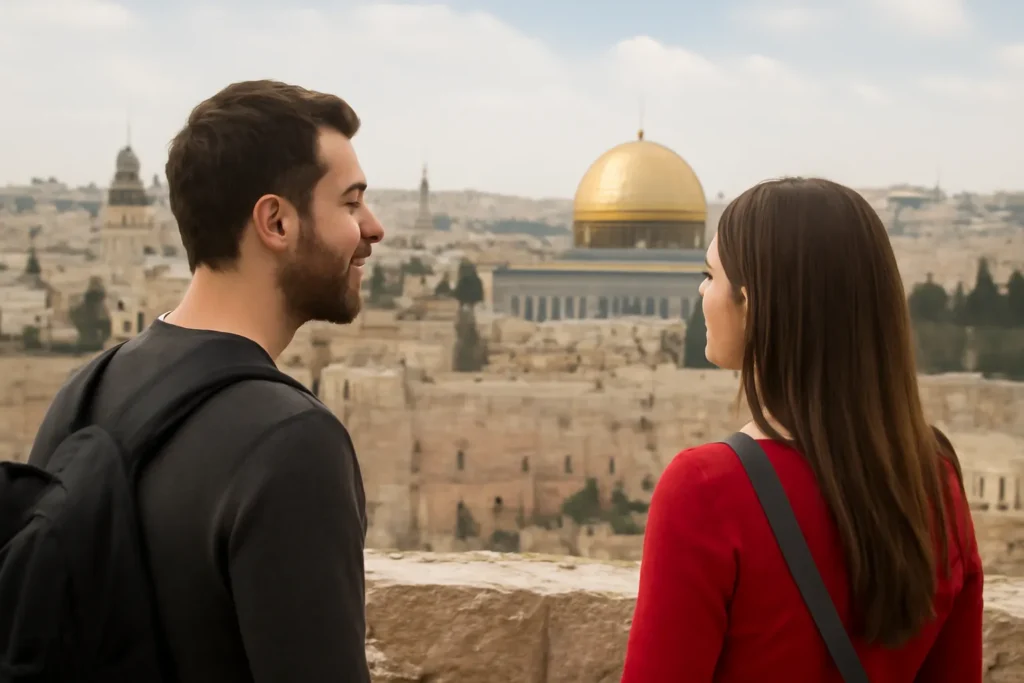
The Holy Land’s Christian communities are profoundly connected to a worldwide network of pilgrims, scholars, missionaries, and diaspora communities. Pilgrimage remains a central practice for many believers who travel to Jerusalem, Bethlehem, Nazareth, and other sacred sites to reflect on the life of Jesus and the early church.
Visitor experiences and spiritual practice
Visiting holy sites with guided tours that emphasize historical context and contemporary faith life.
Participating in liturgical celebrations during major feasts such as Christmas, Easter, Epiphany, and local saints’ days.
Engaging with parish outreach programs, including charitable work and education initiatives.
In addition to pilgrimage, many Christians in the Holy Land maintain inspiration and ties with global communities. Letters, partnerships, and missions connect local churches with sister congregations in North America, Europe, Africa, Asia, and across the Arab world. This international dimension helps sustain financial support for schools, hospitals, and humanitarian programs, enabling communities to continue their work despite regional challenges.
Challenges and resilience: contemporary life for Christians in the Holy Land
Christians in this region face a range of social, economic, and political challenges. Some communities experience emigration as families seek better opportunities elsewhere, while others remain deeply rooted in places where generations have worshipped and worked. Access to land, housing, and essential services can be complicated by security concerns, zoning regulations, and administrative procedures. Yet the enduring presence of Christian churches, schools, and charities demonstrates a resilience that has persisted through centuries of change.
Important topics that frequently arise in discussions about contemporary life include freedom of religion, educational access, economic opportunity, and interfaith cooperation. The Christian communities in the Holy Land often advocate for mutual respect and peaceful coexistence, recognizing that their own future is entwined with the well-being and safety of their neighbors across faiths.
Ensuring reliable access to sacred sites is a practical concern for many priests, lay leaders, and pilgrims. Denominational offices and ecumenical bodies work together to address issues such as opening hours, security measures, and preservation of worship spaces. The broader aim is to enable faithful practice while preserving these sites for future generations.
Youth and education as engines of continuity
Programs aimed at younger generations—such as scholarships, language courses, and youth leadership training—are central to sustaining Christian identity in the Holy Land. Schools affiliated with churches or ecumenical networks serve not only Christian students but also many Muslim and Druze students, contributing to a shared educational landscape that values pluralism and mutual respect.
Hope, dialogue, and the future of the Christian presence in the Holy Land
The future of Christian communities in the Holy Land depends on a combination of faithful witness, robust institutions, and constructive regional partnerships. Dialogues among families, parishes, and national communities help to nurture a sense of shared humanity and common purpose. The ongoing work of healing historical wounds, protecting religious freedom, and sustaining cultural heritage is carried forward by clergy, lay leaders, educators, and volunteers who see themselves as custodians of a long and transformative history.
Strategies for sustaining communities
Strengthening interfaith dialogue to promote mutual respect and collaborative social projects.
Investing in education and youth programs to equip the next generation for leadership and service.
Preserving heritage sites and supporting the arts as modes of cultural expression and tourism that benefit multiple communities.
Encouraging ecumenical partnerships to share resources, address common concerns, and amplify peaceful messaging.
For readers curious about this living religious landscape, it is important to recognize that Christians in the Holy Land are a diverse group with a shared commitment to their faith and a common sense of belonging to a region that has shaped Christian history for two millennia and more. Their stories—of endurance, adaptation, and hope—offer valuable insight into how communities maintain identity while navigating a rapidly changing world.
Practical guidance for visitors and researchers
People who travel to the Holy Land for study, pilgrimage, or personal interest can approach the subject with sensitivity and curiosity. When engaging with local Christians in the Holy Land, consider:
Respect for religious sites, dress codes, and customary practices in churches and monasteries.
Listening to community voices and learning about the different denominational traditions and their histories.
Seeking out local guides who can provide accurate historical context and contemporary perspectives on daily life.
Supporting legitimate charitable and educational programs that serve local communities in need.
The story of Christians in the Holy Land is not only about ancient religious heritage; it is a living narrative of faith in action—through prayer, service, culture, and dialogue. It is a reminder that sacred history and everyday life can coexist in a way that honors memory while fostering peace, understanding, and mutual respect among diverse communities.
Note on terminology: In discussions about this region, several terms are used to refer to the people and communities involved. The phrases Christians in the Holy Land, Holy Land Christians, Arab Christians in Palestine, Palestinian Christians, and Christian communities in Israel and the Palestinian territories all describe overlapping populations with distinct identities. Where possible, this article aims to acknowledge the linguistic and cultural diversity within these communities while focusing on shared elements of faith, history, and daily life.





Leave a Reply