Congregationalism: A Comprehensive Guide to Self-Governing Churches
Congregationalism: A Comprehensive Guide to Self-Governing Churches
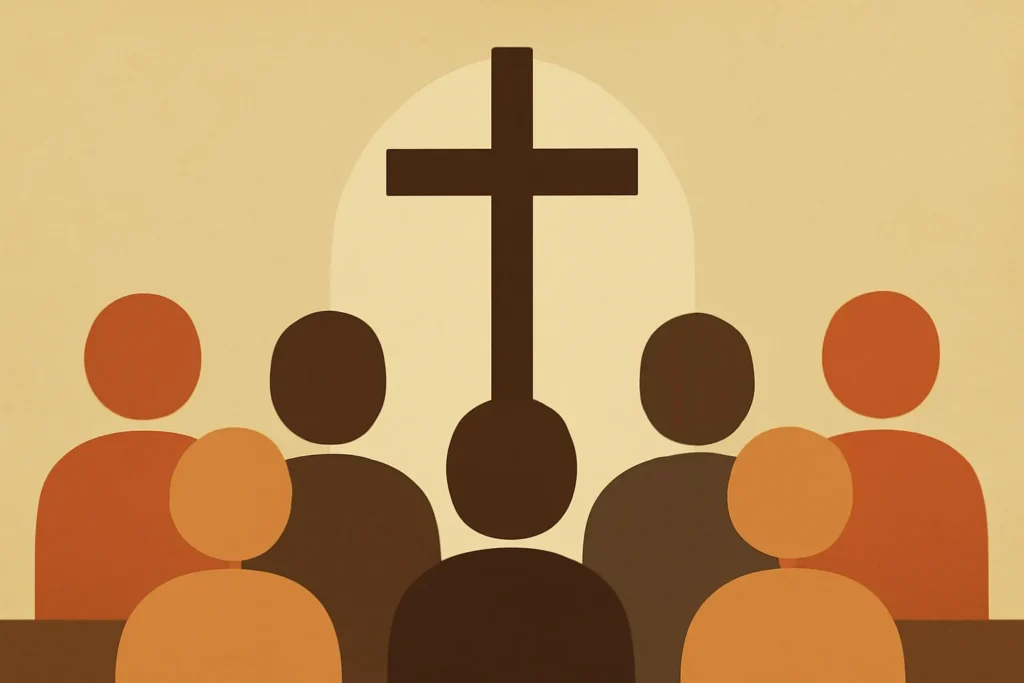
Congregationalism is a distinctive approach to church governance that centers the local congregation as the primary, self‑governing unit of a church. In this tradition, church autonomy is paired with deliberate communal discernment, so decisions about doctrine, discipline, worship, and mission are made primarily by the people who form a given church community. While the term can be used in several ways and across diverse contexts, at its core congregational church governance asserts that a local gathering of believers is capable, under the guidance of Scripture and the Holy Spirit, of directing its own affairs without a mandatory external hierarchy.
Congregational governance describes a polity in which the local church has ultimate authority over its life and work. Rather than a bishopric or presbytery exerting sweeping control over multiple churches, decisions are made by the congregation itself in regularly convened meetings. This model is sometimes called the Congregational Way or the independent church tradition because it emphasizes independence from centralized ecclesiastical structures.
In practice, congregationalism does not mean isolation. Many self‑governing churches participate in voluntary associations or networks to share resources, standardize training, or coordinate mission work. These associational structures exist to promote accountability, mutual support, and unity among churches with a shared ethos, while preserving local sovereignty. Thus, independent congregations retain ultimate jurisdiction over their own affairs, yet they remain open to accountability and cooperation within a broader free church ecosystem.
Historical Development
Early English roots and the rise of Independents
The seeds of congregational polity emerged in 16th and 17th century England among groups often labeled as Independents. They stressed the autonomy of each local congregation and rejected the notion that a centralized church structure should dictate doctrine or practice across diverse communities. Influential figures in this period argued that true church authority flows from within a gathered assembly of believers rather than from a distant hierarchy.
The Puritan era, the Cambridge Platform, and colonial transplant
In the English Puritan milieu, a formal articulation of this approach developed in the mid‑1600s. The Cambridge Platform (a defining 1648 document) helped to codify how congregational churches should exercise governance, discipline, and mutual accountability. When Puritans migrated to the American colonies, many carried these ideas with them, creating a robust Congregationalist model in New England. The Massachusetts Bay Colony and other settlements became laboratories for a church life organized around the decisions of the local body, with pastors and lay elders collaborating under the authority of the congregation.
Colonial America and the formation of the United Congregationalist identity
In the American context, congregational polity shaped everything from membership roles to discipline to the selection of ministers. Churches governed their life through congregational meetings, voted on budget, and wielded spiritual authority in matters of doctrine and practice. While many congregations remained independent, some allied in regional associations to address shared concerns, mission initiatives, or theological education. The balance between local autonomy and cooperative fellowship across churches remains a defining feature of the tradition.
Modern shifts: denominational evolution and remains of autonomy
The 19th and 20th centuries brought changes as some independent congregations joined larger denominations, while others maintained a strict stance of local sovereignty. Notable 20th‑century developments include the formation of denominational families that preserve congregational governance in spirit while providing resources, credentials, and networks. In the United States, several historic streams eventually contributed to contemporary expressions such as the United Church of Christ (UCC), which embodies a congregationally infused polity within a broader covenantal framework. Others continued as fully independent or quasi‑independent congregations with strong ties to regional associations.
Core Principles and Theology
The local church as a covenant community
A central conviction of congregational theology is that the church is a visible, covenant community of believers who gather around the gospel, baptism, and the Lord’s Supper. Membership is a voluntary commitment, not a prerogative conferred by a higher court. The covenantal dimension emphasizes mutual accountability, care for one another, and shared mission.
The priesthood of believers and shared discernment
In the free church tradition, all believers have access to truth and are invited to contribute to decisions about faith and practice. This is not an invitation to chaos but to a disciplined process in which Scripture, prayer, and thoughtful deliberation shape outcomes. Elders or pastors may provide doctrinal leadership, but ultimate authority rests with the people assembled in worship and governance.
Scriptural foundations and interpretive openness
Advocates of congregational polity typically ground their approach in Scripture and the example of the early church. They emphasize collective decision‑making about ordinances, discipline, and church growth, while recognizing the guidance of church officers and lay leadership. The precise interpretation of passages related to church order often reflects tradition, but the overarching principle remains preparation, confession, and consent by the congregation.
Baptism and the Lord’s Supper in a Congregational context
In this tradition, baptism and the Lord’s Supper are typically regarded as the two ordinances entrusted to the church. Practice varies by community: some emphasize infant baptism within a covenantal framework, others emphasize believer’s baptism by immersion. Similarly, communion is often observed regularly, with practice ranging from open to restricted principles depending on the local church’s understanding of fellowship and worship.
Governance and Structure
Key roles in a self‑governing church
Congregation — the ultimate decision‑making body, meeting in regular assemblies to approve budgets, doctrine, and leadership.
Elders (often a mix of teaching and ruling elders) — provide spiritual oversight, teaching, discipline, and pastoral care; they guide, but do not override, the congregational vote.
Deacons — oversee practical service, mercy ministries, and the care of the community, ensuring that needs are met with integrity and accountability.
Ministers or pastors — may serve as primary teachers and shepherds, but their authority is covenantal and shared with the congregation and elders.
Church meetings (also called congregational meetings or church conferences) — formal gatherings where members vote on important matters, including budgets, ordinations, and major policy decisions.
Membership, discipline, and governance processes
The governance cycles in a congregational church typically follow a pattern anchored in voluntary membership and mutual accountability:
Formal membership vows or a covenant that outlines responsibilities and expectations.
Ordination or installation of ministers, pastor‑elders, or teaching elders through a congregational vote and committee‑driven process.
Regular business meetings or annual/biannual gatherings to approve budgets, property matters, and policy changes.
Disciplinary practices that involve the gathered body, with care for restoration and reconciliation, guided by Scripture and the church’s covenant.
Annual reports, financial transparency, and accountability measures to maintain trust within the community.
Decision‑making patterns and procedural norms
In many congregational churches, decisions are reached through a vote of the membership. Common norms include plurality or majority votes, with some matters requiring a supermajority (for example, more than two‑thirds). The precise thresholds vary by church and association, but the standard remains: the congregation has the final say, with officers implementing the will of the people.
Worship, Practice, and Discipline
Liturgy and theological diversity within a shared framework
Worship practices among congregational churches range from highly liturgical to informal and contemporary. The shared thread is a commitment to biblical preaching, communal prayer, singing, and the celebration of the two ordinances. While the core commitments are stable, local churches celebrate cultural and contextual diversity in order to reach their communities effectively.
Open, closed, and experiential approaches to communion
Communion practice can vary. Some congregations practice open communion, welcoming all who profess faith in Christ, while others maintain restricted or close communion, linking participation to membership or affiliation with the local church. These decisions are typically made at the local level, reflecting the congregational emphasis on local discernment.
Discipline, restoration, and accountability
A distinctive feature of the congregational path is its discipline culture. When needed, the local church engages in a process aimed at restoration rather than punishment. This process is governed by the covenant, the counsel of elders, and the consent of the gathered membership. The aim is to preserve the integrity of the church while offering pastoral care and opportunity for repentance.
Denominational Affiliation and Networks
Fully independent congregations
A significant portion of congregational churches operates entirely on their own. These independent congregations choose to retain local sovereignty, avoid binding doctrinal creeds beyond the core gospel, and participate in voluntary networks as they see fit. Their strength lies in flexibility and local relevance, though they may miss some formal resources that larger denominational families provide.
Regional associations and United‑style family structures
Even within a congregational polity, many churches join regional associations for mutual accountability, credentialing, missions, and shared ministries. These connections can take several forms:
Associations that operate on a voluntary basis, coordinating training, mission, and resource sharing.
Confederal or federal structures where member churches retain autonomy but participate in joint decision‑making on specific issues.
Denominational families such as the United Church of Christ or the Congregational Federation in the UK that preserve substantial local sovereignty while providing networks, education, and mission partnerships.
Historical unions and the landscape of inherited polities
Some congregations joined historic unions that reshaped the polity of entire groups of churches. For example, in parts of the United Kingdom, Congregational churches joined with Presbyterian or Reformed bodies to form larger denominations like the United Reformed Church. In North America, various congregations transitioned into the UCC or other multi‑church expressions, while many remained staunchly independent. The common thread is that creedal and practical cohesion is achieved without sacrificing local autonomy.
Contemporary Trends and Debates
Women in leadership and the evolving ministerial landscape
Modern expressions of congregational governance increasingly engage questions about leadership, gender, and credentialing. While some independent churches maintain male‑only leadership models, others affirm women in pastoral and elder roles. The conversation often centers on balancing biblical interpretation, local context, and the practical needs of congregational life.
Inclusivity, diversity, and social witness
As societies become more diverse, congregational churches grapple with how to welcome, disciple, and include people from different backgrounds, ethnicities, and identities. The congregational approach can be a strength here—local communities can tailor hospitality and outreach while upholding shared gospel commitments. Debates about LGBTQ inclusion, racial justice, and social ministry are often resolved at the local level, with emphasis on community discernment and pastoral care.
Property, finances, and governance transparency
With local autonomy comes responsibility for financial stewardship and property management. Transparent budgeting, accountable leadership, and clear governance policies are increasingly viewed as essential to trust and mission effectiveness. Some networks provide standardized guidelines, but the actual decisions about finances remain in the hands of the congregation.
Digital ministry and global reach
The digital era has opened new avenues for local churches to worship, teach, and connect with mission partners. Congregational churches can maintain strong community life while extending their reach through online worship, streaming, and virtual small groups. At the same time, they must navigate issues of stewardship, governance, and the integrity of shared standards in a connected world.
While the core emphasis on local autonomy remains central, congregationalism appears in varied forms around the world. In some regions, churches combine a robust elder‑led framework with dynamic lay participation, while in others, church councils and congregational assemblies are the primary arenas for decision making. Across cultures, the tradition of self‑governing churches often emphasizes the responsibility of Christians in shaping the life of the community, mission priorities, and doctrinal clarity.
Impact on global evangelical networks
The free church tradition has influenced many evangelical movements that prize local initiative and lay leadership. In places where state churches dominate, the congregational model has provided a vehicle for religious freedom, civic participation, and grassroots leadership development. The global story of self‑governing churches is thus intertwined with broader themes of religious liberty, mission collaboration, and theological education.
Practical Guide for Visitors, Members, and Seekers
How to assess a congregational church community
If you are exploring a congregational church, consider the following:
Ask about membership criteria and the covenant you would be asked to sign or affirm.
Inquire about the role of elders and how decisions are made during congregational meetings.
Learn how the church handles discipline, restoration, and pastoral care.
Ask about staff leadership vs lay leadership, and how different ministries are organized.
Explore the church’s approach to baptism, communion, and the interpretation of ordinances.
Find out about financial transparency and how the congregation participates in budgeting and stewardship.
Ask whether the church participates in any associations or networks, and what that partnership looks like in practice.
Questions to ask when joining a local church
Some practical questions to bring to a leadership team include:
What is the procedure for transferring membership from another church?
How are conflicts resolved within the congregation?
What opportunities exist for lay leadership and service?
How is doctrinal teaching verified, and what guides our beliefs?
How does the church engage the community and fulfill its mission locally and globally?
Resources and Further Reading
For readers who want to delve deeper into the history, theory, and practice of congregationalism, a variety of texts, documents, and organizational resources are available. Key historical touchstones include the Cambridge Platform and colonial church records. Contemporary resources often focus on practical governance, church discipline, leadership development, and ecumenical dialogue.
The Cambridge Platform (1648) – foundational text outlining church order in New England.
Histories of the Independents/Independents’ movement in England and America.
Documents and guides on congregational polity and membership practices.
Contemporary denominational families that preserve congregational life while offering support networks (for example, networks within the Congregational Federation or the United Church of Christ in North America).
Essays on church discipline, restoration, and governance in the free church tradition.
Whether approaching from a historical, theological, or practical angle, the study of congregational self‑rule reveals a tradition that prizes the dignity and responsibility of the local church. The congregational method invites careful listening, communal discernment, and faithful service to God and neighbor. It also presents ongoing challenges—how to balance autonomy with accountability, how to maintain unity in mission while preserving diversity of practice, and how to equip laypeople to lead with competence and compassion.
In sum, congregational governance represents a robust and enduring approach to church life. Its emphasis on local autonomy, the leadership of the congregation, and collaborative ministry reflects a conviction that authentic Christian faith flourishes most fully when communities of faith exercise discernment together. Across continents and cultures, the many expressions of congregational polity share a commitment to a church that is free, accountable, and faithful to the gospel.








Leave a Reply