Church Advent Candles: A Complete Guide for Churches
Church Advent Candles: A Complete Guide for Churches
Church Advent candles are more than decorative elements; they are a liturgical tradition that helps worshippers mark the season of Advent, prepare for Christmas, and build a shared rhythm of prayer and expectation. In many congregations, the Advent wreath or Advent candles provide a visual and experiential focal point for worship, catechesis, and community life. This complete guide walks church leaders, volunteers, and laypeople through the meaning, practice, and practicalities of using Advent candles in a church setting.
Overview: what Advent candles symbolize in churches
The Advent candles are typically arranged on an Advent wreath or another circular or circular-inspired display that sits prominently within the worship space. Each week in Advent, one additional candle is lit, culminating in a bright center candle on the final Sunday or Christmas Eve. While the exact practice can vary by denomination and local tradition, the core idea remains the same: time, anticipation, and the light entering the world through Christ. Advent candles serve as a tangible reminder that the church is living in the in-between—between the promise of the Messiah and the fulfillment of that promise in the Incarnation.
Historical background: how Advent candles came to be
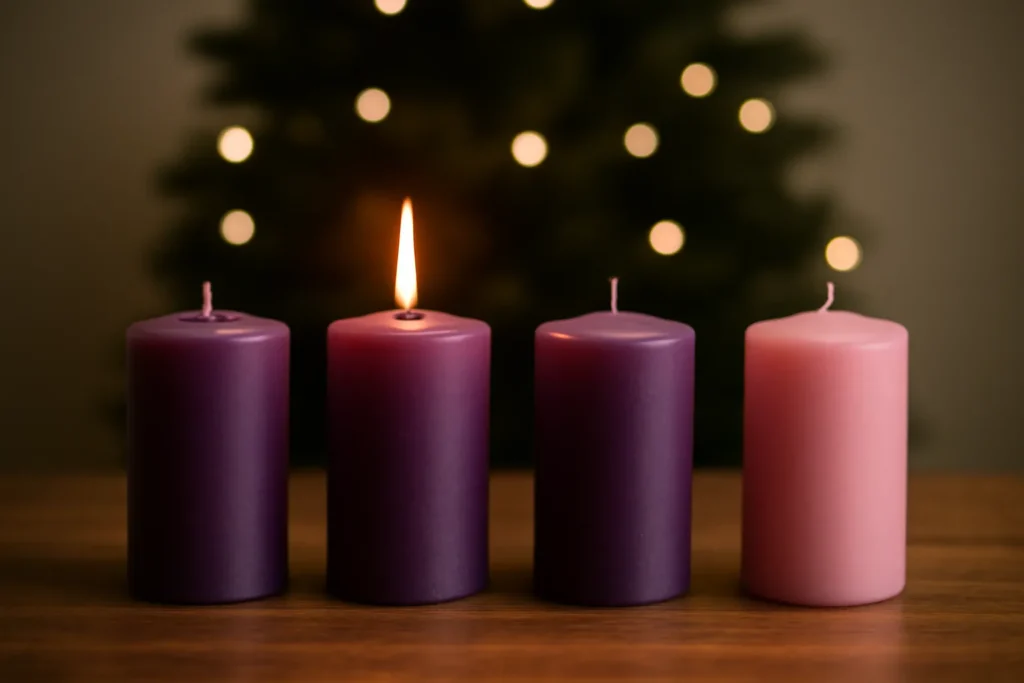
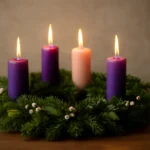
The custom of the Advent wreath with candles has roots in Northern Europe, evolving during the 16th and 17th centuries among Protestant communities and later spreading to Catholic and Orthodox contexts. The circle of the wreath symbolizes the eternity of God, while the lighting sequence channels a narrative arc: waiting, preparation, joy, and proclamation. Over time, the four purple candles (or violets) for most Sundays in Advent, the pink or rose candle for Gaudete Sunday, and the optional Christ candle in the center became familiar in many churches. Some traditions place the Christ candle lit on Christmas Eve or Christmas Day, while others light it on the first Sunday after Christmas. The use of candles blends symbolism with congregational participation, turning waiting into a communal spiritual practice.
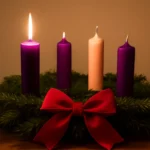
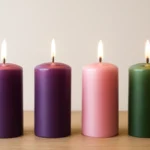
In many churches, the advent candle colors align with the liturgical calendar. Here is a practical overview of the most common color-coding schemes and what they symbolize in worship planning.
Purple/Violet candles — Advent as a season of expectation, penitence, and preparation. The hue signals a solemn and hopeful mood as the church anticipates the coming of Christ.
Pink/Rose candle — Symbolizes joy in the midst of preparation, typically lit on the third Sunday of Advent (often called Gaudete Sunday). It marks a shift from penitence toward anticipation of the arrival with a renewed sense of gladness.
White candle (Christ candle) — Lit on the final Sunday of Advent or Christmas Eve/Day to symbolize the coming of Jesus Christ, his birth, and the light entering the world. The center candle is sometimes lit last to emphasize the Incarnation as the culmination of Advent.
Blue candles — In some churches, particularly in certain Protestant or Orthodox-influenced traditions, blue is used as an alternative to purple to convey penitence, expectation, and depth of longing. Some places also use blue to differentiate a particular Sunday or theme.
When planning the color scheme for an Advent display, consider your tradition and parish preferences. Some congregations maintain strict adherence to the traditional four purple candles with a single pink candle, while others adopt LED or glass-encased versions for safety and maintenance reasons. Regardless of the color palette, the lighting progression remains a powerful symbolic rhythm: hope, preparation, anticipation, joy, and the culmination of Christmas Day.
Common arrangements: how the candles are displayed
Advent candles are most commonly arranged in a circular Advent wreath made of evergreen branches or an alternative platform with a raised center or open ring. Variants exist that suit different space constraints, accessibility needs, or church aesthetics.
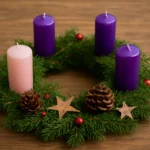
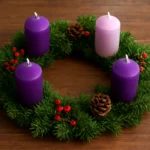
Standard circular wreath — A traditional layout with four outer candles arranged around a central Christ candle (if used). This arrangement emphasizes the cyclical nature of time and the coming light breaking into darkness.
Tabletop centerpiece — For smaller congregations or worship spaces, a compact, freestanding display that sits on a lectern or communion table can be used. It still follows the same lighting sequence, even if it is scaled down.
Hanging or wall-mounted display — In modern sanctuaries, a wall-mounted wreath or a line of candles can provide strong visibility from all seating areas while freeing floor space for accessibility.
LED or electric arrangements — For safety, energy efficiency, or maintenance reasons, many churches use LED candles that imitate real flames. LED candles require careful battery management and timers but can be operated by a small team or automated in a liturgy plan.
Whichever arrangement a church chooses, the structure should provide clear visibility for the people, preserve flame safety (or its LED equivalent), and support the worshipful focus on the liturgical season. The presentation should feel welcoming and meditative, not cluttered or distracting from the prayers and readings.
Liturgical practice: lighting the Advent candles through the season
The lighting sequence typically spans four Sundays leading up to Christmas. Some congregations also observe a fifth, central candle when appropriate. Below is a practical framework that churches can adapt to their own rites and traditions.
First Sunday — Light the first purple candle. A brief homily or exhortation may focus on the theme of hope (often associated with the prophet Isaiah’s message and the coming Messiah).
Second Sunday — Light the first purple candle and the second purple candle. Readings and prayers may highlight preparation and longing for redemption.
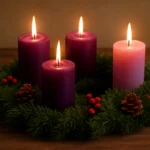
Third Sunday (Gaudete Sunday) — Light the first two purple candles and the pink rose candle. The emphasis shifts toward joy in the Lord, acknowledging that the season’s fullness will soon arrive.
Fourth Sunday — Light all four purple candles (and the pink one if used). The theme often centers on peace and expectation as Christmas approaches.
Christmas Eve or Christmas Day — If a Christ candle is part of the plan, light the center white candle to signify the Nativity and the fulfillment of the Advent promise.
Each lighting ceremony can be accompanied by a short prayer, a brief reading, and a congregational response. Many churches prepare a short script that can be used by the pastor, deacon, or lay reader. If you use readings from the lectionary, align them with the Sunday’s theme. For congregations with a large number of participants, you can rotate lay readers or youth group members to recite prayers and readings.
Sample liturgy: a concise, adaptable script
The following is a template you can adapt for each Sunday. It emphasizes clarity, reverence, and participation.
Leader: We light this first candle, symbolizing hope.
Congregation: We wait in joyful hope for the coming of our Savior, Jesus Christ.
Leader: Now we light the second candle, symbolizing preparation.
Congregation: May our hearts be prepared to welcome the Lord.
Repeat with the pink candle on Gaudete Sunday, then the additional purple candles. If Christ is celebrated with a Christ candle, insert the blessing and lighting at the end of the Advent season or on Christmas Eve/Day as appropriate.
Prayers, blessings, and worship resources
Blessing the Advent wreath or candles can be a meaningful moment at the start of the season or before the first lighting. You may find it helpful to include a brief blessing that acknowledges the role of light in a world that longs for hope and peace. Here is a simple example that can be adapted to your tradition:
Blessed are you, O Lord our God, King of the universe, who brings light to our days. We thank you for the gift of this Advent wreath, and for the light that each candle represents—the hope, preparation, joy, and peace that come through Christ our Lord. May these candles remind us to walk in faith, to serve others, and to keep watch for the coming of your Son, Jesus Christ. Amen.
In many churches, devotionals accompany each lighting. These may include short readings from scripture, a reflection from a pastor or lay leader, and a guided moment of silence. Some parishes also invite the congregation to participate in a brief responsive prayer after each candle is lit. The goal is to create a sense of shared anticipation that is both contemplative and communal.
Practical considerations: safety, materials, and maintenance
Advent candles require careful planning beyond theology and liturgy. Practical considerations ensure a safe, sustainable, and meaningful celebration.
Safety first — If you are using real candles, ensure stable, non-flammable holders, a sturdy base for the wreath, and a clear perimeter to prevent accidental contact. Assign a dedicated candle monitor or candle team to attend the lighting and extinguishing process. Ensure extinguishing supplies are accessible, and never leave burning candles unattended.
Alternative options — LED candles or battery-operated votives can dramatically reduce fire risk and simplify maintenance. If you use LEDs, plan for battery checks, timer programming, and replacement cycles.
Materials — For real candles, choose high-quality paraffin or beeswax candles with appropriate fragrance policy (many congregations prefer unscented to avoid allergic reactions). Use glass holders that are heat-resistant and easy to clean.
Space and accessibility — Position the wreath so that all participants can see the lighting and hear readings. If space is limited or sightlines are poor, consider placing the wreath on the altar or a central lectern with good visibility.
Maintenance and replacement — Plan for the replacement of worn holders, broken glass, or spent candles. Establish a small stock of spare candles in the correct sizes and colors. For outdoor or dim spaces, ensure lighting remains visible during evening services or sunset.
Materials and preparation: choosing candles and wreaths for your church
The selection process for Advent candles is influenced by denomination, budget, and parish preferences. Here are practical tips to guide your procurement and setup.
Assess denomination-specific requirements — Some churches adhere to historical norms (purple and pink candles with a central white candle), while others adopt regional colors or contemporary adaptations. Align with your liturgical committee or worship team to ensure consistency with worship planning documents.
Choose a wreath or display format — The size should match the space and audience. A traditional six- to eight-inch wreath is common for smaller sanctuaries; larger sanctuaries may benefit from bigger wreaths or a wall-mounted display.
Plan for the Christ candle — Decide whether your tradition includes a fifth candle in the center and the schedule for lighting it. If you do not use a Christ candle, ensure the final Sunday’s readings and prayers still provide a sense of culmination and fulfillment of Advent expectations.
Color integrity — Source candles that match your color scheme. If you use mixed color options (e.g., purple and pink), verify the hues appear distinct and consistent under sanctuary lighting.
Backup arrangements — Keep backup candles and fixtures on hand, especially for major services or special events (Christmas Eve, Christmas Day). This prevents last-minute shortages or substitutions during a service.
Educational and outreach opportunities around Advent candles
Advent candles can be a powerful teaching tool and community-building element. Churches often use them to connect worship, education, and service in meaningful ways.
Sunday school programs — Incorporate the candle lighting into children’s lessons, with age-appropriate explanations of each candle’s meaning. This encourages participation and helps younger members engage with the liturgy.
Adult education or small groups — Provide discussion guides that explore the themes of hope, preparation, joy, and peace. Encourage groups to reflect on how these themes show up in congregational life and local outreach.
Illuminated prayer guides — Publish devotional materials that accompany Advent candles, including daily readings, prayers, and suggested acts of service for the week.
Community outreach — Use the Advent candle lighting as a platform to invite neighbors to a candlelit service, a parish light-giving drive, or a window display that explains the symbolism behind the Advent candles.
Planning and logistics: organizing Advent candle practices in a church calendar
Long-term planning helps ensure that Advent candle observances are smooth, meaningful, and collaborative. Below is a practical planning guide for church leaders and worship teams.
Publish the plan in advance — Include the lighting schedule, color scheme, and any special services in the church bulletin, website, and worship slides. Provide a brief explanation of the symbolism to educate the congregation.
Assign roles — Demarcate duties for lighting, readings, prayers, and cleanup. Consider rotating roles among volunteers, including youth or members with a curiosity about liturgy.
Schedule rehearsals — For complex services or large congregations, rehearse the lighting sequence to avoid delays or confusion during the service.
Budget and procurement — Include candles, holders, and any displays in your worship budget. Plan for replacements and contingencies in case of damage or loss.
Accessibility and inclusivity — Ensure that the liturgy and visuals are accessible to those with vision or hearing impairments. Use large-print programs or captions and provide descriptive cues in the readings for those relying on memory or spoken prayers.
Denominational variations: how different churches use Advent candles
While the Advent wreath with four candles and a Christ candle is widespread, different denominations may emphasize distinct aspects of the candles or use alternate practices. This section highlights some common variations and offers practical notes for churches adapting the practice to their liturgical identity.
Catholic and Anglican/Episcopal traditions
In Catholic and Anglican contexts, the Advent wreath is often central in parish churches and cathedrals. The colors follow the traditional purple and pink (for Gaudete Sunday), with the option of a white Christ candle in the center. The readings and prayers frequently align with the liturgical calendar and lectionary cycles. The emphasis is on contemplative preparation and communal worship, with the possibly longer observances on the second and third Sundays and special Advent services on the weekend before Christmas.
Lutheran and Reformed churches
In many Lutheran and Reformed congregations, the Advent candle lighting procedure mirrors broader Lutheran liturgy—ordinarily modest in scale but rich in Scripture and song. The color symbolism is generally preserved, but some communities might use a mix of violet and blue to reflect regional or cultural preferences. A Christ candle is commonly included, and the Christmas Eve service may feature a dramatic lighting of the Christ candle as the culmination of the Advent season.
Methodist and Pentecostal communities
In Methodist and Pentecostal settings, Advent candles often accompany a storytelling or testimony format that emphasizes hope, readiness, and joyful anticipation. Some churches incorporate modern hymns or seasonal songs as the candles are lit, creating a dynamic blend of tradition and contemporary worship. Safety considerations for real candles are particularly important in these contexts, and LED candles are commonly employed in classrooms and prayer spaces.
Orthodox and Eastern Christian contexts
In Orthodox traditions, the approach to Advent and Christmas observance diverges from Western practice, with a focus on the Nativity Fast. Some churches adopt a form of Advent candle symbolism during the pre-Christmas period or in ecumenical contexts, while others maintain non-liturgical decorations. When Advent candles are used, they may be integrated into a broader season of waiting and preparation, sometimes with different color conventions or prayer intakes consistent with Eastern liturgical practice.
Accessibility, inclusivity, and environmental considerations
Accessible and inclusive church practice ensures that Advent candle observances are meaningful to all members, including those with sensory or mobility differences and families with children.
Clear visuals — Ensure the display is visible to congregants from all seating areas. Use large, high-contrast signage or digital screens to explain the candle colors and symbolism.
Auditory clarity — Provide brief readings and prayers that are easy to hear, with options for sign language interpretation or captioning on online services.
Safety and simplicity — For families with children, consider a version of the Advent wreath that uses LED candles or battery-powered options, with supervised times for safety training and guidance.
Environmental stewardship — If using real candles, choose sustainable wax options (like soy or beeswax) where possible, and ensure proper disposal of leftover wax and spent materials. LED candles offer long-term energy savings and reduced waste.
Resources for churches: templates, checklists, and further reading
To support churches in implementing Advent candles with grace and efficiency, a variety of templates and resources can help. Below are suggested starting points you can adapt to your local context.
Liturgy templates — Ready-to-use liturgies for each Sunday of Advent, including readings, prayers, and response responses. These can be adapted to your lectionary and sermon series.
Planning checklists — A printable checklist covering procurement, safety, volunteers, service schedule, and contingency plans for weather or lower attendance.
Educational handouts — Simple handouts for families and newcomers explaining the meaning of each candle and what to reflect on during the season.
Budget guides — A budgeting sheet for candles, wreaths, holders, and maintenance supplies, with suggested price ranges and replacement timelines.
Best practices for churches beginning Advent candle traditions
New or expanding Advent candle programs can be a meaningful addition to worship life. The following practices help ensure a successful launch and ongoing vitality.
Start with training — Offer a brief training session for volunteers on candle handling, safety, and the lighting sequence. Include a demonstration of how to extinguish and store materials properly.
Introduce with a simple ceremony — Kick off Advent with a short dedication service that blesses the wreath and explains the plan for the season, inviting the congregation to participate in a week-by-week lighting plan.
Maintain consistency — Adhere to a regular lighting schedule and publicize it in advance so families can participate. Consistency helps members grow in prayer and anticipation.
Encourage reflection — Provide brief devotional prompts or prompts on church social media or in weekly bulletins to accompany each candle lighting.
Evaluate and adapt — After the season, solicit feedback from worship teams and congregants about what worked well and what could be improved for the next year.
Conclusion: embracing Advent candles as a meaningful spiritual practice
Advent candles—whether in a traditional wreath or an alternative display—offer a multisensory way to mark the church’s journey toward Christmas. They blend symbolism with communal participation, inviting every member of the congregation to reflect on hope, preparation, joy, and peace as the light grows brighter week by week. Involving children, youth, and adults in the lighting, prayers, and readings helps nurture a shared sense of anticipation that goes beyond a single service or season. By paying careful attention to color symbolism, liturgical alignment, safety considerations, and inclusivity, churches can sustain a robust Advent candle practice that nourishes worship, catechesis, and neighborly care year after year.
Whether your church uses classic purple and pink candles with a central white Christ candle or adopts a modern blue or LED-based approach, the core value remains constant: light entering the world as an act of invitation, grace, and transformation. May your Advent candle tradition illuminate hearts, deepen faith, and foster hope as your community prepares to welcome the Messiah this Christmas season.



Leave a Reply