ESV Catholic Edition: Guide to Features & Differences
ESV Catholic Edition: Guide to Features & Differences
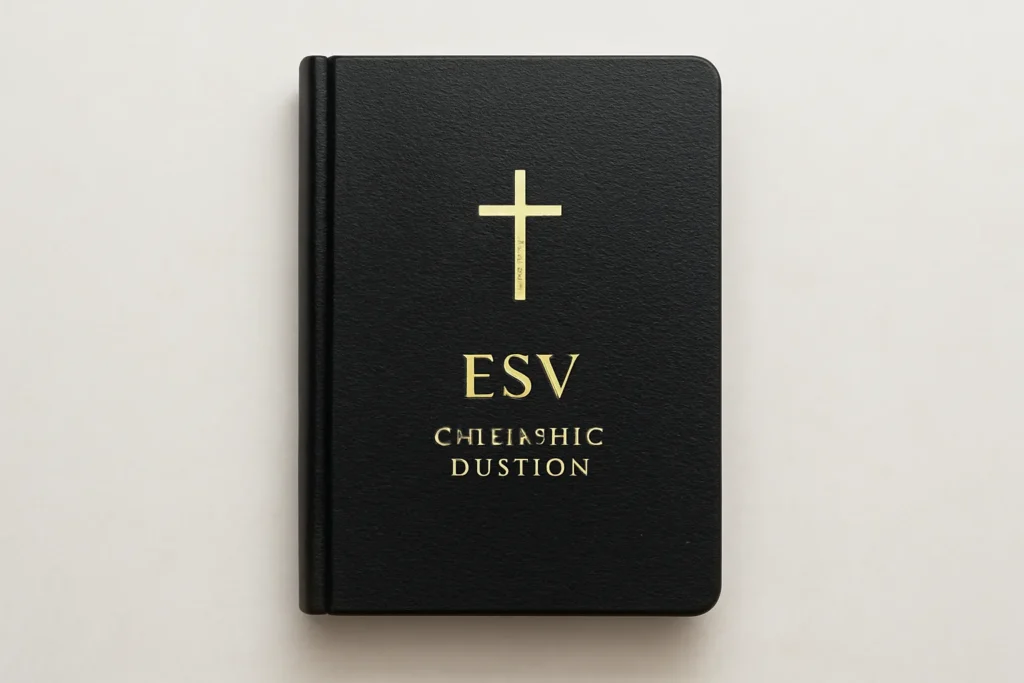
The ESV Catholic Edition is a distinctive edition of the English Standard Version that incorporates the Catholic canon while maintaining the translation philosophy of the widely used ESV. It is designed to serve readers who want the same precise, literary English style of the ESV while reading from a Bible that reflects the Catholic measure of Scripture, including the deuterocanonical books. This article offers an in-depth, practical guide to the features and differences you’ll encounter in the ESV Catholic Edition, with attention to what makes it unique, how it compares to the standard ESV, and how to use it effectively in study, devotion, and liturgical contexts.
The ESV Catholic Edition is an edition of the English Standard Version that explicitly includes the Catholic canon of Scripture. In typical Catholic Bibles, the Old Testament contains a set of books known as the deuterocanon, which are not part of the Protestant canon. The Catholic Edition of the ESV therefore includes these additional books and sections, resulting in a total of 73 books (27 in the New Testament, and 46 in the Old Testament). The standard Protestant ESV, by contrast, presents 66 books (39 in the Old Testament and 27 in the New Testament). For readers who want to read from a single edition that aligns with Catholic usage, the ESV CE offers a compelling option.
The Catholic Canon: Books Included and Organization
One of the core differences you will notice in the ESV Catholic Edition is how the books are organized and which texts appear. Key points include:
Old Testament content is expanded to include the deuterocanonical books such as Tobit, Judith, Wisdom, Sirach (Ecclesiasticus), Baruch, and 1–2 Maccabees, along with the additions to Esther and Daniel that are standard in Catholic editions.
The Order of books in the Old Testament may reflect Catholic usage, which places the deuterocanon in the canonical sequence alongside the other books, rather than grouping them separately or placing them in a later section as some Protestant editions do.
The New Testament remains the same 27 books as in the standard ESV, preserving the familiar order and structure for Christian readers across traditions.
Verse numbering differences and textual apparatus may appear in places where the Catholic canon intersects with the additional material. Readers should be aware that a few passages can have slightly different mechanical presentations due to the inclusion of deuterocanonical material and its placement in the text.
Practical implications of the canon
For readers, the canonical differences mean that the ESV CE is suitable for both private study and public reading in contexts where the Catholic canon is standard. It also provides a bridge for ecumenical dialogue, scholarly comparison, and devotional use when participants come from diverse Christian backgrounds. If you are primarily reading to compare with Catholic liturgical practice or to use a single volume for Catholic catechesis and personal growth, the ESV CE offers a cohesive solution.
Translation Philosophy and Style: How the ESV CE Keeps the Faithful Read
The ESV is widely known for its approach described by its publishers as an “essentially literal”, or “word-for-word” translation philosophy. The same principle informs the ESV Catholic Edition, with the caveat that the edition also represents the Catholic canon, and may include editorial notes or cross-references that reflect Catholic usage. Core elements you’ll encounter include:
Faithful rendering of the original languages (Hebrew, Aramaic, and Greek) into clear, readable English that preserves important literary qualities, sentence structure, and rhythm.
Structural precision in places where the original text favors parallelism, chiasmus, or other ancient rhetorical devices, so that readers encounter a translation that is faithful to form as well as content.
Consistent terminology across books, including names of God, key theological terms, and titles for figures such as prophets and apostles, while remaining accessible to modern readers.
A balance between literal accuracy and readability that supports both study and devotion. The ESV CE keeps this balance, ensuring that readers do not sacrifice clarity for antiquated phrasing or vice versa.
Notes, cross-references, and study aids
In many printings of the ESV Catholic Edition, you will find study aids that resemble those in the standard ESV study Bibles, including:
Cross-references that connect verses across the canonical books, offering pathways for thematic or doctrinal study.
Footnotes that explain textual variants, translation choices, or doctrinal considerations relevant to the Catholic canon when applicable.
Occasional editorial notes that help readers understand how the deuterocanonical books fit within Catholic theology and liturgy.
Important Differences from the Standard ESV
If you are upgrading from the standard Protestant ESV to the ESV Catholic Edition, you should anticipate several concrete differences beyond the inclusion of extra books. These differences may influence reading plans, study methods, and even how you align the text with liturgical or catechetical materials. Key differences include:
Canon scope: The most obvious difference is the addition of the deuterocanonical books and related material in the Old Testament, yielding 73 books in total.
Book order and presentation: The arrangement of the Old Testament follows Catholic usage, which can affect how you navigate sections and locate passages compared to the Protestant edition.
Psalms and cantillation references: In Catholic editions, some Psalm numbering and cantillation cues may align with Catholic liturgical practices. Readers should be mindful of potential numbering differences when using parallel resources.
Notes and commentary: The edition may include notes tailored to Catholic readers, including references to catechetical contexts, liturgical readings, and patristic or traditional interpretations where relevant, without turning the text into a commentary-heavy edition.
Editorial conventions: Language choices and editorial conventions throughout the deuterocanonical sections are designed to be respectful of Catholic tradition while preserving the ESV’s translation philosophy.
Several passages—especially in the deuterocanonical portions and in places where the Catholic canon interacts with the broader Christian tradition—may show minor differences in verse numbering compared to the standard ESV. These discrepancies are largely a matter of canonical ordering and how editors align chapters and verses within the Catholic framework. When using study tools, commentaries, or digital versions, you may encounter notes indicating these variations so you can navigate the text accurately.
Textual Apparatus: Footnotes, References, and Editorial Tools
The strength of a well-made edition is often measured by its editorial apparatus—the notes, references, and helpful features that accompany the primary text. In the ESV Catholic Edition, readers will typically find tools designed to support Catholic readers and ecumenical study, including:
Footnotes explaining textual variants and translation choices, with a view to how they relate to Catholic understanding.
Cross-references that connect related passages across the canonical books, aiding thematic studies such as wisdom literature, prophetic writings, and early church history.
Concordance-ready headings in many editions, which help you locate passages by theme, event, or person, and connect them to catechetical or homiletic studies.
Notes that occasionally address liturgical usage or devotional contexts appropriate for Catholic readers, while maintaining the integrity of the English text.
Readability, Typography, and Design Considerations
Readers of the ESV Catholic Edition often appreciate how the design supports both study and daily reading. Design considerations can include:
Typography that emphasizes legibility, with comfortable font sizes for long reading sessions and clear verse demarcations.
Verse and paragraph breaks that help you navigate complex passages without losing flow, especially in longer prophetic and wisdom sections.
Distinctive section headings and book introductions that orient readers to the Catholic arrangement and context for each book.
High-quality binding and durable materials in print editions, making the ESV CE suitable for personal study, classroom use, or parish libraries.
Formats and Availability: Print, Digital, and Beyond
Like many modern Bible editions, the ESV Catholic Edition is available in multiple formats to suit different environments and preferences. Options commonly found include:
Print editions in various bindings (premium leather, calfskin, or hardcover) and sizes, intended for personal study, gift-giving, or classroom use.
Compact and study Bibles that include helpful introductory material, maps, appendices, and concordance tools designed for efficient reference while on the go.
Digital versions compatible with popular Bible apps and platforms. Digital formats often provide features like search, highlighting, note-taking, and cross-referencing across the entire 73-book canon.
Library and academic editions geared toward seminar use, with robust footnotes and alignment with Catholic catechetical materials.
Who Should Consider the ESV Catholic Edition?
Choosing the ESV Catholic Edition depends on personal needs, worship context, and study goals. Here are some common scenarios where this edition shines:
Catholic readers who want a single English Bible that includes the full Catholic canon while preserving the familiar ESV translation style.
Ecumenical study groups that include Catholic participants and want a text that aligns with Catholic canon without switching to a different translation.
Academic or catechetical settings where instructors or students need to compare the Catholic Old Testament with the New Testament within a single volume.
Devotional readers who value a translation that reads naturally in English while offering robust notes and cross-references for deeper reflection.
How to Use the ESV CE in Practice
To maximize the benefits of the ESV Catholic Edition, consider these practical approaches:
Plan a canon-aware reading by starting with the Old Testament sections that include deuterocanonical books, then moving into the New Testament. This helps you experience the Catholic canon as a cohesive collection.
Cross-reference strategically—use the cross-references to explore thematic threads across both testaments, such as wisdom literature echoes, prophetic fulfillment patterns, or the development of early Christian thought in light of Catholic tradition.
Lectionary alignment—where applicable, compare your reading with Catholic lectionary selections to see how the text is shaped for liturgy and catechesis.
Note-taking—use footnotes and editorial notes to capture translation choices and doctrinal considerations relevant to Catholic interpretation, while proceeding with personal reflection and prayerful reading.
Compare with other editions—a careful side-by-side comparison with the standard ESV and Catholic canonical editions can illuminate how the deuterocanon affects inference, references, and theological framing.
As with any specialized Bible edition, readers often encounter questions or misconceptions. Here are clarifications to help you evaluate the ESV CE accurately:
Myth: The ESV CE replaces the Douay-Rheims or NAB in Catholic contexts. Fact: It is a distinct translation that supplements the ESV approach with the Catholic canon; it does not aim to replace official Catholic Bibles used in liturgy or doctrine in all contexts.
Myth: The translation changes the theology to fit Catholic doctrine. Fact: While the edition includes Catholic canonical texts and may include notes relevant to Catholic readers, the core translation philosophy of the ESV remains essentially literal and committed to accurate rendering of the original languages.
Myth: The deuterocanonical books are placed in a separate appendix. Fact: In the ESV CE, the deuterocanonical books are integrated into the Old Testament sequence in a manner consistent with Catholic usage, not isolated in an appendix.
Myth: The ESV CE cannot be used for ecumenical study. Fact: It is specifically well-suited for ecumenical contexts where Catholics and other Christians study Scripture together, offering a shared English translation that honors Catholic canon.
If you are weighing whether to get the ESV Catholic Edition, consider these practical questions:
Do you need a single Bible that includes the deuterocanonical books for personal study or catechesis?
Are you involved in ecumenical study or interchurch groups where Catholic canon is part of the curriculum?
Will you be aligning your reading with Catholic lectionaries or Catholic education materials?
Do you prefer the same English translation philosophy as the standard ESV, with the only major difference being the canon and related editorial notes?
Understanding the practical contexts in which the ESV CE excels helps readers set expectations:
Church libraries and parish reading programs can benefit from a single edition that serves both personal devotion and group study across traditions.
Academic settings may use the ESV CE to illustrate differences between canons, translation decisions, and the way editorial apparatus supports Catholic interpretation.
Personal devotional reading can benefit from a pristine English translation that is easy to digest in daily quiet time, while still offering access to additional deuterocanonical material.
If you are ready to acquire the ESV Catholic Edition, here are practical steps and tips to ensure you get a reliable edition that meets your needs:
Check the publisher page for the edition’s canonical scope, table of contents, and any notes that accompany the text.
Look for the format you prefer (print, leather-bound, or study edition) and whether it includes helpful features like maps, introductions, a concordance, or a glossary.
Consider whether you want a digital version with search and annotation capabilities, especially if you plan to study across multiple devices and platforms.
For classroom or parish use, verify if the edition includes any catechetical resources or teaching aids that align with Catholic education standards.
To crystallize the differences, here is a quick comparative snapshot. Note that the specifics can vary slightly by print run or digital edition, but the core distinctions usually hold:
ESV CE vs. standard ESV — The ESV CE includes the Catholic canon (Old Testament with deuterocanon) and related editorial material oriented toward Catholic readers, while preserving the ESV translation approach. The standard ESV contains 66 books and is aligned with Protestant canon without the deuterocanon.
ESV CE vs. Catholic Bibles (Douay-Rheims, NAB, etc.) — The ESV CE retains the modern English translation style of the ESV; Catholic Bibles like the Douay-Rheims or NAB may reflect different source texts, translation choices, or editorial practices more closely tied to Catholic tradition. The ESV CE provides a contemporary English alternative that is especially accessible for readers already familiar with the ESV.
ESV CE vs. other ecumenical editions — Other ecumenical editions may combine canonical books with cross-trano or paratexts that emphasize historical-critical notes or patristic commentary. The ESV CE aims for a balance of accuracy and readability while centering Catholic canon in a single volume.
The ESV Catholic Edition represents a thoughtful intersection of translation fidelity, canonical breadth, and practical usability. For readers who want an English Bible that honors the Catholic canon while preserving the readable, precise style of the ESV, this edition offers a coherent, legible, and reliable option. It supports private reading, family devotions, catechesis, and ecumenical study—providing a shared text that can serve as a bridge between traditions without requiring readers to switch translations mid-study.
As you consider incorporating the ESV Catholic Edition into your library, reflect on your goals as a reader. If your primary aim is to study Scripture in a way that is faithful to the Catholic canon and liturgical practice, this edition can be an excellent ongoing resource. If your focus is strictly within a Protestant framework or you rely on Protestant catechesis, you may still benefit from the edition’s precise translation and its posture toward the wider Christian conversation, but you might prefer the standard ESV for routine usage.
In any case, the ESV Catholic Edition stands as a robust option for those seeking a modern English Bible that explicitly includes the Catholic deuterocanon, preserves the ESV’s translation integrity, and offers thoughtful editorial features to support study and devotion. Whether you purchase a print copy for your shelf, download a digital edition for your device, or use it in a classroom setting, this edition invites readers to engage Scripture with clarity, reverence, and informed curiosity.










Leave a Reply