Galatia in the Bible: people, places, and Paul’s letter
Galatia in the Bible: people, places, and Paul’s letter
When you read that Paul wrote to the churches in Galatia, you may wonder whether Galatia was a city, a country, or simply the name of a church. The answer is that it was a region in central Anatolia, the area now known as central Turkey, and its meaning changes slightly depending on whether the Bible is referring to an ethnic territory or a Roman province.
Galatia became important to early Christianity because Paul visited communities there, taught about Jesus Christ, and later wrote the letter known as Galatians. The letter addresses a serious dispute: must non-Jewish believers adopt the requirements of the Jewish law to belong fully to God’s people? Paul’s answer is no. He argues that people are made right with God through faith in Christ, not by taking on the boundary markers of the Mosaic law.
Galatia lay in the interior of Asia Minor, far from the Mediterranean coast. Its landscape included broad plateaus, rolling hills, and important routes connecting western Anatolia with Syria and the eastern regions of the Roman Empire. Because it sat inland, travelers moving between major cities often passed through areas associated with Galatia.
The name came from Galatian peoples who migrated into central Anatolia from the west during the centuries before the New Testament period. These groups were related to Celtic peoples from Europe. Over time, they lived among older Anatolian populations and adopted many features of Greek and Roman culture, while the region continued to carry their name.
Ancient Galatia is not identical to the modern nation of Turkey. It was a historical region whose boundaries shifted over time. The places associated with it included areas around Ancyra, later called Ankara, as well as Pessinus and Tavium. Those centers had different political, religious, and cultural histories before and during the first century.
Roman administration added another layer to the term. After Rome gained control of the region, it organized a larger province called Galatia. That province could include districts south of the older ethnic homeland. As a result, a first-century writer could use “Galatia” in either a narrower geographic sense or a broader administrative sense.
Geography matters: “Galatia” can mean the territory traditionally associated with the Galatian people or the larger Roman province. This distinction helps explain why scholars debate which churches Paul addressed in the letter to the Galatians.
Galatia’s position also helps explain the movement of people and ideas through the region. Roads, military routes, trade connections, and local networks linked central Anatolia with cities such as Antioch in Pisidia, Iconium, Lystra, and Derbe. These southern cities became significant locations in the story of Paul’s missionary work.
Who lived in Galatia during the New Testament period
The population of Galatia was diverse. The region included descendants of the original Galatian settlers, local Anatolian communities, Greek-speaking residents, Roman officials, soldiers, merchants, and Jewish families. Greek was widely used in public and commercial life, while local customs and languages continued in different areas.
Religion was equally varied. People worshiped traditional local deities, Greek gods, Roman gods, and imperial figures. Some cities had long-standing sanctuaries that attracted pilgrims and supported religious economies. Jewish communities were also present in several parts of Asia Minor, creating settings where synagogue teaching and Israel’s Scriptures were known.
Paul’s message reached a setting already shaped by religious questions. People in these communities understood ideas such as gods, sacrifice, purity, loyalty, and divine blessing, but they did not all approach those ideas in the same way. Some listeners came from Jewish backgrounds; others were Gentiles who had worshiped local or imperial deities.
The ethnic label “Galatian” did not necessarily describe every person living in the Roman province. A resident of a southern city might be called Galatian because of provincial administration even if that person had no Celtic ancestry. This is one reason modern readers should avoid treating the name as a simple description of one race or culture.
Paul’s churches therefore included people with different histories. Jewish believers brought knowledge of the law, Scripture, and synagogue life. Gentile believers had not grown up observing circumcision, food regulations, or the Jewish calendar. Bringing these groups together created both spiritual possibilities and practical tensions.
Jewish followers of Jesus often understood faith through Israel’s covenant story.
Gentile followers of Jesus needed to understand how they belonged to the people of God without becoming ethnically Jewish.
Local residents encountered Christian teaching alongside established temples and civic traditions.
Travelers and merchants helped carry news, teachings, and letters between Christian communities.
The social setting also made questions of status significant. Roman society was organized through distinctions involving citizenship, ethnicity, gender, wealth, slavery, and patronage. Against that background, Paul’s teaching about a shared identity in Christ had consequences for how believers viewed one another.
Paul’s visits to Galatia in Acts
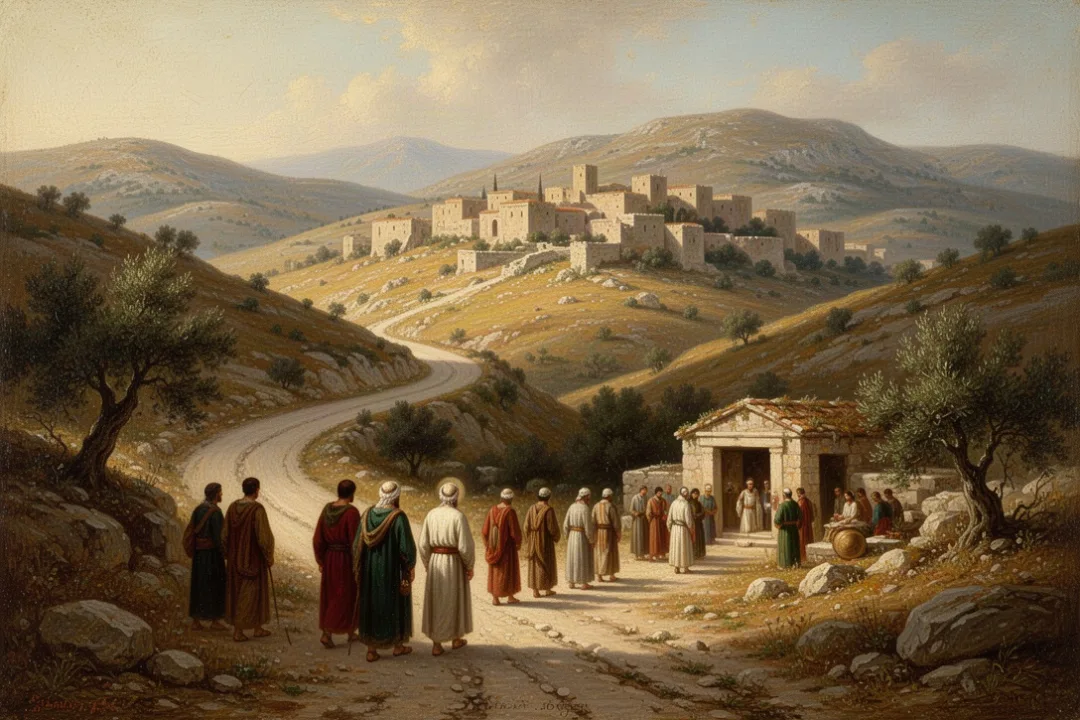
The book of Acts describes Paul visiting several communities connected with the southern part of the Roman province. During his first missionary journey, Paul and Barnabas traveled through Antioch in Pisidia, Iconium, Lystra, and Derbe. These cities are commonly discussed when readers consider the churches that may have received Galatians.
In Antioch in Pisidia, Paul spoke in a synagogue and presented Jesus as the fulfillment of God’s saving purposes for Israel. The message attracted interest from both Jewish listeners and Gentiles. Opposition later developed, and Paul and Barnabas continued to other cities rather than abandoning the mission.
At Iconium, the missionaries again encountered a mixed response. Some people accepted the message, while others resisted it. Acts portrays the Christian mission as creating a division within the city, not because the message was insignificant but because it challenged existing religious and social commitments.
Lystra and Derbe brought different experiences. In Lystra, Paul healed a man who had been unable to walk, and the crowd reacted by treating Paul and Barnabas as divine beings. The missionaries rejected that honor and redirected attention to the living God. Later, opposition became violent, showing how quickly public approval could change.
At Derbe, Paul and his companions preached and made many disciples. On the return journey, they revisited the new groups, encouraged them, and appointed local leaders. This detail shows that the churches were not merely temporary audiences. They were expected to develop stable communities, responsible leadership, and continuing faith.
Acts also records a later journey through the region. Paul strengthened believers in Galatia and Phrygia, and later traveled through the interior areas of Asia Minor. The wording in Acts does not settle every geographic question, but it confirms that Galatia was part of the network of communities connected with Paul’s mission.
The churches faced hardship from the beginning. Paul’s preaching did not occur in a neutral environment. New believers had to form a distinct community while living among established religions and social systems. They also needed to decide how Jewish and Gentile believers could share worship and table fellowship.
Read Acts and Galatians together: Acts provides travel and community background, while Galatians gives a direct view of the theological conflict affecting at least some churches connected with Galatia.
What the letter to the Galatians teaches
Galatians is one of Paul’s most direct and emotionally intense letters. He writes because other teachers were influencing the churches after his departure. These teachers appear to have insisted that Gentile believers needed to accept circumcision and take on obligations associated with the Jewish law in order to belong fully to God’s covenant people.
Paul begins by defending the source of his gospel. He says that his message came through revelation from Jesus Christ, not merely through human instruction. He also recounts his earlier life, his opposition to the church, and his dramatic change after encountering the risen Christ.
That personal material is not included simply to tell Paul’s life story. It supports his central claim: the gospel does not depend on approval from Jerusalem, influential teachers, or any human authority. Paul insists that the message he proclaimed was grounded in God’s action through Christ.
Paul then uses Abraham as a major example. In Galatians, Abraham represents the pattern of people being counted righteous through faith. Paul argues that those who trust God are connected to Abraham’s family, so Gentile believers do not need to become Jewish proselytes before they can receive God’s blessing.
The letter also discusses the role of the law. Paul does not treat Israel’s Scriptures as worthless or evil. Instead, he explains that the law served a temporary and preparatory function within the larger story of redemption. With Christ’s coming, believers are no longer relating to God through the same covenantal guardianship.
One of the letter’s central themes is justification by faith. Paul argues that people are accepted as righteous before God through faith in Christ, rather than through works of the law. In context, “works of the law” includes practices that marked Jewish identity, such as circumcision, food distinctions, and observance of particular days.
Paul also confronts the practical consequences of the dispute. In the section often called the Antioch incident, he describes opposing Peter’s withdrawal from shared meals with Gentile believers. For Paul, that behavior suggested that Gentile Christians were spiritually or socially inferior unless they adopted Jewish customs.
Galatians therefore is not an abstract argument about religious rules. It is also about shared meals, equal belonging, church unity, and the public meaning of the gospel. If people who trust in Christ must still cross an ethnic boundary to receive full acceptance, Paul believes the message of grace has been compromised.
Paul’s gospel comes from Christ: its authority does not rest on social approval.
Faith unites believers to Abraham’s family: Gentiles do not need to become Jews to belong.
Christ brings freedom: believers are not justified by adopting the law’s covenant markers.
Freedom serves love: Christian liberty is not permission for selfish behavior.
The Spirit produces a new way of life: character matters as much as correct belief.
Paul’s famous contrast between the “works of the flesh” and the fruit of the Spirit appears near the end of the letter. Rather than reproducing the biblical wording, the passage can be understood as contrasting destructive behaviors such as hostility, jealousy, rivalry, and uncontrolled desire with a life marked by love, joy, peace, patience, kindness, goodness, faithfulness, gentleness, and self-control.
That contrast explains how freedom should operate. Christian freedom is not a license to harm others or satisfy every impulse. It is freedom from the system of earning status before God, combined with freedom to serve neighbors through love.
Why scholars debate the churches addressed in Galatians
The main geographic question is known as the North Galatian and South Galatian theories. The North Galatian view identifies the recipients with communities in the older ethnic heartland of Galatia. The South Galatian view identifies them with churches Paul founded in cities such as Antioch in Pisidia, Iconium, Lystra, and Derbe.
Both views take the biblical evidence seriously. Galatians says the letter is addressed to “the churches of Galatia,” but it does not list individual cities. Acts describes Paul’s work in southern cities and also refers to travel through Galatian territory. The surviving evidence does not provide a simple sentence resolving the question.
Supporters of the South Galatian view point to the clear account of Paul’s ministry in the southern provincial cities. They also observe that these congregations fit the issues in the letter: Gentile believers were being pressured to accept circumcision and other Jewish identity practices.
Supporters of the North Galatian view emphasize the traditional ethnic meaning of Galatia. Paul may have visited communities farther north, and some readers understand references to the Galatians as pointing specifically to descendants of the Celtic groups who settled there.
The debate affects how readers reconstruct Paul’s travel schedule and the date of the letter. It does not change the letter’s central message. In either case, Paul addresses communities wrestling with the relationship between faith, Jewish law, Gentile inclusion, and Christian freedom.
Several clues can help you read the debate responsibly:
The Roman province was larger than the original ethnic region.
Ancient writers could use geographical names in administrative or cultural ways.
Acts and Galatians were written with different purposes and levels of detail.
The New Testament does not identify every church by modern-style street address or boundary.
The theological argument remains clear even when the precise location is uncertain.
Some readers assume that every mention of Galatia must refer to one compact area. Ancient provincial names did not always work that way. A Roman province could include cities with different histories, and a regional label could remain in use even as political boundaries changed.
How Galatians applies to Christian life and church community
Galatians speaks to the question of how people decide who belongs. Paul resists any system that makes cultural background, ritual performance, or group conformity the basis for full acceptance by God. For him, faith in Christ creates the community, rather than an ethnic identity or a list of boundary markers.
That does not mean Christian conduct is irrelevant. Paul expects believers to live differently, but he places obedience after God’s grace rather than using obedience as a way to purchase grace. The Spirit changes how believers treat one another, especially when freedom, disagreement, and personal preference create conflict.
The letter also challenges churches to examine their behavior at shared tables and in everyday relationships. A congregation may claim to believe in equality while quietly giving greater honor to people with the right background, customs, education, income, or social connections. Galatians asks whether the church’s practices match its confession.
Paul’s teaching about bearing one another’s burdens gives the community a practical shape. Believers are called to restore those who have gone astray with gentleness, carry one another’s difficulties, and refuse to measure spiritual worth through comparison. These instructions make freedom relational rather than merely individual.
The final chapter also warns against religious pride. A person can boast about outward marks, achievements, or influence while neglecting the cross of Christ. Paul’s concern is not simply that people believe the wrong doctrine privately; it is that their public identity may be built around something other than God’s grace.
For a church or small group reading Galatians, useful questions include:
Do we treat cultural customs as if they were requirements for salvation?
Are newcomers welcomed as full members or kept at the edges of community life?
Do our disagreements lead to patient conversation or rivalry?
Does our teaching produce love, humility, and self-control?
Are we using freedom to serve others or to justify selfish choices?
Galatia also shows why historical context matters when reading the Bible. The dispute was not simply about whether rules are good or bad. It involved the identity of God’s people, the meaning of Abraham’s promise, the place of Gentiles, and the consequences of Jesus’ death and resurrection.
Understanding the region makes the letter more concrete. Paul was writing to real communities in a complex Roman landscape, not to an imaginary audience with no history. Their questions about belonging, status, tradition, and freedom remain recognizable because communities still struggle over who is accepted and what practices define faithfulness.
When you encounter Galatia in Scripture, keep three ideas together: a real region in central Anatolia, a network of early Christian churches, and a letter defending the gospel of grace. The geography explains the setting, Acts supplies the missionary background, and Galatians reveals the urgent theological and communal conflict.
Frequently asked questions
Is Galatia a country in the Bible?
No. Galatia was an ancient region in central Anatolia, located within modern Turkey. It was sometimes understood by its ethnic connection to Galatian peoples and sometimes by its status as a Roman province. Its boundaries changed, so it should not be treated as the equivalent of a modern nation-state.
Did Paul write Galatians to one church?
No. The opening of the letter addresses multiple churches in Galatia. The exact communities are debated, but they may have included churches in the southern cities visited by Paul or communities farther north in the traditional Galatian homeland.
What problem was Paul addressing in Galatians?
Paul opposed teaching that Gentile believers needed circumcision and other Jewish covenant practices to belong fully to God’s people. He argued that faith in Christ, not adoption of ethnic or ritual boundary markers, is the basis of acceptance and unity.
Why is Galatians important for Christians today?
Galatians explains Christian freedom, justification by faith, and the equal standing of Jewish and Gentile believers in Christ. It also calls churches to express freedom through love, humility, service, and the Spirit-shaped character described near the letter’s end.











Leave a Reply